
Alloy Resistor Factory: Precision Production for Reliable Electronics
2026-06-26
In modern electronics, even the smallest resistance variation can derail performance. That's why leading engineers turn to precision alloy resistors—components where manufacturing rigor directly shapes reliability. Among the names driving this standard is Milliohm, a factory where advanced metallurgy and exacting process control converge. This article steps onto the production floor to reveal how alloy resistors are made, tested, and refined to meet the demands of tomorrow's circuits.
Crafting Alloy Resistors with Microscopic Precision
The delicate interplay of materials starts with selecting high-purity alloys, where even trace impurities can disrupt electrical stability. Our process relies on electron-beam melting to achieve a uniform crystalline structure, setting the stage for resistances that hold steady under temperature swings. Sputtering techniques then deposit thin films so precisely that thickness variations stay within a few atomic layers, ensuring every resistor meets its specified value without the common drift seen in mass-produced parts.
Laser trimming takes over where deposition leaves off, cutting micron-wide kerfs into the resistive element to dial in accuracy. This isn't the coarse adjustment of yesteryear—real-time feedback from automated optical inspection allows adjustments within 0.01% of target resistance, while preserving the element's thermal stability. The equipment knows when to stop, preventing the micro-cracks that often plague manual trimming, and the resulting resistors exhibit noise levels so low they satisfy the demands of precision instrumentation.
Packaging then protects this precision with hermetic sealing that blocks moisture and oxygen—silent killers of long-term reliability. Lead frames are welded, not merely soldered, to avoid introducing thermoelectric EMFs that could skew measurements. Every unit undergoes accelerated aging tests that project decades of drift, and only those that demonstrate virtually no change over simulated years of use pass through. The outcome is a component that often outlasts the circuits it populates, a quiet testament to microscopic care.
Why Alloy Choice Defines Circuit Reliability
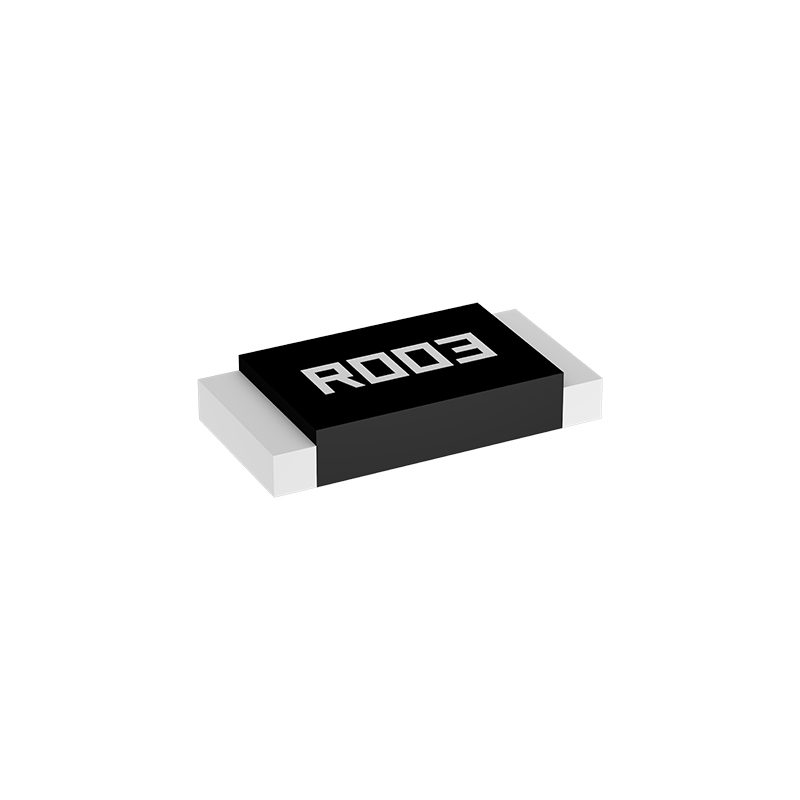
The long-term reliability of any electronic circuit is profoundly influenced by the materials used at interconnects and solder joints. Choose the wrong alloy, and the mismatch in thermal expansion can quietly tear those connections apart with every power cycle. Over time, the accumulated stress leads to micro-cracks and ultimately, intermittent failures that are hard to diagnose.
Beyond mechanical stress, corrosion resistance is a silent battleground inside every circuit. Alloys that lack proper resistance to oxidation or galvanic corrosion will degrade faster when exposed to humidity, contaminants, or even residual flux from assembly. This degradation raises contact resistance, introduces noise, and can eventually break the circuit entirely.
Mechanical shock and vibration are another test that separates reliable alloys from the rest. An alloy that is too brittle may fracture under sudden impact, while one that is too soft can creep under sustained load. The right balance of strength and ductility ensures that the joints not only survive assembly and handling but maintain stable electrical contact throughout the product's expected lifespan.
Inside Our Controlled Manufacturing Environment
Every detail of our manufacturing floor is engineered to minimize external variables. Temperature, humidity, and airborne particulates are constantly monitored and adjusted, ensuring that each component is produced in a setting that rivals semiconductor cleanrooms.
Our team moves through a strict gowning sequence before entering the production zone—full suits, hoods, and double-gloving are standard practice. It’s not about ceremony; it’s about preventing even the slightest contamination that could compromise the final product.
We’ve moved beyond routine ISO certifications by integrating real-time microbial sampling and surface particle counts directly into our workflow. The result is a space where consistency isn’t a goal—it’s the baseline we refuse to deviate from.
Testing Beyond Standard Limits for Consistent Performance
Most testing protocols settle for checking boxes under ideal conditions, but real-world reliability demands pushing past those comfortable thresholds. We deliberately stress components at extreme temperatures, voltage swings, and load cycles that far exceed normal usage. This isn't about breaking things—it's about exposing weak points before they surface in the field, ensuring every unit holds its own when conditions turn ugly.
Consistency is the silent promise behind every measurement. A sensor that drifts after a thermal soak or a board that glitches under low‑battery conditions isn't just a spec failure—it erodes confidence. Our characterization runs capture how performance evolves over thousands of hours, mapping drift patterns and intermittent faults that typical pass/fail testing overlooks. By embracing variability early, we lock in predictable behavior later.
The payoff shows up in places most datasheets never mention. Engines that start cleanly after months of idle storage, communication links that survive brownouts without a reset, analog front‑ends that maintain their linearity through aging—these are the outcomes of a test philosophy that refuses to stop at the data‑sheet boundary. When standard limits feel more like a starting line than a finish, consistent performance becomes a habit rather than a hope.
Tailored Resistor Solutions for Demanding Electronics
Every circuit tells a story, and in high-stakes electronics, that story hinges on components that refuse to compromise. Off-the-shelf resistors often fall short when faced with extreme temperatures, tight tolerances, or unconventional form factors. Our approach starts with your specific challenge—whether it's minimising thermal drift in precision instrumentation or squeezing robust power handling into a space that barely exists—and builds a resistor around it, not the other way around.
We blend decades of material science with agile manufacturing to create resistors that behave exactly as your design demands. Thin film, thick film, metal foil, or custom wirewound—each technology is tuned not just for value and tolerance but for how it ages, how it handles pulse loads, and how quietly it sits in a sensitive signal path. The result is a component that feels less like a purchased part and more like an extension of your engineering intent.
This isn't about offering endless variants from a catalogue; it's about solving the stubborn problems that keep you awake at night. When standard parts can't meet the brief, tailored solutions step in—delivering not just electrical specs but peace of mind that your design will endure, from prototype to field deployment.
Sustainability Meets High-Performance Production
Modern manufacturing is proving that sustainability and high-performance production aren't mutually exclusive—they're becoming essential partners. By rethinking resource flows, factories now recapture heat, water, and materials in closed-loop systems that slash waste while keeping throughput high. This shift isn't just about compliance; it's a direct driver of operational efficiency, cutting costs in energy and raw materials while boosting output consistency.
Advances in smart automation play a pivotal role here. Intelligent sensors and real-time analytics allow lines to self-adjust, reducing scrap and downtime without sacrificing speed. When a machine can predict its own maintenance or fine-tune parameters on the fly, it runs leaner, lasts longer, and consistently hits quality targets—delivering high performance while shrinking the environmental footprint.
Materials innovation further dissolves the old trade-off. High-strength, lightweight alloys and bio-based composites enable products that perform better and use less. Coupled with modular designs that simplify repair and recycling, these choices extend product life cycles and dramatically lower overall impact. The result is a production philosophy where peak efficiency and ecological responsibility reinforce each other, setting a new standard for what world-class manufacturing looks like.
FAQ
Alloy resistors use a metal alloy strip as the resistive element, typically made from copper-nickel, nickel-chromium, or manganese-copper blends, which offers lower temperature coefficient of resistance (TCR) and higher stability compared to thick-film or carbon-based alternatives.
Precision processes like electron beam welding, laser trimming, and automated optical inspection ensure consistent resistance values, minimal drift, and robust terminations. This directly impacts long-term performance in critical applications such as medical devices or aerospace electronics.
Quality checks happen at multiple nodes: incoming alloy strip resistivity testing, in-process monitoring of weld integrity and trim accuracy, followed by final testing under accelerated aging conditions. Statistical process control (SPC) methods catch deviations early.
They're favored in current sensing for power management, precision instrumentation, and automotive under-hood electronics. The low EMF, high pulse tolerance, and stable resistance under thermal cycling make them ideal where accuracy cannot degrade over time.
Yes, the homogeneous alloy element and protective coatings like epoxy molding or silicone encapsulation guard against moisture ingress and mechanical stress. Designs routinely meet AEC-Q200 standards for temperatures ranging from -55°C to +170°C.
Laser trimming adjusts the resistive path with micron-level accuracy without damaging the substrate. This non-contact method allows factories to hit tolerances of ±0.1% or better, adapting to design-specific resistance values without altering the alloy's inherent properties.
Through optimized thermal management via large termination areas, low-resistance alloy formulations, and thorough burn-in testing, the parts maintain stability under rated load over thousands of hours. Derating curves are validated through extensive lifecycle testing.
They often meet IEC 60115-1, AEC-Q200 for automotive, and MIL-STD-202 for military applications. Factories may also hold ISO 9001 and IATF 16949 certifications, reflecting rigorous process control and traceability mandates.
Conclusion
At our alloy resistor factory, the journey toward reliable electronics begins with an unwavering commitment to precision. Every resistor is crafted with microscopic attention to detail, ensuring that tolerances are held to the tightest standards. The selection of alloys isn't merely a routine step—it defines the very reliability of the circuits they serve. By choosing materials with stable temperature coefficients and low noise characteristics, we build a foundation that endures harsh operating conditions. Inside our controlled manufacturing environment, temperature, humidity, and cleanliness are meticulously regulated to eliminate variables that could compromise performance. This isn't just assembly; it's a deliberate process where each stage, from thin-film deposition to laser trimming, is optimized for repeatability and accuracy.
Our commitment extends beyond standard practices. We push testing beyond conventional limits, subjecting resistors to thermal cycling, load life tests, and surge voltages that mirror real-world stress. This rigorous validation ensures consistent performance where it matters most—in demanding electronics like automotive control systems, medical devices, and aerospace instrumentation. For applications requiring specific electrical or mechanical characteristics, we offer tailored resistor solutions that aren't off-the-shelf but engineered to exact requirements. And while performance is paramount, we don't overlook our environmental footprint. Sustainability is embedded in our production, from energy-efficient facilities to recycling of process materials, proving that high-performance manufacturing can coexist with ecological responsibility. The result is components that don't just meet specifications—they deliver reliability you can count on, cycle after cycle.
Contact Us
Contact Person: Yuying Gao
Email: [email protected]
Tel/WhatsApp: +86 18926013721
Website: https://en.milliohm.net/