

Best Conveyor Pulley Vendor from China for Reliable Bulk Handling
2026-11-02
In bulk handling, every minute of uptime counts—yet too many operations still gamble on pulleys that wear out early or fail without warning. Choosing the right conveyor pulley vendor isn't just about price; it's about keeping material moving through mining, quarrying, and processing without unplanned stops. That's where XAN stands out among China's manufacturers. Known for robust engineering and consistent quality control, XAN delivers conveyor pulleys built to handle abrasive loads and harsh environments. This blog breaks down what makes a pulley reliable, how to evaluate suppliers, and why XAN has earned a reputation as one of the best conveyor pulley vendors from China for reliable bulk handling. Whether you're replacing a single component or planning a full system upgrade, the right partner makes all the difference.
What to look for in a pulley supplier before placing a bulk order
Before committing to a bulk pulley order, you need to dig into the supplier's manufacturing depth. A pulley is only as good as the material it's made from and the tolerance it's held to. Ask to see actual sample batches, not just glossy brochures. Run your own checks on bore diameter, keyway dimensions, and surface finish. If the supplier hesitates to share QA data or deflects your questions about raw material sourcing, that's a red flag you shouldn't ignore.
Next, look at how the supplier handles customization and after-sales support. Bulk orders rarely fit a one-size-fits-all model; you may need specific hub styles, coatings, or balancing requirements. A good pulley supplier will walk you through their engineering process, offer practical suggestions based on your application, and provide clear lead times. Pay attention to how quickly they respond to your technical queries before the order is placed—that speed and clarity usually predict how they'll behave after payment.
Finally, verify their track record with other bulk buyers. Ask for references in a similar industry, and if possible, visit their facility or request a video tour of their production and inspection lines. Look for signs of organized inventory management and consistent batch labeling. A supplier with a messy shop floor or unclear traceability can cause costly delays and quality drift in large-volume orders, no matter how attractive the initial price quote looks.
Materials and engineering choices that keep pulleys running under heavy loads
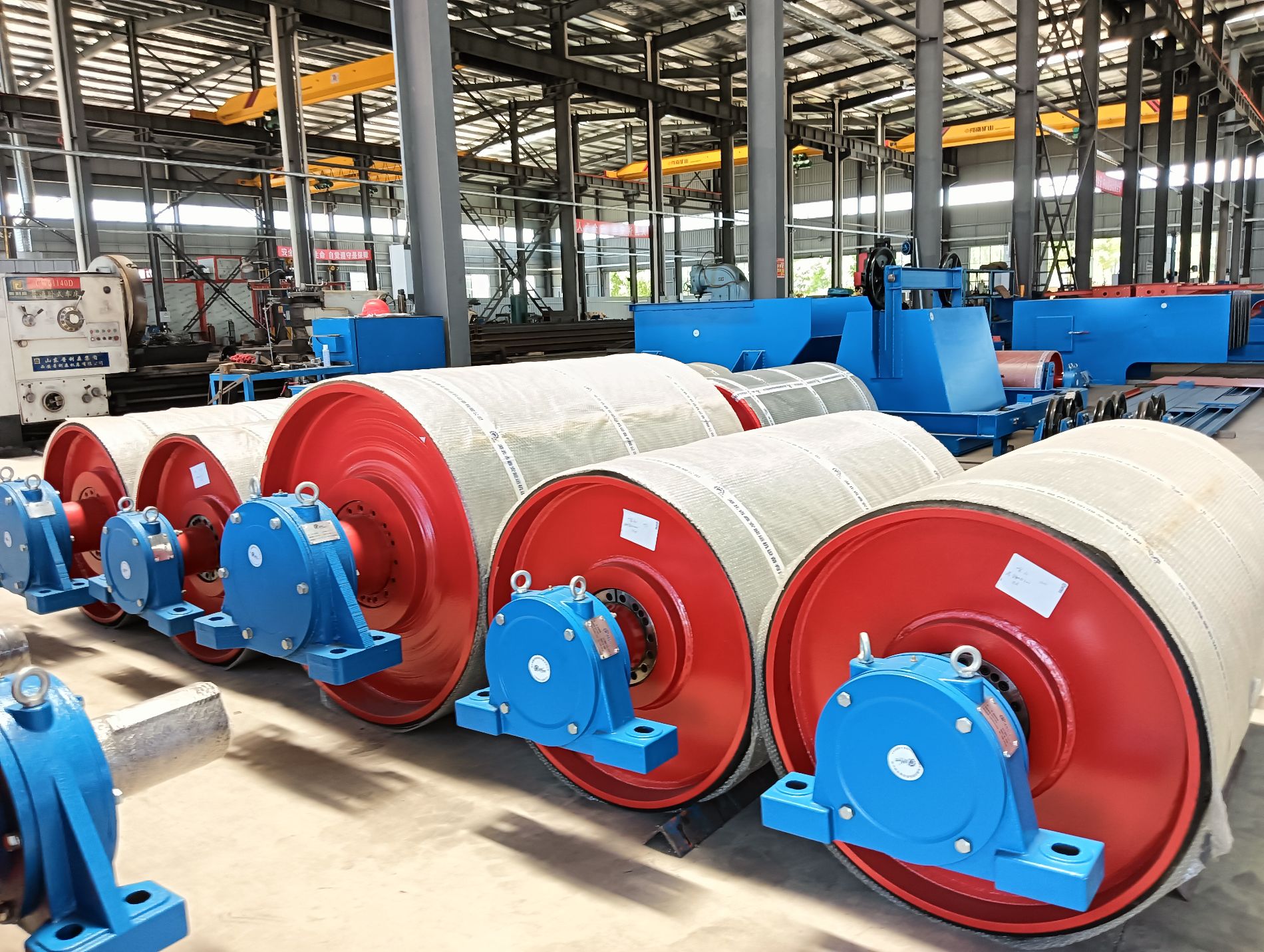
Heavy-duty pulleys rarely survive on geometry alone. The difference between a pulley that lasts a decade and one that chews through belts in six months comes down to material selection. Ductile iron and heat-treated carbon steel dominate high-load applications because they resist brinelling under concentrated contact stress. Where corrosion or weight is a concern, cast stainless or reinforced polyamide hubs with a forged steel rim offer a workable compromise. The key is matching the surface hardness of the groove to the belt or cable—too soft and the metal deforms, too hard and it abrades the tension member.
Engineering choices matter just as much once the alloy is picked. A deep groove profile with a slight taper helps the belt seat under deflection instead of climbing the flange. Many heavy-load pulleys use induction-hardened raceways and then finish-grind them to remove micro-cracks that would otherwise propagate under cyclic loading. Bearings get sized for a minimum L10 life rather than a bare static rating, and labyrinth or contact seals keep abrasive dust out of the rolling elements. In dirty environments, a hardened wear sleeve on the shaft is often cheaper than replacing an entire pulley assembly.
Fatigue resistance is the quiet priority. Heavy loads don't just press down—they flex the pulley shell, so designers add webbing or increase rim thickness to push the natural frequency away from operating speeds. For very high loads, a split hub with a keyless locking device eliminates fretting corrosion at the shaft interface. Every one of these choices reduces downtime that isn't obvious in a catalog photo.
Custom pulley builds for specific bulk materials and belt widths
A pulley that holds up under free-flowing grain may fail in a matter of weeks when it's asked to move abrasive crushed ore. A useful custom build starts with the bulk material's actual behavior: bulk density, particle size distribution, moisture content, and how aggressively it wears against steel. Those numbers drive the choice of shell thickness, end disc reinforcement, lagging compound, and whether replaceable wear liners are worth adding.
Belt width gets less attention than it should, but it changes the load path through every component. A 36-inch belt carrying wet sand concentrates force over a short face, which pushes up shaft diameter and shortens bearing spacing. A 72-inch belt moving the same tonnage spreads the load yet needs much tighter runout control to stop tracking drift. Matching the hub, bushing, and shaft to the actual belt tension profile avoids forcing a stock pulley into a role it wasn't built for.
The payoff shows up as quieter running and fewer unplanned stops. Small choices like a slightly crowned face, a distortion-controlling weld sequence, or a non-standard lagging groove pattern often separate a pulley that just survives from one that actually fits the material and belt it was designed around.
In-house testing and quality checks that happen before shipping
Every batch that leaves our facility goes through a round of physical inspections that go beyond ticking boxes. We pull random samples from the line and give them a real workout—flexing seams, tugging on zippers, and running fabric through repeated stretch cycles. If a single stitch looks shaky or a snap feels loose, the entire lot is held back until we find the root cause and fix it. No exceptions, no workarounds.
Before anything gets packed, our team also runs a set of functional tests that mirror how customers actually use the product. For bags, that means loading them with weight and walking around the block. For apparel, it’s a wash-and-wear check to see if colors bleed or shrink beyond tolerance. We keep detailed notes on each run, so if something fails at this stage, we can trace it back to the exact material lot or sewing station—not just guess.
What makes this different from a typical QC checklist is that the same people who built the product are the ones doing the inspection. They know the weak points because they’ve worked those seams themselves. That hands-on familiarity catches issues a third-party auditor might miss, like a slight tension change in a particular thread type. It’s slower and more tedious, but it’s the only way we’ve found to ship with confidence rather than hope.
Lead times, packaging, and logistics without hidden delays
We quote lead times based on actual production schedules and current inventory, not on optimistic guesses. If a component is backordered or a machine is down for maintenance, that reality is reflected in the timeline before you commit. The date you see at checkout or on your quote is the date our team verifies against the shop floor, so you don't have to pad your own planning around a promise that was never realistic.
Packaging gets treated as part of the product, not an afterthought. We use materials matched to the item's size, weight, and fragility, which cuts down on wasted space and prevents damage in transit. That means fewer repacks, fewer freight claims, and fewer surprise delays caused by a box that couldn't hold up. Custom crating is available when needed, but only when it actually reduces risk.
Logistics coordination focuses on visibility. Once a shipment leaves the facility, tracking details are sent immediately, and any exception—weather, carrier backlog, customs hold—is flagged to you with a revised arrival window rather than silence. Our dispatch team works with carriers that have proven on-time performance on your routes, so the delivery date you're given is one you can actually plan around.
Field examples from mining, ports, and aggregate handling operations
At a copper mine in northern Chile, autonomous haul trucks move ore from the pit to the primary crusher without a driver on board. The trucks follow GPS-defined routes, adjusting speed and spacing based on real-time data from shovel operators. This setup has cut haulage costs by roughly 18% while reducing collision incidents, since the trucks maintain consistent braking distances and never suffer from fatigue or distraction.
Port terminals in Australia and Brazil rely on rail-mounted stacker-reclaimers to handle iron ore and coal. At one facility in Port Hedland, a bucket-wheel reclaimer feeds a 2.5-kilometer conveyor line at 8,000 tonnes per hour, blending material from multiple stockpiles to meet export specifications. Dust suppression systems and wind fences keep airborne particles under control, which matters because nearby communities and marine ecosystems are sensitive to fine ore dust.
Aggregate operations in the U.S. Midwest often run jaw crushers, cone crushers, and horizontal screens in closed circuit to produce road base and concrete aggregate. One quarry near Indianapolis processes dolomitic limestone through a primary jaw, then a secondary cone set at 19 mm closed side setting, with a surge pile feeding two parallel screening towers. The operation adjusts crusher speed based on feed moisture—on rainy days, the cone runs slower to avoid packing, while dry days allow full throughput of 450 tonnes per hour.
FAQ
The strongest vendors combine heavy plate rolling, precision machining, and deep welding expertise. They often use high-grade steel like Q345 or S355 and perform post-weld stress relieving to prevent cracking under continuous impact from ore, coal, or aggregates. Many have supplied pulleys for mines and ports where downtime is extremely costly, so they understand the need for robust shaft connections and well-balanced shells.
Ask for ISO 9001 certification plus relevant product standards such as CE, AS/NZS, or DIN. Request third-party inspection reports for previous orders, material test certificates, and weld procedure qualifications. A factory video tour or live inspection can reveal a lot about whether they actually follow documented processes rather than just having paperwork.
Mining, cement plants, ports and terminals, steel mills, power stations, fertilizer production, and grain handling. These sectors need pulleys that resist abrasive wear, handle high belt tensions, and survive harsh outdoor environments with dust, moisture, and temperature swings.
Beyond standard diameter and face width, you should be able to specify shaft material and diameter, bearing housing style, lagging type (plain, herringbone, ceramic, or polyurethane), crown profile, and special coatings. Many shops will work directly from your drawings or reverse-engineer from an existing pulley sample to match mounting dimensions exactly.
Yes, the larger manufacturers have CNC lathes and boring mills capable of pulleys over 1,500 mm in diameter and shafts weighing several tonnes. They regularly supply drive pulleys for overland conveyors with tensions exceeding 1,000 kN. You should still check their equipment list and past project references to confirm they have done comparable work.
For standard designs, expect 4 to 6 weeks of production. Fully custom or large-diameter pulleys usually take 8 to 12 weeks. Ocean freight to major ports in Europe, North America, or Australia adds roughly 4 to 6 weeks, so plan purchases well ahead of scheduled maintenance windows to avoid emergency air freight costs.
Look at shell thickness, shaft material (40Cr or 42CrMo are common for higher stress), the type of bearing seals, and whether the pulley is dynamically balanced to ISO 1940 G6.3 or better. A good supplier will provide recommended greasing intervals, expected bearing life under your load conditions, and guidance on lagging replacement rather than leaving you guessing.
Conclusion
Sourcing a conveyor pulley vendor from China for bulk handling requires looking past catalog specs and into how a manufacturer actually handles material selection, machining tolerances, and load-bearing engineering. The worthwhile suppliers are the ones who ask about your belt width, trough angle, and material density before quoting, then back their recommendations with finite element analysis and fatigue testing on hubs, end discs, and shafts. You want a shop that keeps 4140 and 1045 steel in stock, uses double-submerged arc welding rather than tack welds, and can balance a pulley to ISO 1940 G2.5 without being prompted. That kind of engineering discipline shows up later as fewer shell failures and less downtime at the head or tail end.
Custom builds matter just as much as standard models. A vendor that regularly machines drum pulleys for iron ore terminals and bend pulleys for aggregate plants will already know how to crown for belt tracking and how to size shafts for high-tension conveyor profiles. Before anything ships, the better factories run ultrasonic weld inspection, keyway and bore checks, and spin tests on assembled units, then pack them in steel cradles with rust-preventive coating, not just wooden crates. Field reports from port and mining operations in Australia and Southeast Asia show that suppliers who control lead times internally—casting, machining, and lagging under one roof—tend to deliver on schedule without shipping incomplete orders or blaming freight delays. That is the difference between a quote and a dependable partner.
Contact Us
Contact Person: Anna Lu
Email: [email protected]
Tel/WhatsApp: 8618561668850
Website: https://www.x-conveyor.com