

Best Double Eccentric Butterfly Valve: Ultimate Guide to High-Performance Fluid Control
2026-08-05
When precision fluid control meets industrial durability, the right valve makes all the difference. Double eccentric butterfly valves have become the backbone of modern piping systems, but not all are created equal. In this ultimate guide, we explore what sets a truly high-performance valve apart and why engineers increasingly turn to THT for solutions that outperform in the toughest conditions. Whether you're dealing with high temperatures, corrosive media, or demanding shutoff requirements, the details behind the design matter more than you think. Ready to see how the best valve can transform your system's reliability? Let's dive in.
Why Double Eccentric Design Outperforms Standard Butterfly Valves
Standard butterfly valves rely on a simple concentric design where the stem and disc rotate directly against the seat. This constant contact leads to friction, accelerated wear, and a significant increase in operating torque, especially as the valve ages. Components often degrade prematurely, causing leaks and demanding frequent maintenance that disrupts operations.
A double eccentric valve introduces two intentional offsets. The first shifts the stem away from the disc's centerline, and the second displaces the shaft from the sealing plane. The moment the disc begins to open, it immediately swings free of the seat, eliminating the rubbing action that plagues concentric models. This cam‑like motion preserves the sealing surfaces, ensuring consistent performance even after thousands of cycles.
The result is a valve that operates with notably lower torque, allowing smaller actuators and reducing energy costs. In applications—from HVAC to chemical processing—the extended service life and tighter shut‑off translate directly to fewer shutdowns and lower total cost of ownership. By making the seat last longer and function better, a double eccentric design simply outclasses conventional alternatives in both durability and efficiency.
The Engineering Behind Zero-Leakage Sealing and Reduced Torque
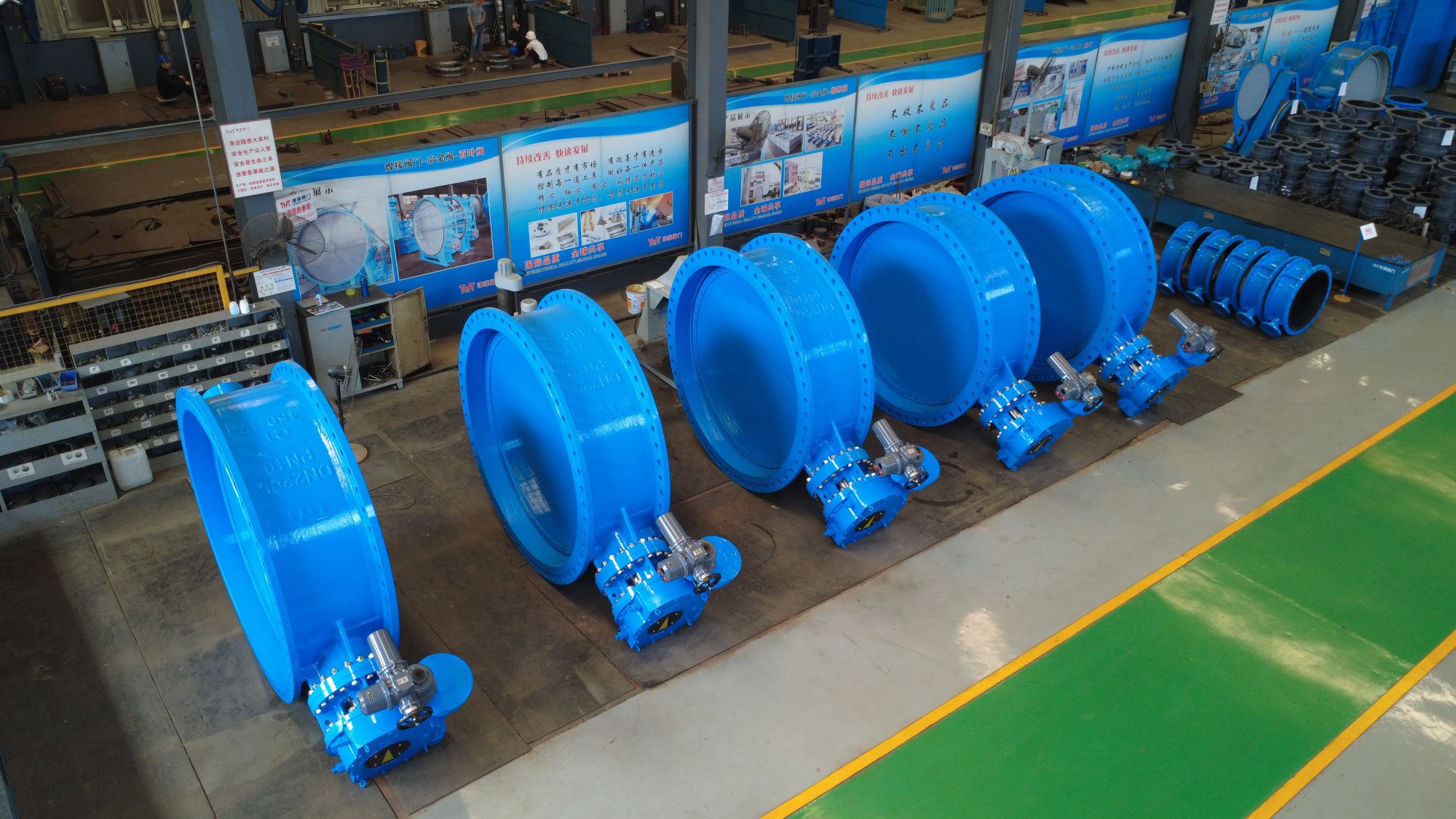
Achieving zero-leakage performance while simultaneously reducing operating torque requires a meticulous fusion of material science and precision geometry. Advanced seal profiles, such as those with asymmetric lip designs or micro-textured surfaces, exploit hydrodynamic principles to create a thin lubricating film during shaft rotation. This film not only prevents direct rubber-to-metal contact, which would otherwise drive up friction and wear, but also fills microscopic surface irregularities to block fluid migration paths. The result is a dynamic sealing interface that maintains integrity under pressure fluctuations without demanding excessive rotational force.
Material selection plays an equally critical role. Modern elastomeric compounds are engineered to exhibit low modulus and high resilience, enabling them to conform tightly to mating surfaces while recovering quickly from deformation. Coupled with low-friction coatings or impregnated solid lubricants, these materials minimize both breakaway and running torque. In some designs, a tailored interference fit is precisely calculated to provide sufficient contact stress for sealing without over-collapsing the lip—a delicate balance that hinges on finite element analysis and accelerated life testing to validate predictions under thermal and chemical aging.
Beyond the seal itself, system integration amplifies these benefits. Shaft surface finishes are specified to an optimal roughness range—smooth enough to reduce abrasion, yet textured enough to retain lubricant and promote elastohydrodynamic action. Bearing preloads and housing tolerances are coordinated to maintain concentricity, preventing localized lip overload that would otherwise spike torque and invite leakage. The entire assembly becomes an orchestrated ecosystem where each element—from the seal’s spring energizer to the lubricant’s viscosity index—is tuned to sustain a lifetime of low-friction, emission-free operation.
Material Choices That Define Performance in Extreme Conditions
Selecting the right materials for extreme environments isn't just about picking the strongest or most heat-resistant option—it's about understanding how a substance will behave when pushed beyond its normal limits. Engineers often look beyond standard specifications, considering factors like thermal expansion mismatch, galvanic corrosion in multi-material assemblies, or the subtle embrittlement that can occur at cryogenic temperatures. A material that performs flawlessly in a controlled lab might fail catastrophically in the field due to a combination of vibration, pressure cycling, and chemical exposure that no single datasheet can predict.
Advances in metallurgy and composite science have opened up possibilities that did not exist a decade ago. Nickel-based superalloys, once reserved for jet engine turbines, are now finding their way into deep-sea drilling equipment, while ceramic matrix composites challenge traditional assumptions about brittle failure under thermal shock. The real art lies not in chasing exotic materials for their own sake, but in matching the exact failure modes of the application with a material's often non-intuitive strengths. Sometimes, a cleverly engineered polymer can outperform a metal simply because it dampens vibrations that would otherwise initiate fatigue cracks.
Perhaps the most overlooked aspect of material selection is how manufacturing processes alter end-use properties. A forged component can tolerate stresses that would destroy a cast or 3D-printed counterpart of the same alloy, because the flow of the grain structure follows the lines of force. Surface treatments, from simple shot peening to sophisticated diffusion coatings, can multiply the lifespan of a part without changing its bulk chemistry. When every millimeter and gram counts, performance becomes a story of subtle trade-offs and hidden synergies orchestrated by those who understand matter at its deepest level.
Key Applications Where Double Eccentric Valves Excel Under Pressure
In high-pressure, high-temperature steam isolation for power generation, double eccentric valves truly come into their own. The cam-like motion ensures the disc lifts cleanly off the seat before rotating, nearly eliminating sliding contact and preserving the integrity of metal or graphite seals even after thousands of cycles. This makes them a go-to choice for turbine bypass, boiler feedwater, and main steam lines, where zero leakage and rapid actuation aren’t just desirable—they’re mandatory.
Petrochemical processes handling aggressive fluids and cyclic temperatures also lean heavily on the double eccentric design. With fire-safe certifications and an inherently quarter-turn operation, these valves handle thermal expansion gracefully, preventing the disc from lodging in the seat during cooldown. Whether it’s controlling hot oil in refineries or managing flows in ethylene crackers, the double offset geometry delivers long-term tightness without the constant maintenance burden typical of conventional ball or gate valves.
Installation Insights: Avoiding Common Pitfalls for Long-Term Reliability
Installation often gets treated as a box-ticking exercise, but the difference between a system that hums for decades and one that fails prematurely often comes down to a handful of overlooked details. Take torque settings, for example: plenty of failures trace back to fasteners that were either under-tightened, leading to loosening under vibration, or over-tightened, causing thread damage that only shows up months later. The manufacturer's spec isn't just a suggestion—it's a carefully engineered boundary that accounts for material expansion, load cycles, and environmental stress.
Then there's the quiet menace of contamination. A speck of dust inside a hydraulic fitting or a trace of moisture in a gas line might seem trivial on day one, but as components heat up and cool down, those impurities become abrasives or corrosive agents. Many installers rush to get the job done and skip the simple step of capping open ports until the last possible moment. A little patient housekeeping during installation pays off massively in avoiding early-onset wear.
Finally, don't underestimate the value of documentation and staged testing. Rushing to full power without verifying each subsystem independently is a classic pitfall. A phased startup—checking alignment, low-load runs, and sensor feedback before committing to full operation—catches missteps before they cascade into damage. It's not glamorous, but taking the time to verify instead of assuming everything is right is what separates reliable installations from the ones that generate panicked service calls at the worst possible moment.
Maintenance Practices That Extend Service Life Beyond Expectations
Too often, equipment gets the bare minimum—a quick wipe-down, fluids topped off when someone remembers. But real longevity comes from the rituals nobody talks about: checking torque on bolts nobody sees, listening for subtle shifts in vibration that don't yet trigger alarms. It's the difference between reacting to breakdowns and quietly preventing them while everyone else sleeps.
One refinery I visited kept a hand-written log in the control room, not for audits, but because the night-shift operator noticed that a pump's hum changed two days before the bearings seized. That kind of attention can't be programmed into a checklist. They also had an unspoken rule: if you fixed something small today, you didn't need to justify it—you just did it. That trust changed the entire maintenance culture.
Then there are the clever, low-tech tricks. A veteran mechanic taught his team to wrap problem fittings in a specific color tape—not as a repair, but as a silent signal to the next shift: keep watching this. Simple, but it cut repeat failures by a third. Sometimes the highest-impact practices are the ones that never make it into a manual.
FAQ
A double eccentric butterfly valve features a disc that is offset from both the center of the valve body and the shaft centerline, unlike a standard concentric design where the disc and shaft are centered. This dual offset reduces friction between the disc and seat during operation, allowing for tighter sealing and less wear over time.
Double eccentric valves provide an excellent balance of durability and sealing capability, especially in moderate to high-pressure applications. They offer a lighter, more compact alternative to gate or globe valves while handling a wide temperature range and resisting wear better than traditional butterfly valves.
They are widely used in water treatment, chemical processing, HVAC systems, power generation, and oil & gas pipelines. Any application requiring reliable on/off or throttling service with minimal leakage and long service life benefits from their design.
The valve’s metal or resilient seat materials and offset geometry allow it to operate effectively under a broad temperature range, typically from -40°F to over 1000°F, depending on construction. The eccentric design reduces seat contact in the partially open position, minimizing wear and ensuring stable performance even under high cycle rates and up to ANSI Class 600 pressures.
Key factors include the media type (corrosiveness, viscosity), operating pressure and temperature ranges, required flow characteristics, pipe size and connection standards, actuation method (manual, electric, pneumatic), and seat material compatibility. It is also wise to verify the valve's leakage rating and fire-safe certification if needed.
These valves are designed for reduced maintenance thanks to their friction-minimizing eccentric action. Routine inspection should check for seat wear, stem seal integrity, and smooth operation. Seat replacement is possible in many designs without removing the entire valve from the pipeline, simplifying repairs. Lubrication of moving parts and actuator checks are also recommended at intervals based on service conditions.
The seat material directly affects sealing, temperature resistance, and chemical compatibility. Common options include PTFE for high chemical resistance, reinforced PTFE for improved durability, metal seats for extreme temperatures, and elastomers like EPDM or NBR for water and mild chemicals. The right choice ensures a bubble-tight seal and long service life in the intended application.
Conclusion
The double eccentric butterfly valve stands as a transformative solution for high-performance fluid control, combining advanced engineering with practical durability. Its offset disc and stem create a cam-like motion that lifts the seal away from the seat almost instantly, drastically reducing friction and wear compared to concentric designs. This not only lowers operating torque but also enables tighter shut-off, with zero-leakage sealing achieved through a precise, pressure-assisted contact geometry. In demanding environments, material selection is critical—stainless steel bodies, PTFE or metal seats, and resilient coatings ensure resistance to corrosion, abrasion, and temperature extremes. The result is a valve that thrives where standard versions falter, from high-pressure steam lines to abrasive slurry handling.
Real-world success depends on more than just robust design. Proper installation is key to avoiding early failures: aligning flanges to prevent disc interference, confirming flow direction, and torque-limiting actuator setups prevent common damage. Once in service, routine maintenance extends life far beyond expectations—periodic checks of the seat and seal, stem lubrication, and verifying the eccentric mechanism’s free movement preserve peak performance. Industries such as oil and gas, water treatment, chemical processing, and power generation consistently rely on these valves for their ability to handle cyclic pressures, thermal shocks, and challenging media without degradation. By integrating meticulous engineering with user-focused practices, the double eccentric butterfly valve delivers unmatched reliability and a lower total cost of ownership, making it the definitive choice for critical fluid isolation.
Contact Us
Contact Person: Su Zhang
Email: [email protected]
Tel/WhatsApp: +86-25219206
Website: https://www.tht-valve.com/