

Best Paper Bag Machine for Efficient Packaging Solutions
2026-11-16
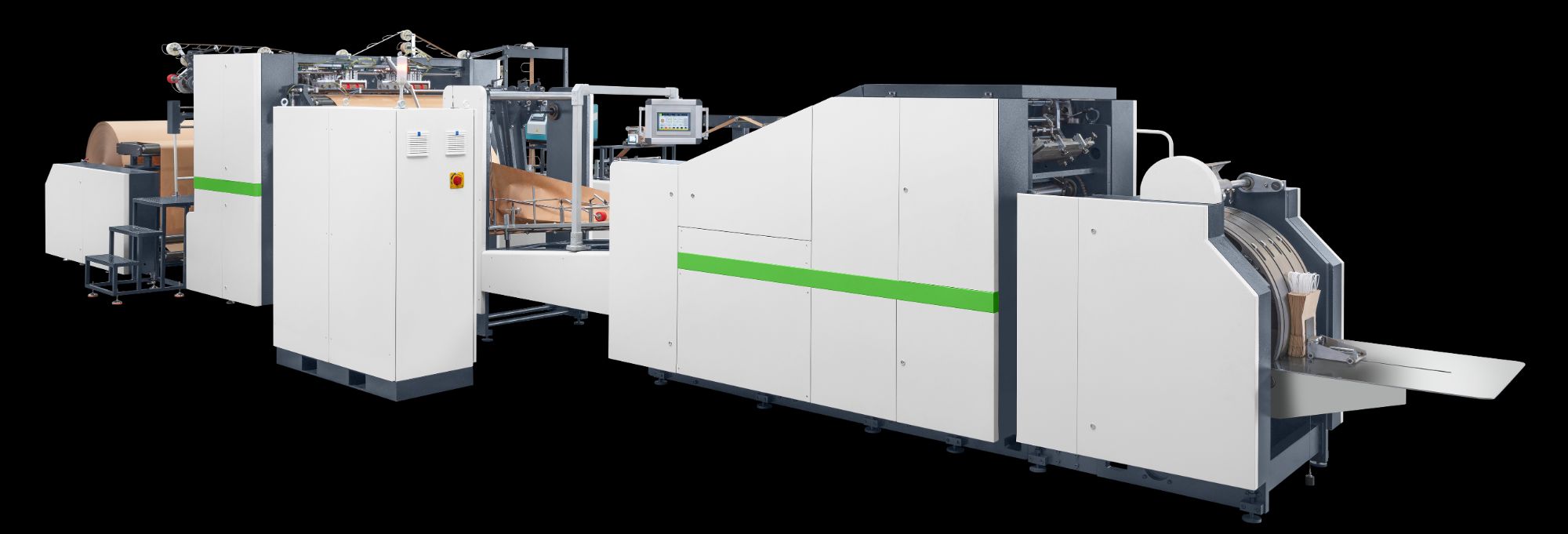
Finding the right paper bag machine can make or break your packaging line. ROKIN has been quietly redefining what efficiency means in this space—combining speed, precision, and durability in ways that most suppliers overlook. But what exactly sets their machines apart from the dozens of options flooding the market? The answer lies in a few design choices that most buyers never think to ask about. In this guide, we'll unpack what makes a paper bag machine truly efficient, and why ROKIN keeps coming out on top in real-world production environments.
Where the Real Throughput Gains Hide in Paper Bag Lines
Most plant managers chase speed by bolting on faster motors or squeezing cycle times, but the biggest lever in a paper bag line often sits in the shadows between machines. It is the accumulated idle time at transfer points, the half-second pauses waiting for glue to set, the misfed blanks that jam a folder for twenty seconds at a stretch. These small losses rarely show up on a standard OEE dashboard, yet they quietly eat fifteen to twenty percent of nominal capacity. Fixing them usually costs nothing in capital, just a shift in how operators stage materials and clear minor faults without stopping the whole line.
Look closely at any high-volume bag converting operation and you will find that the named machine speeds are almost never the constraint. The real bottleneck is the rhythm between stations. A folder rated at four hundred bags per minute still needs a steady, gap-free supply from the upstream printer or unwinder. If that supply stutters even three percent of the time, downstream stations run dry, operators start compensating with manual feeds, and the entire line settles into a slower, jerky cadence. Throughput gains hide in smoothing those micro-interruptions, not in pushing any single motor harder.
The most reliable wins come from observing the line with a stopwatch and a notebook, not from a vendor's throughput promise. Track every stoppage under ten seconds for a full shift. You will find that most of them trace back to inconsistent paper tension, worn feed rollers, or a sensor positioned too close to a dust cloud. Addressing these root causes often yields a five to ten percent gain in real output with zero new equipment. That is where the hidden throughput lives, in the quiet correction of small, repeated frictions that no one has ever bothered to measure.
Material Feed Consistency as the Foundation of Speed
When filament diameter drifts or pellet feed rates fluctuate, the entire process has to throttle back. A printer or extruder that encounters uneven material delivery will compensate by slowing extrusion, adjusting temperatures, or pausing altogether. Speed, in this context, isn't about motor power or gantry acceleration—it's about whether the material arrives at the nozzle in a predictable rhythm.
Systems that prioritize feed consistency often see speed gains that have nothing to do with raw hardware upgrades. A steady, uninterrupted supply lets the machine run at its true mechanical limit without triggering defect-related slowdowns. This shows up clearly in high-volume additive manufacturing, where a 5% variation in pellet feed can force operators to cut print speed by 20% or more just to avoid voids and layer delamination.
The practical takeaway is simple: before chasing faster motion systems, verify that your material feed can hold up under sustained load. Upgrading hoppers, drives, or sensing loops usually costs less than a new motion platform but delivers more reliable throughput. Once feed becomes boring and predictable, speed stops being a risk.
Bag Styles That Demand Different Sealing and Folding Approaches
Not every bag can be sealed the same way. Flat pouches, for instance, want a straightforward fold-over flap or a simple heat seal across the top, while stand-up pouches need a bottom gusset that stays tucked and a top closure that doesn’t crush the structure. The shape dictates where stress lands when the package is handled, so sealing has to work with those lines of tension instead of against them.
Side-gusseted bags add another layer of complexity. If you fold the side pleats inward before sealing, you get a tidy brick-like package that stacks well, but the seal needs to be placed just above the gusset fold to avoid trapping air. For block-bottom bags, the approach changes again—often the top corners are folded back and the seal runs diagonally to create a flat, shelf-ready face. You can’t just run a straight bar sealer across every style and expect the same result.
Even within the same family, material thickness and fill level shift the folding method. A bag half full of coffee beans will fold differently than one stuffed with loose leaf tea. The key is to read the bag's natural creases and let those guide the seal line, rather than forcing a generic fold.
Automation Features Worth the Extra Investment—and Two That Aren't
When you're comparing automation platforms, the base packages all promise similar things: trigger-based workflows, some level of data syncing, and a dashboard. But a few features quietly separate the tools that actually reduce your daily workload from the ones that just add another tab to keep open. Conditional branching that adapts to real-time data—not just simple if-this-then-that—is worth paying for. You want an automation that can check inventory levels, customer history, or team availability, then reroute a task without needing a human to step in. The same goes for error handling that's baked into the core, not bolted on. A system that retries failed steps, pauses gracefully, and notifies the right person with context saves more hours than any flashy template gallery ever will.
Similarly, invest in automation that speaks your other tools' languages natively. If your CRM updates trigger a chain in your project management software, and that in turn logs a note in your help desk, the automation needs to handle messy field mapping, duplicate records, and timing gaps. Cheaper platforms force you to use middleware for this, and that middleware becomes a silent tax on every workflow you build. The feature is less about one big integration and more about the quiet reliability of small ones: a date format that never breaks, a custom field that doesn't get dropped, a loop that doesn't stall at step three. You'll know it's worth the extra cost the first time you don't have to rebuild a Zap after a minor UI update.
On the flip side, two features rarely justify their price tag. First, the natural-language chatbot builder that promises to understand your team's slang and hand off to automation. Unless you're running a high-volume support desk with very predictable queries, you'll spend more time training it than it saves. Second, the "advanced analytics suite" that auto-generates charts from your automation logs. Most teams glance at those once, then go back to their own reporting tools. Skip both, and put that budget toward the boring reliability features—they're the ones that keep working when you're not watching.
Floor Space and Layout Constraints Most Spec Sheets Ignore
When you compare spec sheets side by side, the numbers often look nearly identical. Yet step into the actual room and everything changes. A machine that fits on paper leaves no room to open a door, slide out a tray, or kneel down for routine access. Manufacturers love to quote the footprint, but they rarely mention the swing radius of a control panel or the extra inches needed behind the unit for cabling and airflow. Those missing inches are exactly where real installations go wrong.
Look beyond the stated width and depth. Ask about clearance for maintenance, the direction doors and drawers open, and whether the unit can be placed against a wall or needs air gaps on all sides. Some layouts demand a straight approach for service while others allow side access. If your space has pillars, low ceilings, or uneven flooring, those constraints matter more than the headline dimensions. A tape measure used only on the machine itself tells you little about whether it will actually work in your space.
Also think about how people move around the equipment. Even a compact unit can feel cramped if it blocks a walkway or forces technicians into awkward positions. The best way to test this is to mark out the full clearance envelope on the floor, not just the base footprint. Add the reach needed for adjustments, the swing of access panels, and the path for pulling out consumables. Only then can you see whether a spec sheet's tidy dimensions translate into a usable layout.
Preventive Maintenance Routines That Keep Output Steady
Most equipment failures don't announce themselves with a bang—they creep in as small drifts in performance that get ignored until a line stops. A solid preventive maintenance routine flips that dynamic. Instead of reacting to breakdowns, you schedule inspections based on actual usage hours, vibration signatures, or thermal patterns. For example, checking belt tension every 400 hours of run time or swapping filters when pressure differentials rise beyond a set point keeps machines in their sweet spot. The goal isn't perfection; it's avoiding the erratic dips that force unscheduled downtime and scramble your production schedule.
What separates a useful routine from a binder full of checklists is calibration. Too many teams either over-maintain—replacing parts that still have life—or under-maintain, waiting for a failure. One practical approach is to track mean time between failures for each asset and adjust intervals accordingly. If a conveyor motor lasts 8,000 hours before bearing wear shows up, you don't need to tear it down at 5,000. Conversely, if a pump seal starts leaking at 2,000 hours under high-temperature loads, your routine should catch that early. This kind of data-driven tuning keeps output steady without wasting labor on unnecessary tasks.
Another layer that often gets missed is environmental consistency. Preventive maintenance isn't just about tightening bolts—it's about controlling heat, dust, moisture, and vibration around the machine. A spindle that runs cool because you schedule coolant flushes every two weeks will hold tolerances longer than one that overheats irregularly. Similarly, cleaning electrical cabinets to prevent dust buildup avoids intermittent faults that are hard to diagnose. When these small routines become part of the shift handover—documented with photos and timestamps rather than vague notes—the whole line moves from firefighting to a predictable rhythm.
FAQ
Look for servo-driven forming, quick size change systems, and consistent glue application. Machines with automated tension control and real-time fault detection tend to hold speed without producing rejects.
Yes, many newer machines use digital size presets and tool-less adjustments. A good system can switch between bag widths and lengths in under ten minutes, keeping small-batch orders profitable.
They use less energy per bag through heat recovery and idle mode, reduce paper scrap with precise cutting, and require fewer manual interventions thanks to sensor-based monitoring.
Automation handles material feeding, bottom forming, and stacking with very little human input. This reduces labor bottlenecks and keeps output steady across shifts, especially for flat and satchel bags.
Paper bags are easier to recycle in many regions, and new machines produce them faster with less glue and energy. That makes them a practical choice for businesses trying to cut plastic without slowing down lines.
Daily cleaning of rollers and glue nozzles, weekly inspection of cutting blades, and monthly lubrication of drive chains keep failures low. Many operators also track cycle counts to replace wear parts before they cause jams.
Compare the machine's output per hour, scrap rate, and labor hours needed per 1,000 bags against your current setup. A slightly higher upfront cost often pays back within a year if changeover time drops sharply.
Recycled kraft and virgin fiber papers from 40 to 120 gsm work well. Avoid papers with high moisture content, since they can cause curling or misfeeds on high-speed rotary and handle-attachment units.
Conclusion
Real throughput gains on a paper bag line rarely come from a single advertised speed rating. They show up in how the machine handles changeovers, web tension, and the split-second synchronization between gusseting, folding, and sealing. If the material feed drifts or the roll brake hunts, even a nominally fast machine loses output to wrinkles and jams. Consistent tension from unwind to forming is the quiet backbone of speed. Bag style also dictates the sealing and folding strategy—flat bags tolerate simpler hot melt patterns, while SOS or pinch-bottom constructions need precise crease control and staged adhesive application. Ignoring these differences leads to weak seals or crooked folds that no downstream counter can fix.
Worthwhile automation addresses real labor bottlenecks: servo-driven size changes, automatic splice detection, and jam recovery that resets without operator intervention. But two frequent upsells—vision inspection on low-value stock and robotic case packing for short runs—often don't pay back. Floor layout matters more than most spec sheets admit. A machine that needs three meters of clearance for reel loading or a side-mounted stacker can force costly mezzanine work. Finally, preventive maintenance keeps output steady: daily roller cleaning, monthly belt tension checks, and documented knife sharpening intervals prevent the slow degradation that quietly eats capacity. The best machine isn't the fastest on paper; it's the one that holds its pace through a full shift without drama.
Contact Us
Contact Person: CARA
Email: [email protected]
Tel/WhatsApp: +8619519778302
Website: https://www.rokinmachinery.com