

Best PVC Foam Board Hot Stamping Foil Manufacturer for Premium Surface Finishes
2026-11-16
Choosing a hot stamping foil for PVC foam board often comes down to one question: will the finish still look premium after cutting, creasing, and handling? Most suppliers promise metallic brilliance but deliver fading, peeling, or uneven coverage. That's where GUMPTION stands apart. As a manufacturer focused on high-end surface finishes, GUMPTION engineers foil that bonds cleanly to foam board, holds fine detail, and resists the wear that ruins lesser products. In this article, we'll explore the key factors that separate a reliable supplier from a costly compromise.
What Makes Foil Adhere Cleanly to PVC Foam Board
Clean adhesion starts with the surface, not the adhesive. PVC foam board often carries a faint film of manufacturing residue, dust, or oils from handling. A quick wipe with isopropyl alcohol and a lint-free cloth removes most of that interference. Let the board dry completely before bringing the foil near it, because even a thin layer of moisture can turn into tiny bubbles under pressure.
The adhesive itself needs to match the low surface energy of PVC. Standard acrylic or rubber-based transfer tapes often work, but look for ones rated for plastics or polyethylene. Apply the foil with steady, even pressure using a roller or squeegee, starting from one edge and working outward. This pushes out air pockets before they become permanent wrinkles.
Temperature and patience also play a role. Cold adhesive is stiff and grabs poorly, so keep the board and foil at room temperature for a few hours before bonding. Once applied, let the assembly rest for a day before trimming or bending. That dwell time lets the adhesive flow into the board's microtexture, which is what turns a temporary stick into a clean, long-lasting bond.
Custom Metallic Shades That Match Brand Requirements Exactly
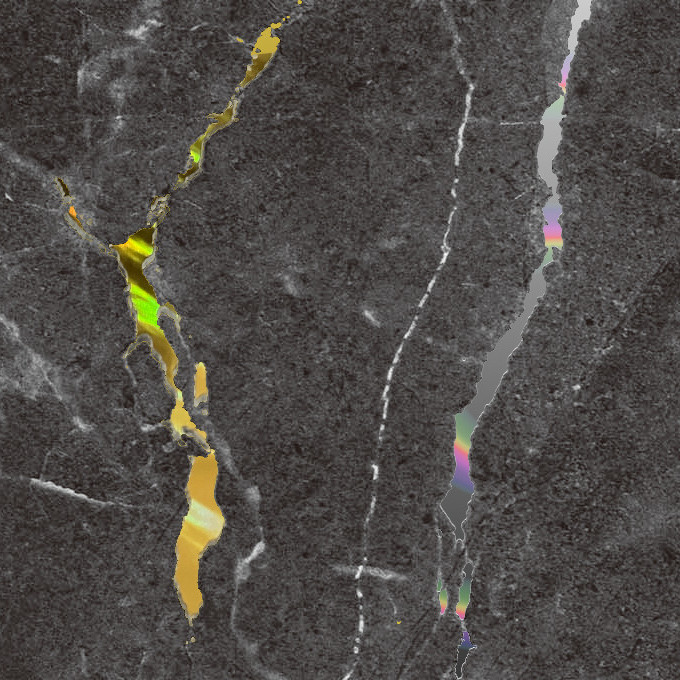
Brand colors in metallic finishes are tricky because metal flakes shift under different light. We don't rely on standard swatches; every custom shade starts with a physical sample or a precise spectral reading. Our lab then adjusts pigment load, flake size, and base coat tint in small batches until the finish matches your corporate palette under daylight, showroom lighting, and indirect indoor light.
The result is a metallic color that stays consistent across different production runs and material types, whether you need anodized aluminum, powder-coated steel, or a flexible polymer film. We document each formula in a locked reference standard, so your future orders carry the same hidden sparkle and deep tone without drift. That way your packaging, hardware, or product casing reads as one unmistakable brand line.
How Release Coatings Prevent Foil Tearing on Dense Cores
Dense cores present a tricky surface for thin aluminum foil. The high contact pressure and minimal porosity can create spots where the foil grabs the core instead of peeling away cleanly. A release coating changes that dynamic by creating a uniform, low-energy boundary. This lets the foil slide off with steady tension rather than snagging on microscopic ridges or uneven fiber ends.
Without a barrier layer, foil tends to cold-weld or mechanically key into the core surface under winding tension. Release coatings fill those tiny voids and smooth out the topography, so the adhesive-like grip never gets a chance to form. At the same time, the coating reduces the coefficient of friction enough to prevent sudden jerks during unwinding, which is where most tearing starts.
In practice, this means fewer web breaks, less edge damage, and a more predictable unwind profile on high-speed converting lines. Operators notice the difference most when working with thin gauges or denser core materials that normally amplify any surface irregularity. The coating doesn't need to be thick—just consistent—to keep the foil intact from the first wrap to the last.
Temperature Profiles That Stop Foam Board Warping Mid-Stamp
The warping that shows up halfway through a stamping run rarely comes from a single hot spot. It builds from the way heat moves unevenly across the board as the die closes. A common fix is to flatten the entire platen temperature, but that ignores how foam releases stress at different rates depending on thickness, density, and the dwell time. Watching the board curl right after the first few hits usually means the center is cooling faster than the edges, or the bottom face is lagging behind the top. Instead of chasing a perfectly uniform readout, start by profiling the heat from edge to center in three zones, then drop the outer zone by about 8 to 12 degrees Fahrenheit below the middle. That slight gradient lets the perimeter stay slightly softer, so it can flex and follow the die without lifting or puckering.
A second profile that works well for closed-cell foams is a two-stage ramp rather than a single soak. Bring the board up to roughly 70 percent of the final stamping temperature slowly, hold it there for a few seconds so the core catches up, then spike the last stretch right before contact. This prevents the surface from getting scorched while the interior is still cold, which is exactly the condition that makes one side expand and bow upward. Many operators mistake that bow for a pressure problem and crank the tonnage, which only creases the foam. The real fix is taking the extra few seconds to let the temperature front pass through the entire thickness, then letting the quick final rise do the forming work. When the profile is set this way, you can run the same sheet through repeated hits without watching the corners gradually lift off the platen.
For thicker boards above half an inch, a third profile cuts warping almost entirely by adding a controlled cool-down pulse right after the stamp. Instead of opening the press hot and letting the part sit in ambient air, hold the die closed for about two seconds with a brief drop of 15 to 20 degrees on the lower platen. This sets the bottom surface while the top is still warm, balancing the internal stress before the part can twist. It sounds counterintuitive because you are slowing the cycle, but the reduction in rejected warped parts more than pays back the lost time. Operators who switch to this profile often find they can reduce the overall platen temperature by a few degrees as well, since the foam no longer needs to be overheated to stay flat during the stamp.
Long Production Runs Without Color Shift or Gloss Variation
Consistency over thousands of cycles is where many coatings fall short, but this formulation holds its own. Pigment dispersion stays uniform through extended machine time, so the hue you approve on the first part matches the five-thousandth. Gloss levels don't drift either—no flat spots developing as temperatures fluctuate or solvents evaporate at different rates. The chemistry resists the gradual breakdown that typically dulls finishes after repeated exposure to heat and abrasion.
Operators notice the difference when they stop making mid-run adjustments. There's no creeping tint change that forces a recalibration of mixing ratios, no patchy sheen that requires buffing out between shifts. The film builds and cures with the same optical profile from morning to night, even when line speeds vary or ambient humidity shifts. That stability comes from carefully selected resins and stabilizers that don't segregate or oxidize under sustained stress.
What this means in practice is fewer rejected parts, less downtime for color matching, and a finish that stays true to the reference panel. It's the kind of reliability that lets a production schedule run uninterrupted, confident that the last piece off the line will sit beside the first without a visible mismatch.
Surface Effects Beyond Standard Gold: Matte, Brushed, Holographic
Matte gold trades the mirror shine for a soft, almost velvety glow that feels quiet and deliberate. Light settles on it rather than bouncing off, which makes edges and engravings easier to read. It's a finish that suits pieces meant to be touched often, since it hides fingerprints well and develops a gentle character over time.
Brushed gold carries fine, parallel lines that catch the eye without shouting. Those subtle grooves break up reflections into a fine grain, giving the surface a sense of motion even when it's still. It works especially well on bands and bezels, where the texture adds depth and makes small scratches from daily wear far less noticeable.
Holographic finishes go beyond a single tone, shifting from warm champagne to cool silver and even hints of blue or violet as the angle changes. This play of color comes from micro-etching or special coatings rather than plating alone, so no two moments look exactly the same. It's a bolder choice, but one that keeps a familiar gold base while adding an unexpected, almost liquid dimension.
FAQ
We formulate our foil with a specialized release layer and high-grade pigments that transfer crisply onto PVC foam board without tearing or ghosting. The finish holds up under heat and handling, and we tune the adhesive to match the board's surface energy, so you get clean edges even on textured profiles. That combination isn't something you find in generic foils.
You'll see it a lot in furniture edging, picture frames, architectural moldings, and display fixtures. Sign makers also use it for dimensional lettering and decorative panels. Basically, any application where PVC foam board needs a metallic, woodgrain, or high-gloss finish that looks like an integral part of the material rather than a sticker.
The key is a low-temperature release coating that activates before the foam core gets soft. We set the stamping parameters so the surface layer melts just enough to bond, while the underlying foam stays rigid and intact. You don't get warping or cell collapse because the heat dwell time is very short and the pressure is distributed evenly.
Yes, we routinely match Pantone references, replicate woodgrains or brushed metals, and slit rolls to widths from a few millimeters up to 1.6 meters. If you send a physical sample, we can reverse-engineer the finish and produce a trial roll before you commit to a full production run.
Look closely at release consistency, pigment density, and whether the manufacturer tests on actual PVC foam board rather than just paper. Ask for roll-to-roll color stability data and request a sample with your exact board grade. A good supplier will also ask about your stamping machine's speed and temperature range before recommending a foil.
We run every batch through a spectrophotometer and a peel test on PVC foam board samples, not just film. Each master roll gets a unique lot number tied to raw material batches, so if a question comes up six months later we can trace it back. Operators also pull samples every 500 meters during slitting to check for coating voids or splices.
For indoor use, standard foils work well. For outdoor exposure, we offer a UV-stable version with higher pigment loading and a tougher top coat that resists fading and abrasion. You'll want to specify the outdoor grade if the finished board will see direct sunlight or frequent cleaning.
Stock sizes ship within 3 to 5 business days. Custom color matching or pattern development usually takes 10 to 14 days, including a sample approval step. For very large orders, we can work out a phased delivery schedule so you don't have to warehouse everything at once.
Conclusion
Getting foil to bond cleanly with PVC foam board without lifting or tearing is less about luck and more about engineered chemistry. The right manufacturer starts by tuning the adhesive layer to the board's closed-cell surface, which can be tricky because dense cores tend to trap heat and gas during stamping. A carefully selected release coating allows the foil to separate from the carrier at exactly the right moment, preventing the ragged edges or micro-tears that show up on dense foam. Temperature control plays an equally important role. Rather than relying on a single fixed setting, production-grade equipment uses staged heat profiles that bring the board up to stamping temperature gradually. This avoids the sudden thermal shock that causes warping mid-stamp, especially on larger panels or thinner gauge foam board. The result is a crisp transfer that looks like it was painted on rather than pressed on, with no visible start-stop marks.
Color consistency over thousands of impressions is where many suppliers stumble, but a capable manufacturer builds repeatability into the process from the start. Custom metallic shades can be matched to a brand's Pantone or RAL targets without drifting into a generic "gold" or "silver" look. During long runs, high-grade pigments and stable resin systems keep gloss levels and hue from shifting, so the first board and the five-thousandth board sit side by side without a visible difference. Beyond traditional metallics, the same line can produce matte, brushed, and holographic effects that give products a distinct shelf presence. This flexibility means a furniture edge band, a display panel, or a signage piece can carry a finish that feels intentional rather than off-the-shelf. When all these factors align—clean release, warp-free stamping, and tight color control—the manufacturer earns the label of best for premium PVC foam board hot stamping foil.
Contact Us
Contact Person: Hsien
Email: [email protected]
Tel/WhatsApp: +86 57387072688
Website: https://www.gsfilm.cn