

Bike Carbon Timing Belt Factory Delivers High-Strength Carbon Belts for Modern Bicycles
2026-11-26
Not long ago, carbon belts were little more than a curiosity in bicycle drivetrains. Today they are quietly replacing chains on everything from gritty commuters to high-end belt-drive builds. At the center of that shift is Sanxing, a factory turning out high-strength carbon timing belts that promise less stretch, lower noise, and far less maintenance than the metal alternative. This post looks at why modern bicycles are making the switch, what separates a dependable carbon belt from the rest, and how Sanxing has become a name worth watching in the belt-drive market.
Carbon Timing Belts Are Quietly Taking Over Modern Drivetrains
Open a modern hybrid transaxle or a high-end e-bike motor and you are more likely to find a slim carbon-reinforced belt than a chunky chain. The switch does not announce itself with badges or marketing fanfare. It shows up as a narrower front cover, fewer oil seals, and a drive system that runs noticeably quieter at cold start. Carbon timing belts have moved out of prototype labs and into production because they solve several packaging and NVH problems at once.
The real difference is creep. A conventional rubber belt slowly stretches under heat and load, so tensioners end up chasing tooth timing over the life of the belt. Carbon cords barely elongate, which keeps cam or rotor timing stable without constant compensation. That also means engineers can delete some of the hardware normally used to manage slack. On a chain drive, you need lubrication, guides, and a sturdy housing to contain the noise. A carbon belt can run dry in a lighter, tighter envelope, which matters just as much in a mid-drive e-bike as it does in a downsized engine.
Service intervals are shifting too. Some automakers now treat the belt as a life-of-engine part, while bicycle and motorcycle brands push longer replacement windows than riders expect. The trade-off is alignment. Carbon belts do not forgive a worn bearing or a slightly cocked pulley the way a chain can, so installation and diagnostic habits have to change. For now, the shift is quiet, but the next time a timing cover comes off, do not be surprised to see a row of clean black teeth instead of metal links.
Inside the Production Line for High-Strength Carbon Belts
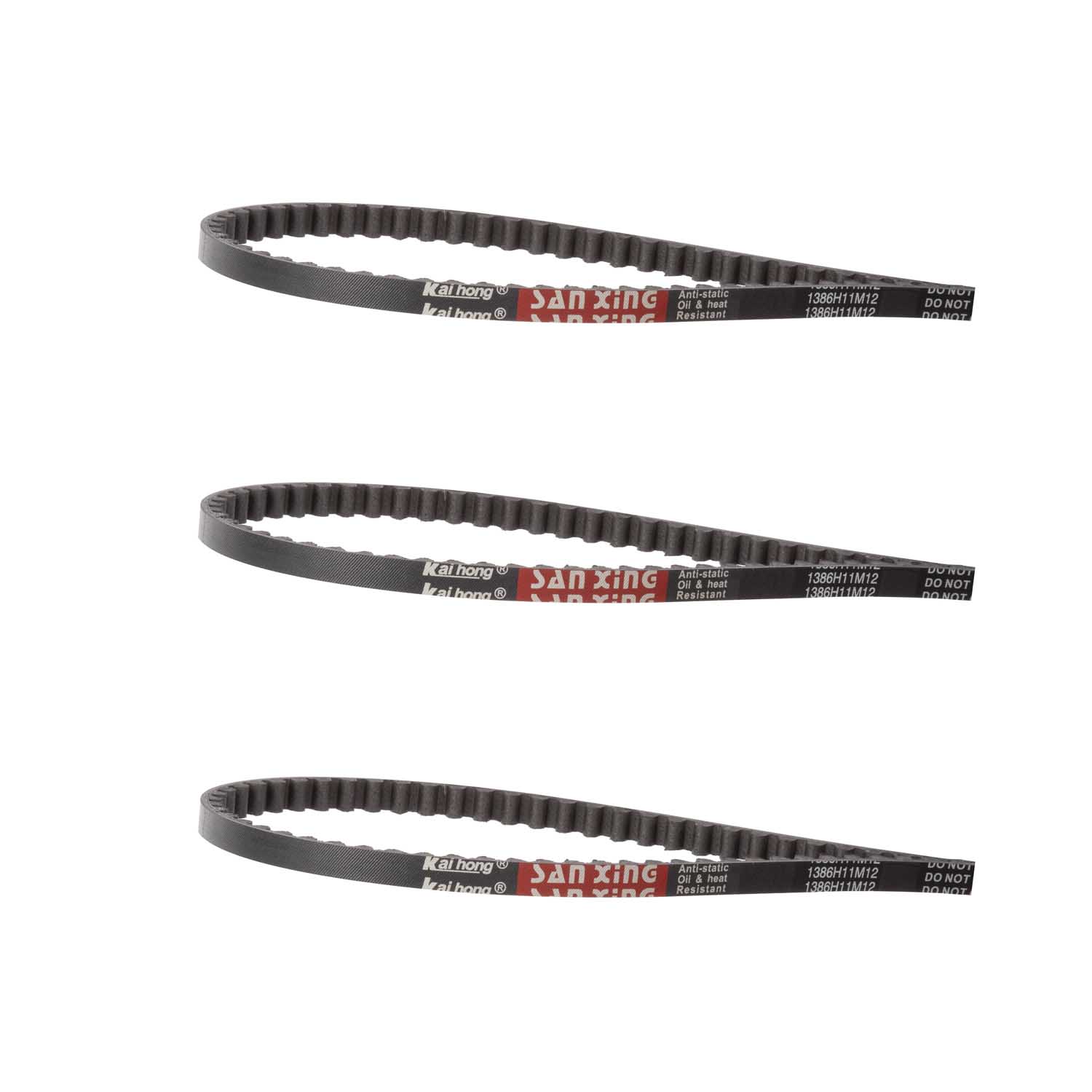
Walking the length of the line, the first thing that stands out is how tightly the fiber tension is controlled. Carbon tows unwind from a creel arranged in staggered rows, each spool fitted with its own brake so a single slack filament never reaches the resin bath unnoticed. The impregnation zone runs hot and close, pulling the spread fibers through a narrow gap where epoxy is worked into the bundle under pressure rather than simply coated on the surface. Operators monitor the squeeze-out point more than the gauges, because the way excess resin beads along the edges tells them more about wet-out than any readout.
Further down, the belt enters a series of heated forming plates that set the cross-section and align the fibers before the material reaches the cooling drums. Here the difference between a stable product and scrap often comes down to a few degrees of temperature drift or a slight change in line speed. After cooling, the strip passes under a laser micrometer and a camera array that checks width, thickness, and surface voids in one continuous pass. Finished rolls are wound onto cores with controlled back tension, then tagged with batch and position data so a defect found later can be traced back to the exact spool and shift it came from.
Why Riders Are Ditching Oily Chains for Clean Belt Systems
The shift away from greasy chains isn't just about keeping your hands clean after a roadside repair. Riders are discovering that a belt drive eliminates the constant ritual of degreasing, re-lubing, and wiping black sludge off the rear wheel. Without oil attracting grit, the entire drivetrain stays noticeably quieter and the bike remains presentable even after wet or dusty commutes. For anyone who stores a bike indoors or carries it on a car rack, that absence of chain tattoos on pant legs and upholstery quickly becomes the deciding factor.
Beyond cosmetics, there's a practical longevity argument. A sealed belt doesn't stretch the way a metal chain does, so you're not chasing derailleur adjustments or replacing worn cassettes and chainrings at the same rate. The belt's teeth engage the rear sprocket without the metal-on-metal wear that produces the classic "chain growl." Riders who log consistent mileage in rain or sandy conditions often mention that their first belt setup paid for itself simply because they stopped buying degreaser, brushes, and replacement chains every few months.
Then there's the riding feel itself. A well-tensioned belt transfers power with a direct, almost silent engagement that makes stop-and-go city riding feel less mechanical. There's no clatter when coasting over rough pavement and no delayed pickup from a stretched link. That smoothness, combined with the near-zero maintenance routine, is why so many commuters and touring cyclists now view an oily chain as an old habit they don't miss.
The Tensile Strength Story Behind Carbon Timing Belts
Carbon timing belts did not begin with a datasheet value; they began with a materials problem. Rubber and polyurethane belts reinforced with steel or glass carried drives well enough until higher speeds and tighter positioning tolerances exposed a basic weakness: stretch. Carbon was borrowed from applications where elongation was not an option, and it entered belt construction as a tension member that barely moves under load. That low-strain character is what gives the belt its real tensile strength story, not just the peak force it can survive.
The tensile strength itself matters less than its consistency. In a carbon cord, thousands of filaments share the pull almost equally, so the belt does not develop soft spots under repeated acceleration. Where steel-reinforced belts gradually elongate and force technicians to re-tension, carbon holds its length and keeps tooth engagement predictable. For timing applications this means the pulley and belt stay in phase, which is the entire point of a synchronous drive.
There is another part of the story that rarely appears in catalogs: the bond between the carbon cord and the surrounding jacket. A strong fiber only helps if it is locked into the belt body so load transfers evenly from tooth to cord and back. Impregnation, twisting, and curing have to be controlled tightly. When that is done well, the belt acts like one solid tension band rather than a collection of strong fibers slipping inside a polymer shell. The published tensile figure is really the result of that hidden process, not just the raw material.
Lightweight Frame Design Gets a Boost From Carbon Belts
Carbon belts aren't just a weight-saving gimmick—they change how the frame behaves under load. Instead of relying on bulky solid sections to add stiffness, the woven straps distribute tension along specific paths. That means engineers can shave material from areas that don't carry much stress while keeping the chassis rigid where it matters most. The result is a structure that feels both taut and forgiving, without the usual penalty of extra kilograms.
On rough surfaces, the difference is immediate. The belts absorb high-frequency vibrations before they reach the rider, yet the frame never feels vague or rubbery. Traditional lightweight designs often sacrifice stability for gram-counting, but the carbon straps create a kind of tuned resilience. Corners hold their line, and hard braking doesn't induce the flexing wobble you'd expect from a pared-down spine.
Maintenance also becomes simpler. Because the belts are replaceable and the surrounding frame members can be thinner, a damaged section doesn't automatically mean a full rebuild. Riders can swap out a worn strap in minutes, keeping the overall weight low without living in fear of every pothole.
Real Miles on Carbon Belts From Daily Commuters and Weekend Racers
The commuters I've talked to rarely bring up the belt itself, which is probably the point. They ride through winter slush, gravel shortcuts, and the occasional curb, and the drivetrain just stays quiet. What does come up is how little they think about maintenance: no chain lube stains on work pants, no weekly cleaning ritual, just a quick wipe when enough grit builds up around the rear sprocket. The real miles add up in unglamorous ways—grocery runs, daycare pickups, damp basement bike parking.
Weekend racers put a different kind of load on the same hardware. Short, hard efforts and repeated sprints expose belt tension and alignment issues that casual riding never does. A belt that felt fine on a Tuesday commute can chirp under a full standing start at Saturday practice. Once sorted, though, it stays sorted longer than a chain setup, and the lack of drivetrain noise becomes more noticeable when you're already breathing hard.
The gap between these two groups is smaller than spec sheets suggest. Both want predictable engagement when the light changes or the race kicks, and both notice when a system adds friction—literal or mental. Carbon belts earn their keep not by being exotic, but by fading into the background across thousands of miles that include rain, sweat, potholes, and the occasional poorly timed shift.
FAQ
The carbon reinforcement gives them a much higher tensile strength without adding weight, so they resist stretching and wear better than ordinary polyurethane belts.
Yes, they are built to handle repeated high tension and abrasive conditions. Riders use them on city streets, gravel paths, and loaded touring bikes without babying the drivetrain.
You need a frame with an opening in the rear triangle or an elevated chainstay design because a continuous belt cannot be split and rejoined like a chain.
There is no oiling or degreasing involved. You mostly wipe the belt down and occasionally check tension and sprocket wear, which is far less messy than chain upkeep.
Carbon belts hold their length exceptionally well. You may need tiny tension adjustments after the first few rides, but significant stretch is not a normal issue.
It is possible if your frame has a break in the rear triangle and you are willing to replace the crankset, rear sprocket, and possibly the hub or bottom bracket to get proper alignment.
Commuter bikes, touring rigs, gravel bikes, and urban singlespeeds tend to benefit the most because they reward low maintenance, quiet running, and long service life.
They often outlast several chains when kept clean and properly tensioned, though sprocket condition and riding environment affect the actual lifespan.
Conclusion
At a time when drivetrain noise and chain upkeep still shape most rides, a growing number of frame builders are quietly turning to carbon timing belts from a factory that treats tensile strength less as a specification and more as a fixed principle. The production line runs each belt through tension-testing stations before it ever reaches a pulley, checking how the carbon cord layup holds under repeated load. That process shows up in the finished product: a reinforced belt that resists the stretch-and-wear cycle riders have long accepted from metal chains. Engineers inside the plant describe the work as building a tension member first and a belt second, which helps explain why modern drivetrains are moving toward clean, belt-driven systems without much noise or drama.
Out on the road, the change becomes more personal. Daily commuters mention keeping work clothes free of chain oil, while weekend racers notice a direct feel from the first hard pedal stroke. After several hundred miles, both groups tend to point at the same detail: no black grime collecting around the bottom bracket. Since a carbon belt weighs less than a comparable chain setup, frame designers can also trim material around the dropout and chainstay without sacrificing stiffness. Real mileage from commuters and club riders keeps returning to quieter acceleration, fewer roadside adjustments, and no constant lubrication. That kind of reliability does not happen by chance; it starts with a factory that treats carbon belts as the main path forward rather than a specialty option.
Contact Us
Contact Person: Becky
Email: [email protected]
Tel/WhatsApp: 0086-15168665227
Website: https://www.sxbelts.com