

Bulk Energy Storage Cabinet Design Trends Shaping Reliable Energy Management
2026-11-16
Scaling energy storage isn't just about adding more cells — it's a test of how well the cabinet itself manages heat, faults, and years of daily cycling. The latest bulk energy storage cabinet designs are moving far beyond sheet metal enclosures, with innovations in thermal management, modular architecture, and fire suppression reshaping what reliable energy management actually means. For anyone planning large-scale storage, these aren't cosmetic updates; they're the difference between a project that meets its availability targets and one that quietly underperforms. At UNC, we're tracking the details that matter most when uptime is non-negotiable. Here's a closer look at the trends setting the pace.
Why Thermal Runaway Containment Now Dictates Cabinet Shape
A decade ago, cabinet dimensions followed battery module footprints, busbar routing, and cooling loop layouts. Thermal runaway was addressed with added sensors or a larger vent at the end of the design. That order no longer works. Today the pressure pulse, particle load, and flame jet from a failing cell are intense enough that the enclosure itself has to shape the event. Flat, wide enclosures tend to trap hot gases in corners and create unpredictable flow paths, so the outer envelope now starts with the question of where the effluent will go.
Narrow upright cabinets have gained ground partly because vertical exhaust paths can be made short and direct. A sloped top cover or a full-height rear vent turns the rising gas into a controlled release instead of letting it circulate around modules. In low-profile cabinets, the same problem gets harder: horizontal gas spread heats neighboring cells faster. Designers respond by narrowing the module bays, adding internal deflectors, or placing the rupture panel on the end wall where the gas naturally travels. These choices change the cabinet profile as much as any electrical layout decision.
It also reshapes how cabinets sit next to each other. A cabinet that vents upward may need less side clearance, while one that directs flames toward a rear wall forces a different aisle width. That means the shape is no longer just a container for batteries; it is an active part of the suppression strategy. Some designs now use stepped side walls or angled top edges not for aesthetics, but to keep a failing module from preheating the unit beside it. The result is a cabinet silhouette dictated less by rack dimensions and more by the path of least harm.
The Shift to Hot-Swappable Modules in Dense Storage Cabinets
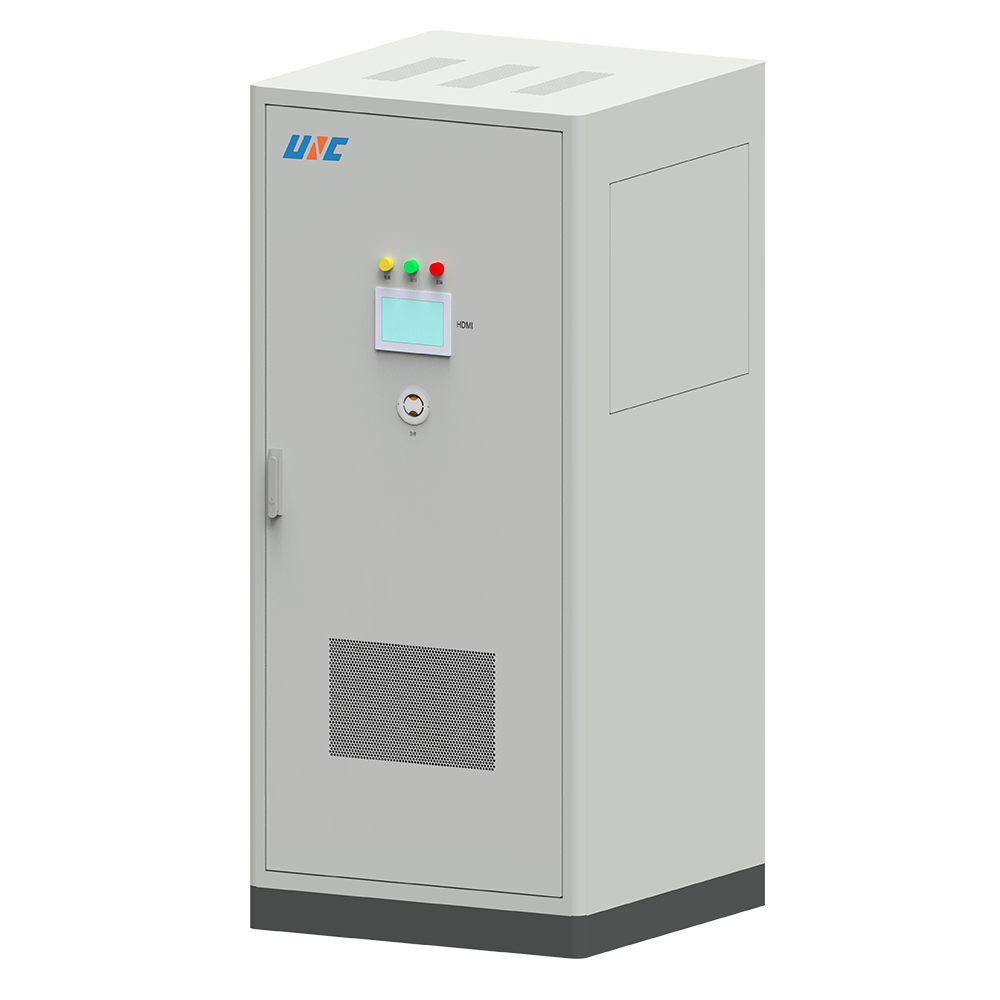
A dense storage cabinet used to turn routine hardware failures into small engineering projects. With dozens of drives stacked behind a single bezel, swapping a bad disk often meant powering down a whole shelf or wrestling a heavy chassis out of the rack. Hot-swappable modules have quietly erased most of that burden. Carriers now guide themselves into backplane connectors, while power supplies and fans release with a simple lever instead of a screwdriver.
The real change is in how the enclosure handles a live replacement. Sensors detect a newly seated module before full power is applied, and onboard controllers stagger spin-up so the rest of the array never sees a sudden demand spike. Status indicators on each carrier remove the guesswork, showing whether the part is ready, rebuilding, or failed. That matters in dense layouts where a mis-seated connector can be hard to spot by eye.
Operationally, the shift means fewer scheduled outages and shorter repair trips. A technician can carry one spare tray, slide out the failed unit, seat the replacement, and walk away while the system verifies it. The trade-off is mostly procedural. Labeling has to be exact, and staff need clear authority to pull live hardware. Even so, hot-swap capability has moved from a premium feature to a basic expectation in dense storage.
Corrosion Resistance Becomes a Primary Design Input, Not an Afterthought
Treating corrosion resistance as a primary design input shifts the earliest sketches toward water management, galvanic isolation, and accessible inspection paths. Instead of finalizing load paths first and then asking how to protect them, teams begin by eliminating standing moisture, avoiding trapped crevices, and separating dissimilar metals before detailed stress work starts.
That approach also changes material selection. High-strength candidates that demand aggressive coatings or frequent maintenance can lose ground to alloys with better pitting resistance and repairability, even if their published tensile numbers look slightly lower. The comparison moves from a narrow strength-to-weight ratio toward a broader lifecycle view that includes corrosion allowance, touch-up feasibility, and inspection burden.
The clearest sign of the shift is in the geometry that reaches production. Drain holes, sloped surfaces, sealed faying surfaces, and bolt isolators appear in the first prototype rather than being added after testing exposes corrosion. As a result, late-stage rework drops and the final structure stays much closer to its original mass and stiffness targets.
Sensors Move From Accessories to Built-In Decision Tools
The early wave of industrial sensors did little more than beep when a threshold was crossed. Today that role has flipped. Sensors no longer sit at the edge waiting for a human to interpret a reading. They carry their own logic, their own memory of what normal looks like, and enough processing power to flag anomalies before a shift engineer ever opens a dashboard. In practice this means a vibration sensor on a pump isn't just reporting rpm; it's comparing current harmonics against months of baseline data and quietly escalating only the deviations that matter.
What changed is the collapse of the old division between sensing and deciding. A decade ago you needed a separate controller, a gateway, and a software package to turn raw signals into action. Now the decision tree lives inside the sensor housing itself. A temperature probe on a cold storage line can decide to adjust a valve, log the event, and notify maintenance with a suggested cause, all without a round trip to the cloud. This shift makes the sensor less like a peripheral and more like a resident expert on the machine it monitors.
The practical payoff shows up in places where connectivity is spotty or latency is unacceptable. When a robotic arm begins to draw slightly more current during a specific motion, a built-in model can recognize the pattern as early bearing wear and trigger a slower, safer operating mode in milliseconds. No network round trip, no server queue. The sensor has stopped being a passive witness and become the first link in a chain of automated decisions, one that gets smarter with every cycle it observes.
Designing Around the Service Crew Instead of Only the Rack
Racks are usually treated as the fixed center of a data hall, with everything else arranged around their dimensions. But the people who swap drives, trace cables, and replace power supplies rarely work at rack height alone. Service paths, cart clearance, and lift zones matter as much as rail spacing. When a design starts with the movements a technician makes during a typical shift, the result often looks different: deeper cold aisles, removable side panels, and fewer sharp edges at knee and shoulder height.
Small adjustments tend to remove more friction than a complete layout overhaul. Mounting switches at a height that does not force a crouch or a step stool, leaving space for a tool cart beside the cabinet, and keeping labels readable from a standing position all reduce the physical toll of routine work. These choices also shorten the time spent on site, because the person doing the job does not have to fight the environment before reaching the equipment.
Mass Production Techniques Quietly Enter Storage Cabinet Manufacturing
Walk through most cabinet shops now and you will notice the shift before anyone says a word. Stacks of pre-finished side panels, racks of identical doors, and bins of pre-inserted dowels have replaced the old cutting lists pinned to the wall. The change is less about automation theater and more about repeatable panel sizing, batch drilling, and edge banding lines borrowed from flat-pack furniture plants. It used to be that a storage cabinet was cut, assembled, and finished as a one-off; today, the same face frame or frameless box may pass through four or five stations without a single custom measurement being taken.
That shift has altered how builders think about inventory and labor. Instead of keeping wide rough stock and milling everything after an order lands, shops now keep common board sizes, pre-notch shelf pin holes in batches, and cut joinery on CNC routers before the cabinet is even sold. Hardware mounting plates get pressed into doors ahead of time, and drawer boxes are assembled in small lots so a crew can install a run of storage cabinets in a day rather than a week. The quiet part is that these methods do not announce themselves; the finished unit still looks like cabinet shop work, but the production path behind it has moved closer to a factory floor.
FAQ
Higher energy density leaves limited space for air channels, so liquid cooling pulls heat directly from cell blocks and keeps temperature variation narrow. The added plumbing and leak monitoring require more upkeep, but the gain in thermal stability justifies the complexity in large systems.
Modular layouts allow a failed module or battery tray to be isolated and replaced without taking the whole cabinet offline. That reduces downtime and lets operators upgrade parts of the cabinet as cell generations change, instead of scrapping an entire enclosure early.
They are separating bus sections with insulated barriers, adding fast-acting fuses, and placing arc-detection sensors close to connection points. Some designs also let operators de-energize and rack out a compartment remotely before opening the door, which lowers exposure during routine checks.
String-level control can still leave parallel strings drifting apart, causing circulating currents and uneven aging. Cabinet-level balancing coordinates charge across all racks in the enclosure, which reduces repeated overcharge or deep discharge cycles and recovers usable capacity that would otherwise be locked out.
Outdoor units are moving beyond painted carbon steel toward aluminum-magnesium alloys, stainless composite panels, and weathering steel. These materials improve corrosion resistance and fire performance while cutting weight, though they demand careful sealing and can raise initial cost.
Suppression equipment needs space for agent cylinders, distribution nozzles, and venting paths, so cabinet interiors are often arranged taller and narrower. Blast panels and exhaust routing also influence where modules sit, because gas and pressure must leave the cabinet without pushing flames toward service access points.
Besides voltage, current, and cell temperature, operators now track internal resistance spectra, swelling force, insulation resistance, coolant flow and pressure, door status, and partial discharge. Edge processing turns those signals into early warnings before a fault forces an unplanned shutdown.
Conclusion
Cabinet enclosures are no longer simple steel boxes sized around cell racks; the need to contain a thermal runaway event now drives overall geometry, vent routing, and compartmentalization. Narrow service aisles and thick blast-resistant doors are being traded for designs that direct gas and particulate away from occupied zones while keeping adjacent modules below propagation thresholds. At the same time, hot-swappable module architecture has changed internal layout. Instead of shutting down an entire string for one failed pack, operators can slide out a module without de-energizing the full cabinet, which reduces downtime and lowers arc-flash exposure. This serviceability requirement pushes busbar placements, connector orientations, and locking mechanisms toward the front, leaving the rear wall for thermal barriers and exhaust ducts. Corrosion resistance has also become a primary design input rather than a coating upgrade at the end of the project. Cabinets deployed near coastal substations, wastewater plants, or humid industrial sites now specify sealed seams, stainless or alloyed structural members, and drainage paths that prevent saline dust from pooling at the base.
Sensor packages have moved from optional add-ons to embedded decision tools wired into the cabinet's control logic. Temperature, humidity, off-gas, pressure, and voltage taps are positioned during CAD layout so they capture conditions at the hottest cell surfaces and vent outlets, not just ambient air. Their data feeds derating curves, pre-fault alarms, and maintenance scheduling rather than simply logging trends for later review. The layout is increasingly designed around the service crew instead of only the rack: lift heights, cable bend radii, torque access, and labeling assume a technician working in limited light and wearing arc-rated gloves. Finally, mass production techniques borrowed from automotive and panel manufacturing are quietly reshaping cabinet fabrication. Modular weld fixtures, laser-cut frame kits, automated busbar forming, and standardized subassemblies reduce tolerance stack-up and make replacement parts more predictable. These shifts do not chase novelty; they address the practical reality that reliable energy management depends on containment, maintainability, and repeatable manufacturing as much as on cell chemistry.
Contact Us
Contact Person: Manager Leng
Email: [email protected]
Tel/WhatsApp: 8613764878967
Website: https://www.unc-energy.com