

Bullet Ice Makers Factory Practices That Shape Nugget Ice Quality
2026-11-16
Not all nugget ice is created equal. The soft, chewable texture that makes it so craveable depends on far more than the machine sitting on your counter—it starts deep inside the factory. From how evaporators are wound to the precise control of water flow and freezing cycles, the real story of nugget ice quality is written in production choices most brands never talk about. At YOMAN, we pull back that curtain. In this post, you’ll see which factory practices separate dense, long-lasting nugget ice from the brittle, quickly melting kind—and why those details matter every time you fill your cup.
Water Filtration Changes That Happen Before Nugget Ice Hardens
Before water ever reaches the freezing chamber, a series of filtration steps remove the larger particles that would otherwise interrupt the way liquid solidifies. Sediment screens and activated carbon pull out rust, silt, chlorine, and some organic compounds. This is not just about taste; it changes how the water behaves when it starts to crystallize. Fewer foreign particles mean fewer random points for ice crystals to latch onto, so the nugget ice forms with a more even, chewable texture instead of fracturing around debris.
The more interesting shift happens at the mineral level. Hardness ions like calcium and magnesium are reduced or replaced, which lowers the chance of scale building up on the evaporator. That matters because a clean freezing surface transfers cold more predictably. Water with fewer dissolved solids also holds less gas after pressure drops, so the tiny air pockets in nugget ice stay small and uniform rather than turning into large brittle voids.
Filtration also affects how the ice hardens at the edges. When the water has passed through a fine filter, it leaves less residue behind as the outer layer freezes. The result is a softer, slightly porous nugget that holds its shape but crumbles easily when bitten. Without that change in water quality before hardening, the same machine would produce harder, more jagged pieces even under identical temperature settings.
Why Auger Speed Alters Chew Without Touching Flavor
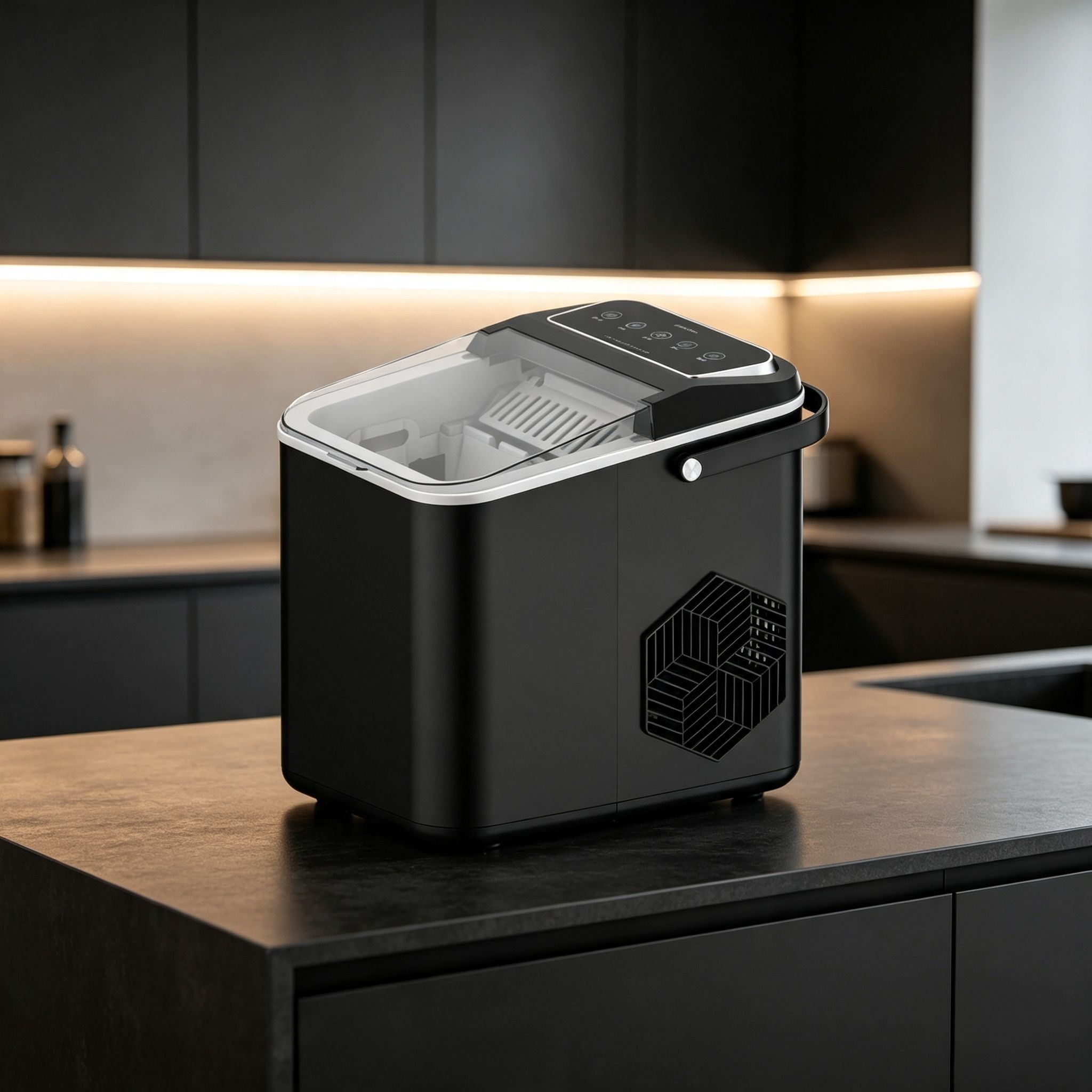
The rate at which an auger turns inside a meat grinder does more than push product toward the plate. It sets the rhythm of cutting, compression, and back-pressure. As speed climbs, meat moves through the knife and plate faster, which shortens the time each particle spends under shear. That can leave a coarser, more distinct chew even when the final plate size stays identical. Slower speeds, by contrast, allow the auger to pack the meat more thoroughly into each hole before the blade passes, producing a denser, more uniform bite with less visible separation between strands.
What makes this interesting is that the seasoning load, fat content, and blend ratio remain untouched. The flavor compounds stay locked in the same distribution, but the mechanical work changes how the mouth reads the structure. A fast auger can introduce tiny air pockets and slight temperature rise, which softens the perception of fat without altering its actual percentage. Meanwhile, a slow auger builds more friction over time, letting proteins align into a firmer bind that holds juices differently. The tongue notices this as a change in snap or springiness, not as a shift in spice or salt.
In practice, this means a processor can dial in a specific mouthfeel without reformulating. Someone making a coarse pork sausage might slow the auger to get a tighter, more elastic chew, while someone aiming for a crumbly breakfast patty could increase the speed to open up the texture. The recipe stays the same, the label stays honest, and the eating experience moves in a direction that has little to do with how the product tastes on paper. It is a simple lever with an outsized effect on how the final bite feels, all without touching the flavor profile.
The Evaporator Finish Detail That Keeps Ice From Tasting Like Metal
Most ice makers rely on a bare aluminum evaporator, and that’s exactly where the metallic edge creeps in. When water freezes directly against untreated metal, it picks up faint traces of oxidation and mineral reactions, especially in machines that sit idle between cycles. The finish on the evaporator changes that contact surface—not by coating it with something fragile, but by creating a stable barrier that keeps the ice from bonding to raw metal.
That finish also affects how cleanly the cubes release. A rough or corroded evaporator makes ice cling and fracture, leaving behind thin metal-tinged residue that ends up in the glass. A smoother, sealed surface lets the slab drop away in one piece, so there’s less scraping, less frost buildup, and less chance of off flavors developing overnight.
The difference is subtle at first sip, but it becomes obvious once the ice sits in a drink. Without that metal contact, the cubes melt slower and stay neutral, letting the liquid taste like itself instead of the machine.
Refrigerant Pulsing Patterns Most Bullet Ice Lines Ignore
Walk past a row of bullet ice machines and you will hear the same story: a compressor ramping up, a brief sigh from the expansion valve, then a long quiet stretch before the harvest cycle kicks in. What gets overlooked is how the refrigerant actually moves during that quiet stretch. It is rarely a steady push. It surges, stalls, and reverses in small pulses as the evaporator floods and starves. Most control boards are tuned only for pressure cut-ins and cut-outs, so the pulse rhythm drifts with ambient temperature and load. That drift changes how evenly the ice forms around the evaporator pins.
The result shows up as cloudy cores, thin tips, or half-formed bullets that break during harvest. A line that ignores its pulsing pattern has to compensate with longer freeze cycles or a hotter harvest, which stresses the nickel plating and drives up energy use. You can hear it if you stand near the discharge line: a flutter rather than a clean hiss. Fixing it is less about adding sensors and more about mapping the pulse interval under real load, then setting the expansion valve and fan delays to match that rhythm instead of fighting it.
How Assembly Sealing Stops Odor Before It Reaches the Ice
Most ice makers sit inside a refrigerated compartment where the air carries a rotating cast of smells—chopped garlic, ripe cheese, leftover curry. The seal around the ice maker assembly isn't just a gasket; it's the one physical boundary that keeps that air from settling on fresh ice. When the module is pressed into place, the sealing surfaces close off the small gaps around the fill tube, wiring harness, and storage bin rim. Those gaps are exactly where odor molecules try to travel, and a properly seated assembly blocks the path before the ice ever gets a chance to absorb anything.
Temperature swings matter here more than they seem. A seal that feels snug at room temperature can shrink just enough in a colder freezer environment to open a hairline channel. That's why the material and profile of the seal are chosen to stay flexible after repeated cooling cycles, maintaining contact even as plastic housings contract. Without that lasting grip, air drifts in slowly over hours, carrying volatile compounds straight toward the ice surface.
The result is quieter than people expect. Ice doesn't announce that it tastes like freezer air until someone drops it into a glass of water. A clean assembly seal removes that variable, so the cubes taste like the water they were made from rather than the collection of odors stored a shelf away.
Batch Testing the Squeak, the Melt, and the Crunch
There’s a particular satisfaction in hearing a squeak turn into a crunch, but that shift rarely happens by accident. The squeak usually comes from surface tension or trapped air, the melt from a fat or sugar that gives way under heat, and the crunch from a structure that finally breaks apart. Testing all three in a single batch means paying attention to how they interact rather than treating each as a separate problem. Too much moisture can dull a crunch, while too little can leave a dry, brittle texture without any melt to speak of.
A practical approach is to pull a few samples at different stages and let them cool completely before judging. The squeak might disappear as soon as the surface sets, but that doesn’t mean the interior has finished changing. If the melt feels greasy instead of creamy, the fat didn’t fully incorporate. If the crunch turns hard instead of crisp, the baking or cooling time was too long. Small adjustments, like lowering the temperature slightly or letting the batch rest before the final bake, can bring the three textures into better balance.
The goal isn’t a single perfect moment, but a range where the squeak gives way to a soft melt and finishes with a clean, audible crunch. That range can shift from one kitchen to the next, depending on humidity, pan material, and ingredient temperature. Keeping a short note on what worked, and what didn’t, makes the next batch easier to read. Over time, you start to hear the difference before you even bite, and that’s when the test stops being a guess and starts feeling like a method.
FAQ
The biggest difference usually comes down to how tightly the factory controls the evaporator temperature and auger speed. When the ice forms a little slower and is compressed under steady, lower torque, it keeps that soft, layered texture. Lines that push for speed tend to flash-freeze the outer shell while leaving the core weak, which is exactly what leads to ice that shatters instead of crunching the way people expect.
High humidity around the forming area changes how frost builds on the evaporator and can make the compacted ice wetter at the point of extrusion. That extra surface moisture refreezes into a hard glaze, so the nugget ends up with an inconsistent mix of crunchy shell and mushy center. Factories that keep humidity in a tight band get a more uniform bite from batch to batch.
If the auger clearance drifts even slightly, the ice is either under-compressed or sheared too aggressively. Too much clearance leaves air pockets and a crumbly texture, while too little creates dense, tooth-breaking chunks. The better factories measure and match auger and barrel wear limits far more often than the operators would ever admit in a brochure.
Dissolved minerals don't just affect taste. They change how the water freezes around nucleation points, and residual hardness can make the compressed layers bind unevenly. Factories that run reverse osmosis or at least staged carbon and softening before the ice machine tend to produce nuggets with a cleaner chew and fewer off-texture spots.
Freshly extruded nugget ice carries a small amount of surface liquid, and if it is bagged or boxed too quickly, that moisture migrates and fuses pieces into clumps. Letting the ice rest in a cold, dry hopper lets the surface stabilize so the individual pieces stay separate. Factories that skip or shorten this stage usually see more returns for clumped bags, even when the ice itself is technically fine.
Regular inspection of the cutting edges and bearings matters because a worn blade or a loose bearing can shed tiny metal or plastic shavings into the product stream. Beyond safety, those fragments act as unwanted nucleation points and can produce hard spots in nearby ice. A strict replacement schedule based on hours of runtime, not just visual checks, is the practice that quietly separates premium lines from average ones.
The most consistent plants don't simply speed up the auger to hit daily volume targets. They adjust the evaporator load in stages, run multiple smaller extrusion heads, or extend the production window while keeping the compression profile unchanged. That way the ice still forms in soft layers instead of being rushed into a glassy, dense pellet.
Conclusion
Most nugget ice problems are locked in before the machine ever freezes a single cube. Water filtration gets adjusted early, not just to strip chlorine or scale but to pull out dissolved gases and minerals that change how the ice web forms as it hardens. A slower auger speed can produce a softer, more chewable pellet without altering the water chemistry, so the flavor stays clean while the texture shifts. At the same time, the evaporator finish matters more than many lines admit. A poorly passivated surface leaches a faint metallic edge into the ice, while a properly treated finish keeps the first chew neutral.
Refrigerant pulsing is another quiet lever. Factories that tune the pulse rather than running a flat cycle create small thaw-and-refreeze moments that round off the pellet edges and change mouthfeel. Assembly sealing stops odors at the source, keeping gasket and plastic smells from drifting into the ice bin before the batch even starts. Then comes batch testing, where workers listen for the squeak, watch the melt rate, and feel the crunch. These checks tie the whole process together, because a nugget that squeaks right but melts too fast usually means one of the upstream settings drifted. Quality here is less about a single secret and more about keeping half a dozen small variables from drifting apart.
Contact Us
Contact Person: Mr. Sun
Email: [email protected]
Tel/WhatsApp: 8618867635088
Website: https://www.nbyoman.com/