

China Automatic Paper Bag Making Machine Advances Reshaping Modern Packaging
2026-11-27
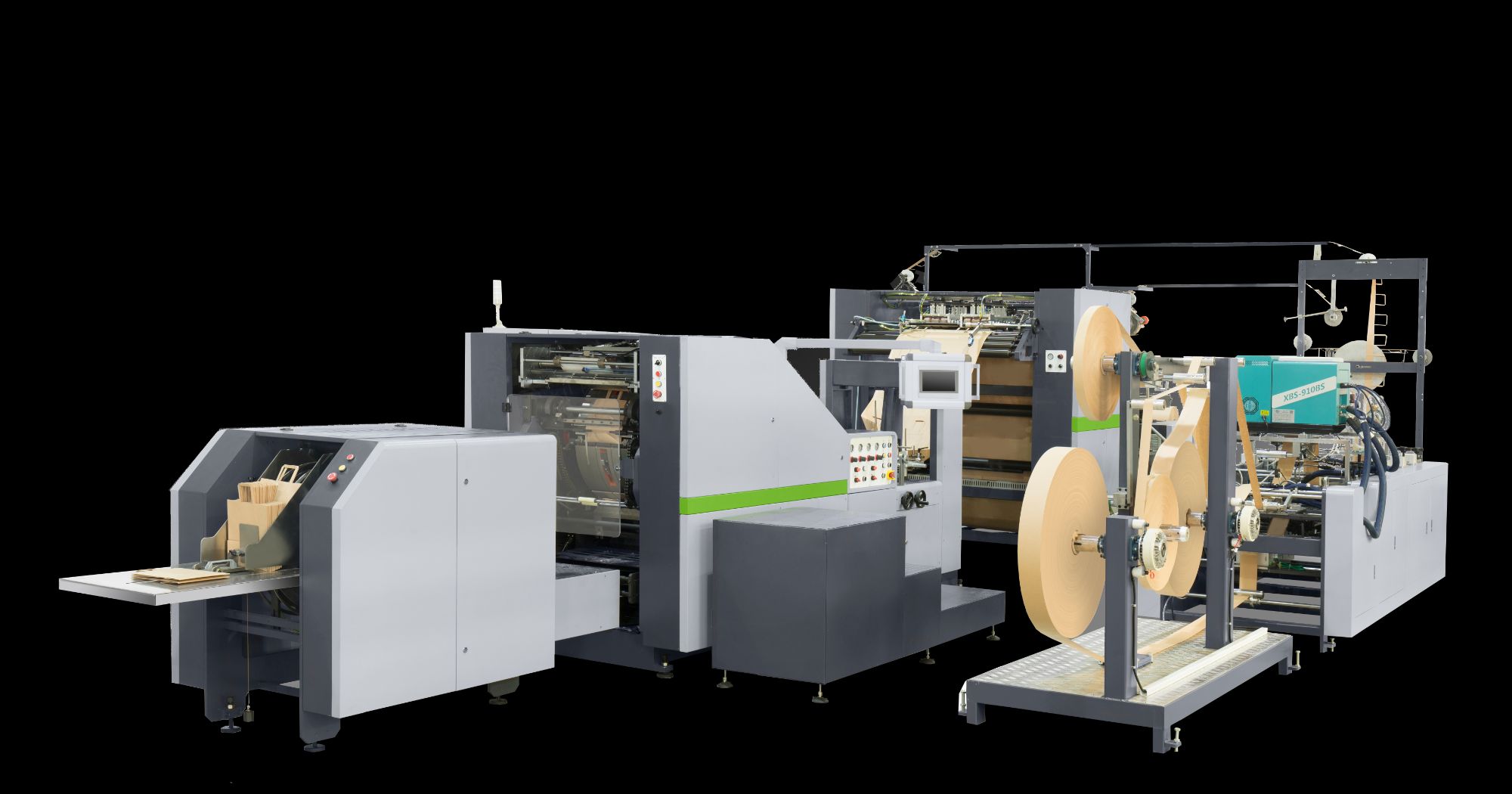
Modern packaging rarely makes headlines, yet few industries are being reshaped as quickly. At the center of this shift is the automatic paper bag making machine—no longer just a low-cost utility, but a quiet driver of speed, precision, and resource efficiency. Across global supply chains, manufacturers are rethinking what production lines should deliver, and the gap between conventional equipment and next-generation systems is widening fast. ROKIN has been closely tracking this change, and the advances emerging today are not incremental tweaks. They are redefining how modern packaging lines are built, operated, and scaled. This blog explores the breakthroughs that matter and why they are arriving now.
Where China’s high-speed paper bag machines now outperform older import lines
For years the assumption was simple: imported meant more stable, more precise, more productive. That hierarchy no longer holds across the board. A number of Chinese high-speed paper bag machines now run 20 to 30 metres per minute faster on standard grocery bag formats than older European lines still in operation, while holding fold position with less drift across a shift.
The real advantage, though, is not raw speed. It is the way the machines handle short runs and repeat sizes. Servo-driven format settings let a crew pull up a saved job, swap a few quick-change parts, and be back on production before a legacy import line would have finished its first manual timing adjustment.
Cost and support widen the gap. Domestic builders offer same-week spare parts and remote diagnostics without the language and time-zone friction that used to inflate downtime. For a mid-sized converter running mixed orders, that consistency on ordinary days now outweighs the prestige of a familiar European nameplate.
Servo motor tuning that keeps paper tension stable at top speed
At high line speeds, paper tension problems usually show up as edge flutter, wandering web alignment, or wrinkles just before a printing unit. A stable setup rarely comes from simply raising the gain. It depends more on how well the velocity feed-forward handles rapid changes in roll diameter and core inertia. With the motor coupled, we set the speed loop bandwidth first, then adjust the tension trim in small steps while watching the dancer or load cell response during acceleration and splice sequences.
If the load cell signal only oscillates above a certain speed, the cause is often a mechanical resonance or a coupling that is too soft rather than the PID values alone. A light low-pass filter on the torque reference and a narrow notch around the unwind stand's natural frequency can stop the oscillation without making the tension loop sluggish. The goal is to keep the unwind from chasing the downstream section too late, especially during fast ramp-up.
Final tuning passes should be done with actual paper on the roll, not empty cores. Run repeated ramp tests to top speed and back down, then fine-tune inertia compensation until the tension deviation stays inside a narrow band. When the settings are right, the dancer moves smoothly near center and the load cell trace flattens even during roll changes or quick speed adjustments.
What automatic handle paste stations do to bag failure rates
Bag failures rarely trace back to a single dramatic cause. More often they come from small inconsistencies: a seal that shifts under tension, a corner fold that goes unnoticed, or adhesive applied a few millimeters off target. Automatic handle paste stations remove much of that variability by controlling paste placement, pressure, and dwell time across every bag. As a result, the weak points that used to show up during filling or transport become less common, and line crews spend less time sorting out rejects.
The effect on failure rates shows up most clearly in high-volume runs. When handle application is manual, fatigue and minor technique differences start to matter after the first few hundred bags. Automatic stations keep the same motion and paste coverage from the first bag to the last, so the failure rate flattens instead of climbing late in a shift. That consistency also feeds back into upstream adjustments: once the paste station is stable, it becomes easier to spot material issues or film variations that would otherwise be masked by operator error.
It would be a stretch to say automation eliminates bag failures entirely. Poor film quality, damaged handles, or incorrect settings can still cause rejects. But the failures that do remain tend to be more predictable and easier to trace. For many plants, that shift is the real gain—not just a lower average failure number, but a process stable enough to act on without guessing.
Feeding kraft, coated, and recycled paper without swapping core parts
Running a mixed queue of coated sheets, kraft, and recycled board usually means stopping to swap feed tires or separators whenever the stock changes. This setup avoids that. The feed head leans on textured rollers and an adjustable air curtain that can be dialed in for slick coated stock, then backed off for the rougher, dustier surface of kraft or recycled grades. Operators adjust a few external dials without pulling the core assembly apart.
Kraft tends to shed dust, coated stock can cling, and recycled board often arrives with uneven caliper. Those differences are absorbed in the separation zone rather than by changing feed rolls. Extra travel, a slightly steeper retard angle, and adjustable side guides keep the lead edge steady across warped or fluffy sheets. In practice, you can move from heavy coated board to lightweight kraft and then to mixed recycled filler without opening the feed section.
Short-run work is where the time savings become obvious. Since the core feed components stay in place, there is less wear from repeated removal and less chance of misalignment after reassembly. Many operators mark the dial positions for each grade and return to them across shifts, which makes stock changes feel more like a quick tweak than a mechanical overhaul.
Why mid-size packaging plants are replacing plastic bag units first
Mid-size packaging plants tend to sit in an awkward spot: large enough that downtime and maintenance costs hit the monthly budget hard, but not big enough to bury those costs under massive production volumes. When film prices swing or plastic bag orders soften, these lines feel it before almost anything else in the plant. Replacing a plastic bag unit often starts as a spreadsheet decision rather than a sustainability statement, because a machine that spends more time being patched than running becomes hard to justify.
Many of these plants also serve regional food, pet care, or produce brands that are quietly shifting toward paper or compostable materials, but in quantities too small to interest the largest converters. Mid-size operators respond by taking one or two older plastic bag lines offline and bringing in equipment that can handle shorter runs and multiple substrates. It is a defensive move aimed at keeping key accounts, and it tends to happen before a full plant-wide overhaul.
Spare parts and skilled labor add another push. Older plastic bag units often need constant attention on heat sealers, knives, and film tension controls, and the people who know those machines well are becoming scarce. Without a deep in-house engineering bench, a mid-size plant is more likely to retire a temperamental unit early and shift capital toward machinery that changes over faster and needs less specialist upkeep.
Maintenance schedules after upgrading to fully automatic bag forming
Upgrading to fully automatic bag forming changes the rhythm of routine upkeep. The former semi-automatic setup allowed operators to spot wear on forming collars, pull belts, and sealing jaws during normal pauses. Once the line runs continuously, those visual checks disappear. Maintenance should shift from calendar-based tasks to a mix of cycle-count and condition-based intervals. For high-volume shifts, a daily 15-minute inspection of air filters, film path rollers, and jaw alignment prevents small drifts from becoming jam-related downtime.
The first 200 hours after the upgrade matter more than the manual suggests. New actuators and servo drives settle in, belt tension shifts slightly, and temperature controllers need re-tuning against the faster cadence. During this window, log seal temperature variance, air pressure drops, and any intermittent sensor faults. That log becomes the baseline for deciding whether to keep the previous PM frequency or move certain tasks closer together.
Finally, make one person accountable for post-upgrade maintenance data, not just the tasks. A fully automatic bag former produces enough film dust and micro-debris to shorten the life of photo eyes and vacuum cups if cleaning stays on a monthly schedule. Clean those every week, and replace worn Teflon tape on the sealing surface before cosmetic wrinkles appear in finished bags. Adjust the schedule after the first full month of production—then lock it in writing.
FAQ
Recent developments focus on multi-layer handle reinforcement, faster servo-driven forming, and inline quality inspection. Some lines now switch between flat and twisted handles without stopping, and registration accuracy on printed webs has improved enough to handle high-graphic retail bags at commercial speeds.
The shift is driven by a mix of practical engineering and cost control. Chinese builders have simplified drive systems, made spare parts easier to source, and lowered the entry price for fully automatic lines without cutting too much on frame rigidity or sealing consistency. Shorter lead times and direct factory support also matter when packaging converters are trying to expand quickly.
They are increasingly designed around uncoated and recycled kraft grades, which tend to tear or slip more easily. Improved web tension control, gentler forming fingers, and adjustable adhesive application let operators run thinner or stiffer recycled paper while keeping bag strength within acceptable limits. That makes it easier for converters to offer paper bags that are actually recyclable rather than just looking like it.
Typical outputs include flat and satchel bags, square-bottom bags with twisted or flat handles, and grocery-style bags with side gussets. Some models handle window patching, bottom reinforcement sheets, or custom handle styles in the same pass, reducing the need for separate finishing steps.
Many overseas converters are using them to shorten turnaround on regional retail orders and to test small-batch designs without committing to expensive European lines. That flexibility is shifting how brands think about seasonal packaging, allowing shorter runs while keeping unit costs manageable.
The biggest gains come from faster size changeovers and fewer manual adjustments. Servo-controlled folding and gluing stations let operators recall saved settings for a bag format, so a line that once took half a shift to reconfigure can switch in under an hour in many cases. Inline defect rejection also reduces rework.
Beyond the quoted speed, it is worth checking the frame construction, the brand of bearings and servo components, and the supplier's track record with similar bag formats. Ask for video of the exact configuration running your paper grade, and clarify whether the quoted output assumes a specific grammage and handle type.
Expect more closed-loop tension control, better integration with digital printing lines, and automated handle inspection using cameras. Some builders are also working on modular stations that can be added later, so a converter can begin with a basic flat-bag line and upgrade to reinforced square-bottom bags as orders grow.
Conclusion
The shift in modern packaging is no longer about whether Chinese automatic paper bag machines can compete, but where they have already pulled ahead of older import lines. High-speed models now hold paper tension more consistently at top output, largely because servo motor tuning has moved from coarse speed control to finer, real-time corrections. The result is fewer wrinkles and edge tears even when running lightweight kraft or coated stock. Automatic handle paste stations have also changed the conversation around bag failure rates; instead of relying on manual glue application, these stations apply a controlled adhesive pattern that reduces weak points at the handles. For plants feeding kraft, coated, and recycled paper, the ability to switch materials without replacing core rollers or guides keeps changeover times short and production schedules flexible.
Mid-size packaging plants are often the first to replace plastic bag units, not because of policy pressure alone but because the economics now work in their favor. A fully automatic bag forming line can run with fewer touchpoints, and the maintenance burden shifts from frequent mechanical adjustments to planned inspections of servo drives, paste applicators, and feed rollers. With clearer maintenance schedules, operators spend less time chasing breakdowns and more time managing output quality. That practical shift, rather than the technology itself, is what makes China’s latest paper bag machines reshape how modern packaging lines are planned.
Contact Us
Contact Person: CARA
Email: [email protected]
Tel/WhatsApp: +8619519778302
Website: https://www.rokinmachinery.com