

China Bag Hardware Essentials for Durable and Stylish Handbag Designs
2026-11-02
When a handbag outlasts seasons and still turns heads, the secret is almost always in the details you don’t see at first glance—the hardware. From the snap of a magnetic clasp to the smooth glide of a zipper, these small components carry the weight of both function and fashion. For designers who refuse to compromise, sourcing China bag hardware isn’t just about finding parts; it’s about finding a partner who understands durability and aesthetics in equal measure. That’s where Kingming comes in. In this post, we’re breaking down the bag hardware essentials that keep your handbag designs sturdy, stylish, and unmistakably yours.
Zinc Alloy vs. Brass: What Actually Holds Up in Daily Wear
The daily grind treats these two metals quite differently. Zinc alloy parts—commonly a Zamak blend—tend to start out shiny and uniform, but that surface is usually just a thin plating over a relatively soft, brittle core. After a few months of rubbing against keys, sliding into pockets, or catching on shirt cuffs, the plating on a zinc alloy buckle or zipper pull can chip at the edges, exposing a dull gray base that slowly develops a white, powdery corrosion. Brass, on the other hand, is solid copper-zinc throughout. It picks up fine scratches and a warm patina, but those surface changes don't undermine the part the way a broken plating layer does.
Where the difference really shows is in failure mode. A zinc alloy ring or clasp that gets dropped on tile may crack or snap because the material has limited give. Brass usually deforms or bends before it breaks, so it can often be bent back into shape. Brass does demand occasional polishing if you dislike tarnish, and it carries more weight—something you'll notice on a heavy belt buckle or a long chain. Zinc alloy wins on upfront cost and lightness, but if you want a piece that survives daily abuse without looking wrecked by the end of the year, brass usually earns its keep.
Electroplating Layers That Resist Scratches and Fading
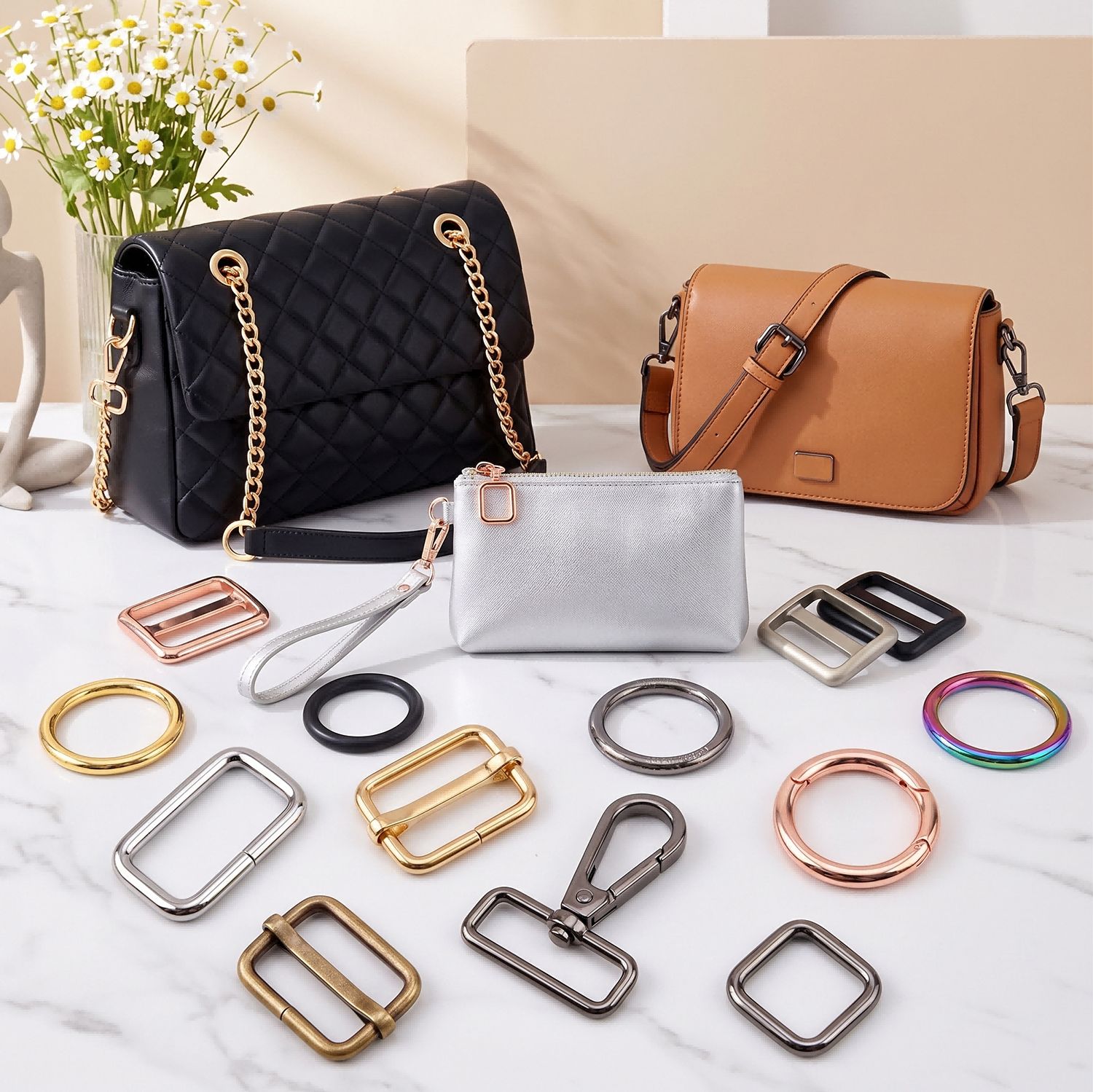
A well-chosen electroplated finish does more than add shine; it acts as a physical shield. Hard metal deposits like nickel-cobalt or palladium-nickel alloys create a surface that deflects daily abrasion, so hairline scratches that typically show up on softer substrates never get a chance to dig in. Instead of relying on a single brittle layer, these systems often use a ductile undercoat to absorb impact and a harder top layer to take the brunt of contact, which keeps the finish looking clean far longer.
Fading usually comes from a mix of UV exposure, humidity, and repeated handling breaking down the topcoat. Here, the right plating chemistry makes a measurable difference. Tin-nickel and certain trivalent chromium deposits hold their color because they resist oxidation and don't form the cloudy corrosion films that plague plain nickel or silver. The result is a surface that keeps its original tone and luster without needing frequent polishing or clear-coat touch-ups, even in high-wear or outdoor-facing applications.
Magnetic Closures with the Right Pull Force for Flap Bags
Finding the right pull force for a flap bag closure often comes down to how the bag is carried and what it holds. A magnet that requires 3 to 5 pounds of pull tends to keep a slim flap secure without turning the opening into a wrestling match. For everyday shoulder bags or crossbody styles, this range lets you flip the flap open with one hand while still snapping shut reliably when the bag swings against your hip.
Thicker leather, reinforced flaps, or bags that get overstuffed change the equation. If the flap has to fight the bulk of a wallet, keys, and a phone, a closure rated closer to 7 or 8 pounds of pull prevents accidental popping. But go too strong and the hardware can strain the stitching around the magnet, especially on softer leathers. Sampling a few strengths against your actual prototype—not just the magnet spec sheet—is the only way to hear and feel the right click.
Magnet placement matters as much as raw pull. Setting the male and female halves slightly off-center or adding a thin leather keeper under the flap can reduce the perceived strength without changing the magnet itself. Some makers also prefer a wider, flatter magnet at 4 pounds over a smaller 6-pound disc because the force spreads over more surface, giving a softer snap that feels less abrupt to the hand.
Lightweight Chain Straps That Won't Dig into Your Shoulder
Most chain straps look cute for ten minutes, then start sawing into your skin. These are different because the links are hollow and feather-light, so the strap stays put without needing constant readjustment. You can wear a crossbody all afternoon and forget it’s even there.
The trick is in the finish: each edge is smoothed and rounded, not pressed flat like typical metal straps. That means no sharp ridges digging into your shoulder, even when your bag is packed full. If you’ve sworn off chain straps before, this is the one that might change your mind.
Custom Finishes: From Matte Gunmetal to Antique Brass
Custom finishes give products a distinct personality that stock colors simply cannot match. Matte gunmetal, for instance, has a low-sheen, almost velvety texture that absorbs light rather than reflecting it, creating a sense of understated weight. Antique brass, on the other hand, leans into warmth and history, with uneven patinas and soft highlights that make each piece feel quietly aged. These finishes are not just color choices; they are tactile and visual signatures that shift according to the surrounding light and the angle of view.
Achieving such finishes involves more than a quick spray coat. Matte gunmetal often requires a careful layering of dark metallic pigments followed by a fine-textured clear coat to lock in the muted surface without making it glossy. Antique brass typically starts with a bright brass base that is then chemically darkened or hand-rubbed to create depth in recesses while leaving raised edges gently burnished. These small imperfections and variations are deliberate, giving the finish a lived-in quality that feels organic rather than factory-perfect.
Because of this hand-finished nature, no two pieces are exactly alike, which appeals to designers and homeowners who want their hardware, lighting, or furniture to feel like a considered choice rather than an off-the-shelf default. Pairing matte gunmetal with cool stone or concrete can sharpen a modern interior, while antique brass brings a softening counterpoint to deep greens, navy blues, or rich woods. The result is a finish that not only protects the material beneath but also becomes a quiet focal point in its own right.
Rust-Proof Coatings for Bags That Travel Through Every Season
A bag that moves from monsoon downpours to salted winter sidewalks needs more than a standard zipper and a prayer. Rust-proof coatings on hardware—think zipper pulls, buckles, D-rings, and rivets—create a barrier that stops moisture from eating into metal before it starts. The best versions use electroplated finishes or nano-ceramic layers that flex with the bag instead of flaking off after the first frost.
Seasonal shifts are rough on metal components. Spring humidity invites oxidation, summer downpours soak into seams, fall dew lingers in stitching holes, and winter road salt accelerates corrosion like nothing else. A quality rust-proof treatment doesn't just sit on the surface; it penetrates micro-crevices around hardware attachment points, where water and salt like to hide. Look for bags that treat zipper teeth, not just the visible pull tabs, because a jammed zipper on a slushy morning is a special kind of misery.
The payoff shows up months later. Instead of orange streaking around rivets or a seized buckle on your go-to travel bag, the hardware keeps its finish and function. For anyone who has wrestled a rust-stuck strap adjuster in an airport security line, that's not a cosmetic detail—it's the difference between a bag that ages with you and one that quits halfway through the year.
FAQ
The turn lock and strap anchors usually fail first. Look for solid brass or zinc alloy with a thick electroplated finish, cheap castings tend to snap at the loop within a few months. I'd also check the rivets on the handle attachments, those tiny pieces bear more load than people expect.
Yes, but you have to be specific about plating thickness and base metal. Many workshops in Guangdong will happily send samples, and the better ones run salt spray tests on request. Insist on that rather than relying on product photos.
Gunmetal and antique brass hide wear far better than high-shine gold. If you want that bright gold look, go for PVD plating instead of standard electroplating, it costs more but doesn't rub off at the edges as quickly.
Skip the overly polished, ornate pieces that appear on every fast-fashion bag. Instead, pick a single signature element, like a rectangular D-ring with crisp beveled edges or a matte black magnetic snap with a subtle logo-free face, and repeat that shape in at least three places.
Magnetic snaps are faster to open but can accidentally pop open if the bag is overstuffed. Turn locks offer a more secure closure and feel more premium, but they require precise alignment during installation. For everyday totes, I'd use a recessed magnetic snap; for flap bags, a turn lock.
Mold fees are usually lower than you'd think, often under $100 for a simple logo on a standard base. Ask for laser engraving rather than raised casting if you want fine detail at small sizes. Also request a pre-production sample before the full run, colors and edges can shift slightly.
Yes, the move toward thicker edge coatings on zinc alloy bases and stainless steel internal springs in snap hooks. Some factories now use a ceramic-like coating on zipper pulls that resists chipping. These are practical upgrades, not just visual gimmicks.
Conclusion
When sourcing bag hardware from China, the smartest designers know that material choice sets the foundation for both longevity and look. Zinc alloy may be the budget-friendly workhorse, but brass earns its keep in high-stress areas like turn locks and D-rings—it shrugs off daily wear without snapping or deforming. The real differentiator, though, is the electroplating. A well-applied multi-layer finish, whether a matte gunmetal or an antique brass, resists the micro-scratches and fading that plague cheaper imports. For flap bags, don't overlook pull force: magnetic closures need enough grip to keep the bag shut, yet not so much that opening becomes a wrestling match. The sweet spot sits between 2.5 and 4 kilograms, depending on leather thickness.
Comfort and weather resistance round out the essentials. Lightweight chain straps made from hollow-link aluminum or thin-gauge steel offer the look of luxury without the shoulder ache after a long commute. Pair that with a rust-proof coating—think nano-ceramic or PVD titanium—and the hardware survives humid summers, salty coastal air, and even the occasional rainstorm without pitting. Custom finishes are where Chinese factories truly shine: small-batch runs can achieve subtle patinas or brushed textures that set your handbag apart from mass-market copies. The trick is to specify both the base alloy and the plating thickness in your RFQ, then request a salt-spray test report. That single step filters out suppliers who cut corners on durability and leaves you with hardware that feels as good as it looks, season after season.
Contact Us
Contact Person: Jamie Zeng
Email: [email protected]
Tel/WhatsApp: +86 13728219269
Website: https://www.kmhardware.com