
China Chevron Belt Supplier: Reliable Conveyor Solutions for Your Industry
2026-08-17
When a conveyor line stalls on a steep incline, the cause is rarely the motor—it's usually the belt losing its grip. As a China chevron belt supplier, XAN builds vulcanized chevron profiles that bite into materials like gravel, sand, and grain, so rollback becomes a non-issue. But not all chevron belts are equal, and a poor choice can quietly eat into your throughput. In this article, we'll explore the key specs that separate a truly reliable conveyor solution from a short-lived one, and how the right supplier can change the game for your operation.
Chevron Patterns That Match Your Material Flow
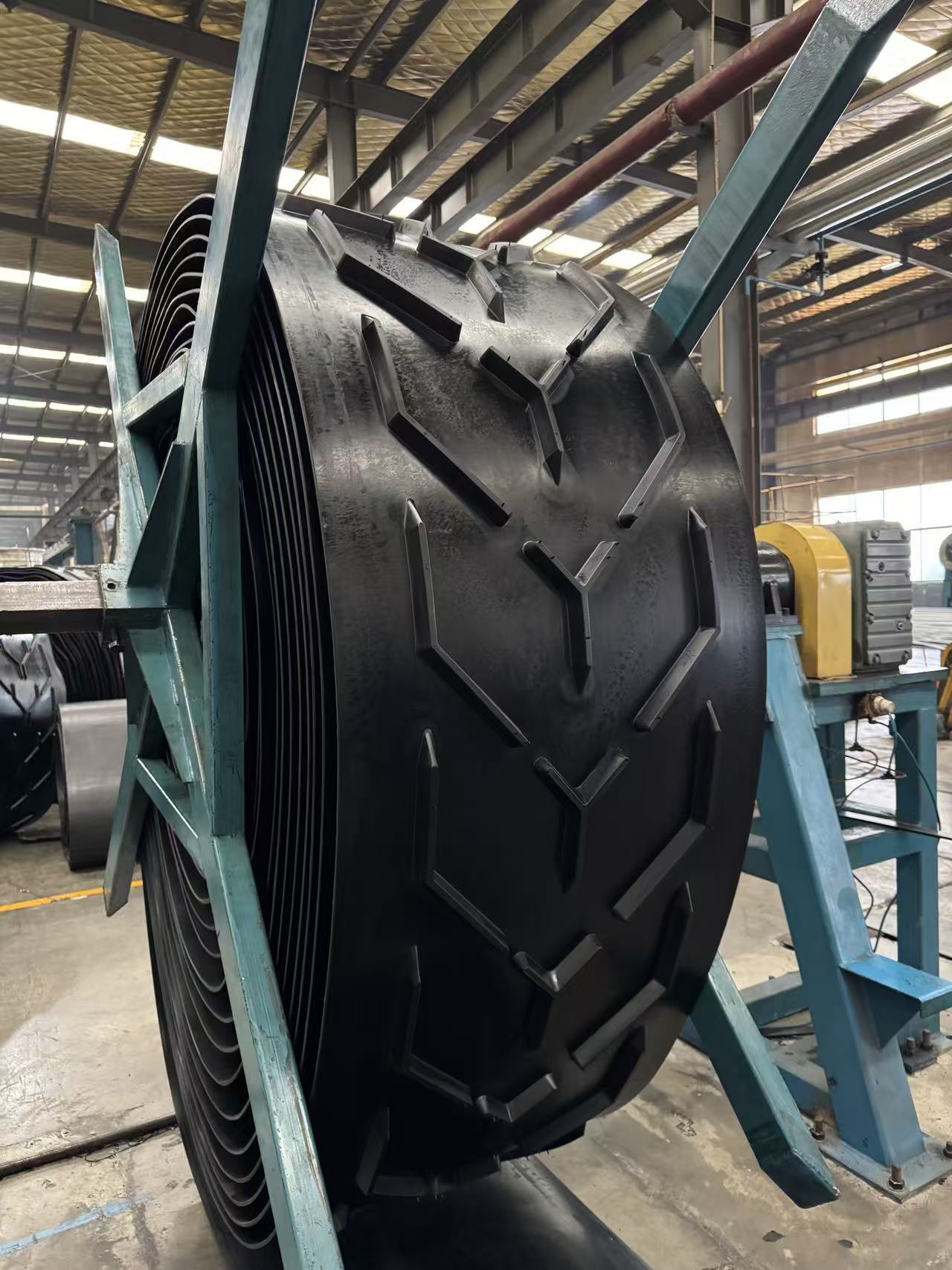
A chevron belt pattern does more than look aggressive—it actively steers how material rides the conveyor. For dry, free-flowing granules, a shallow V-profile keeps things moving without excessive kickback, while sticky or damp loads often demand a taller, sharper chevron to break surface tension and prevent carryback. The wrong profile turns a steady feed into a clogged chute, so matching the angle and pitch to your specific bulk density is the quiet detail that separates a smooth line from a constant cleanup.
Inclined runs are where chevron geometry earns its keep. A standard 15–17 degree incline might only need a moderate cleat height, but push past 30 degrees and the chevron must bite harder, often with a closed-V layout to trap material pockets. It's less about the pattern's name and more about how the chevron's leading edge interacts with material at the discharge point—too aggressive and fines scatter before the head pulley, too gentle and the load slips backward under vibration.
Operators often overlook how chevron spacing influences flow consistency. Wide spacing creates distinct pockets that release in pulses, great for large lumps but rough on metering applications. Tighter spacing smooths the discharge into a near-continuous stream, ideal for blending or feeding a crusher. Before swapping belts, run a ten-minute visual check: watch where material first slides against the chevron face—that streak tells you whether your flow wants a taller profile, a shallower angle, or simply a cleaner belt scraper downstream.
The Hidden Costs of a Wrong Belt—and How We Avoid Them
Most people look at the price tag of a belt and stop there. The real damage shows up weeks later: a belt that's a few millimeters off spec slips under load, heats up the pulley, and destroys the bearings. One unscheduled stop on a busy line can wipe out a year's worth of savings from buying the cheaper part.
We don't guess. Every belt we install is matched to the drive's actual power draw, pulley condition, and operating environment—temperature swings, dust, oil mist, you name it. If a customer has a history of early failures, we inspect the entire drive train, not just swap the belt.
The result is less downtime, longer bearing life, and a maintenance schedule you can actually plan around. No hidden costs, no 3 a.m. calls for a snapped belt.
From Rubber Compound to Finished Belt: What Happens in Our Facility
The whole process starts in the mixing hall, where raw rubber, carbon black, processing oils, and a handful of other powders get dropped into a 270-liter internal mixer. The rotors spin at around 40 rpm, and the batch temperature climbs to roughly 160°C before the ram lifts. We don't rely on guesswork here—each batch logs its energy input and temperature curve, and an operator pulls a small sample for a quick Mooney viscosity check before the compound moves on.
Once the compound cools for a day on skids, it's ready for the calender line. Four rolls squeeze the rubber into a uniform sheet, sometimes straight onto polyester fabric or steel cord, depending on the belt spec. After that, a team on the building table layers the plies, aligns the edges, and stitches everything together with hand rollers. It's slow, careful work—misalignment of even two millimeters can show up later as belt wander.
The assembled carcass then goes into one of our three daylight presses, where it sits under 12 bar of steam pressure for about 25 minutes. That's where the crosslinking happens, turning the tacky green belt into a tough, elastic product. When the press opens, the belt comes out hot and slightly oversized. Operators trim the edges, grind any splice points, and run a final visual and thickness check before it's rolled and tagged for shipping.
Case Study: Moving Wet Sand Without Slippage
A mining operation in northern Chile was losing nearly 18% of its daily throughput because the existing conveyor belt couldn't grip wet, abrasive sand. Every shift, workers hosed down the belt to clear clogs, only to watch the material slide back down the incline. The fix wasn't a faster motor or a deeper trough—it was a switch to a chevron-pattern belt with a softer durometer cover. The chevron ribs, angled at 22 degrees, created micro-dams that held the wet sand in place even on a 24-degree incline. Within three days, slippage dropped to less than 1%, and cleanup crews were reassigned to other tasks.
What made the difference was attention to the belt's surface energy rather than its tensile strength. Standard smooth belts rely on friction, but wet sand acts like a lubricant, reducing the coefficient of friction below 0.2. The chevron pattern mechanically traps the sand, while the 55 Shore A cover compound provides enough flex to release material at the discharge point without sticking. Operators also adjusted the belt scraper tension to compensate for the thicker profile, preventing carryback that had previously hardened overnight and caused tracking issues.
Three months after the retrofit, the client reported a 14% increase in effective conveying capacity and a 30% drop in maintenance hours. The lesson is clear: when moving saturated bulk solids, the belt's topography matters more than horsepower. A simple pattern change turned a chronic bottleneck into a non-event.
Why Thicker Carcass Doesn’t Always Mean Better—and What Does
A thicker carcass often gets mistaken for a guarantee of toughness, but that assumption falls apart under real-world conditions. Extra material adds weight and cost, yet it can introduce internal stress during cooling or welding, making the structure more prone to hidden cracks. Instead of raw thickness, the real advantage comes from how the material is distributed and how well the design handles load paths.
What actually matters is the carcass geometry and the quality of the material's microstructure. A well-designed thinner carcass with strategic ribs or a graded composition can outperform a bulky one in fatigue resistance and impact absorption. The key is to focus on stiffness-to-weight ratio and fracture toughness, not just a bigger number on a specification sheet.
So before you assume a beefier carcass is the safer bet, look at the failure modes you're trying to prevent. Optimized cross-sections, heat treatment, and controlled cooling often deliver better longevity without the downsides of excess mass. Thickness can be a crutch; smart engineering is what actually holds things together.
Working Directly with the Factory: No Middlemen, No Miscommunication
When you reach out to us, you're not talking to a broker or a trading company. The person answering your questions knows the production floor, the materials in stock, and the realistic timelines. If you need a custom change—say a different stitching pattern or a revised logo placement—it gets relayed straight to the team that will make it happen, not filtered through three layers of email forwarding. That means fewer errors and faster turnarounds.
Middlemen often add markup without adding value. By working directly with the factory, you see the true cost of labor, materials, and finishing. Any budget discussion happens with the people who control those numbers, so you can negotiate adjustments that actually stick. And because there's no game of telephone between you and the production line, the specs you approve are the specs that get built—no lost decimal points or swapped packaging details.
This setup also makes problem-solving more honest. If a material is delayed or a machine goes down, you'll hear about it from us directly, usually with a plan already in motion. Over time, that builds a working relationship where you're treated like a partner rather than a purchase order. Many of our long-term clients value that they can call the factory floor on a Tuesday morning and get a straight answer, not a scripted apology.
FAQ
Focus on their production capacity, material sourcing, and ability to provide consistent profile heights. A reliable supplier will share detailed specs and offer samples before you commit to a bulk order.
The raised patterns grip the material, preventing rollback on angles that smooth belts can't manage. For very steep slopes, higher cleat profiles and proper belt tension make the difference.
Yes, many Chinese manufacturers adjust pattern type, belt width, and rubber compound based on what you're moving. Whether it's wet grain or sharp gravel, the belt can be built to resist tearing and wear.
Regular inspection of the cleats for cracking, keeping the pulley lagging clean, and avoiding excessive heat buildup. Also ensure the belt tracks straight, because edge wear can shorten its life quickly.
Ask for tensile strength test reports, abrasion resistance data, and details on the rubber grade. Reputable suppliers won't hesitate to provide these, and many can arrange third-party inspection.
Agriculture, mining, recycling, construction, and food processing. Any operation that moves loose bulk material up an incline or needs extra grip can benefit from them.
That depends on your conveyor system. If you have multiple conveyors of the same width, buying full rolls can lower cost. For replacements, many suppliers offer cut lengths with spliced or endless options.
It varies with order size and current demand, but usually 2-4 weeks for standard patterns. Custom profiles or special rubber compounds might take longer, so plan your inventory accordingly.
Conclusion
When you're sourcing a China chevron belt supplier, what you're really after isn't just a product—it's a belt that won't let you down when the incline gets steep or the material gets slippery. Our chevron patterns are matched directly to your material flow, whether you're moving wet sand, crushed stone, or loose grain. The wrong belt quietly costs you in downtime, spillage, and constant re-tensioning; we avoid that by starting with the rubber compound itself and controlling every step in our own facility. From mixing to vulcanizing, nothing is outsourced, so the carcass and cover work together as one system—not a patchwork of parts.
Take wet sand as an example: a standard flat belt would slip and clog, but our V-shaped chevron profiles bite into the load and shed moisture, keeping your line moving without manual cleanup. And while many buyers assume a thicker carcass means a stronger belt, that's rarely the whole story—what matters is the right fabric, the right ply adhesion, and the right rubber-to-fabric ratio for your specific tension and impact load. Dealing directly with our factory eliminates middlemen and the miscommunication that comes with them, so you get a belt built to your exact specs, delivered on time, and backed by engineers who understand your industry. That's the difference between buying a belt and buying a solution.
Contact Us
Contact Person: Anna Lu
Email: [email protected]
Tel/WhatsApp: 8618561668850
Website: https://www.x-conveyor.com