

China Digital Inkjet Marking Systems Revolutionize Industrial Identification
2026-07-07
Industrial identification is undergoing a quiet but powerful transformation, and at the heart of this shift are China's digital inkjet marking systems. Once limited to basic coding, today's solutions offer precision, speed, and adaptability that slash downtime and errors on fast-moving production lines. Danmajet leads this revolution with technology that handles everything from delicate electronics to rugged building materials, making permanent, high-contrast marks without slowing the process. For manufacturers eager to cut waste, stay compliant, and embrace smarter workflows, the next generation of marking is already here—and it's rewriting the rules of product identification.
Inkjet Innovation Fuels Industrial ID Overhaul
Precision inkjet systems are quietly reshaping how industrial environments handle identification. Gone are the days of static, pre-printed labels and laborious etching methods. Now, production lines deploy printheads that lay down durable codes, serial numbers, and complex graphics directly onto components, even on curved or textured surfaces. This shift isn't just about speed—it's about turning every product into a carrier of its own dynamic history.
The real leap comes from chemistries that bond pigments with substrates at a molecular level, resisting abrasion, chemicals, and UV exposure without overlaminates. Variable data printing at line speed means each item can receive a unique identifier, enabling granular traceability from raw material to end-user. Rapid-drying inks and maintenance-free print modules keep uptime high, while the ability to switch between batches without tooling changes makes small runs economically viable.
Industries from automotive parts to heavy machinery are rethinking their marking strategies. Instead of relying on external tags that can be lost or damaged, manufacturers embed information directly into the part surface. This merges physical identity with digital records, feeding real-time data into inventory systems and quality control loops. The result is a fluid, interconnected ID layer that reduces errors, thwarts counterfeiting, and builds a foundation for smarter supply chains—all sparked by a stream of ink.
Why China’s Marking Systems Are Outpacing the Pack
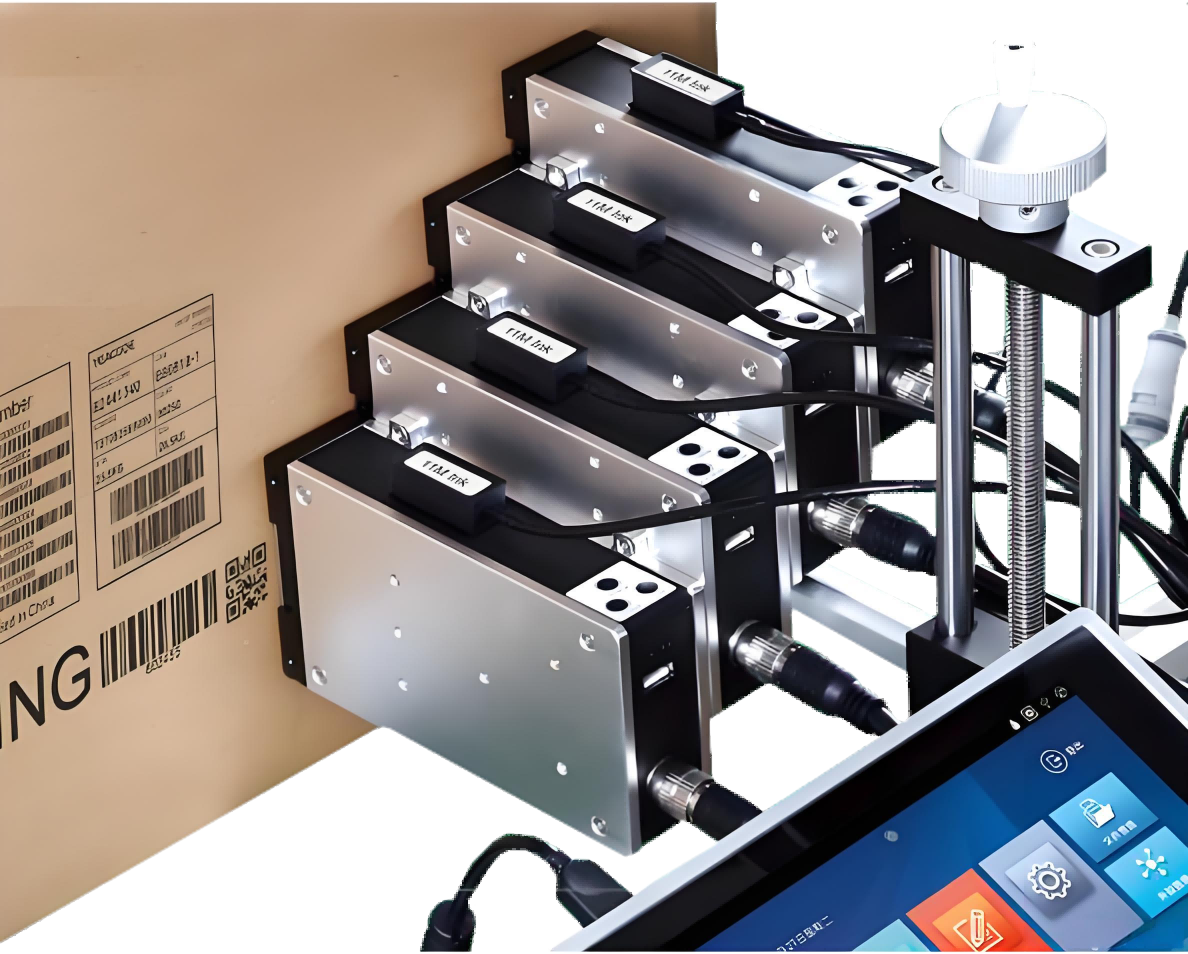
China’s rise to prominence in marking technology isn’t a fluke—it’s the outcome of a manufacturing ecosystem that prizes speed and adaptability. Unlike many competitors that rely on legacy hardware and slow iteration cycles, Chinese firms have woven marking systems directly into agile production lines. The result is equipment that can handle higher throughput without sacrificing precision, often at a cost point that leaves overseas alternatives scrambling. This isn't just about cheaper components; it's about engineering cultures that iterate weekly, not annually, and supply chains that can source custom parts in days rather than months.
Regulatory tailwinds have accelerated this shift. Domestic mandates around traceability, especially in sectors like food, pharmaceuticals, and automotive, forced suppliers to up their game years before many Western counterparts felt similar pressure. The Chinese government’s relentless push for smart manufacturing and industrial digitalization poured funding into R&D for advanced laser and inkjet systems, creating a blueprint for public-private partnership that few nations have replicated. As a result, marking systems from China now routinely pack features like real-time database connectivity and AI-driven verification, built to meet standards that are often stricter than those abroad.
Perhaps the real edge lies in customization. While global brands often dictate rigid product tiers, Chinese manufacturers treat marking solutions like a toolbox rather than a finished product. Integrators can mix and match marking heads, controllers, and software interfaces for niche applications—from etching QR codes on curved glass vials to embedding anti-counterfeit patterns in microchips—without breaking the budget. This modularity, paired with rapid prototyping, means that a client with a quirky packaging design can have a fully optimized system installed while the competition is still filling out quote forms. It’s a nimbleness that has turned Chinese marking tech from a cost-cutting option into a strategic asset for factories worldwide.
From Assembly Lines to Supply Chains: Seamless Tracking
The journey of a product now leaves a digital footprint at every stage, from the moment raw materials enter the assembly line to the final handoff at a customer’s doorstep. Sensors, RFID tags, and IoT devices relay real-time data, creating a living map of inventory as it moves. This constant stream of information eliminates blind spots, allowing managers to pinpoint the exact location of a component, monitor its condition, and predict potential delays before they cascade into larger problems.
Bridging the gap between the factory floor and the wider supply chain requires a unified data fabric that speaks the same language across disparate systems. Modern platforms translate machine-level signals into actionable insights, connecting production schedules with warehouse capacities and transportation logistics. When a pallet leaves the assembly line, the system automatically updates stock levels, triggers replenishment orders, and adjusts delivery routes—all without manual intervention. The result is a rhythm where each link in the chain anticipates the next, reducing idle time and preventing the costly friction of information lag.
This seamless visibility reshapes how businesses respond to disruption. Instead of reacting to a stockout after the fact, teams receive early warnings when a shipment deviates from its planned path or when a machine’s output dips below threshold. They can reroute goods, shift production priorities, or communicate revised timelines to customers with confidence. Ultimately, the ability to trace a product’s entire lineage—from assembly lines to supply chains—turns transparency into a competitive advantage, fostering trust and agility in an increasingly interconnected marketplace.
Precision Meets Speed: A New Benchmark for Coding
For years, developers faced a hard trade-off: code generation tools could be fast or they could be accurate, but rarely both. Quick outputs often came riddled with errors, demanding heavy rework; meticulous solutions consumed precious time. This friction slowed down everything from prototyping to production.
Today, that compromise no longer holds. A new approach merges algorithmic rigor with streamlined architecture to deliver code that's not only correct on the first pass but also arrives in seconds. The system anticipates intent, fills in gaps intelligently, and validates logic on the fly—slashing iteration cycles from hours to moments.
This sets a fresh industry standard, redefining what's achievable. Where past tools treated speed and precision as opposing forces, the new benchmark proves they can reinforce each other. Developers can now expect near-instant turnarounds that don't sacrifice quality, raising the bar for every coding assistant that follows.
Greener Prints, Tighter Budgets: The Dual Advantage
Choosing eco-friendly printing doesn't mean sacrificing your budget. Modern sustainable practices, like using recycled paper or vegetable-based inks, often cut long-term costs. These materials require less energy to produce and reduce waste disposal fees, making your print projects both earth-conscious and wallet-friendly.
Streamlined digital workflows complement these savings by minimizing physical proofs and setup waste. By refining designs on screen before a single sheet is used, you avoid unnecessary reprints and resource drain. It's a practical way to keep expenses in check while lowering your carbon footprint.
Bulk ordering with smart inventory management ensures you only print what's actually needed, preventing overstock that ends up unused. Combined with energy-efficient printers, this approach creates a cycle where every step respects the environment without stretching your finances thin.
Smart Coding for the Factory of Tomorrow
The factory floor isn't what it used to be—rigid, predictable, and slow to change. Today's manufacturing environments demand software that thinks on its feet, adapting to real-time data from sensors, machines, and even the products themselves. Smart coding in this context means writing logic that can parse a flood of inputs and turn them into split-second decisions, whether it's rerouting a robotic arm or adjusting quality checks mid-production. It's about building systems that don't just follow a static script but learn and evolve with every cycle.
What sets modern industrial code apart is its focus on interoperability. Machines from different eras and vendors need to communicate seamlessly, often through lightweight protocols and edge computing nodes. Developers are weaving together digital twins, predictive maintenance algorithms, and human-machine interfaces into a single, responsive fabric. The goal isn't more complexity—it's hidden complexity that presents a simple, intuitive layer to operators, letting them focus on high-level tasks while the code handles the noise.
Looking ahead, the code that powers tomorrow's factories will be less about controlling hardware and more about orchestrating intelligence. It will live partly on-premises, partly in the cloud, always analyzing, anticipating, and self-correcting. The real challenge isn't technical skill; it's designing software that respects the physical world's constraints while pushing its boundaries. Those who get it right won't just build better factories—they'll redefine what a factory can be.
FAQ
Digital inkjet marking systems use advanced printhead technology to directly apply inks, coatings, or other functional fluids onto a substrate without physical contact. Unlike traditional methods such as stamping, engraving, or labeling, they offer non-contact, high-speed, and programmable marking that can instantly change information like batch numbers, barcodes, or graphics, making them ideal for dynamic production lines.
Chinese manufacturers are driving innovation by integrating high-resolution piezo-electric printheads with proprietary inks and robust control software tailored for harsh industrial environments. They focus on cost-efficiency, reliability, and seamless integration with smart factory systems, often combining marking with vision inspection and IoT connectivity. This holistic approach enables real-time traceability and customization that was previously difficult to achieve, particularly in electronics, automotive, and packaging sectors.
The shift is fueled by the need for greater flexibility and traceability. Digital inkjet systems eliminate the need for pre-printed labels or costly tooling changes; they can mark variable data on-the-fly, reduce material waste, and operate with minimal maintenance. Additionally, they support a wide range of substrates—from plastics and metals to glass and corrugated board—making them a versatile choice for diverse manufacturing environments.
China's systems are engineered to meet stringent international standards like GS1 barcoding and FDA requirements. They often include built-in software for generating compliant codes, database integration for farm-to-fork traceability, and anti-counterfeiting features using UV or invisible inks. This makes them crucial for exporters in industries like pharmaceuticals, food & beverage, and electronics, where clear, durable coding is mandatory.
Digital inkjet marking reduces waste by eliminating consumables like labels, ribbons, and solvents. Many Chinese systems are designed with cartridge-based, low-VOC inks and energy-efficient curing methods, such as UV-LED. Precise dot placement ensures minimal ink usage, and the ability to mark directly on packaging simplifies recycling, aligning with circular economy goals.
One notable advancement is the development of high-speed, wide-format inkjet printers for direct-to-corrugated packaging. Using water-based certified inks with fast-drying formulations, these systems can print at speeds exceeding 100 meters per minute, rivaling traditional analog methods while offering full-color personalization. This has transformed the logistics and e-commerce sectors, where customized packaging and instant shipment labeling are now scalable.
Conclusion
The shift toward smarter industrial identification is reshaping production floors across the globe, and China's digital inkjet marking systems sit squarely at the center of this transformation. At the heart of the overhaul is inkjet innovation that moves far beyond simple date codes: systems now embed high-resolution graphics, machine-readable data matrices, and real-time variable information directly onto products, packaging, and even curved or textured surfaces. This leap in capability means that manufacturers can tie every item to its digital twin, enabling traceability that flows from raw material intake to final delivery. It's not just about slapping on a batch number—these printers integrate with factory MES and ERP platforms to pull live production data, instantly updating codes for product variants or regulatory requirements without slowing the line. The result is a seamless tracking backbone that spans assembly cells, warehouses, and third-party logistics, dramatically reducing recall scopes and closing gaps that once plagued global supply chains.
What truly sets China's offerings apart from legacy players is the combination of blistering speed with sub-millimeter precision, paired with a keen focus on operational costs and environmental footprints. New printhead architectures deliver crisp, smudge-proof marks at conveyor speeds exceeding 300 meters per minute, all while consuming less ink than previous generations. This efficiency isn't just a lab metric—it translates to real savings because solvent-based inks have been largely replaced by low-VOC or even water-based formulations that cure instantly under UV-LED systems, slashing energy use and making the process safer for workers. At the same time, predictive maintenance algorithms monitor nozzle health and fluid dynamics, cutting downtime and waste. Looking toward the factory of tomorrow, these coding stations double as data nodes that communicate with autonomous guided vehicles and cloud analytics tools, allowing mid-batch adjustments for promotions, personalized packaging, or anti-counterfeiting features without human intervention. By weaving sustainability, cost control, and adaptive intelligence into one package, China's digital inkjet systems are not just keeping up—they're setting the benchmarks the rest of the industry is scrambling to meet.
Contact Us
Contact Person: Jacky
Email: [email protected]
Tel/WhatsApp: 086 15000607053
Website: https://www.danmajet.com