

China Fire Door Manufacturer: A Complete Guide to Quality and Safety
2026-07-21
When fire strikes, every second counts. The integrity of a fire door can mean the difference between a contained incident and a catastrophic loss. In China’s vast manufacturing landscape, finding a supplier that combines certified quality with real-world reliability is no small task. This guide cuts through the noise to show you what truly matters: from materials and testing to installation standards. And at the forefront of this exacting field stands FANSI, a name synonymous with uncompromising safety. Whether you’re an architect, contractor, or facility manager, understanding these fundamentals will empower you to make choices that protect lives and assets. Ready to discover how China’s fire door industry is raising the bar? Let’s open the door to smarter safety.
Decoding Fire Door Certifications: What They Really Mean
Fire door certifications aren't just bureaucratic stickers. They're shorthand for a complex series of tests that prove the door can hold back smoke and flames for a specific period. When you see a certification label, it's a guarantee that the door, frame, hardware, and glazing work together as a system to protect escape routes and contain fire.
In the US, look for the UL mark—typically followed by a number like 10C or 14B—which ties back to specific testing standards. In the UK and Europe, you'll often see BS 476 or EN 1634 ratings. The numbers usually indicate how many minutes of integrity (and sometimes insulation) the door provides. A door labeled FD30, for instance, offers 30 minutes of fire resistance when correctly installed.
But here's the catch: a certification is only valid if the door is installed exactly as tested. Even small changes—swapping hinges, planing the bottom for carpet clearance, or adding a letterbox—can void the rating. Check the label for the manufacturer's name, the fire resistance duration, and the testing standard. If it's missing or illegible, treat it with suspicion. Compliance isn't about having a certificate; it's about ensuring the door performs when it counts.
Inside the Materials: The Chemistry of Fire Resistance
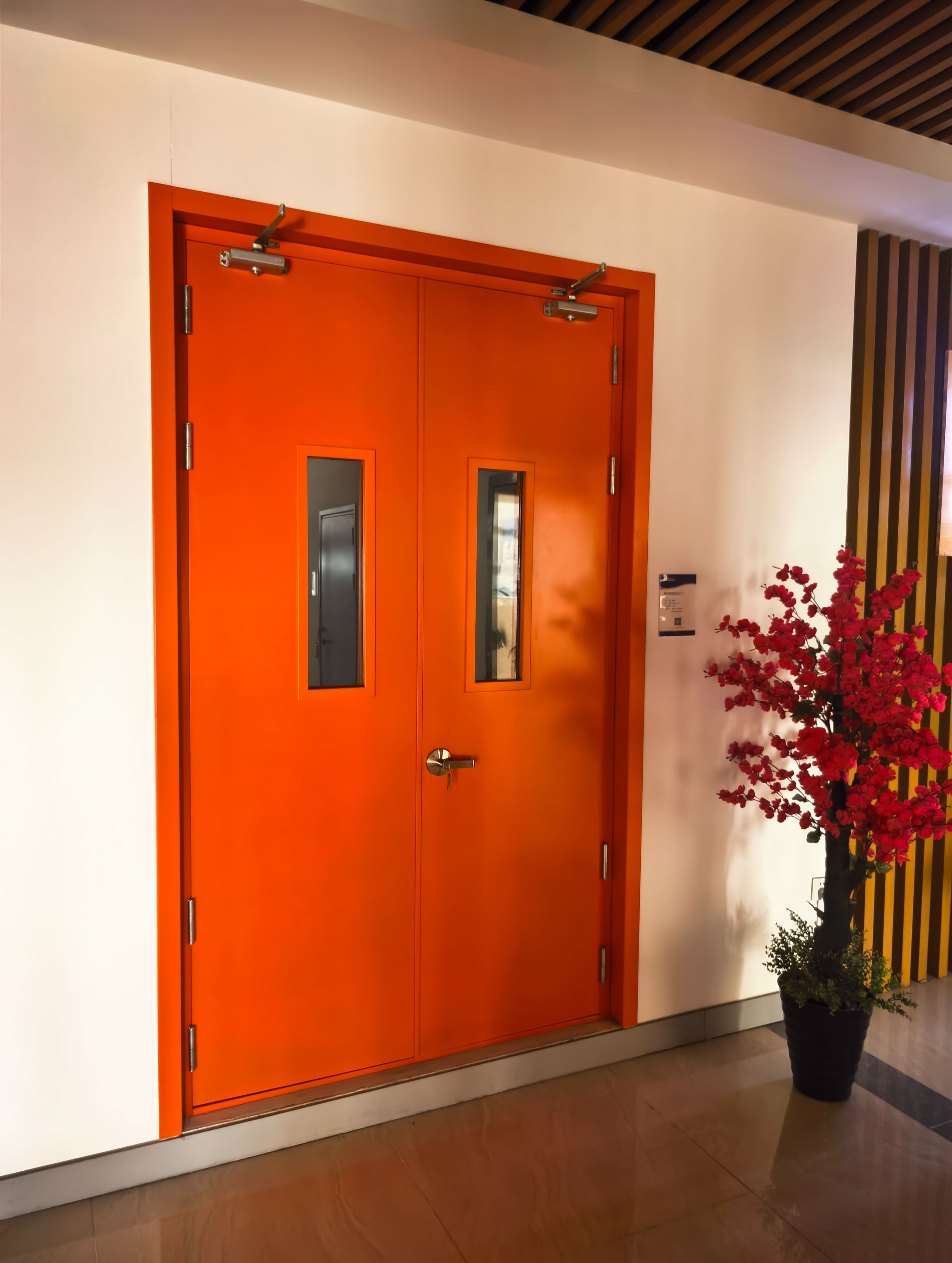
At the heart of fire-resistant materials lies a clever manipulation of chemistry. Many common building materials, like wood or plastic, are composed of carbon-based polymers that love to burn—they break down under heat into combustible gases that feed a flame. To interrupt this cycle, fire-resistant substances often incorporate elements such as phosphorus, nitrogen, or halogens. These elements can reroute the decomposition process, creating a protective char layer instead of flammable vapors, or releasing inert gases that dilute the oxygen around the material.
Take intumescent coatings as an example. These coatings expand dramatically when exposed to flame, forming an insulating foam that shields the underlying material. The chemistry here typically involves a carbon source (like pentaerythritol), an acid source (such as ammonium polyphosphate), and a blowing agent (commonly melamine). When heat kicks in, the acid catalyzes the carbon source into a thick char, while the blowing agent puffs it up, creating a barrier that slows heat transfer and keeps the structure cooler for longer.
Meanwhile, inherently flame-retardant polymers like polybenzimidazole (PBI) or polyetherimide (PEI) work on a molecular level. Their polymer backbones are packed with strong bonds and aromatic rings that resist thermal degradation. Instead of melting or dripping, they carbonize and maintain their geometry, denying flames the fuel and pathways they need to spread. By designing materials from the atomic level up, chemists have crafted fabrics, foams, and composites that don’t just delay fire—they actively challenge it.
Form Meets Function: Design Choices That Don't Compromise Safety
When aesthetics and practicality collide, the safest designs don't shout for attention—they quietly earn trust. Rounded edges on a kitchen counter aren't just a stylistic nod to minimalism; they eliminate sharp corners that could catch a sleeve or, worse, a child's forehead. The same principle applies to staircase railings with a smooth, continuous grip that invites a firm hold without snagging. These choices feel intuitive because they blend seamlessly into the environment, proving that safety doesn't have to be an afterthought bolted onto a finished product.
Materials play an equally subtle role. A bathroom floor with a matte, textured surface looks warm and organic, yet it provides crucial traction under wet feet. In a garage, epoxy coatings that resist oil and grease also prevent slips without the industrial coldness of raw concrete. Even in furniture, fabrics treated for flame resistance can mimic the soft hand of natural linen, preserving the cozy appeal while standing guard against accidents. The trick is selecting finishes that serve a dual purpose—enhancing the visual narrative while acting as a silent safety net.
Lighting, too, is a silent guardian dressed in ambiance. Recessed step lights with a warm glow guide a midnight path to the kitchen without disrupting sleep, while motion-sensor fixtures in a dark hallway eliminate the fumble for a switch. Outdoors, solar-powered bollards define a driveway's edge stylishly, preventing a misstep into the garden. In each instance, the form genuinely meets function: the design element isn't sacrificed for safety; it's elevated by it. That's the hallmark of thoughtful, human-centered design.
Installation Traps: Common Mistakes and How to Dodge Them
Rushing through the setup often leads to skipped dependency checks and incompatible versions. A quick glance at the system requirements page can save you from hours of troubleshooting cryptic error messages later. Always take a moment to verify that your environment matches what the software expects—especially when it comes to database drivers, runtime versions, and OS-specific packages.
Blindly following default installation paths might seem harmless, but it frequently results in permission headaches and cluttered directories. Customize the install location to something logical for your workflow, and avoid nesting it too deeply in protected folders. If the installer asks about PATH variables or service accounts, treat those prompts with care—they’re not just decorative checkboxes.
A surprisingly common snag is ignoring post-install steps. Many platforms require a manual service start, a firewall exception, or an initial wizard before they’re truly ready. That final reboot or command-line sequence isn’t a suggestion; it’s often the difference between a smooth launch and a cryptic failure. Bookmark the official “getting started” guide and step through it methodically—your future self will thank you.
Aging Gracefully: Maintenance That Extends Your Fire Door’s Life
A fire door isn’t just a piece of wood and metal—it’s a silent guardian that stands between you and disaster. But like any hardworking protector, it ages, and even the sturdiest door needs a little attention to stay reliable. The key to a lasting performance isn’t complicated: regular, thoughtful care that catches small issues before they become serious problems. Think of it less like a chore and more like a simple routine that safeguards your space.
Start with the basics: check hinges, lubrication, and alignment. A drop of oil on squeaky hinges might seem trivial, but it prevents friction that wears down components over time. Misalignment, even by a fraction of an inch, can compromise the door’s ability to close fully against smoke and flames. Give your door a gentle push—if it doesn’t latch smoothly and securely, something needs adjustment. Pay attention to seals and gaskets too; they can crack or loosen in ways you might not notice until you look closely.
Painting or refinishing? Go ahead, but only with products that won’t damage the door’s integrity. A fresh coat can make an older door look brand new, yet patience matters. Layers built up too thickly or applied over damaged areas can hide crucial warning signs. Instead, treat the door with respect: clean it gently, inspect it often, and don’t ignore the little things. With minimal effort, you add years to its life—and keep protection quietly, steadfastly in place.
Real-World Proof: Fire Doors That Stood the Test
In a quiet suburban neighborhood, a fire that started in a kitchen late at night was contained to a single room. The family was asleep when the smoke alarm went off, but the fire door leading to the hallway held back the flames long enough for everyone to escape. Firefighters later confirmed that without that door, the entire upper floor would have been engulfed in minutes.
Another case took place in a high-rise office building where a small electrical fire broke out on the tenth floor. The fire doors on that level sealed off the affected wing, keeping smoke and heat from spreading to occupied areas. Employees on adjacent floors barely noticed the incident until the evacuation alarm sounded, and the damage was minimal.
In a historic library, a rare collection was saved by a set of fire doors that held back intense heat from a blaze in an adjoining workshop. The doors were original to the building, well-maintained but unassuming, yet they performed exactly as intended. These stories aren't exceptions—they're proof that properly installed fire doors do exactly what they're designed to do when it matters most.
FAQ
Focus on manufacturers with solid certifications like ISO 9001 and third-party fire test reports. Check if they use high-grade cold-rolled steel and genuine fire-resistant cores, and ask about their in-house testing facilities.
Request the original fire test certificate from labs like CNAS or TUV, and verify the stamp on the door itself. Many reputable makers will also provide video documentation of the test process.
Top manufacturers use perlite, vermiculite, or composite honeycomb cores that resist heat transfer. Avoid any supplier reluctant to disclose their core composition—transparency is a key quality indicator.
Yes, many can tailor doors to match specific dimensions, finishes, and hardware setups. Provide your local building codes and aesthetic requirements early, and ensure they have experience with export packaging to prevent damage.
From raw material inspection to automated welding and final assembly, good factories run continuous checks. They often conduct random furnace tests on production samples to ensure consistent performance.
Reliable manufacturers handle proper crating and sea-worthy packing. They coordinate with freight forwarders and provide all necessary documentation for customs clearance. Always confirm the Incoterms and lead time upfront.
Experienced exporters often supply detailed installation guides and can pre-install compatible hardware. Some also offer remote training videos or on-site support for large-scale projects.
It’s the combination of certified materials, precision engineering, and consistent factory testing. Look for seamless welding, heavy-duty hinges, intumescent seals, and a manufacturer willing to show you their production line in real time.
Conclusion
Choosing a fire door manufacturer in China means looking far beyond a glossy brochure. A trustworthy partner will walk you through the maze of certifications—explaining the real difference between a UL listing and a CCC mark, and why third-party lab tests matter more than internal promises. This guide delves into the heart of what makes a door genuinely fire-resistant: from the intumescent seals that expand under heat to the gypsum and mineral cores engineered to slow flame spread. It also tackles the balancing act of design, showing how style doesn’t have to vanish at the first sign of safety. You’ll see how modern profiles, finishes, and hardware can meet strict codes while still fitting the architectural vision.
What happens after the purchase is just as critical. The guide uncovers the installation slip-ups that even seasoned contractors make—misaligned frames, inadequate sealing, or wrong fasteners—that can undermine performance in an emergency. It then shifts to the long game, offering practical maintenance routines that preserve the integrity of the door over years of use, from simple visual checks to seasonal adjustments. To anchor the technical advice, real case studies are included: hospitals and high-rises where these doors bought precious minutes during actual fires. All of this gives you the confidence to specify fire doors that are not just compliant on paper, but truly dependable.
Contact Us
Contact Person: Liam
Email: [email protected]
Tel/WhatsApp: (+86)16658531012
Website: https://www.fansifiredoor.com