

China Reflective Alu Foil Factory Pioneers High-Performance Reflective Insulation for Modern Buildings
2026-08-29
As modern buildings chase stricter energy codes and lower carbon footprints, the quiet role of reflective insulation is finally getting its due. Few outside the industry realize that a thin aluminum foil layer can sharply cut heat gain and loss—if it’s engineered well. That’s where Jinbo, a China reflective alu foil factory, is turning heads. Instead of treating reflective materials as a commodity, Jinbo has been pushing the performance envelope with high-performance reflective insulation built for the realities of today’s construction. Here’s why that matters for your next project.
Inside the Chinese Factory Making Aluminum Foil Work Harder
On the rolling floor, a coil of aluminum thicker than a man’s arm is fed back through the mill for a fifth pass. The gap between the work rolls is set to a few microns, and the metal exits thinner, longer, and hotter to the touch. Operators watch laser gauges and adjust the tension with small hand wheels, trying to push the foil down to 0.005 millimeters without tearing it. Every extra meter pulled from the same ingot means more profit, so the line runs close to the edge of what the alloy can take.
To make the foil work harder, metallurgists tweak the recipe in small ways. A slightly higher silicon content can improve stiffness, while a touch more iron helps the foil survive high-speed packaging lines without pinholes. Annealing cycles are shortened by a few hours or shifted by ten degrees, and each batch is tested for burst strength and elongation. Night shift workers carry sample strips to a lab where a tensile machine yanks them apart, and the numbers decide whether the next coil gets the same treatment or something new.
The pressure comes from export orders and domestic food packaging demand that never seems to slow. Some operators still tap a roll with a wooden stick, listening for the dull thud that signals uneven winding, even as the automated flatness controls run beside them. It is a blend of old hearing and new sensors, all pointed at the same goal: get more square meters of usable foil from less aluminum, and do it before the next shift takes over.
The Surprising Second Life of Reflective Aluminum in Construction
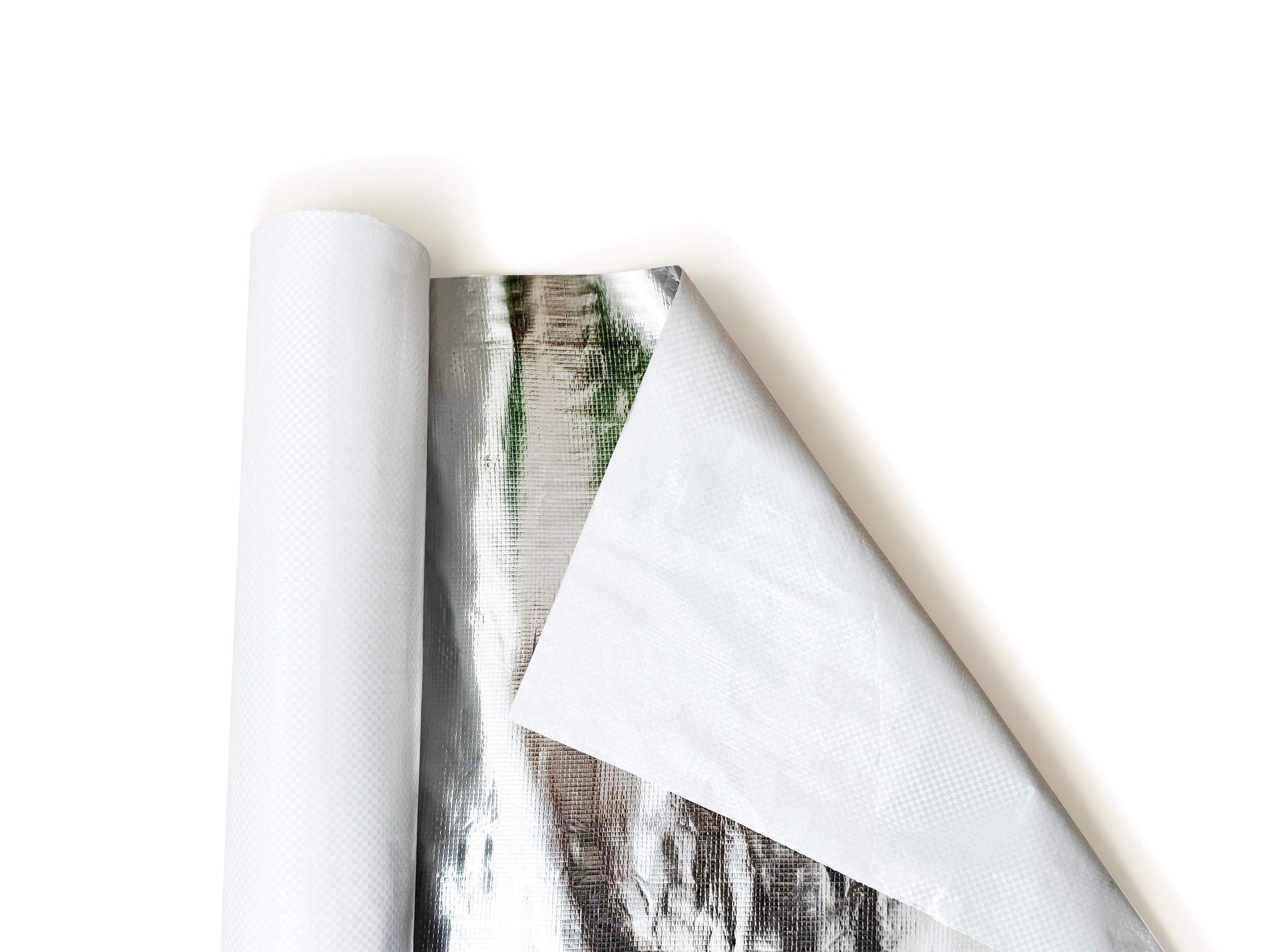
Shiny aluminum panels rarely stay put forever. When a building comes down, the metal skin that once bounced sunlight across a street often heads to a scrapyard—but not always to an end. A growing number of fabricators now pull those reflective sheets, extrusions, and frames aside for a second pass through the mill.
What comes back is not just a lower-carbon substitute. The reflective quality that made aluminum popular in the first place survives recycling almost intact, so old curtain wall sections can become new brise-soleils, spandrel panels, or rainscreen cladding. Some workshops even sort recovered aluminum by finish, keeping anodized surfaces together to preserve a particular sheen.
On job sites, this material tends to blur the line between old and new. A renovated building might wear panels cast from a dismantled warehouse across town, their faint scratches telling a quiet story under the latest coating. And because the metal still throws daylight where it's needed, the second life doesn't feel like a downgrade—it feels like a continuation.
What Happens When You Wrap a Building in a Heat Mirror?
Most people think of mirrors as light reflectors, not insulation. But a heat mirror—a film or coating designed to reflect infrared while letting visible light through—changes how a building breathes. In summer, the outer face bounces solar heat back into the sky, keeping interior walls surprisingly cool to the touch. In winter, the same principle works in reverse if the coating faces inward, trapping radiant warmth inside like a thermos.
The real surprise is how little energy you need once the envelope starts treating heat as light. Windows stop becoming thermal holes. Concrete or glass facades lose less heat overnight, and rooftop units don't have to fight the afternoon sun. You get less glare, fewer hot spots near south-facing rooms, and a subtle shimmer that makes the structure look almost liquid.
But it's not a set-it-and-forget-it trick. The orientation of the reflective layer matters—wrong side out in a cold climate and you can chill the building year-round. Also, birds sometimes misread highly mirrored surfaces as open sky. So cities that adopt this on a large scale often tweak the reflectivity or add faint patterns to break up the illusion.
Why 'Thicker' No Longer Means Better Insulation
For decades, the insulating power of a material was judged almost solely by how much of it you could pile on. Builders assumed that doubling the thickness of fiberglass batts or foam boards would translate directly into doubled thermal resistance. That logic held up when the only options were air-trapping fibers, but it falls apart once you examine modern aerogel and vacuum insulation panels. These materials achieve R-values per inch that were unthinkable twenty years ago, simply because they disrupt heat transfer at a molecular level rather than relying on sheer bulk.
A vacuum insulated panel, for example, can deliver the same thermal performance as a conventional wall cavity in a fraction of the depth by removing the gas molecules that normally carry heat across a gap. Similarly, silica aerogel consists of over 95% air trapped in a nanostructured solid, yet its labyrinthine pore network makes it nearly impossible for heat to move through. What matters now is not the physical thickness of the barrier but how effectively it blocks conduction, convection, and radiation.
This shift has practical consequences for architects and homeowners who want to preserve usable floor area or retrofit older buildings without sacrificing interior space. Thin, high-performance insulation can be integrated into window frames, pipe wraps, and even clothing. The old rule of thumb—thicker means warmer—needs to be replaced by a more nuanced question: how many ways does this material stop energy from escaping, and at what total installed cost?
Cooling Costs, Carbon Footprints, and the Foil Factor
Most people assume insulation is all about thickness. But when the sun hammers a roof, a thin layer of aluminum foil can do what a foot of fiberglass can't: bounce radiant heat back before it ever enters the living space. That's the foil factor. By reflecting up to 97% of radiant heat, foil insulation keeps attic temperatures dramatically lower, which means the air conditioner doesn't have to work as hard. For a typical home in a hot climate, that can trim cooling costs by 10-15% every summer.
The carbon math follows the same curve. Every kilowatt-hour of cooling not used is a kilowatt-hour that never needs to be generated. Since peak cooling demand often lines up with the dirtiest hours on the grid, reducing that load with a simple radiant barrier cuts more CO2 than you'd expect from the material's small footprint. Foil itself is lightweight, takes little energy to produce, and doesn't trap moisture or off-gas like some foam boards.
The catch is installation. Foil only works if it faces an air gap; press it against a surface and it turns into a conductor, losing nearly all its reflective power. Get the gap right, though, and it's one of the cheapest retrofits with the fastest payback. In a world where cooling demand keeps climbing, the foil factor isn't a gimmick—it's physics doing the heavy lifting.
From Rolling Mills to Rooftops: Tracing a High-Performance Shift
The journey of high-performance metals rarely starts where it ends. In the early days, these alloys were forged and rolled for industrial muscle—think steel beams, machine parts, and the heavy bones of factories. The priority was simple: withstand stress, resist wear, and keep costs in check. But the same properties that made them indispensable in mills and plants eventually caught the attention of a very different kind of builder.
As architecture began to demand more from its materials—lighter frames, longer spans, sharper profiles—the metalworking world responded by refining what already worked. Coatings improved, tolerances tightened, and alloys originally designed for punishing environments found their way into curtain walls, cladding, and structural elements far above street level. It wasn't a sudden revolution, but a steady migration of know-how from the foundry floor to the drafting table.
Today, the rooftop has become a testing ground for materials once confined to heavy industry. A panel that survives a coastal storm, a bracket that holds through thermal cycling, a finish that shrugs off decades of UV exposure—these are the quiet achievements of that shift. The mills never stopped rolling; they simply learned to aim higher.
FAQ
It works by blocking radiant heat rather than slowing conduction. The polished aluminum surface reflects up to 97% of thermal radiation, so it stops heat at the roof or wall before it enters the building. That makes a huge difference in attics and metal structures where radiant gain dominates.
In hot climates it keeps indoor temperatures noticeably lower by bouncing solar heat back outside. Builders often pair it with a small air gap to get the best performance. The result is less strain on air conditioning and a more stable indoor environment throughout the day.
Yes, it is lightweight and flexible enough for roofs, walls, and under-floor spaces in homes, warehouses, offices, and even prefabricated structures. Its thin profile makes it easy to fit into tight building envelopes without taking up usable space.
The foil acts as a vapor barrier when seams are properly sealed. This helps prevent condensation inside wall cavities and roof assemblies, which is a common source of mold and rot in humid climates.
Many of these facilities are located close to raw material sources and have highly automated production lines. Combined with decades of export-focused manufacturing experience, they can produce consistent, high-quality reflective foil at scale. That scale brings unit costs down while still meeting international testing standards.
It has a long service life and the aluminum content is fully recyclable at end of use. Because it reduces cooling energy demand, it also lowers the building's operational carbon footprint over time. The lightweight format further cuts fuel use during shipping compared to bulky insulation types.
The key is leaving an air space of at least 20 mm on the reflective side. Without that gap the foil cannot reflect radiant heat effectively. Sealing all overlaps with foil tape also prevents air leaks and keeps the vapor barrier function intact.
Conclusion
Inside a Chinese rolling mill, ordinary aluminum foil is being pushed far beyond its kitchen-drawer reputation. Engineers there have refined the alloy and lamination process so that a layer barely thicker than a human hair can bounce back the bulk of radiant heat. What was once a byproduct of packaging lines now finds a second life in wall cavities, attic spaces, and roofing assemblies, where it behaves like a heat mirror. Instead of adding more fiberglass or foam, builders are learning that a thin, low-emissivity surface can interrupt thermal transfer at the point where it matters most, making the old rule "thicker equals better" obsolete.
The practical payoff shows up in lower cooling loads and smaller carbon footprints, especially in sun-drenched climates where air conditioning dominates energy bills. By tracing the material from rolling mills to rooftops, one sees a quiet but high-performance shift: Chinese foil manufacturers have moved from commodity output to engineered reflective insulation systems. These products pair the foil with air gaps, bubbles, or foam cores, each configuration tuned to specific building envelopes. The result is not just a cheaper reflective layer, but a smarter one, cutting peak heat gain without adding bulk. For modern buildings chasing efficiency targets, the humble foil has become an unlikely frontline material.
Contact Us
Contact Person: Miranda
Email: [email protected]
Tel/WhatsApp: +8615231299719
Website: https://www.ihousewrap.com/