

China's 5G Core Network: Unlocking the Potential of a Hyperconnected World
2026-05-24
China’s 5G core network is reshaping how we connect, but the real story isn’t just about speed—it’s about unlocking a hyperconnected future where industries, cities, and lives intertwine seamlessly. Behind this transformation, companies like IPLOOK are quietly powering the backbone that makes it all possible. What does it take to build a network that can handle billions of devices and still feel invisible? Let’s explore the hidden engine driving China’s digital leap.
The Unseen Engine Powering China's Digital Leap
Beneath the surface of China’s rapidly expanding digital ecosystem lies a complex, often overlooked foundation of hardware-software integration and homegrown innovation. It’s not the flashy consumer apps or the sprawling e-commerce platforms that truly power the country’s online evolution, but rather a deep, threaded network of microarchitectural advances, tailored operating systems, and collaborative open-source projects that have been quietly refined over the past decade. This unseen engine is built on custom silicon designed for specific workloads, from AI inference to edge computing, and a shift toward RISC-V architectures that reduce dependency on foreign licensing. The result is a digital infrastructure that can scale with unprecedented speed while maintaining a level of resilience that is rarely discussed outside technical circles.
What makes this engine particularly effective is its ability to bridge legacy systems with next-generation demands. In many sectors, decades-old industrial machinery has been retrofitted with tiny, intelligent modules that speak the same protocols as cloud-native applications. This fusion wasn’t achieved through off-the-shelf solutions; it required a grassroots effort by engineers who developed lightweight middleware and real-time operating systems capable of running on minimal resources. The knowledge gained from these projects flowed into public-private partnerships, creating a feedback loop where real-world problems from manufacturing, logistics, and energy grids directly shape the evolution of digital platforms. This approach stands in contrast to the top-down model seen elsewhere, instead emphasizing adaptability and bottom-up problem-solving.
The ripple effects extend far beyond China’s borders, though they are seldom attributed to their true source. Developers around the world now rely on libraries, compilers, and debugging tools that originated from these efforts, often without realizing their provenance. The unseen engine thrives on a culture of open contribution, with thousands of developers continuously patching and improving shared codebases. It’s a form of digital self-sufficiency that doesn’t seek the spotlight; its metrics are uptime, latency improvements, and the silent, steady hum of data centers that rarely make headlines. For those paying close attention, the signs are everywhere—in reduced chip fabrication cycles, novel memory interfaces, and an ecosystem that treats software not as a product but as a constantly evolving, collaborative endeavor.
Network Slicing: One Infrastructure, Many Worlds
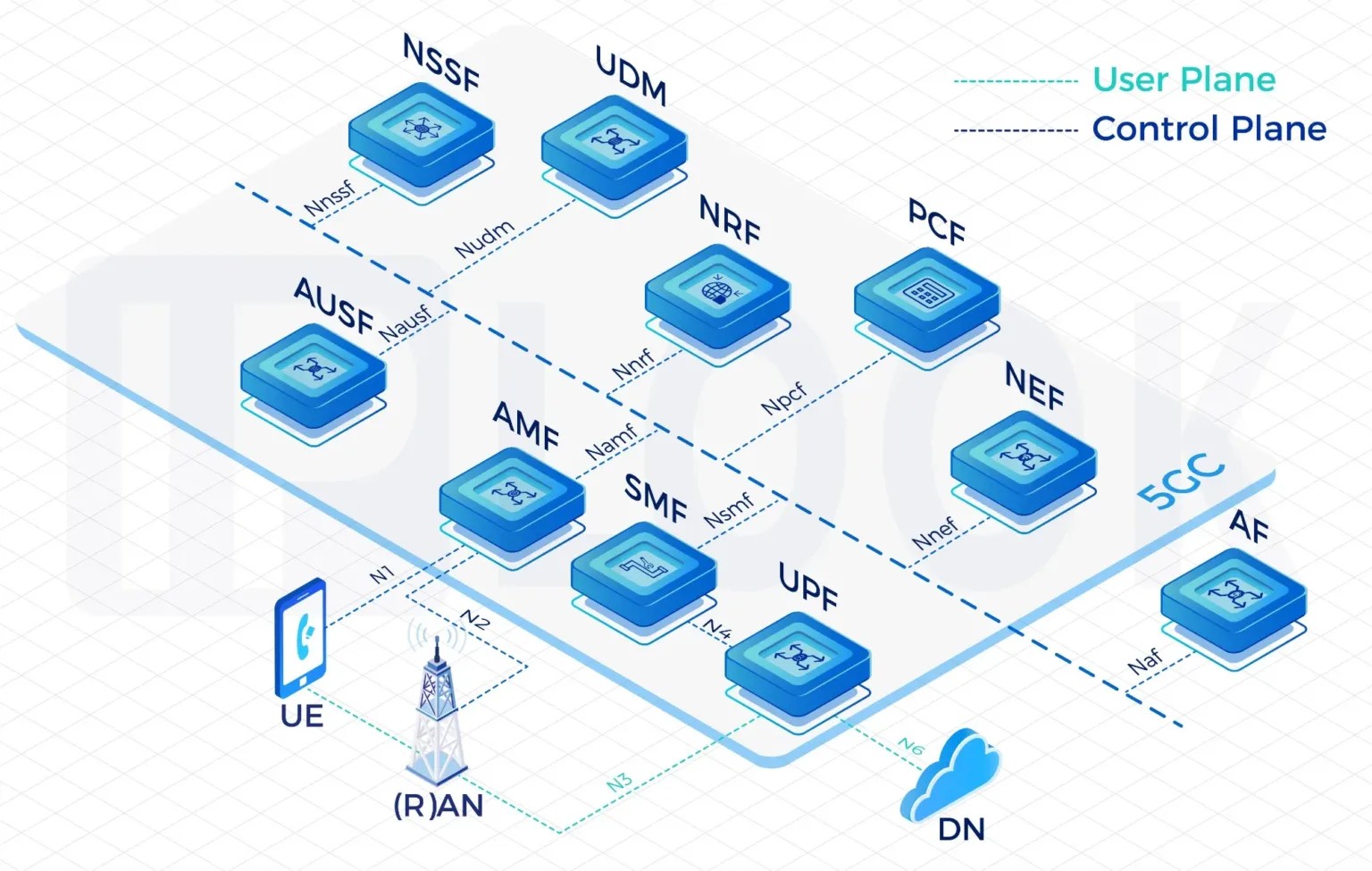
At its core, network slicing breaks a single physical network into multiple virtual networks, each tailored to a distinct set of requirements. Instead of forcing every application onto the same generic infrastructure, operators can now carve out dedicated slices optimized for speed, latency, or connectivity density. This approach transforms the network from a monolithic pipe into a collection of purpose-built environments.
The magic lies in how a common infrastructure can simultaneously support worlds that seem incompatible. One slice might power autonomous vehicles, demanding ultra‑low latency and ironclad reliability. Another could serve a dense IoT sensor grid, prioritizing massive device density and battery efficiency over raw throughput. A third might deliver high‑bandwidth VR experiences, where consistent performance trumps all else. Each slice operates as if it’s running on its own private infrastructure, yet they coexist harmoniously on the same hardware.
Beyond technical flexibility, this model reshapes the economics of networking. Service providers can offer precisely calibrated connectivity on demand, turning a fixed‑cost physical asset into a platform for innovation. Enterprises gain the freedom to design networks that match their exact requirements, paying only for the slices they need. The result is an infrastructure that doesn’t just connect endpoints but adapts to the unique language of every application it serves.
Edge Computing's Quiet Takeover
Not long ago, the cloud was the undisputed center of the digital universe. But a shift is happening, almost without fanfare. Edge computing has started handling tasks that once made the round trip to distant data centers—processing sensor data from factory floors, making split-second decisions for self-driving cars, even keeping smart home devices responsive when the internet flickers out. This isn't a loud revolution; it's a quiet redistribution of computing power to where it's actually needed.
Part of what makes this takeover so silent is its invisibility. There are no new apps to download, no interfaces to learn. Instead, edge nodes are tucked away in cell towers, retail backrooms, and utility poles, smoothing out experiences we already rely on. Video calls have fewer stutters, augmented reality feels more immediate, and industrial machines predict their own failures without waiting for a remote server's approval. It's infrastructure doing what infrastructure should—working in the background, asking for no attention.
Perhaps the most surprising aspect isn't the technology itself, but the way it changes our relationship with data. Instead of hoovering up everything and sending it away for analysis, edge devices can now decide what matters on the spot. A traffic camera no longer streams endless footage to the cloud; it recognizes a collision and sends just that clip. This selective approach doesn't just save bandwidth—it quietly redefines privacy and efficiency, making the takeover not just quiet, but strangely considerate.
Life at Light Speed: The Consumer Reality
We’ve entered an era where the gap between desire and delivery has all but vanished. Same‑day shipping, instant streaming, and real‑time notifications have rewired our expectations, making patience feel like a relic of the past. This acceleration isn’t just about speed—it’s about the erosion of friction from everyday life, turning once‑tangible waits into abstract inconveniences.
Behind the seamless tap‑to‑own magic lies a labyrinth of logistics, data centers, and last‑mile couriers working in silent harmony. The illusion of effortlessness masks a frantic ballet of predictive algorithms and inventory robots, all choreographed to make you feel like the center of a universe that never sleeps. Yet for the consumer, the machinery remains invisible—only the instant gratification registers, reinforcing a cycle where any delay feels like a personal failure of the service.
But living at light speed reshapes more than just habits; it recalibrates our sense of value and permanence. When everything arrives before you can second‑guess the purchase, the thrill of anticipation dissolves, replaced by a fleeting dopamine hit and a growing mountain of cardboard boxes. We’re learning, sometimes uneasily, that the true cost of frictionless consumption isn’t measured in dollars—it’s the quiet devaluation of waiting, the forgotten art of longing, and the slow realization that speed, once a luxury, now dictates our rhythms in ways we rarely pause to examine.
Factories That Think: The Industrial 5G Shift
Picture a factory floor where machines don’t just perform tasks—they anticipate needs, coordinate in real time, and adapt on the fly. That’s the promise of the industrial 5G shift, moving beyond the limitations of wired networks and Wi-Fi. With ultra-reliable low-latency communication, factories gain the ability to process data at the edge, enabling decisions in microseconds. It’s less about raw speed and more about creating a responsive digital nervous system that connects every sensor, robot, and control unit without a tangle of cables.
This transformation isn’t limited to a single production line. Private 5G networks let entire facilities reconfigure their layouts overnight, swapping out machinery like plugging in peripherals to a computer. Maintenance shifts from scheduled downtime to predictive models, as vibration sensors and thermal cameras stream high-definition data to cloud-based analysis—yet everything runs locally for security. The result is a plant that rarely stops, because it constantly self-monitors through a dense web of wireless devices that sip power and last for years.
What sets this apart from earlier wireless upgrades is the emphasis on determinism. Time-sensitive networking over 5G means a robotic arm’s command arrives exactly when it should, every time, even in a crowded spectrum. That precision unlocks collaborative robots working alongside humans without safety cages, guided by instant hazard detection. For manufacturers, it’s not about chasing the latest label—it’s about building an environment where innovation happens in the spaces between wires, where the factory truly starts to think.
Spreading the Blueprint: Global Echoes of China's Core
Across continents, China's development approach has sparked conversations that go beyond economics. In parts of Africa, newly built industrial parks mirror the manufacturing zones that once transformed China's coastal cities. Local entrepreneurs speak not just of infrastructure, but of a shift in mindset—long-term planning, phased implementation, and the integration of technology with traditional industries.
In Southeast Asia, the embrace of digital payment ecosystems and smart city frameworks carries familiar echoes. Young tech founders draw inspiration from China's leap into a cashless society, adapting it to local needs without losing their own cultural textures. The circulation of these ideas isn't one-directional; it's a continuous remix, where practices are borrowed, tweaked, sometimes challenged, and often merged with homegrown innovation.
Even in regions where official narratives face skepticism, the concrete results—high-speed rail networks, efficient logistics hubs, and revitalized trade corridors—drive a quiet reevaluation. Community leaders talk less about geopolitical alignments and more about practical solutions that have visibly changed daily life. This organic diffusion of experience highlights how modern global influence often spreads not through proclamation, but through the quiet persistence of lived examples.
FAQ
The 5G core is the central nervous system of a mobile network, handling everything from user authentication to data routing and service orchestration. Unlike the 4G evolved packet core, which was largely hardware-based and monolithic, the 5G core embraces a cloud-native, service-based architecture. This shift decouples network functions into modular services that can be deployed, scaled, and updated independently. It natively supports features like network slicing, edge computing, and ultra-reliable low-latency communication, making the network far more adaptable to diverse use cases beyond just faster smartphone browsing.
China's 5G core isn't just about faster speeds—it fundamentally rethinks how networks handle massive device density and data-intensive applications. By deploying a standalone 5G core from the outset, Chinese operators can leverage full-scale network slicing, which dedicates virtual network segments to specific services like autonomous driving, industrial automation, or smart city sensors. This means a single physical network can simultaneously guarantee ultra-low latency for remote surgery missions and massive bandwidth for 8K video streaming without one compromising the other. Coupled with aggressive edge node deployment across urban and industrial hubs, it turns the network into a pervasive fabric that processes data closer to users, slashing latency and enabling real-time decision-making at a scale that legacy architectures simply can't support.
Network slicing is a direct result of the 5G core's service-based architecture and control-user plane separation. The core can dynamically create isolated end-to-end virtual networks, each with its own customized set of resources, policies, and service-level agreements. For instance, a factory floor slice might require 1ms latency and 99.9999% reliability, while a smart meter slice only needs sporadic, low-bandwidth connectivity. Edge computing works hand in hand by allowing the user plane function (UPF) to be placed deep into the network edge, near factories, stadiums, or neighborhoods. This way, data doesn't have to travel all the way to a centralized data center; it gets processed locally, reducing backhaul load and cutting latency drastically. The core also exposes network capabilities via APIs, so third-party applications can request slicing and edge resources on demand.
Manufacturing leads the pack, with smart factories using private 5G slices for real-time robot control, predictive maintenance, and AI-driven quality inspection. Ports and logistics are transformed through automated guided vehicles and remote crane operations that demand deterministic low latency. Healthcare experiments with telesurgery and remote patient monitoring rely on the network's ability to guarantee performance. Meanwhile, smart cities tap into massive IoT for traffic optimization, environmental sensing, and public safety, aided by edge computing nodes that process video streams locally. Media and entertainment benefit from immersive experiences like augmented reality concerts that require high bandwidth and synchronization. Even agriculture sees precision farming with drones and sensor networks enabled by nationwide coverage and low power consumption features.
Security has been baked into the 5G core architecture from day one, with stronger encryption algorithms, mutual authentication between devices and networks, and a dedicated security anchor function. China employs a multilayer approach that includes strict compliance with national cybersecurity laws and standards, such as the Multi-Level Protection Scheme. Network slicing itself enhances security by isolating sensitive traffic—an autonomous vehicle slice, for example, is logically separated from a public internet slice, preventing lateral attacks. Additionally, edge computing allows sensitive data like factory production secrets to remain on-premises rather than traversing the public cloud. Operators also deploy AI-driven threat detection within the core to spot anomalies in signaling or traffic patterns in near-real time.
The 5G core is pivotal for massive IoT because it introduces native support for low-power wide-area connectivity with features like enhanced Machine-Type Communication (eMTC) and narrowband IoT integration. The cloud-native core can efficiently manage billions of device registrations, authentication, and data flows through lightweight protocols tailored for devices that send tiny bursts of data infrequently. It also enables edge-based aggregation and analytics, so sensor data from smart meters, environmental monitors, or wearables gets processed locally without overwhelming network backbones. The ability to dedicate network slices to IoT ensures that critical sensor networks (like fire alarms) get priority and isolation from consumer traffic, making large-scale smart city and industrial IoT viable without compromising reliability.
Moving to a cloud-native core is a radical departure from the past. It means network functions are built as microservices running in containers, orchestrated by platforms like Kubernetes. This allows Chinese operators to achieve unprecedented agility—new services can be rolled out in hours instead of months, and network capacity can be scaled up or down on demand. It also paves the way for automation and zero-touch provisioning, reducing operational costs. Crucially, a cloud-native core breaks vendor lock-in, as operators can mix and match network functions from different suppliers, fostering a more competitive ecosystem. This architectural shift not only accelerates innovation but also makes the network inherently resilient since failures in one microservice don't cascade catastrophically.
Despite rapid deployment, several hurdles remain. The complexity of managing a fully virtualized, multi-vendor core demands new skills in cloud orchestration and AIOps, leading to a steep learning curve for operation teams. Interoperability between different vendors' core components still throws up occasional integration glitches. Energy consumption is also a growing concern—keeping dense edge computing sites and data centers running requires significant power, challenging sustainability goals. On the business side, monetizing network slicing effectively is still experimental; many enterprises are cautious about costs and unclear ROI. Then there's the need for a thriving ecosystem of device manufacturers and application developers to create compelling use cases that actually justify the infrastructure investment. Finally, balancing nationwide coverage goals with the economic realities of less populous regions remains a tough planning puzzle.
Conclusion
Beneath the surface of China's digital transformation lies an unseen engine—the 5G core network—redefining how data moves, services scale, and industries operate. Network slicing, a cornerstone of this architecture, enables a single physical infrastructure to support countless virtual environments, each tailored with unique performance characteristics. Alongside this, edge computing has quietly shifted processing power closer to users and devices, slashing latency and enabling real-time decision-making in ways previously unimaginable. These foundational shifts have turned the network into a dynamic, adaptive platform rather than just a faster pipeline, laying the groundwork for a truly hyperconnected society where everything from autonomous vehicles to remote surgery can thrive.
For consumers, life moves at light speed with seamless streaming, immersive augmented reality, and instant cloud gaming becoming everyday norms, while industries are undergoing a deeper revolution. Factories are evolving into thinking entities, where 5G-enabled sensors and AI orchestrate production lines, predict maintenance, and optimize supply chains autonomously. Beyond China's borders, echoes of this core network blueprint are spreading as other nations adopt similar frameworks, influencing global standards and sparking a new wave of industrial digitization. Ultimately, China's 5G core isn't just a technological leap—it's a catalyst for reshaping how humans and machines coexist in a hyperconnected world.
Contact Us
Contact Person: Shimmy
Email: [email protected]
Tel/WhatsApp: 85253392231
Website: https://www.iplook.com