

Current Sense Resistor Selection Guide: Top Recommended List for Accurate Measurements
2026-07-01
Selecting the right current sense resistor can make or break your measurement accuracy. In this guide, we cut through the noise to bring you a curated list of top-performing resistors that deliver precise results in real-world circuits. Whether you're optimizing a power supply or fine-tuning a motor controller, your choice matters—and Milliohm has done the homework so you don't have to.
Why Getting the Resistor Right Matters More Than You Think
Resistors are often treated as simple, passive components that just limit current or divide voltage, but their selection can quietly determine a circuit’s success or failure. The right resistor value ensures that a sensor interface remains linear, a timing circuit stays accurate, and a power supply delivers stable voltage. When the value is off, even slightly, the consequences might not be immediately obvious—degraded signal-to-noise performance, thermal drift pushing a design out of spec, or oscillation you didn’t anticipate.
Beyond the nominal resistance, factors like temperature coefficient, power rating, and parasitic inductance can turn a reliable board into a troubleshooting nightmare. For instance, a low-cost thick film resistor might drift enough over temperature to throw off a precision analog front-end, while a metal film type would barely flinch. High-frequency circuits reveal another layer: the tiny inductance of a wirewound resistor can create impedance peaks that distort signals, making a seemingly ideal part completely wrong for the job.
The physical package and PCB layout also interact with the resistor’s behavior in ways that simulation often misses. A small 0402 resistor might be perfect for minimizing parasitic capacitance, but its limited power dissipation can lead to hot spots and even board discoloration over time. The difference between a product that lasts a decade and one that fails in the field after a year can come down to a single resistor choice that accounted for surge tolerance, moisture ingress, and thermal cycling—things no datasheet headline will tell you.
Key Specs That Make or Break Measurement Accuracy
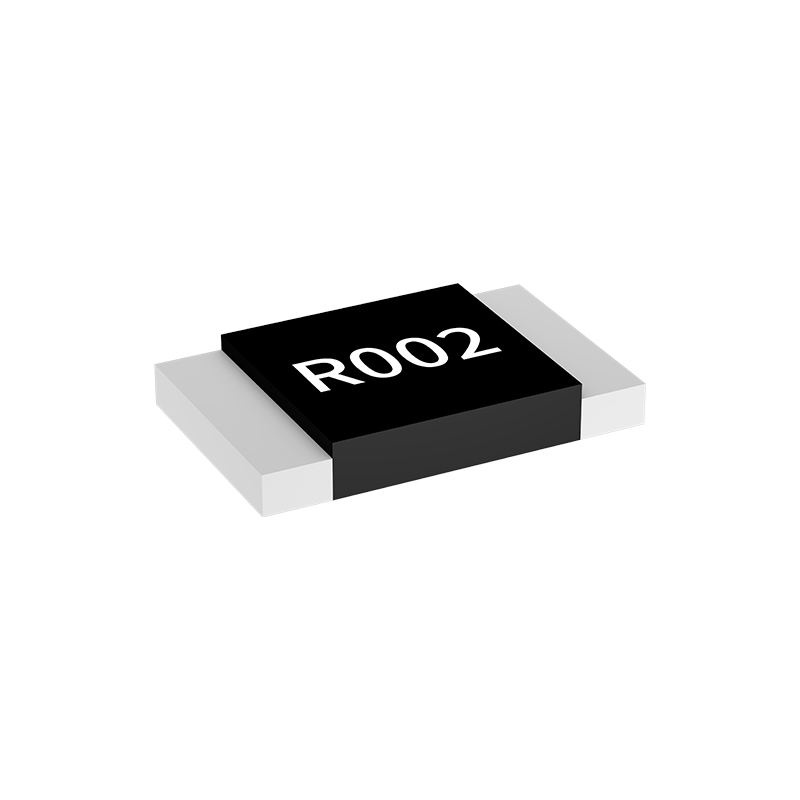
Precision instruments live and die by their specifications, and a handful of parameters separate a trustworthy reading from a misleading one. Resolution might grab attention, but it's accuracy that tells you how close you are to the true value—expressed as a percentage of reading plus a fixed offset, this number is often where cheap sensors stumble. Equally critical is measurement range; pushing a device too close to its limits invites nonlinearity and error creep, even if the spec sheet claims otherwise.
Temperature stability is the silent saboteur. A device that drifts a fraction of a percent with every degree swing can render months of data useless, especially in field deployments where controlled labs are a fantasy. Look for guaranteed drift figures over the full operating range, not just a single-point calibration promise. Similarly, input impedance and loading effects can distort signals before they ever reach the ADC—high-impedance sensors demand carefully matched front ends, or the measurement is compromised from the start.
Noise and update rate trade-offs round out the list. A high-resolution display can mask noisy, unstable readings if the measurement rate is too slow to capture real dynamics, or too fast to reject interference. The best designs let you adjust filtering, but the underlying RMS noise and effective number of bits tell the real story. When these specs align, accuracy isn't just a datasheet claim—it's a repeatable, field-proven outcome.
Overlooked Pitfalls in Real-World Usage
It’s easy to get caught up in the hype of a new tool or framework, only to discover later that it doesn’t play well with the rest of your stack. One subtle trap is assuming that because something works beautifully in isolated demos, it will hold up under the messy, unpredictable conditions of a production environment. Real-world usage often exposes hidden assumptions—about network latency, error handling, or the sheer variety of user inputs—that tutorials rarely cover.
Another common blind spot is over-relying on default configurations without understanding their trade-offs. A library might ship with sensible defaults for most, but your particular traffic patterns or data shapes can surface performance bottlenecks or security gaps you never anticipated. Teams sometimes treat these defaults as a safety net, only to realize later that they were never meant for the specific load or compliance requirements their application demands.
Finally, there’s the pitfall of integration complexity. Even when each component performs well on its own, the glue code between them can become a fragile web of workarounds. Without careful monitoring and logging, failures become hard to trace, leading to debugging marathons that sap morale and delay releases. The best way to avoid these traps is to test early with realistic data, gradually introduce complexity, and always question whether the shiny solution truly fits the problem you’re solving.
Practical Selection Workflow for Common Applications
Finding the right component for a common application often starts with clearly defining the operating conditions. Instead of jumping straight to datasheets, begin by listing the non-negotiable parameters: voltage levels, current load, switching frequency if applicable, and environmental factors like temperature range or exposure to moisture. A common pitfall is over-specifying, which drives up cost without adding real value. For instance, in a simple DC motor driver, you rarely need a 150°C rated MOSFET when the system operates at room temperature with proper ventilation.
Once the must-have specs are known, narrow down the options using parametric search tools from distributors, but don't stop there. Check the lifecycle status and real-world availability of the part, especially if the design is meant for a product with a long lifespan. A component that shows thousands in stock today might be facing an end-of-life notice next quarter. Cross-reference manufacturer technical notes and community forums—often, the practical nuances, like unexpected thermal behavior or package solder issues, surface only in field reports rather than official documentation.
Finally, verify the selection under plausible worst-case conditions before committing to a design. A bench test with a makeshift thermal chamber or a quick simulation with parasitic elements can reveal limitations that pure spec sheets hide. Keep a shortlist of two or three alternative parts that can serve as drop-in replacements; this simple habit prevents panic when lead times stretch or when you discover that your first choice has an uncommon footprint that limits second-sourcing options downstream.
Handpicked Resistors That Deliver Consistent Results
Each resistor in our collection undergoes a rigorous selection process, ensuring only those with the tightest tolerances and most stable characteristics make the cut. This hands-on approach eliminates variability, so you get components that perform identically from batch to batch.
Consistency is more than a buzzword—it’s the foundation of reliable circuitry. By handpicking resistors that meet exacting standards for temperature coefficient and noise, we guarantee predictable behavior in your designs, whether you’re prototyping or scaling production.
The result? Fewer surprises during testing and fewer field failures. Our handpicked resistors empower engineers to build with confidence, knowing every unit will deliver the same, unwavering performance.
Tips for Optimizing Signal Integrity in Your Design
Signal integrity isn’t just about following a checklist—it’s about understanding how your signals actually behave in the real world. Start by visualizing your return paths. Every high-speed signal needs a low-inductance route back to its source, and without it, you’re inviting crosstalk, EMI, and timing headaches. Instead of treating the ground plane as a magic sink, actively shape it to guide return currents right under their respective traces. This means avoiding splits, slots, or gaps in reference planes that force return currents to wander, creating antennas out of your differential pairs.
When it comes to routing, treat your traces as transmission lines, not simple wires. Match lengths within a few mils, but don’t obsess over absolute symmetry—sometimes a slight meander in the right spot prevents a much bigger skew problem. For differential pairs, keep the spacing consistent; letting the gap widen around a via or connector creates an impedance hiccup that can reflect back as jitter. And don’t forget the vias themselves. A via acts like a tiny inductor in series, so minimize its stub length and consider back-drilling if you’re working above a few GHz. The goal is a clean, monotonic eye at the receiver, not just a layout that passed a DRC check.
Power distribution can make or break your signal chain. Low-frequency bypassing with big bulk caps isn’t enough—you need a network of capacitors that keeps the PDN impedance flat into the hundreds of MHz. Think in time domain: a switching driver gulps current in picoseconds, and if the local decoupling can’t supply it instantly, the rail voltage sags, delaying edges and smearing the eye. Place small, high-frequency caps directly under the IC, using the shortest possible traces to the power and ground pins. And watch out for resonances between caps; sometimes a little series resistance on the bulk caps dampens nasty parallel peaks. If your simulation shows a PDN impedance spike near a harmonic of your clock, fix it before it fixes your margin for you.
FAQ
While many specs matter, the temperature coefficient of resistance (TCR) often takes priority for precision work. A low TCR, say ±50 ppm/°C or better, ensures the resistance value stays stable even as the part heats up under load, keeping your current readings accurate across a wide temperature range.
A Kelvin connection separates the current-carrying path from the voltage-sensing leads. That means the measurement circuit isn't affected by the resistance of the solder joints or PCB traces that carry the main current, so you get a much truer voltage drop reading directly across the resistive element.
Sure. The Vishay WSL series, like the WSLP, WSLT, and WSLF families, are widely used because they offer very low resistance values (down to milliohms) in small footprints, with good power ratings and low TCR. Another go-to is the Susumu KRL series, known for stable thin-film construction.
Self-heating raises the resistor's temperature, which drifts its resistance according to its TCR, introducing error. To keep it under control, you can choose a resistor with a higher power rating than you strictly need, ensure good PCB copper area for heat sinking, or step down to a lower resistance value to reduce I²R losses.
A larger value gives you a bigger voltage drop for the same current, which means better signal-to-noise ratio and easier measurement, but it also wastes more power and causes more voltage drop in the supply line. A smaller value is more efficient but demands a low-offset, high-gain amplifier to resolve the tiny voltage, making the circuit more sensitive to noise.
Definitely use Kelvin routing: run dedicated, narrow traces from the inner pads of the resistor straight to the amplifier's input, connecting them as close to the resistive element as possible. Also, place the amplifier nearby to minimize trace resistance and noise pickup, and keep high-current paths well away from the sensing traces.
Conclusion
Selecting the right current sense resistor often makes the difference between a design that performs reliably and one plagued by elusive errors. It’s not simply about picking a low-ohm value; factors like temperature coefficient of resistance (TCR), power rating, and parasitic inductance directly impact measurement accuracy, especially under varying loads. Even a resistor with an impressive datasheet can underperform if its layout invites thermal imbalances or if the chosen footprint amplifies noise. Overlooking these aspects leads to gain errors that self-calibration routines can’t fully correct, because the root cause is a fundamental mismatch between the sensing element and the real-world operating conditions.
A practical workflow starts by defining the maximum sense voltage and power budget, then narrowing candidates based on tolerance, TCR, and thermal derating. But real pitfalls surface in the lab: trace resistance adding offset, thermoelectric voltages at connections, or pulse currents exceeding steady-state ratings. Our handpicked list focuses on resistors that balance precision with robustness, from metal foil types for high-accuracy tasks to thick-film parts for cost-sensitive designs. To preserve signal integrity, keep Kelvin connections short, shield against electromagnetic interference, and consider guarding techniques around the sense pads. By treating the resistor as a system component rather than a discrete part, you turn a simple component choice into a deliberate design decision that ensures consistent, accurate current measurements.
Contact Us
Contact Person: Yuying Gao
Email: [email protected]
Tel/WhatsApp: +86 18926013721
Website: https://en.milliohm.net/