

Cutting Rule Manufacturer for Die Making Materials What to Look For
2026-11-02
在模具制造中,切割规则的精度直接决定了最终产品的成败。但面对众多供应商,如何找到真正理解模具材料需求的切割规则制造商?选择错误可能导致生产延误和成本飙升。这就是为什么行业领先者信赖ADEWO——我们不仅制造切割规则,更针对模具制造材料的特殊要求进行优化。继续阅读,了解选择切割规则制造商时需要关注的关键因素,以及ADEWO如何帮助您避免常见陷阱。
Steel Hardness Claims That Actually Hold Up
Most knife makers toss around Rockwell numbers like they're badges of honor, but very few actually stand behind them once the blades leave the shop. A claimed 62 HRC sounds great on paper, yet if the heat treatment was rushed or the steel was never properly stress-relieved, that number means nothing at the edge. The claims that hold up come from makers who test each batch, not just once, but after cryo, after tempering, and sometimes after a full day of hard use. They know that hardness without toughness is a chipped blade waiting to happen.
Then there's the myth of the super-steel—the idea that a higher Rockwell number automatically makes a better knife. That might sell knives to collectors, but it doesn't hold up in the kitchen or on a job site. What actually holds up is consistency: a steel that stays at 60-61 HRC across the entire edge, not just at the ricasso where the tester happened to land. Big manufacturers love to cherry-pick a single reading, while smaller makers who care will show you a hardness map. That's the difference between a claim and a guarantee.
Finally, the claims that survive real-world testing are the ones that admit trade-offs. A high-hardness blade will hold an edge longer, but it's also more likely to chip if you twist it or hit bone. A slightly lower hardness might roll instead of chip, which is easier to fix with a honing rod. The honest makers tell you this up front—they don't pretend their steel does everything. That transparency is rare, and it's exactly why those hardness claims actually hold up when you put them to work.
How Cutting Rule Tolerances Show Up in Your Finished Die
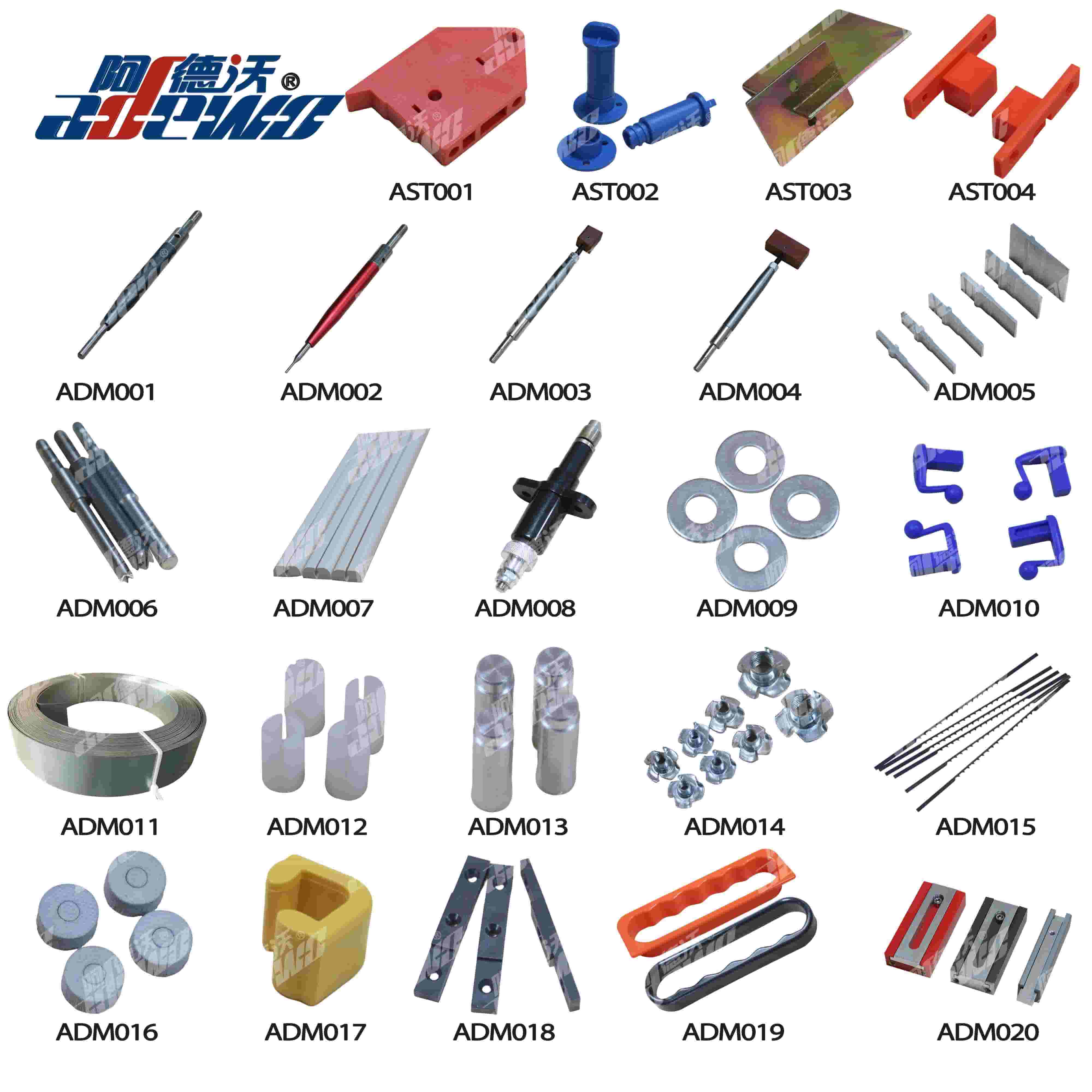
When a cutting rule is spec'd with a loose tolerance, the first thing you'll notice is that the die doesn't sit flat against the base. Small deviations in rule height stack up across the die board, so one end of a long straight rule can end up a few thousandths higher than the other. That uneven pressure transfers straight into your material.
The telltale sign is usually along the cut edge. If the rule height varies, you might get full penetration in the center but only a partial kiss-cut near the corners. On thicker substrates this shows up as fibers pulling instead of shearing cleanly, or a ragged edge on the bottom side of the sheet. Over time, the high spots on the rule wear faster, making the cut quality drift even on repeat jobs.
Tolerances in the rule's width also affect how snug the rule fits in the laser-cut channel. A rule that's slightly undersized can rock in the slot, especially during ejection or when the press cycles at speed. That movement changes the cut angle and leaves inconsistent crease depth. Finished dies with this issue often need more make-ready time and extra shimming just to hold a baseline.
The Difference Between Catalog Profiles and Your Actual Board
A catalog profile is a snapshot taken before the board exists. It reflects the design file, the master mold, or a hand-shaped template under ideal measuring conditions. The board in your hands, though, has already gone through resin cure cycles, core humidity shifts, and finishing passes that quietly reshape those numbers.
Most of the deviation shows up in flex and rocker. Two decks from the same catalog page can sit slightly different on a flat table, and one might need more break-in time before it matches the listed feel. Tolerances exist, but they're rarely printed, so the profile becomes a range rather than a fixed spec.
That's not a defect—it's just the gap between a controlled drawing and a material object. If you can, put a straightedge along the base and flex the board by hand. That will tell you more about how it actually behaves than any spec sheet will.
Lead Times That Respect Your Die Room
A die room runs on momentum. Stalled tooling or late components don't just delay a single job—they ripple through every downstream operation, turning a well-oiled schedule into a scramble. The lead times you're quoted should account for that reality. We build our timelines around the way die rooms actually work: factoring in inspection, adjustment, and the inevitable fine-tuning that separates a good fit from a perfect one.
Instead of padding every order with the same generic buffer, we look at the specific geometry and wear patterns involved. Simple reworks move quickly. Complex multi-cavity retooling gets the extra days it genuinely needs—no more, no less. That means you're not left wondering whether a promise of 'two weeks' really means six, or rushing to clear bench space for a part that hasn't even been hardened yet.
The result is a schedule you can trust without babysitting it. Your die room keeps its rhythm, your machinists stay focused on the job in front of them, and you stop losing evenings to tracking shipments or re-sequencing work orders. Respect for your die room starts with a lead time that fits how your shop actually breathes.
Edge Coatings That Survive Abrasive Materials
Edges coated with conventional titanium nitride look great on paper but fail quickly once abrasive particles start grinding against them. The real problem isn't just wear—it's edge rounding. Once a cutting edge loses its sharpness, the tool requires more force, generates more heat, and accelerates its own destruction. To survive abrasive materials, a coating must do two contradictory things at once: it has to be harder than the particles hitting it, yet flexible enough to absorb impact without chipping at the very tip.
That's why modern edge-specific coatings lean toward nanocomposite structures and layered architectures rather than single-phase hard films. Aluminum chromium nitride (AlCrN) with a silicon nitride nanolayer, for example, holds an edge far longer in abrasive wood composites or glass-filled polymers than TiN. Diamond-like carbon (DLC) coatings work well on sharp blades because their high hardness and low friction reduce micro-welding and particle adhesion. But DLC can't take high heat, so for tools that run hot, CVD diamond or boron-doped diamond coatings are often the only choice that doesn't round off after a few hundred cycles.
Edge preparation matters as much as the coating itself. A sharp, burr-free edge with a slight hone provides a stable platform for thin, conformal coatings; without it, even the best coating will spall at the tip. Coating thickness should stay between 2 and 6 microns in most abrasive applications. Thicker coats add bulk but create stress risers at the edge, leading to premature flaking. In abrasive environments, a thinner, well-adhered coating with a smooth surface consistently outperforms a thicker, harder one that peels away in sheets.
Support That Extends Beyond the Initial Order
Placing an order is just the beginning of working with us. We keep the lines open long after your shipment arrives, checking in to make sure everything fits, functions, and actually solves the problem you bought it for. If something feels off, a quick email or call is all it takes to get real answers from someone who already knows your order history.
That ongoing relationship shows up in practical ways: we flag when your consumables may need replenishing, we remember your preferences for future runs, and we do not disappear once the invoice is marked paid. You are not left navigating a maze of tickets or canned replies. Instead, you get consistent follow-through from the same support team that helped you configure the order in the first place.
FAQ
Most cutting rules start as cold-rolled steel strip, then get hardened and tempered. You'll also find high-carbon steel for tougher jobs, stainless steel for corrosion resistance, and sometimes coated variants with titanium or nickel for speciality applications. The choice really depends on the substrate being cut and how many impressions you need from the die.
Look beyond the catalogue. Ask for details about their steel sourcing, heat treatment process, and tolerance control. A good manufacturer will share sample reports or let you visit the line. If they can't explain how they keep hardness consistent from batch to batch, keep looking.
Hardness numbers alone can mislead. You want to know the hardness profile across the rule height, not just at the cutting edge. Check whether the hardening is uniform and whether the edge geometry is ground or just stamped. Edge retention also hinges on the microstructure, so ask about grain refinement rather than just Rockwell figures.
Yes, but not every supplier does it well. Custom profiles often require CNC grinding or laser cutting after the initial bending. The best manufacturers will work from your CAD files and produce short test runs before committing. Clarify whether they adjust the bevel angle, tooth pitch, or rule height for your specific material stack.
Standard rules often ship within one to two weeks. Custom profiles or special coatings can stretch to four to six weeks depending on tooling changes. If you need just-in-time delivery, ask whether the manufacturer keeps buffer stock of your most-used sizes. Reliable suppliers will give a realistic window instead of promising overnight miracles.
Poor steel with inconsistent carbon content wears unevenly, so some sections of the die dull faster than others. This forces premature die changes and can damage the cutting plate. High-quality rule material maintains its edge profile over thousands of cycles, which means fewer touch-ups and more consistent cut quality.
Some manufacturers offer titanium nitride or chromium-based coatings. These reduce friction and can help when cutting abrasive or adhesive materials. But the coating only helps if the underlying steel is properly prepared. Ask for adhesion test results rather than just a glossy spec sheet.
A serious supplier should help with rule selection, bending radii, and material compatibility. They often have application engineers who can analyse failed dies and recommend adjustments. If you are stuck with only a sales contact and no technical backstop, that is a red flag when problems arise on the production floor.
Conclusion
A cutting rule supplier can list any hardness number on a spec sheet, but the real test is whether that steel holds an edge through stacks of abrasive board without chipping or folding. Ask for batch-level hardness readings and, better yet, run a short production trial before committing. Tolerances matter just as much: a rule that varies by a few thousandths across the length will force your die to bridge inconsistently, leaving weak spots or crushed areas in the finished cut. Compare the manufacturer's stated profile dimensions against actual board caliper, not just the catalog drawing, because board density and thickness swing from lot to lot. The profile that works in a brochure may buckle or under-cut when it meets your specific substrate.
Lead time is not just a date on a purchase order; it is a measure of how well the supplier understands die room scheduling. A maker that pads every quote with two extra weeks is signaling they cannot plan their own mill runs. Look for clear, honest turnaround commitments and the willingness to adjust when a rush job lands. Edge coatings should be judged on abrasive resistance, not just appearance: a thin, well-bonded coating will outlast a thick layer that flakes under repeated impact. Finally, support after the first shipment reveals the most. Ask whether the manufacturer will help troubleshoot rule failures, provide regrind guidance, or swap stock that behaves differently on your floor. That ongoing back-and-forth is the difference between a vendor and a working partner.
Contact Us
Contact Person: KAELYN LEE
Email: [email protected]
Tel/WhatsApp: +86 15012673758
Website: https://www.china-adewo.com