

Electronic Expansion Valve Supplier Guide to Reliable Performance and Smarter System Design
2026-11-28
An electronic expansion valve can look like a small component on a bill of materials, but it has an outsized effect on superheat stability, capacity, and long-term reliability. This guide gets into what a dependable EEV supplier should actually deliver, and how smarter system design leans on that choice from the beginning. Rather than treating valve selection as an afterthought, we’ll look at the failure points that show up in the field and how HONGSEN helps engineers stay ahead of them.
Sizing the Valve Around Actual Load Swing
A control valve sized only for maximum flow can miss the point entirely. In most operating plants, the real challenge is not the peak capacity but the constant drift in load that happens hour by hour. When demand swings between sixty and eighty percent of the design range, a valve with an oversized trim will spend most of its life barely cracked open. That forces the plug to work in a narrow, unstable band where friction, seat wear, and poor resolution combine to make small adjustments nearly impossible.
The better approach starts by mapping the actual load envelope before touching a sizing coefficient. Rather than trusting a single full-load data point, field readings and trend logs show where the process actually lives. Once that band is known, the valve can be selected so the travel falls between roughly twenty and eighty percent under normal swings. This leaves just enough cushion for occasional upsets without sacrificing control authority during routine operation.
What changes is often the Cv split, not the line size. A reduced trim, a different characteristic, or even a smaller body can bring the installed gain back into a usable range. The goal is to make the valve respond in proportion to the load, not to force it to handle a rare peak. Plants that size around the real swing instead of the nameplate capacity usually end up with steadier pressure, fewer oscillation complaints, and a valve that actually follows the controller instead of fighting it.
Why Sensor Placement Makes or Breaks Control
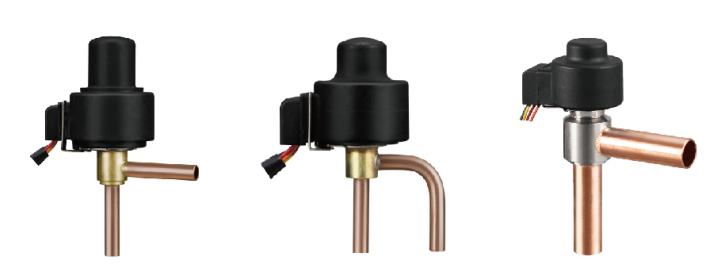
A controller can only act on what it actually sees, and a sensor mounted in the wrong spot sees a distorted version of reality. Put a temperature probe too close to a heat source and the loop chases phantom spikes that have little to do with the process. Move it downstream where the fluid has fully mixed, and the same controller suddenly behaves as if it were tuned by a different engineer. The physical location is not a minor detail; it is part of the control algorithm itself.
Placement also shapes the delay between a disturbance and the corrective action. A pressure tap at the end of a long, narrow line reports trouble long after it has built up, forcing the controller to fight yesterday's problem. Shortening that sensing distance often does more for stability than doubling the gain or adding derivative action. In many plants, the difference between a loop that runs quietly for months and one that hunts every afternoon comes down to a few feet of tubing and a poorly chosen tap point.
Vibration, dead zones, and local turbulence can turn an otherwise accurate instrument into a noise generator. When the signal is mostly chatter, operators respond by filtering heavily or switching to manual, and the supposed automatic control quietly stops doing its job. Good placement means finding a location where the measured variable represents the true process condition without excessive lag or contamination from nearby equipment. That choice, made once at installation, often matters more than any tuning change made later.
Refrigerant Properties That Change the Selection
A refrigerant that performs well at standard rating conditions can fall apart once the condensing temperature climbs. Low critical temperature fluids lose capacity and efficiency faster on hot days, while blends with noticeable glide change saturation behavior through the heat exchanger. That glide can work in your favor if the circuiting is arranged to follow the temperature shift, but it becomes a liability when fractionation after a leak makes field charging more of a guess than a procedure.
Flammability and pressure class push selections in very different directions. A mildly flammable A2L fluid may offer low GWP and strong heat transfer, yet it introduces charge limits, leak detection requirements, and sometimes revised ventilation layouts. In contrast, a high-pressure refrigerant can shrink pipe diameters and reduce compressor displacement, but it also raises bearing loads, gasket stress, and refrigerant velocity concerns. The practical decision usually hinges on which set of headaches a given building or equipment platform can actually tolerate.
Oil return and material compatibility are just as decisive as thermodynamic performance. Some refrigerants do not carry lubricant reliably through low-velocity suction lines, while others cause seals, gaskets, or motor insulation to swell and degrade over time. A switch that looks efficient on a modeling sheet may create maintenance problems that only appear after thousands of hours of service life.
Keeping Superheat Stable Without Constant Hunting
Superheat control often falls into a rhythm of overcorrection. The valve opens too wide, the refrigerant floods, then the controller slams it back and the system swings the other way. Breaking that loop starts with accepting that the target moves with load, not against it. A steadier approach uses smaller adjustments paired with a feedforward signal from the compressor or evaporator load, so the valve anticipates shifts before they show up as temperature drift.
Tuning matters more than the hardware itself. Instead of chasing a perfect single setpoint, give the controller a narrow band where it simply holds position. Let the bulb or sensor settle between small moves. In many installations, adding thermal mass near the sensing point or relocating the bulb away from turbulent flow does more than aggressive gain changes. The goal isn't to eliminate every fluctuation, but to keep the hunting shallow enough that it never reaches the compressor.
One practical trick is to log the valve position against superheat during normal load swings. You'll usually find that the system behaves well within a certain valve range, then becomes twitchy outside it. Limit the controller's output to that stable range, and let the expansion valve act more like a follower than a referee. This keeps the evaporator fed without the constant back-and-forth that wears out actuators and hides real performance problems.
Spotting Installation Risks Before Startup
Most installation failures don’t appear at commissioning; they hide in the weeks before as someone measures once, assumes twice, and leaves a clearance issue for later. Walking the actual site with a tape measure beats relying on drawings that haven’t been updated since the last tenant moved out. Check door swing paths, ceiling height near cable trays, and the distance between the new unit’s vented side and the wall behind it, because a missing six inches can turn a simple setup into an angry call from the facilities team.
Utilities deserve a harder look than the spec sheet suggests. The outlet may be grounded on paper but unstable under load, compressed air lines might dip below required pressure when other machines cycle, and network drops can be routed through a switch that nobody remembered was scheduled for retirement. If the equipment needs water, confirm the shutoff valve isn’t buried inside someone else’s locked office. These are the issues that rarely show up on a floor plan but reliably delay startup.
A pre-installation checklist works best when it treats vendors and maintenance staff as equal sources of truth. Ask the people who will use the space what currently breaks, leaks, or trips in that corner of the building. Their answers often reveal risks no engineering review would catch: vibration from a nearby freight elevator, dust from a grinding station, or a seasonal heat problem that only appears when the afternoon sun hits the dock door. Find those conditions before the crate is opened, and the startup becomes a formality rather than a troubleshooting session.
What a Supplier Should Bring Beyond the Catalog
A glossy catalog can show you what a product looks like, but it rarely tells you how it behaves when things go sideways. The suppliers worth keeping are the ones who bring more than a list of SKUs and a smile. They arrive with a working knowledge of your production floor, a few hard-won stories about what failed elsewhere, and a willingness to say "that spec won't hold up" before you've placed the order. That kind of candor doesn't come from a brochure; it comes from having actually used the material.
Beyond the pages, a strong supplier brings a habit of solving problems you haven't yet named. Maybe it's a quieter bearing that reduces line noise, or a coating that keeps dust from settling on your sensors. These aren't featured items with bold prices. They're the details surfaced in a five-minute phone call, the ones that don't photograph well but save you two days of downtime later. You know you've found the right partner when the catalog starts to feel like an afterthought and the conversation becomes the real deliverable.
What also matters is how they handle the moments after the sale. Do they track the batch through your incoming inspection? Do they remember that your plant runs hotter in July and suggest a slightly different viscosity? Any vendor can ship a box. The ones worth keeping treat your constraints as part of their own design brief, quietly adjusting lead times, packaging, or even the formulation itself so that the part you ordered actually works in your world, not just on paper.
FAQ
Look beyond catalog specs. A dependable supplier pairs valve design with application feedback, shares test data under partial load conditions, and stays involved after shipment instead of disappearing once the purchase order closes.
It removes much of the guesswork tied to fixed orifices and mechanical valves. By adjusting refrigerant flow in response to real-time load changes, it helps keep superheat stable, reduces compressor flooding risk, and avoids hunting that wears out system components.
Many treat it like a drop-in replacement. Sizing, valve authority, controller tuning, and sensor placement need to be considered together. Ignoring one of these leads to unstable operation even when the valve itself is high quality.
The right supplier contributes more than a part number. They offer application notes, control guidance, and sometimes reference firmware or tuning starting points. That shortens development time and helps avoid trial-and-error on the test bench.
Yes, particularly in systems with wide load swings, variable-speed compressors, heat pump reversals, or low condensing pressures. In these situations a mechanical valve often fixes flow at a compromise point, while an EEV keeps adjusting.
Ask for lifecycle test summaries, field return rates, and failure modes, not just MTBF numbers. Also look at how the supplier handles contamination, moisture, and electrical connection strain in their design. Reliability is proven by shared data and field history.
Ask how their valve behaves during defrost, startup, low ambient cooling, and rapid load changes. If the conversation stays only on maximum capacity and price, they may not be the right partner for demanding designs.
Not necessarily. Many modern EEV controllers accept simple analog or digital signals and include basic protection routines. The key is matching the controller's feature set to the system's actual operating map, not adding complexity for its own sake.
Conclusion
Sizing an electronic expansion valve around real load swings rather than a single full-load rating changes how stable the system behaves from morning pull-down to part-load evenings. The valve needs enough stroke resolution at the low end without choking at peak, and that balance rarely comes from a generic capacity table. Sensor placement is just as decisive: bulb or pressure transducer location can feed the controller a delayed or biased signal, so a physically correct installation often matters more than tuning effort. Refrigerant choice adds another layer because glide, density, and heat transfer behavior shift the required orifice and control response, especially with blends.
Keeping superheat stable without constant hunting usually comes down to reducing unnecessary gain and giving the controller clean, representative feedback rather than chasing setpoint with aggressive corrections. Pre-startup inspection should catch common risks such as insufficient straight pipe, poor thermal contact, wiring errors, or a valve mounted in the wrong orientation. Beyond the catalog, a capable supplier contributes valve sizing review, application notes for unusual refrigerants, control parameter suggestions, and honest guidance on what not to do. That level of support turns a component purchase into a more predictable system outcome, especially when the operating envelope is wide and the cost of a callback is high.
Contact Us
Contact Person: KOPASS HO
Email: [email protected]
Tel/WhatsApp: 8613606566112
Website: https://www.hongsenref.com/