
Equestrian Clothing Supplier: How to Find Quality Riding Apparel for Every Discipline
2026-09-09
Every discipline asks something different from your riding clothes—dressage demands elegance, cross-country demands toughness, and daily training demands comfort. Yet too many riders end up with gear that fails after one season, because they're not sure how to separate genuine equestrian suppliers from generic sportswear labels. This guide walks you through what to look for in quality riding apparel, from fabric and fit to durability and discipline-specific features. Along the way, you'll see how OpeEquestrian is meeting those standards for riders who refuse to compromise.
Discipline Mapping: From Dressage Rings to Cross-Country Courses
Riders often think of dressage and cross-country as two separate worlds—one defined by quiet precision in a sand rectangle, the other by open terrain and split-second judgment. But the underlying skills map onto each other more directly than the settings suggest. Balance, adjustability of stride, and the ability to shift a horse's weight rearward before a demanding question are just as essential to a clean coffin complex as they are to a perfect flying change.
When you trace the training scale from dressage into the cross-country phase, the real crossover becomes visible. A horse that can collect and extend within a test has the physical foundation for the sudden compression before a drop or the bold lengthening between fences. Riders who spend hours refining half-halts in the arena usually find that same language works out on course, even if the ground is uneven and the fences don't fall down.
Mapping one discipline to the other isn't about turning a dressage specialist into an eventer overnight. It's about recognizing that a well-schooled horse carries a toolkit that transfers. The arena develops invisible aids, straightness, and response to the seat; the cross-country course asks for those same qualities at speed and over terrain. Seen that way, the gap between the white boards and the start box isn't nearly as wide as it looks from the rail.
Material Choices That Move With You, Not Against You
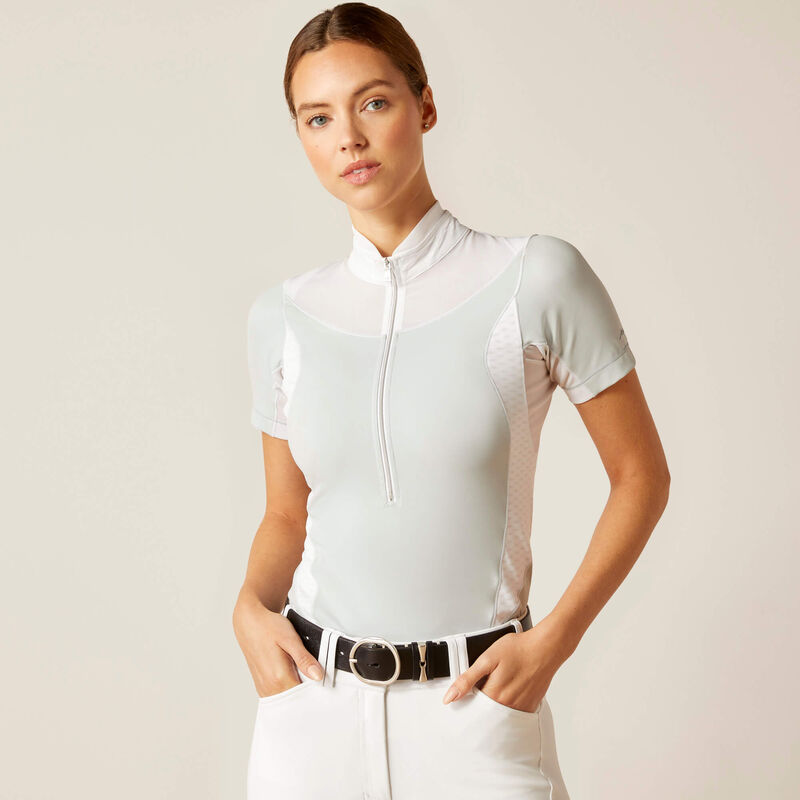
Some fabrics seem to have their own agenda—pulling at the knees when you sit, pinching at the waist when you bend. The right material choice gets out of your way. It gives where you need it, then settles back without losing its shape. You stop noticing the cuffs, the waistband, the tightness across your back. That’s what moving with you actually feels like.
Softer and thinner won’t solve the problem on their own. The real difference comes from how fibers are arranged and finished. A little give in the weave, a panel shaped to your body, a surface that slides instead of catching. When those details line up, the fabric follows your stride, your reach, your shift from sitting to standing. You’re not fighting the material—it’s simply keeping pace.
That ease adds up over a long day. Because nothing is resisting you, you don’t brace against it. The material recovers quietly through dozens of washes and still moves the same way. You only really notice the difference when you pull on something stiff again. Good material choices should feel exactly like this: supportive enough to be reliable, unobtrusive enough to be forgotten.
Cut and Construction: Finding Gear That Fits Real Bodies
The promise of technical apparel often falls apart at the seams—literally. Most off-the-rack pieces are cut for a statistical phantom, leaving anyone with broader shoulders, longer torsos, or curvier hips tugging at hems and fighting zippers. True fit isn't about sizing up until fabric hangs like a sack; it's about how a garment's panels map to actual human geometry. Look for articulated elbows, gusseted crotches, and raglan sleeves that follow the body's natural lines instead of forcing it into a rectangular template.
Construction details reveal whether a brand has thought beyond the fit model. Flat-felled seams reduce chafing on inner thighs, while stretch woven panels can accommodate muscular calves without looking baggy elsewhere. A well-designed waistband sits at the natural waist on some bodies, at the hip on others—but a truly inclusive cut offers adjustable drawcords, hidden elastic, or multiple rise options rather than a single arbitrary anchor point. Check if the garment is sewn with negative ease in the right places: a bit of compression through the core, but breathing room across the chest and upper back.
Real-body fit also means acknowledging that no single pattern works for everyone. The best gear offers alternative fits—regular, tall, petite, plus—but more importantly, it's designed with the understanding that bodies change over time and across activities. A jacket that feels perfect standing still should still allow a full overhead reach without the hem riding to the ribs. Pants that don't gap at the back when you squat are worth more than any waterproof rating. The measure of good cut and construction is simple: after six hours on the trail, you forget you're wearing it at all.
Hidden Protections: Impact Zones and Reinforced Seams
Most people never notice the real engineering until they take a hard fall. Tucked beneath the outer fabric, strategic padding sits over hips, knees, and elbows—areas that routinely meet the ground first. These impact zones aren't just extra foam stuffed in; they're shaped to follow the body's natural contours, so you get full mobility without feeling like you're wearing armor. The moment your weight hits the pavement, that hidden layer compresses and spreads the force, sparing joints and bones from the worst of it.
Just as critical are the reinforced seams running through high-stress areas. A standard stitch might hold fine for everyday wear, but not when you're sliding across asphalt or twisting mid-air. Reinforced seams use tougher thread and tighter stitch patterns, sometimes with a second row of bar tacks at the exact points where fabric would otherwise tear. The result is gear that survives repeated abuse without splitting open—protection you notice only when it saves your skin.
What makes these hidden protections truly effective is how they work together. The impact zones cushion the initial blow, while reinforced seams keep everything in place through the slide or roll that follows. No external plates, no bulky visors—just quiet engineering that lets you move freely and walk away from a crash with little more than a bruised ego.
Wear and Tear Testing: What High-Quality Apparel Should Survive
High-quality apparel is expected to hold up under stress that goes far beyond a single season. Before a garment reaches the rack, it should be put through abrasion tests that mimic elbows rubbing against desks, shoulder straps digging into skin, and thighs brushing together on a daily commute. Fabrics that survive these trials without thinning or developing shiny patches are the ones worth keeping.
Washing and drying cycles expose weaknesses that a quick glance in the fitting room never will. A well-made piece should withstand repeated laundering without shrinking at the seams, bleeding dye onto lighter fabrics, or losing the crispness of its silhouette. Colorfastness tests under light and perspiration also matter here, because a shirt that fades unevenly after two washes fails the most basic expectation of longevity.
Seams and hardware often determine whether a garment falls apart before the fabric does. Pulling at stress points, yanking zippers, and repeatedly fastening buttons may sound aggressive, but these are exactly the motions real life throws at clothing. If a pair of trousers can survive seam slippage tests and a jacket’s zipper keeps its teeth aligned after hundreds of cycles, it has earned the label of high quality.
Beyond the Label: Evaluating Suppliers You Can Actually Trust
A polished certificate on the wall or a slick website rarely tells you how a supplier behaves when things go wrong. Real trust gets built in the unglamorous moments: how quickly they own a mistake, whether they flag a delay before you discover it yourself, and if they treat your smaller orders with the same care as your flagship ones. Start by asking for references from clients whose scale is similar to yours, not just the marquee names on their homepage. Then dig into the patterns: do their past customers mention proactive communication, or only praise the final product? A supplier worth trusting will have a history of solving problems you didn't even know you had.
Another signal hides in their flexibility under pressure. Send a slightly unconventional request early on, maybe a tweak to packaging or a request for a staggered delivery, and watch how they respond. Do they push back with rigid policy quotes, or do they engage with the actual constraint you are facing? The best suppliers treat your constraints as design inputs rather than inconveniences. Also pay attention to what they ask you. A trustworthy partner wants to understand your downstream customers, your seasonal spikes, and your tolerance for risk. If their questions stay only on price and quantity, they are likely optimizing for a transaction, not a relationship.
Finally, trust is built on consistency, not intensity. A supplier who overpromises during the pitch and then fades after the first invoice is common; one who delivers the same level of detail on the tenth order as on the first is rare. Consider running a small, low-stakes trial before committing volume. Use that trial to observe their documentation, their response times, and whether they catch mistakes without being nudged. The goal is not to find a perfect supplier, but one whose defaults align with your need for dependability. When their behavior stays steady even when nobody is watching closely, that is the label you can actually rely on.
FAQ
Look for a blend that wicks sweat away from your skin rather than just absorbing it. A mesh back panel or underarm vents help a lot, but the real test is whether the fabric dries quickly when you hang it between classes. Avoid anything with thick cotton against your skin — it stays damp and gets cold fast. A hidden zip placket and a collar that lies flat under a stock tie or jacket are also practical details many riders forget until they're already sweating.
Sit in them before you buy, ideally on a saddle if the shop allows it. The waist should stay put when you bend forward, and the knee patches should align with your actual knee when your leg is bent. Check for any seams that run right under your seat bones or along the inside of your thigh — those can rub badly after an hour. A wide, high waistband with a bit of silicone or elastic inside helps keep everything from sliding down when you post the trot.
Not necessarily. You're paying for the quality of leather, the structure of the ankle, and how well the boot molds to your leg over time. If you ride four or five days a week, a well-made leather boot will outlast a cheaper synthetic one and give better support. But if you're a weekend rider, a mid-range boot with a sturdy zipper and a comfortable footbed can serve you just fine. The key is to check the sole grip and make sure the calf fits close without pinching your knee when you sit.
Look for a current safety certification label — the specific standard depends on your country, but don't rely on a vest that only claims to be 'protective.' Try it on over your base layer and move your arms in a full circle; the vest shouldn't ride up or restrict your shoulders when you're in two-point. Check the straps and closures for wear, and replace any vest that has taken a hard fall or shows cracks in the foam. A vest that's too loose won't stay in place during a rotational fall.
Look at how they describe their products. A dressage-focused retailer will talk about seat stability, leg position, and fabrics that don't slip. A jumping supplier will mention shoulder mobility, grip on the knee, and durability against rubs from the saddle flap. If you see a whole range of 'riding leggings' with no mention of discipline-specific needs, they're probably just rebranding fitness wear. Also check whether they carry items like full-seat breeches, show shirts with stock tie loops, or gloves with reinforced rein fingers — those details matter.
Lightweight technical fabrics like polyester blends with spandex work well because they pull sweat off your skin and dry fast. Look for mesh panels placed under the arms or down the back of a shirt, not just decorative cutouts. For breeches, a thinner fabric with laser-cut ventilation behind the knee can help. Avoid heavy cotton or double-layered fabrics in summer, even if they look more traditional. A sun shirt with a high UPF rating and a collar will keep you cooler and more protected than a basic tee.
You don't need a huge collection, but the materials do make a difference. Schooling gloves should be tough and grippy, often with reinforced patches between the rein fingers, because they take daily abuse. Show gloves are usually thinner and more fitted, designed to give a clean look and a subtle grip on the reins without looking bulky. If you only ride a few times a week, one pair of high-quality leather gloves can do double duty, but synthetic schooling gloves are cheaper to replace when they wear through.
Conclusion
Finding riding apparel that actually works across disciplines starts with recognizing that a dressage seat, a cross-country gallop, and a quiet trail ride place wildly different demands on fabric, fit, and finish. A supplier worth your time will speak plainly about those differences instead of pushing one “all-purpose” line. Look for pieces designed around the position you spend hours in: close-contact cuts for jumpers, grippy full-seat panels for dressage, stretchy articulation for eventers who need to move from collected work to a forward gallop. Material choices should follow suit—softshells that shed light rain without turning into a sweatbox, merino blends that regulate temperature on long schooling days, and abrasion-resistant panels where boots and tack rub. If a supplier can't explain why a particular knit or weave suits a discipline, that's a red flag.
Cut and construction matter just as much as the spec sheet. Real bodies aren't mannequins, so seek out brands that offer tall, short, and curvy options rather than a single block fit. Seams should lie flat and avoid chafing at the knee or inner thigh, and reinforced stitching at stress points—pockets, belt loops, zippers—should survive repeated mounting and dismounting. Hidden protections often separate cheap gear from gear that lasts: think foam or gel impact zones at the hip and knee, silicone grips that don't peel after a season, and bar-tacked stress seams. Before trusting any supplier, ask about wear testing or order a sample to abuse at home: stretch the fabric, scrub it with a stiff brush, wash it on cold and hang dry. If it pills, fades, or loses shape quickly, move on. A reliable equestrian clothing supplier doesn't just sell a logo; it demonstrates through construction, materials, and honest sizing that the apparel can keep up with the horse and rider, season after season.
Contact Us
Contact Person: Keven Tong
Email: [email protected]
Tel/WhatsApp: +86 18666477707
Website: https://www.ope-technology.com