

High Evaluation Silent Generator: Quiet, Reliable Power for Your Home
2026-08-26
Imagine a generator so quiet you can hold a conversation right next to it—yet powerful enough to keep your entire home running through any outage. That’s the promise behind the high-evaluation silent generator from DINGBO POWER, a name rapidly becoming synonymous with whisper-quiet, dependable backup power. But does it truly live up to the hype? Let’s find out why so many homeowners are switching to silence.
How Quiet Is Quiet? Decoding Generator Noise
When a generator box claims “quiet operation,” the first thing to check is the decibel rating, but even that can feel abstract. A 60 dB unit sits roughly at the level of normal conversation, which sounds fine until you are trying to sleep six feet away in a nylon tent. Traditional open-frame generators often hover between 70 and 80 dB, closer to a vacuum cleaner or heavy traffic, and that kind of noise doesn't fade into the background at a campsite or tailgate.
Distance matters more than most buyers expect. Manufacturers usually measure sound from about 23 feet (7 meters) away, so if your setup puts the generator just outside the RV door or under a workbench, the perceived volume jumps noticeably. Load also plays a role: a generator running a microwave or air conditioner will work harder and louder than one trickle-charging a battery, even if the spec sheet lists a single number.
Inverter generators have reshaped what “quiet” can mean by letting the engine speed vary with demand instead of screaming at full throttle all the time. Many now run in the low 50s dB range under light load, which lands somewhere between a refrigerator hum and light rainfall. Still, quiet is relative. In a silent forest or a tightly packed campground, even a 52 dB unit can earn side-eye from the next site over, so think about your typical overnight setting before trusting marketing language.
Home Backup Power Without the Constant Hum
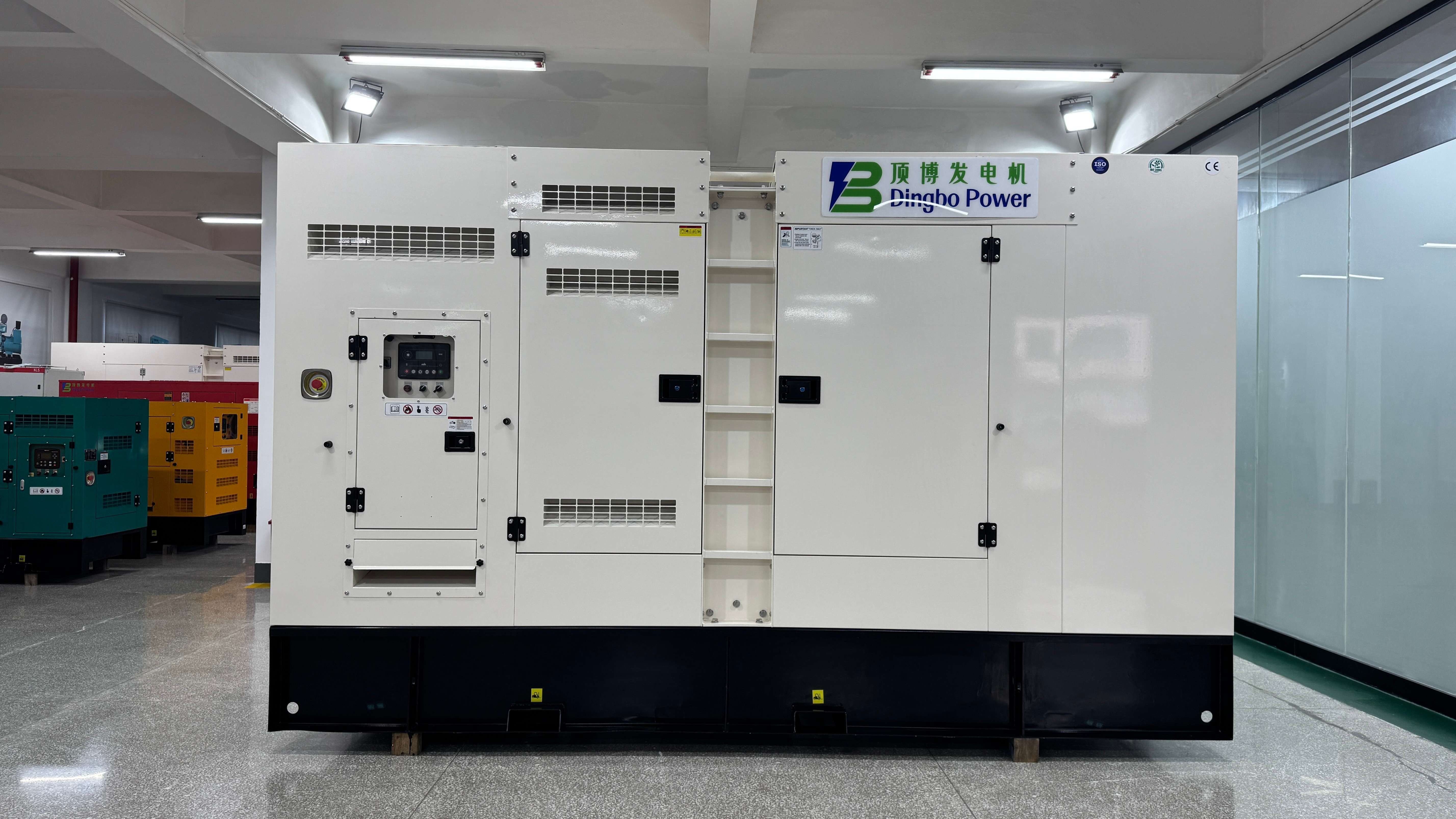
The old trade-off used to be simple: keep the lights on and put up with the racket. That deal is wearing thin, especially now that battery backup systems can step in without a single piston firing. Inverter-based units switch over fast enough that clocks barely blink, and the only sound is a low electronic murmur—closer to a laptop fan than a lawn mower. Because there’s no exhaust to route, a quiet backup unit can sit in a mudroom, under a basement workbench, or even against a bedroom wall.
What makes the difference is load matching. A small gas generator often runs at full speed whether you're powering a freezer or a whole floor, and that's where the drone comes from. Home battery systems ramp output to what the house actually needs, so the cooling system inside the unit stays passive for most small outages. In sleep mode, the refrigerator's hum is usually louder than the backup. That changes how a power cut feels: you pour a glass of water, check the router, and go back to bed instead of standing in the garage babysitting a fuel cap.
Noise also has a legal side that rarely shows up in product photos. Many cities and HOAs cap generator decibels at the property line, and a few ban generator use entirely after certain hours. A system with no constant engine hum slips under those limits without needing a sound-dampening enclosure bolted to the patio. For anyone running a CPAP, keeping a sump pump active, or finishing a deadline during an outage, silent operation is less about luxury and more about getting through the night without a headache.
Reliability Under Pressure: What Keeps It Running
Most systems fail not from a single dramatic blow, but from a slow accumulation of small stresses that go unnoticed until the moment they align. True reliability under pressure comes from designing for the unglamorous moments: a cooling fan that spins slightly slower than usual, a power supply that tolerates voltage dips without flinching, a software watchdog that silently resets a hung process. These quiet redundancies are what separate machinery that merely works on a good day from machinery that keeps working when everything else is falling apart.
The second layer is deliberate simplicity. The more components you have, the more failure points you introduce, yet simplicity is not about stripping things down to the bare minimum and hoping for the best. It is about choosing parts that are over-specified for their role, so they never run at their edge. A capacitor rated for twice the expected voltage, a bearing lubricated for triple the expected cycle count, a cooling path with airflow headroom even when filters are partially clogged. This margin of error is invisible during normal operation, but it is precisely what keeps the system responsive when ambient temperature spikes or when a neighboring module fails and shifts load unexpectedly.
Finally, there is the human factor: maintenance that does not wait for symptoms. Reliability under pressure is a habit, not a feature. It lives in torque checks done before a problem appears, in replacing seals on a schedule rather than after a leak, in logging performance trends and acting on small drifts before they become large excursions. A machine that runs under pressure is usually the result of someone who respected the quiet intervals enough to prepare for the loud ones.
Everyday Appliances, Seamlessly Powered
The coffee maker kicks on before dawn while the fridge hums in the corner and a load of laundry finishes its spin cycle—all without a single outlet argument. That's the quiet promise behind everyday appliances, seamlessly powered: your home's energy grid handles the load distribution so smoothly that you never stop to think about where the electricity is coming from or whether the circuit can keep up.
Instead of bulky adapters or constantly flipping breakers, this approach weaves power delivery into the background. Smart sensing adjusts output to match what each device actually draws, trimming waste during low-demand moments and holding steady when the microwave and toaster run side by side. The result feels less like managing utilities and more like the house simply knows what it needs.
Installation doesn't ask you to rewire your life, either. Retrofitting works with the outlets and wiring you already have, while modular upgrades let you add more capacity as your appliance collection grows. By the time you notice the difference, it's usually because nothing blinked during a storm or the energy bill shrank without a single manual toggle.
What Installation and Maintenance Actually Look Like
Most people imagine installation as a one-and-done affair, but the reality often involves a series of small, unglamorous steps. You might spend a morning drilling pilot holes, only to realize the included anchors are useless for your wall type. Then comes the fiddly alignment: a level that never quite sits flat, brackets that need shims, and a final tightening sequence that somehow shifts everything two millimeters to the left. Maintenance, meanwhile, rarely announces itself. It’s the occasional creak at 3 a.m., the faint discoloration near a fastener, or the slow accumulation of dust in places you can’t reach without removing half the fixture.
On a practical level, keeping things working means checking for loosened bolts, wiping down contact points, and sometimes re-torquing connections after the first month of use. Seasonal changes add their own quirks — wood swells in humidity, metal contracts in cold snaps, and slight gaps appear where none existed before. A quick visual scan every few weeks catches most issues before they turn into costly repairs.
But the real picture is less about heroic fixes and more about small, routine habits. You learn which joints tend to shift under load, which finishes show fingerprints, and which cleaning products leave streaks. Over time, you develop a feel for when something is off — a subtle vibration, a change in sound, a door that no longer closes with the same satisfying click. That’s what installation and maintenance actually look like: not a polished tutorial, but a series of quiet adjustments and occasional muttered curses.
Silent Generators vs. Traditional Models: The Real Difference
The gap between silent generators and traditional open-frame models goes far beyond a lower decibel rating. Traditional units rely on a simple engine and alternator bolted to a steel frame, with little to dampen mechanical clatter or exhaust roar. Silent generators, by contrast, are engineered around acoustic isolation: insulated enclosures, redesigned exhaust routing, and often inverter technology that lets the engine throttle down under light loads. That change in engine speed not only reduces noise but also cuts fuel consumption and wear, something a fixed-speed conventional generator cannot match.
Where the difference becomes most tangible is in everyday use. A traditional generator might force you to shout over it in a campsite or draw complaints from neighbors during a power outage. A silent model, rated anywhere from 50 to 60 decibels at a quarter load, blends into the background much like a normal conversation. That lower noise floor means you can place it closer to living spaces, run it at night without breaking local ordinances, and avoid the fatigue that comes from hours of constant engine drone. The trade-off is usually cost and weight, yet for anyone who values a quieter environment, the real difference isn't just sound—it's the freedom to use power without announcing it to everyone nearby.
FAQ
It typically runs between 50 and 60 decibels, which is a bit quieter than a normal conversation and closer to the hum of a refrigerator. You can run it in the backyard without bothering your neighbors or family.
Yes, it uses inverter technology to produce clean electricity with less than 3% total harmonic distortion. That makes it safe for laptops, phones, modems, and even medical devices like CPAP machines without needing a separate power conditioner.
Most models run on regular gasoline, and some offer dual-fuel capability with propane. At a quarter load, a full tank typically lasts between 10 and 14 hours, depending on the exact model and what you're powering.
No, never run it indoors or in a garage, even with the door open. Like all fuel-powered generators, it emits carbon monoxide. Keep it at least 20 feet away from windows, doors, and vents, and install a battery-powered CO detector for extra safety.
It comes with an electric start and a backup recoil cord. Many models have an automatic choke that helps the engine fire up in one or two pulls even on cold mornings. If temperatures drop well below freezing, using a fuel stabilizer or a cold-weather kit can make starting even easier.
Check the oil level before each use, change the oil after the first 5 hours and then every 25-50 hours depending on the manual, clean or replace the air filter regularly, and inspect the spark plug once a year. If you're storing it for more than a month, drain the carburetor or add fuel stabilizer.
Yes, most versions come with a built-in trolley handle and non-slip wheels, so you can move it across grass or a driveway without much effort. Its compact shape also makes it easy to tuck into a corner of the garage or a shed.
The biggest differences are noise and voltage stability. An open-frame unit usually runs at 68-75 decibels with more voltage fluctuation, while this silent model cuts the noise by about 15 decibels and keeps the power steady, which matters a lot for home backup and sensitive equipment.
Conclusion
A generator running at 52 decibels is about as loud as a quiet conversation, yet many homeowners still brace for the mechanical growl that never comes. This is the reality of a high evaluation silent generator, where inverter technology and sound-dampening enclosures cut noise to levels that fade into background chatter. You can stand a few feet away and hold a normal conversation, or keep the bedroom window open on a summer night without the constant hum that plagues older backup units. That absence of noise is not a gimmick, it is the difference between a power outage that feels like a crisis and one that feels like a mild inconvenience.
Reliability under pressure comes from more than a sturdy engine. Low-oil shutdown, automatic voltage regulation, and weather-resistant casings keep the unit running through storms, heat waves, and weeks of neglect. Everyday loads, from refrigerators and sump pumps to medical devices and home offices, get clean sine wave output that does not flicker or damage sensitive electronics. Installation is often a single afternoon, with a small concrete pad or wall bracket and a transfer switch that takes over in seconds. Maintenance rarely goes beyond an annual oil change and a quick check of the air filter. Compare that with traditional open-frame generators, which roar at 70-plus decibels and demand constant fuel tweaks. The silent model wins not because it is quieter on paper, but because it disappears into your routine, waiting quietly until the moment it is needed.
Contact Us
Contact Person: Rita
Email: [email protected]
Tel/WhatsApp: +8613481024441
Website: https://www.dbdieselgenerator.com/