High Tenacity Anti-UV Nylon 66 Filament Yarn Supplier Insights for Industrial Applications
2026-07-22
When it comes to industrial-grade materials, few can match the rugged reliability of high tenacity anti-UV nylon 66 filament yarn—but sourcing it from a trustworthy partner makes all the difference. Changshu Polyester brings a fresh perspective to this specialized market, blending deep technical know-how with real-world application insights. In this post, we’ll peel back the layers on what sets premium nylon 66 filament apart and how the right supplier choice can elevate your next project.
Beyond Standard Nylon: What Sets High-Tenacity Anti-UV Variants Apart
Standard nylon has been a workhorse material for decades, prized for its balance of strength, flexibility, and affordability. But when applications demand resilience against harsh sunlight and sustained mechanical stress, ordinary nylon falls short. High-tenacity anti-UV variants step in where standard grades fail. These materials are engineered at the molecular level to resist degradation from ultraviolet radiation while maintaining exceptional tensile strength—even after prolonged outdoor exposure.
The key difference lies in the incorporation of advanced UV stabilizers and a drawing process that aligns polymer chains for maximum toughness. Unlike basic nylon 6 or 6,6, which can become brittle and discolored under UV light, these variants use hindered amine light stabilizers (HALS) and UV absorbers to intercept harmful radiation before it breaks down molecular bonds. Meanwhile, the high-tenacity aspect is achieved through controlled drawing and specialized polymer formulations that boost internal cohesion, yielding fibers and fabrics that are not only tougher but also more resistant to abrasion and fatigue.
This combination makes high-tenacity anti-UV nylon ideal for outdoor gear, protective covers, marine applications, and industrial textiles that must perform reliably in sun-drenched environments. It’s not just about lasting longer—it’s about preserving mechanical integrity and appearance under conditions that would quickly compromise standard nylon. By choosing these variants, manufacturers can reduce replacement cycles, improve safety, and offer products that truly endure the elements.
Industrial Demands Unpacked: Where This Filament Yarn Proves Critical
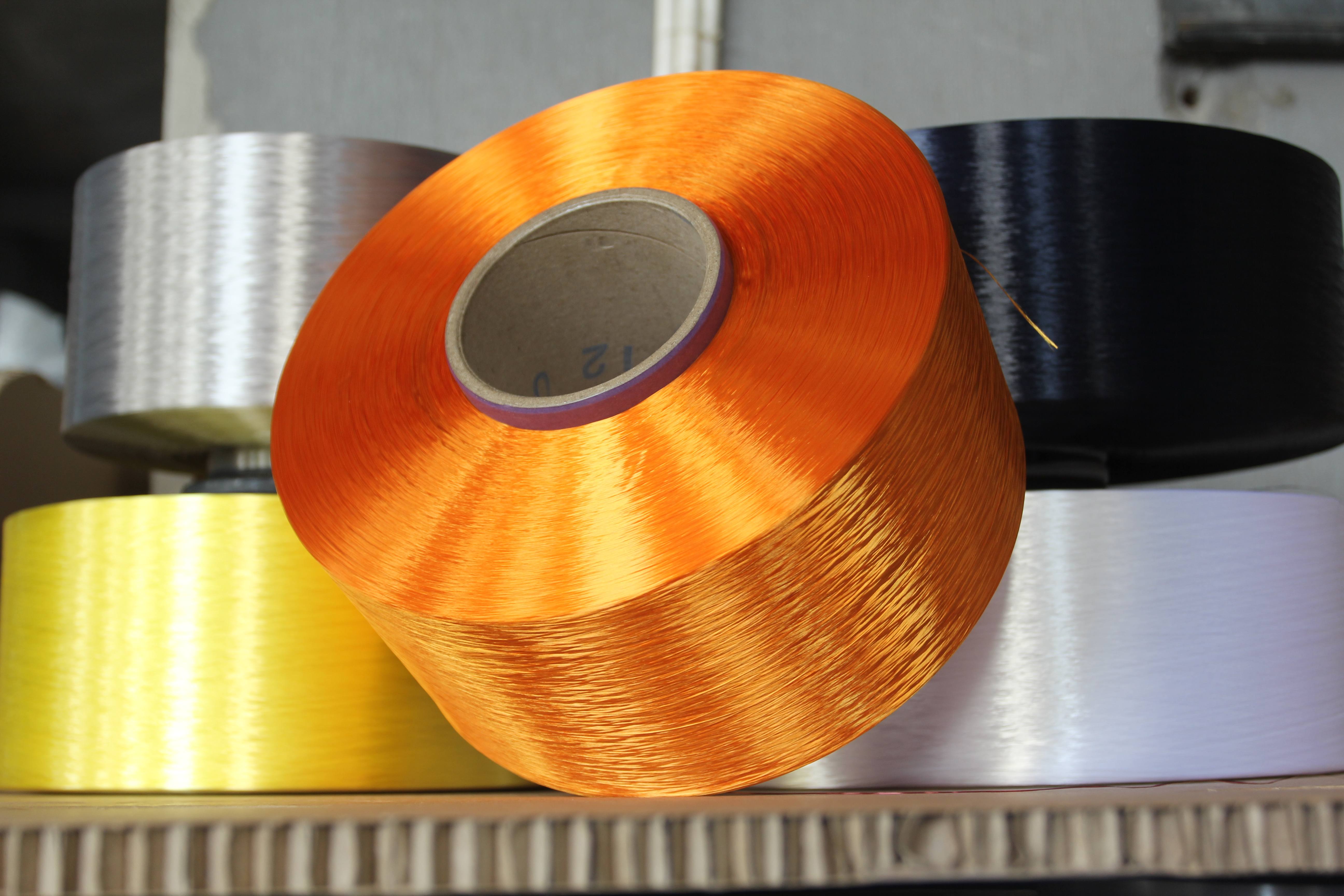
In heavy-duty manufacturing, few materials bridge the gap between flexibility and raw strength quite like industrial filament yarn. It’s the unseen backbone in conveyor belts that haul tons of ore, the silent reinforcement in hydraulic hoses enduring relentless pressure, and the precise tension member in timing belts keeping complex machinery in sync. Without it, production lines would stall under their own weight, and countless engineered systems would simply fall apart.
High-tenacity polyester and nylon yarns are the go-to choices when components face abrasive wear, chemical exposure, or extreme temperature swings. These filaments don’t just survive harsh conditions—they maintain dimensional stability and resist elongation under continuous load, which is non-negotiable in geotextiles reinforcing embankments or in tyre cords gripping asphalt at highway speeds. The material’s ability to be twisted, plied, or coated adapts it to roles ranging from sewing threads in automotive airbags to load-bearing webbing in cargo lifting slings.
Beyond standard applications, specialty variants like aramid or UHMWPE filament yarns step into arenas where failure is not an option. Bulletproof vests, cut-resistant gloves, and offshore mooring ropes all rely on the unique combination of lightweight structure and exceptional toughness. It’s this quiet, relentless reliability that cements filament yarn’s status as a critical industrial resource—one that rarely grabs headlines but constantly prevents them from turning catastrophic.
Inside Supplier Quality Protocols for UV-Stabilized Nylon 66
When sourcing UV-stabilized Nylon 66, raw material traceability forms the backbone of supplier quality protocols. Every batch of resin must be accompanied by detailed certificates of analysis that confirm the precise concentration and dispersion of UV additives. Without rigorous incoming inspection, even minor variations in stabilizer content can lead to premature polymer degradation. Suppliers should also provide data from accelerated weathering tests—typically QUV or xenon arc—that demonstrate colorfastness and mechanical property retention over thousands of hours of exposure. This upfront documentation ensures that the material will perform consistently in outdoor applications.
Beyond paperwork, robust protocols demand on-site process audits. A supplier’s compounding environment must be free of cross-contamination risks, especially since Nylon 66 is hygroscopic and sensitive to moisture. The mixing and extrusion parameters need to be tightly controlled to achieve uniform stabilizer distribution without thermally degrading the base polymer. Auditors often look for real-time monitoring systems that track melt temperature, screw speed, and residence time, as these variables directly influence the long-term UV resistance of the finished resin. A supplier that maintains detailed batch records and proactively shares them signals a culture of accountability.
Finally, an effective quality protocol includes a closed-loop feedback mechanism for field performance. Leading suppliers periodically collect samples from end-use products that have been in service for several years, testing them against initial specifications to validate their stabilizer package. This practice not only verifies the accuracy of laboratory aging predictions but also drives continuous improvement in formulation. When a supplier structures its quality protocols around traceability, process control, and real-world validation, buyers gain confidence that the UV-stabilized Nylon 66 will withstand years of sunlight without sacrificing toughness or appearance.
Performance Longevity: How Enhanced Tenacity Withstands Harsh Environments
Materials that hold up over time don't just resist wear—they actively defy the conditions that cause others to fail. Enhanced tenacity means a product or component can take repeated stress, extreme temperatures, or corrosive exposure without cracking, softening, or losing its structural integrity. This isn't about a single tough layer; it's a built-in resilience that runs through the entire material matrix, allowing it to bounce back from impacts and strains that would permanently deform standard alternatives.
What sets truly durable solutions apart is their ability to maintain performance when the environment turns hostile. Whether it's constant vibration, abrasive particles, or chemical attack, enhanced tenacity prevents micro-damage from accumulating into catastrophic failure. The molecular bonds are designed to redistribute energy, so instead of a crack propagating, the stress gets absorbed and dissipated. This self-preserving behavior keeps components in service far beyond their expected lifespan, even in scenarios where maintenance is impossible or replacement is prohibitively expensive.
In real-world applications—from deep-sea equipment to desert machinery—the difference is measurable. Parts with superior tenacity show minimal degradation after thousands of cycles, while conventional materials would have been scrapped long before. It's a quiet reliability that doesn't announce itself until you look back at the logbooks and realize nothing has broken in years. That kind of longevity isn't just an engineering achievement; it's a strategic advantage for any operation that can't afford downtime.
Supply Chain Transparency: Evaluating Authentic Anti-UV Yarn Sources
Truly functional anti-UV yarn doesn’t begin with a label—it starts deep in the supply chain, where raw fibers are treated or engineered to block ultraviolet radiation. Without clear visibility into those origins, brands risk buying yarn that merely mimics UV protection through surface coatings that wash away. A trustworthy source will openly share where and how the UV-blocking properties are embedded, whether through ceramic micro-particle integration during spinning or through chemically stable, non-leaching additives. If a supplier can’t provide detailed process documentation or hesitates to name the raw material producers, that’s a clear warning sign.
Verification goes beyond paperwork. Third-party lab reports should match the batch numbers of the yarn in question, and the testing must follow internationally recognized methods like AATCC 183 for UV transmission after repeated laundering. The most reliable sources conduct routine spot checks and make those results accessible to buyers, not just a one-time certification. A practice often overlooked is visiting production floors—legitimate manufacturers welcome audits because consistent output isn’t accidental; it’s built into their process controls, from maintaining precise masterbatch ratios to monitoring extrusion temperatures that affect the dispersion of UV absorbers.
The geography of production also tells a story. Regions with a mature textile industry often have tighter environmental oversight, which indirectly guards against counterfeit UV claims—factories cutting corners on chemical management tend to cut corners on functional integrity too. Yet even within those regions, the highest assurance comes from suppliers who offer traceability right back to the polymer chips or fiber stages. This level of openness allows brands to cross-reference with additive manufacturers and confirm that what’s promised in the spec sheet is actually woven into every meter of yarn.
Future-Proofing Industrial Textiles with Advanced Nylon 66 Solutions
In an era where industrial demands are constantly evolving, material selection becomes a decisive factor in long-term performance. Advanced Nylon 66 offers a unique combination of strength, thermal stability, and chemical resistance that traditional polymers struggle to match. Its tightly packed molecular structure resists deformation under heavy loads and retains integrity across a wide temperature range, making it the backbone of textiles designed for extreme duty cycles. From conveyor belts in high-speed manufacturing to protective gear exposed to harsh chemicals, Nylon 66 ensures the fabric not only survives but thrives where lesser materials would rapidly degrade.
The future-proofing advantage goes beyond raw resilience. By integrating specialized finishes and engineered weave patterns, manufacturers can tailor Nylon 66 textiles to meet precise operational demands without compromising on longevity. Enhanced UV stabilizers and hydrolysis-resistant additives extend the service life of outdoor deployments, while low-friction coatings improve machinability in dynamic applications. This adaptability means a single base fiber can be transformed into components as varied as filtration media, composite reinforcements, or lightweight structural fabrics, all while maintaining a predictable degradation profile that aids in lifecycle planning and reduces unplanned downtime.
Adopting Nylon 66 solutions also addresses the growing push for circularity in industrial supply chains. The material's durability translates directly into extended replacement intervals, fewer resources spent on manufacturing spares, and easier reprocessing at end-of-life compared to blended or coated alternatives. By engineering textiles that retain their properties through multiple use phases and can be re-pelletized without catastrophic loss of tenacity, industries position themselves ahead of tightening regulations and shifting market expectations, ensuring that today's investments do not turn into tomorrow's liabilities.
FAQ
Focus on tensile strength (often expressed in grams per denier), elongation at break, UV resistance rating (such as hours to 50% strength loss under ASTM G154), and heat resistance. For load-bearing uses, consistency in denier and twist levels across batches is also critical to avoid downstream processing issues.
It depends largely on the quality and type of UV stabilizers compounded into the nylon 66 resin. Top-tier suppliers use hindered amine light stabilizers (HALS) and UV absorbers that can extend service life to several years even in harsh sunlight. Independent accelerated weathering tests (QUV or Xenon arc) are common to verify claims—look for at least 80% strength retention after 1000 hours.
A trustworthy supplier will have in-house polymer modification capability, not just spinning. They should offer traceable lot-to-lot data sheets, custom additive packages (like color + UV + anti-oxidant combinations), and the willingness to collaborate on yarn performance tuning for specific industrial machinery. Field references from other industrial customers are also a strong differentiator.
Yes—insist on test reports per ASTM D885 for tire cord and industrial yarns, or ISO 2062 for tensile properties. For UV resistance, ASTM G154 or ISO 4892-2 accelerated weathering data is essential. Certifications like OEKO-TEX or REACH compliance matter if the yarn will contact skin or be used in sensitive environments.
It excels where you need a combination of high continuous operating temperature (up to 120°C), superior toughness, and long-term outdoor durability. Examples include heavy-duty slings and towing straps, parachute cords, mining conveyor belt reinforcement, and outdoor structural netting. Polyester degrades faster under UV if not well stabilized, and nylon 6 has lower thermal stability.
Some specialized suppliers offer small-batch customization for prototypes or low-volume industrial applications, but usually at a premium. The key is to find a mill that runs a flexible pilot line. Regular commodity mills may require several tons per SKU. Early communication about your development timeline and potential scale-up plans can help negotiate MOQ flexibility.
Moisture absorption is the biggest issue—nylon 66 can take up moisture from the air, which temporarily reduces tensile strength and can cause processing problems like size variation in coating lines. Always store in a climate-controlled environment and condition bobbins to the recommended moisture content (often 2.5–3.5%) before use. Also, avoid prolonged exposure to direct sunlight in storage areas, despite the UV additives.
Conclusion
High-tenacity anti-UV nylon 66 filament yarn is engineered to outperform standard nylon in demanding industrial settings, where resistance to ultraviolet degradation and mechanical stress is non-negotiable. Unlike conventional grades, these specialized variants incorporate advanced UV stabilizers directly into the polymer matrix during extrusion, ensuring long-term colorfastness and structural integrity even under prolonged sunlight exposure. Suppliers with deep technical expertise go beyond basic certification, implementing rigorous quality protocols such as accelerated weathering tests, tensile strength retention analysis after QUV aging, and precise control of stabilizer dispersion. This guarantees consistent performance batch after batch, making the yarn ideal for outdoor fabrics, heavy-duty straps, geotextiles, and military gear where failure is not an option.
In industrial applications, the true value of this yarn emerges in environments that challenge lesser materials—saltwater corrosion, acidic atmospheres, abrasive dust, and cyclic loading. Enhanced tenacity, often exceeding 8–9 g/den, allows it to withstand jagged rock cuts in mining screens or constant flexing in conveyor belts without microfracture propagation. Transparent supply chains further differentiate authentic sources; traceable raw material provenance, third-party lab reports, and factory audit trails help procurement teams avoid subpar imitations that claim UV resistance but degrade within months. Beyond immediate durability, forward-looking suppliers are refining circular-ready nylon 66 blends and bio-based stabilizer packages, aligning with stricter industrial sustainability mandates. These advancements future-proof critical textiles, ensuring that components like offshore mooring lines, architectural membranes, and automotive airbags remain robust and reliable across their service life, reducing total cost of ownership and unplanned downtime.
Contact Us
Contact Person: CONNIE
Email: [email protected]
Tel/WhatsApp: 86-0512-53671634
Website: https://www.lida-yarn.com/