

Innovative Water Pipe Cleaning Machine Company in China Revolutionizes Pipeline Maintenance
2026-06-14
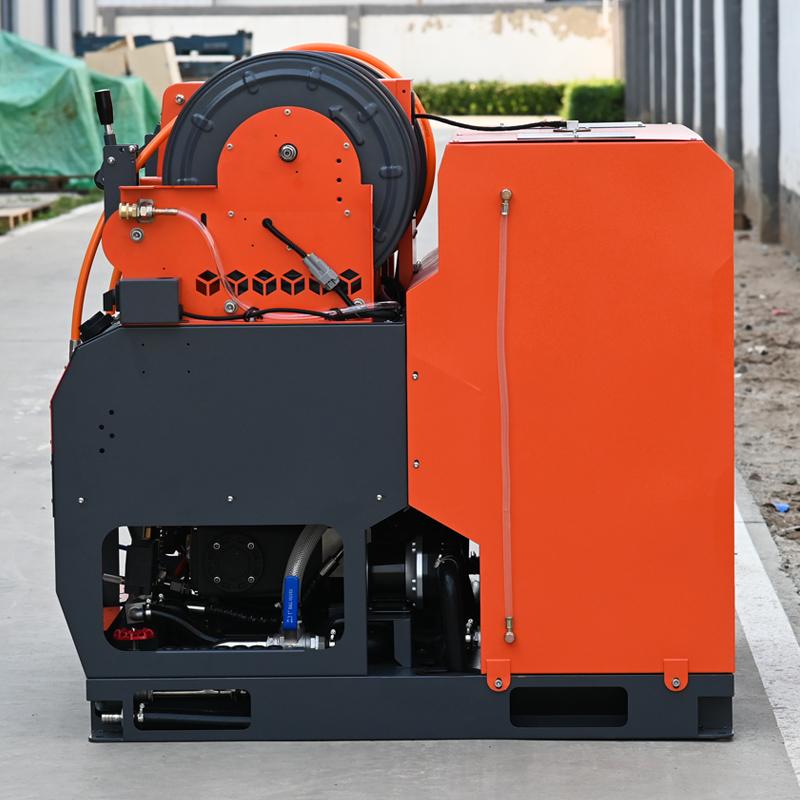
Pipeline maintenance is often slow, costly, and disruptive—but a fresh approach from China is changing the rules. At the forefront is AMJET, an innovative company whose advanced water pipe cleaning machines are making traditional methods look obsolete. Their technology doesn’t just clean pipes; it redefines efficiency, saving time and resources while tackling stubborn blockages that others can’t. In this article, we’ll explore how AMJET’s breakthrough is revolutionizing the industry and why maintenance teams worldwide are taking notice.
A Silent Revolution Under the Streets
Beneath the familiar hum of traffic and the rhythm of footsteps, a quiet transformation is reshaping the veins of our cities. Old, fractured pipes and outdated conduits are being replaced not with jackhammers and gaping trenches, but with stealth and precision. Trenchless technology has slipped into the urban underground, allowing repair crews to fix water mains, sewage lines, and gas pipes through mere keyhole entry points. The streets above stay intact, businesses remain open, and the chaos we once accepted as inevitable simply fades away.
This shift runs deeper than convenience. By avoiding open-cut excavation, cities slash carbon emissions from heavy machinery, preserve mature trees whose roots would otherwise be severed, and eliminate mountains of asphalt waste. Engineers now guide robotic cutters and cured-in-place liners through century-old tunnels, strengthening them from within like a minimally invasive surgery. The public rarely notices, because there's nothing to see—only a van parked over a manhole, and a job finished before the morning rush.
What's truly revolutionary is the data layered beneath the pavement. Fiber-optic sensors and ground-penetrating radar now map the subterranean world in real time, turning blind digs into calculated maneuvers. This silent network of diagnostics whispers about groundwater shifts, pipe stress, and soil stability long before a crisis erupts. It's a new kind of urban intelligence, one that listens to the earth beneath our feet and acts before we ever sense a ripple on the surface.
The End of Costly Pipe Replacements
For decades, the mere mention of pipe replacement sent shudders through property owners—and their wallets. Traditional methods meant tearing up floors, demolishing walls, and enduring weeks of disruption, all while costs spiraled. But a quiet revolution has made that nightmare a relic. Trenchless technologies, advanced composite liners, and smart robotics now let us renew pipes from the inside, often through a single access point. No jackhammers, no mountains of debris, just a system restored to better-than-new condition with a fraction of the hassle.
The numbers tell a stark story: epoxy pipelining can slash restoration expenses by up to 75% compared to a full dig-and-replace. Municipalities and homeowners alike are embracing this shift, not just for the savings but for the speed—jobs that once took a month now wrap up in days. Water mains, sewer laterals, even in-building risers are being rehabilitated while life hums on above ground. The real win is that these fixes aren’t short-term bandages; cured-in-place liners often carry 50-year warranties, extending asset life without the endless repair cycle.
Maintenance thinking has flipped on its head. Instead of waiting for a catastrophic failure that rips up landscapes and budgets, asset managers use predictive sensor networks and acoustic monitoring to spot tiny weaknesses before they burst. Small, targeted interventions replace wholesale pipe swaps. It’s a practical, almost old-fashioned idea—fix what’s actually wrong—made possible by modern materials science and digital diagnostics. The era of the budget-busting pipe replacement is quietly, definitively ending.
Precision Cleaning Without Harsh Chemicals
Achieving a truly deep clean doesn’t have to involve aggressive solvents or toxic fumes. Modern methods rely on targeted techniques that lift dirt, grease, and grime using natural enzymes, plant-based surfactants, and micro-emulsion technology. These solutions break down soils at a molecular level, allowing them to be rinsed away effortlessly—without leaving behind chemical residues that can irritate skin or damage delicate surfaces.
Steam and microfiber have become go-to tools for precise cleaning in sensitive environments. High-temperature steam penetrates microscopic crevices, dissolving buildup and killing bacteria on contact, while ultrafine microfiber cloths trap particles mechanically rather than relying on detergents. This combination not only eliminates the need for strong disinfectants but also reduces water usage and drying time, making it a practical choice for everything from food-prep areas to electronic equipment.
Another breakthrough lies in probiotic and enzyme-based cleaners that continue working long after application. Unlike traditional sprays that simply sanitize and evaporate, these formulas introduce beneficial microorganisms that digest organic waste, preventing future buildup and odors. It’s a smarter, longer-lasting approach that keeps surfaces genuinely clean at the microscopic scale—all without a single harsh ingredient in sight.
Why Municipalities Are Switching to Robotic Inspections
Cracked pipes and crumbling culverts don’t wait for budget meetings. For decades, sending crews into confined, hazardous spaces was the only way to assess infrastructure, but that approach is rapidly changing. Municipal leaders are beginning to see that pairing human judgment with robotic precision doesn’t just reduce risk—it transforms how they plan for the future of their buried assets.
The shift isn’t just about doing the same job faster. Robots armed with multi-sensor payloads can slide into a 40-year-old storm drain and come back with millimeter-level data, sniff out gas leaks, and map deformations that no flashlight would ever catch. That kind of detail means repair decisions become surgical instead of reactive, and public works departments can finally stop guessing which pipe will fail next.
Money talks, but it whispers here. Robotic inspections may carry an upfront price tag, yet they almost eliminate overtime for confined-space entries, cut traffic disruptions, and shrink the liability shadow that hangs over every manhole opening. When communities compare the cost of repeated emergency digs to a single, thorough robotic sweep, the math starts to look less like an expense and more like a long-term insurance policy.
Real-Time Data That Prevents Disasters
A few seconds can make all the difference when a crisis is unfolding. Real-time sensor networks now feed constant streams of temperature, pressure, and vibration data from critical infrastructure, allowing automated systems to spot anomalies before they spiral into full-blown emergencies. Instead of relying on periodic inspections, operators see live dashboards that highlight subtle changes—a tiny shift in structural tilt, an unexpected heat spike in a turbine—giving them the chance to intervene when it counts.
These aren't glorified alarm systems. Modern platforms fuse satellite imagery, ground sensors, and even social media signals to form a dynamic picture of risk. For instance, combining rainfall measurements with soil saturation data can predict landslides hours ahead, while monitoring electrical grid fluctuations alongside weather forecasts helps prevent cascading blackouts. The key is not just collecting data but making it immediately actionable, often through alerts pushed directly to maintenance teams or automatic system adjustments.
What really sets these approaches apart is their ability to learn from near-misses. By feeding historical incident data back into machine learning models, the systems get better at ignoring false alarms and recognizing genuine precursors. A pump that typically vibrates at a certain frequency might be fine today, but if its pattern mirrors one that preceded a failure at another site three months ago, the system flags it. This constant refinement turns raw telemetry into a quiet, ever-present safety net that works around the clock, no sleep required.
From Startup to Industry Disruptor: The Untold Story
Most people see a polished disruption story, but nobody talks about the nights we almost gave up. In our first year, we pivoted three times—not because we were agile, but because the market kept punching us in the face. The breakthrough didn’t come from a genius roadmap; it came when we finally listened to a customer who told us our product was solving a problem they didn’t actually have.
That moment forced us to strip everything down to one simple question: what makes people angry enough to switch? That anger became our compass. We stopped pitching features and started documenting frustrations—hundreds of interview clips pinned to a wall, each one a tiny splinter of the giant industry we were about to crack open.
The rest isn’t a fairy tale. It’s two years of saying “no” to distraction, hiring weirdos who cared more about the mission than their resume, and making decisions that looked irrational to outsiders. By the time the incumbents noticed us, we weren’t just competing—we had rewritten the rules they thought were permanent.
FAQ
They've developed a series of high-pressure, motorized cleaning systems that handle everything from everyday blockages to industrial-scale buildup. Their machines integrate real-time monitoring sensors and self-adjusting nozzles, so operators get precise control without manual guesswork.
Instead of relying on chemical drain cleaners or basic snaking, their approach uses pulsed water jets and adaptive pressure settings. This means stubborn deposits get stripped away faster while pipe interiors remain undamaged—a common problem with older mechanical methods.
The founders saw a glaring gap in urban infrastructure maintenance. With aging pipe networks causing frequent leaks and contamination risks in Chinese cities, they realized a smarter, non-destructive solution was essential. What started as a local fix quickly proved valuable worldwide.
Municipal water utilities are the top users, but their equipment also serves oil refineries, food processing plants, and even historic building restoration projects. Any facility with hard-to-reach piping can see dramatic reductions in downtime and repair costs.
Absolutely. Since they use high-pressure water as the primary cleaning agent, there's minimal need for harsh chemicals. Many models recirculate and filter water, cutting down on waste. It's a cleaner clean, literally.
It's their blend of hardware engineering and digital tools. Each machine generates a detailed pipe condition report via a companion app, helping maintenance crews plan ahead instead of reacting to emergencies. That shift from reactive to proactive care is what clients rave about.
Their patented valve system earned them an innovation award at a major European water industry expo last year. Several Southeast Asian municipalities have already placed orders after seeing trial runs.
They're piloting a compact, AI-driven unit for residential buildings that can alert homeowners to early-stage pipe degradation. Expansion into Middle Eastern markets is also in the works, where water infrastructure is booming.
Conclusion
Beneath bustling city streets, a quiet transformation is taking hold. An innovative Chinese company has developed a water pipe cleaning machine that sidesteps the need for disruptive and expensive pipeline replacements. Instead of relying on harsh chemicals that can corrode infrastructure and harm the environment, this technology uses precision mechanical cleaning to restore pipes to near-original condition. It’s a subtle but powerful shift—one that keeps water flowing reliably while extending the lifespan of underground networks. Municipal teams no longer have to guess what lurks below; they now have a tool that delivers consistent results without collateral damage, turning a reactive repair approach into a proactive maintenance strategy.
The real game-changer, however, is the integration of robotic inspections with real-time data capture. As the cleaning unit moves through a pipe, it collects high-resolution imagery and sensor readings that feed directly into analytics dashboards. This allows engineers to spot cracks, blockages, or corrosion early, averting potential failures before they escalate into full-blown disasters. More and more municipalities are switching to these robotic systems, drawn by the promise of lower costs and greater insight. Behind this shift lies a compelling untold story—a startup that challenged entrenched industry norms and rose to become a disruptor. By combining mechanical ingenuity with digital intelligence, this Chinese company isn’t just cleaning pipes; it’s rewriting the rules of infrastructure upkeep.
Contact Us
Contact Person: Mike
Email: [email protected]
Tel/WhatsApp: +86 19545555505
Website: https://www.amjeting.com/