

Medical Disposable Manifolds: How to Choose a High-Quality Manufacturer
2026-09-03
When a disposable manifold fails, the alarm bells don't always ring—sometimes the only sign is a subtle pressure drop or a patient who doesn't recover as expected. That quiet risk is precisely why the choice of manufacturer matters far more than the spec sheet suggests. Here's what separates a reliable medical disposable manifold from a liability—and where INT fits into that picture.
Ask for the polymer's full story, not just the spec sheet
A data sheet will give you tensile strength and heat deflection, but it won't tell you how the polymer behaves after three years of UV exposure on a rooftop in Phoenix, or whether it turns brittle when molded at the upper end of its recommended barrel temperature. The full story lives in the supply chain, the processing history, and the application failures that never make it into a brochure.
Ask your compounder what happens to the lot-to-lot viscosity when the raw monomer source shifts, or how the material handles regrind from a hot runner system. Demand to see long-term aging data, chemical resistance under sustained load, and real shrinkage figures from a mold that wasn't tuned to hide warpage. A polymer that looks perfect on paper can tell you a very different story once it's been through your machine, your environment, and your customer's hands.
Why some cleanrooms are cleaner than their certificates claim
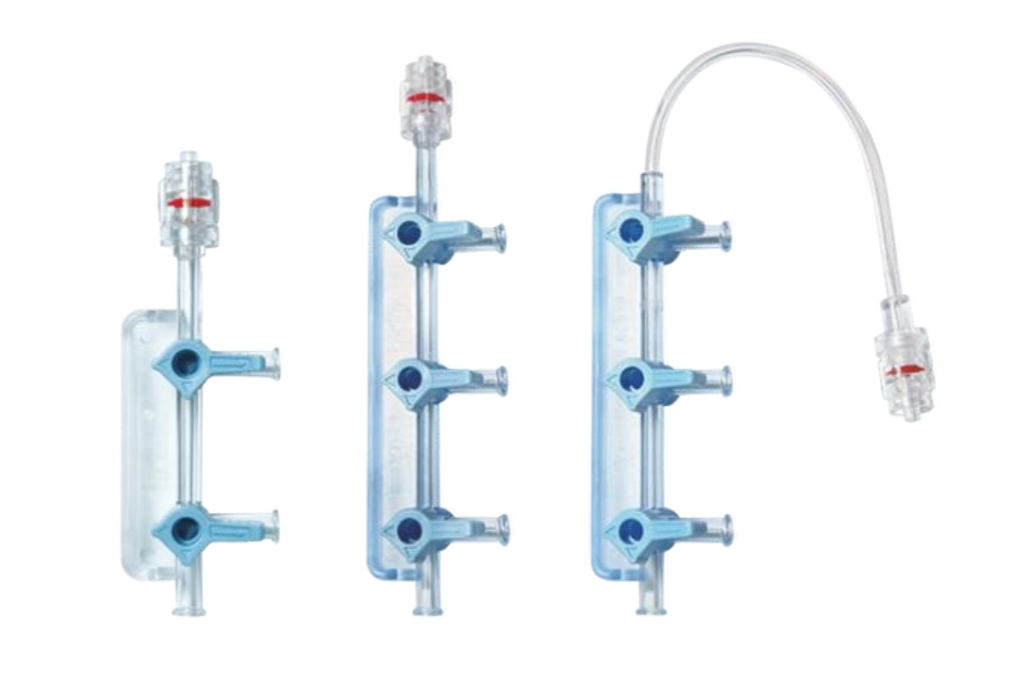
Certification reports often rely on spot checks taken under static conditions, but real cleanrooms rarely sit still. Once the HVAC system stabilizes and the facility settles into its normal operating rhythm, particle counts frequently drift well below the certified ceiling. The gap comes from conservative test protocols: sampling points are chosen to represent worst-case locations, and the stated class reflects a pass/fail threshold rather than actual measured averages.
Daily operations also introduce a feedback loop that certification cannot replicate. In many facilities, real-time particle monitoring triggers immediate corrective actions—adjusting air-change rates, replacing pre-filters, or restricting access to sensitive zones. This constant tuning pushes the environment far cleaner than the certificate implies, especially in areas protected by unidirectional flow or isolators that exceed the baseline design.
There is also a human factor. Cleanroom operators who take pride in their gowning discipline and housekeeping routines often outperform the conditions captured during a brief audit. The certificate becomes a floor, not a ceiling, and the actual cleanliness level ends up several ISO classes better than the paperwork suggests.
Dead space and flow path mistakes that compromise infusions
In many infusion setups, the dead space between the distal catheter hub and the point where the IV tubing connects is not truly empty—it holds a small but clinically significant volume of fluid. When a medication is infused through a line with unaccounted dead space, the drug can remain trapped there and get delivered later as an unexpected bolus during a flush. This is especially dangerous with potent vasopressors, sedatives, or pediatric doses, where a few tenths of a milliliter can shift hemodynamics or cause oversedation.
Flow path errors often start at the connections themselves. A stopcock turned the wrong way, a Y-site positioned too far from the patient, or an extension set with a large internal volume can all change how much drug actually reaches the bloodstream. Air bubbles trapped in dead space or in poorly primed tubing can further distort the delivered volume, and parallel infusions sharing a single lumen may push one drug backward into another line if the pressures differ. The physical layout of the flow path—where each port sits relative to the pump and the catheter—matters as much as the programmed rate.
To keep infusions reliable, trace the entire path from bag to vein and question every added component. Flush dead space after drug administration, choose the shortest appropriate extension set, and switch stopcocks deliberately rather than assuming orientation. Small adjustments to the flow path prevent delayed therapy, unintended boluses, and dosing errors that can quietly compromise patient safety.
The sterilization validation question most buyers skip
Most purchasing teams spend hours comparing chamber sizes, cycle times, and temperature uniformity, but they never ask whether the sterilization process was actually validated for the specific product or material they plan to run. That single oversight can turn a great-looking machine into a compliance nightmare once production starts.
The question almost nobody asks is: "Can you show me validation data for this exact device, tray configuration, or packaging system—not just the autoclave's generic cycle qualification?" Vendors are quick to share IQ/OQ/PQ documents, but those usually prove the equipment works, not that your particular load reaches the required sterility assurance level every time.
Skipping this question means buyers often find out too late that their dense load pattern, custom container, or moisture-sensitive material was never included in the original validation. That leads to rejected batches, revalidation costs, and delays that no amount of cycle time savings can offset.
Packaging that keeps its promise during shipping and storage
A box can look sturdy on a warehouse shelf and still fail halfway to its destination. The real test happens in the back of a truck, under a stack of heavier cartons, with humidity climbing and temperature swinging. Packaging that keeps its promise is built around those unglamorous conditions: corner crush resistance, vibration dampening, and seals that don’t peel open when the air turns damp. It’s not about being over-engineered, but about being honest about what the product will actually go through.
Storage adds another layer of quiet stress. Weeks or months on a pallet can degrade weak adhesives, flatten foam, or let dust sneak past a loose flap. Good packaging holds its shape without becoming brittle, keeps its cushioning where it matters, and doesn’t rely on a single strip of tape to do all the work. The materials and folds are chosen so that the package still does its job on day ninety, not just on day one.
The best way to judge a package is to open it after a rough journey and see whether the product looks untouched. That means the inner supports line up correctly, the voids stay filled, and the closure doesn’t require a knife fight. When those small details work together, the package becomes a quiet guarantee: what you packed is what arrives, no excuses, no repacking required.
A manufacturer's response time reveals its real priorities
When a manufacturer takes days to answer a simple query, that delay is not an accident. It reflects an internal culture where customer needs are slotted around production schedules, inventory cycles, or even internal meetings. A quick response, by contrast, usually means the team has clear escalation paths and treats every inquiry as a potential disruption to be resolved fast.
Lead times on quotes are just as telling. If a company routinely needs a week to turn around pricing while competitors do it in a day, the bottleneck often sits in outdated approval chains or a sales team that lacks authority. The manufacturer is quietly telling you that its own process matters more than your timeline.
Response patterns also surface where investment goes. Firms that prioritize maintenance, spare parts, and after-sales support tend to answer technical questions with specific detail rather than generic reassurance. Those that stall or deflect are revealing that post-sale care is a cost to minimize, not a value to protect.
FAQ
A reliable supplier will walk you through their cleanroom layout, show you recent environmental monitoring logs, and explain how they handle nonconforming lots. If a company is vague about process controls or only offers polished brochures, that gap usually shows up later in inconsistent bonding or leaks.
Look for manufacturers that can discuss resin grades, additive packages, and DEHP-free alternatives without hesitation. High confidence comes from documented biocompatibility data and lot-specific material certifications. Lower confidence comes when a supplier says "medical grade" but cannot explain what that means for their specific polymer or tubing.
Ask to see recent particle count data, differential pressure logs, and gowning procedures during an on-site visit or a video tour. A trustworthy manufacturer will offer full transparency, including corrective actions when readings drift outside limits. If they hesitate to share environmental monitoring records, treat that as a warning sign.
Manifolds often need custom geometries, solvent bonding, or overmolding that a generic supplier cannot handle well. A manufacturer with in-house engineering can suggest design tweaks that reduce assembly time, improve flow dynamics, or prevent dead legs. Those savings and performance gains frequently outweigh a slightly higher piece price.
You should receive evidence of leak or pressure decay testing, dimensional inspections, and visual checks for flash or particulates. For sterile products, ask for sterilization validation reports and endotoxin or bioburden data per lot. If a manufacturer cannot provide lot-specific test results, your quality team will have to do that work after delivery.
Full traceability from raw resin and components through assembly, sterilization, and packaging lets you isolate a defect quickly if a field issue appears. A strong system also proves to auditors that every manifold can be linked to its material lots and process records. Without that level of detail, a recall becomes far more costly and harder to contain.
Watch for limited tooling capacity, manual assembly that does not scale, or a quality team that is too small to handle multiple production lines. Another red flag is frequent schedule changes without clear communication. A plant that struggles with consistent output at low volumes will rarely improve when you double or triple demand.
Conclusion
Choosing a medical disposable manifold supplier goes far beyond checking a data sheet. Ask the manufacturer to walk you through the polymer's full story—where it is sourced, how it behaves under repeated stress, and whether it has a history of extractables or leachables in actual clinical use. Then look at the cleanroom itself: some facilities pass audits on paper but have weak points in gowning, airflow, or particulate recovery that never show up on a certificate. In the flow path, small dead space or a tight radius can trap drug residue or create pressure spikes that alter infusion accuracy, so request computational fluid dynamics data or at least a physical prototype to inspect.
Sterilization validation is another area where buyers often accept a generic certificate instead of asking for cycle development reports and worst-case loading studies tied to the exact manifold design. Packaging deserves the same scrutiny—sterile barrier systems should be tested for drop, vibration, and seal creep, not just a visual check at the loading dock. Finally, pay attention to how quickly a manufacturer answers technical questions. A supplier that takes days to clarify polymer compatibility or provide a validation summary is likely to be slow when a production problem appears. Speed and clarity in those early conversations tell you more about their real priorities than any sales presentation.
Contact Us
Contact Person: Jeffrey
Email: [email protected]
Tel/WhatsApp: 86-0633-2230056
Website: https://www.sd-intmedical.com