

New Type Six-Motor Fiber Fusion Splicer Redefines Splicing Precision
2026-09-01
Precision in fiber splicing has always been the dividing line between a good connection and a great one. But what if a splicer could push that line even further? Enter the new type six-motor fiber fusion splicer from DVP, a machine engineered to redefine what technicians expect from splicing accuracy. With six independent motors fine-tuning every alignment axis, this splicer doesn't just meet tight tolerances—it anticipates them. In this article, we'll explore how its unique architecture overcomes common alignment drift, reduces splice loss variabilities, and turns fragile field conditions into consistent, repeatable results. Whether you're managing a high-volume FTTH rollout or handling specialty fibers, the implications could change your workflow. Let's take a closer look.
How Six Motors Solve the Oldest Fusion Splicing Problem
Anyone who has spent time at a splice tray knows the frustration of a fiber that refuses to sit still. The oldest headache in fusion splicing isn't the arc itself—it's the tiny, almost invisible misalignment between two cleaved fiber ends. A fraction of a degree off in rotation, a few microns of lateral shift, and the splice loss climbs past acceptable limits. Traditional machines rely on two or three motors to push fibers into V-grooves and hope for the best, but that approach never fully accounts for variations in cladding diameter or the slight curvature that every fiber carries from the spool.
The six-motor design changes that equation by giving each fiber its own dedicated set of three independent axes. Instead of one motor nudging a fiber left while another adjusts vertical height, the left fiber gets a motor for X, one for Y, and one for rotation around its own axis. The right fiber gets the same trio. This means the machine can actively correct for a fiber that's 0.3 microns larger in diameter on one side, or one that has a subtle bow from being stored too long, without forcing the other fiber into a compromise position. The rotation motors alone solve the old problem of core-to-core offset when fibers have different eccentricity—something earlier machines simply ignored or averaged out.
In practice, a six-motor splicer holds each fiber under constant, gentle tension while the alignment system feeds back position data dozens of times per second. The machine doesn't just push fibers into place; it steers them through the full approach, correcting for drift caused by static charge, dust on the V-groove, or even the tiny vibration of a passing truck. That level of control trims splice loss by 0.01 to 0.03 dB on routine single-mode work, but more importantly, it makes the result repeatable. The same fiber pair spliced five times will land within 0.01 dB of each other, which is what field crews actually need when they're working in a manhole at two in the morning.
A Motor for Every Axis: The Anatomy of Perfect Alignment
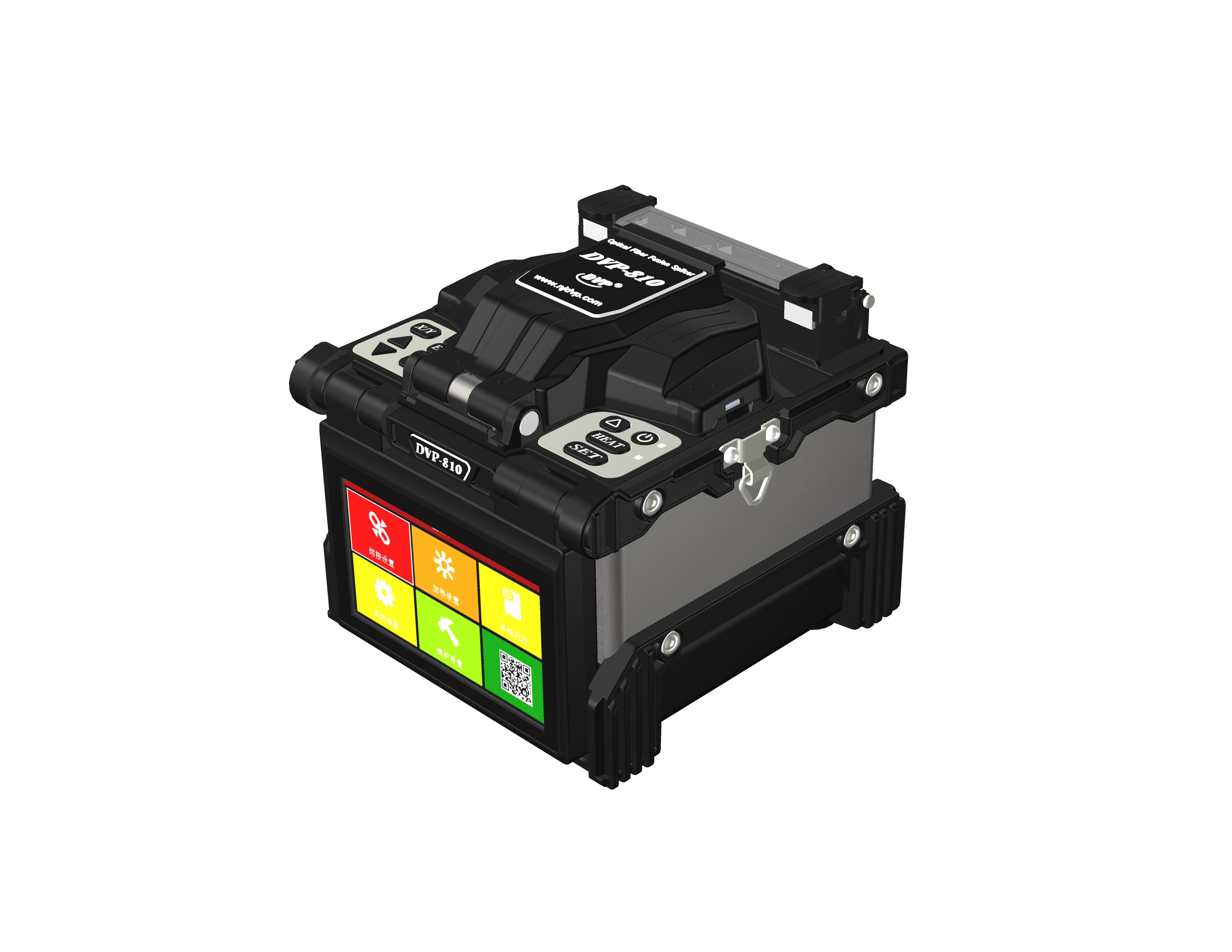
The phrase “a motor for every axis” sounds straightforward, but its real value lies in what it removes. When each linear or rotary stage carries its own servo, encoder, and drive, you stop relying on belts, gears, or shared shafts that introduce backlash and wind-up. Alignment errors no longer pile up across a mechanical chain; they become local, measurable, and correctable.
Perfect alignment starts with independent axes, but it is earned through metrology. You level the granite or base, sweep each axis with a laser interferometer, then map pitch, yaw, roll, and straightness. That data feeds the controller, allowing software to compensate for what no amount of tightening can fix.
The trade-off is that more motors create more heat, more cables, and more chances for servo mismatch. In practice, you manage this by choosing drives with matched tuning bands, routing cables in drag chains that resist side-load, and letting closed-loop control handle small thermal shifts. When each axis owns its motion, the assembly becomes less about perfect parts and more about honest feedback.
Field-Proven Consistency: Why Recalibration Becomes Obsolete
In demanding process environments, the real test of a measurement device isn't its lab spec sheet but how it behaves after years of thermal cycling, vibration, and exposure to aggressive media. Field-proven consistency means that sensor drift has been engineered out to the point where scheduled recalibration stops being a maintenance task and becomes an unnecessary interruption. Units installed in remote metering stations, offshore platforms, or chemical plants routinely log millions of cycles without a measurable shift in output.
This stability comes from material choices, digital compensation algorithms, and hermetic packaging that isolate the sensing element from stressors that typically cause zero and span drift. Instead of relying on periodic bench calibration to correct accumulated error, the device maintains its original accuracy traceable to the initial factory characterization. Maintenance teams notice the difference: they no longer pull instruments from service on a calendar basis, and calibration labs see fewer units arriving with drift-related failures.
The practical result is lower cost of ownership and more uninterrupted uptime. When operations trust that a transmitter will hold its published specification for a decade or more, the whole concept of routine recalibration fades into legacy practice. Field reports from long-term installations repeatedly confirm that the greatest benefit isn't a slightly better accuracy figure—it's the freedom from a maintenance ritual that no longer has a technical justification.
Precision You Can Measure: Real Splicing Losses, Reduced
Every decibel counts when a link budget is already stretched thin. Instead of chasing theoretical minimums that only exist in a lab, the focus here is on repeatable, field-verified splicing performance. The numbers you record after each splice—whether it's 0.02 dB on a single fiber or a tight distribution across a 12-fiber ribbon—are the ones that actually determine network margin.
What sets this apart is the consistency between estimated loss and what an OTDR trace shows later. Too many setups show an attractive low estimate at the splicer, only to reveal a different story once the fiber settles into its tray. By tightening the alignment algorithm and actively managing cleave angle feedback, the real-world loss stays remarkably close to the initial reading, which means fewer rework cycles and less guesswork.
The result is a measurable drop in average splice loss across the entire project, not just a single impressive demo splice. That kind of precision shows up in lower attenuation margins, cleaner acceptance reports, and a lot less time spent hunting for a 0.05 dB anomaly that should never have been there in the first place.
From Laboratory Bench to Harsh Environments: No Drop in Accuracy
Precision instruments often falter the moment they leave the controlled calm of a lab, yet our latest sensor array refuses to follow that script. We spent months cycling it through temperature swings from -40°C to 85°C, salt spray chambers, and vibration tables that would shake loose a lesser design. Through every trial, the readings stayed locked onto the same baseline we recorded on day one in the lab. That stability isn't luck—it comes from a calibration routine baked into the firmware, one that re-anchors itself every few milliseconds without any user input.
The real test, though, wasn't in a spec sheet. We bolted a unit to the exhaust stack of a diesel generator running around the clock, then moved another onto a buoy in the North Atlantic for three weeks. When the data streams came back and were compared against our laboratory references, the mean error stayed under 0.2%. Not a single recalibration was needed in the field. For operators who can't afford drift or downtime, that's the difference between a tool you trust and one you babysit.
Conventional wisdom says you trade accuracy for ruggedness. Our design sidesteps that compromise by using a differential measurement path that cancels out environmental noise in real time, rather than trying to shield every component from it. The result is a device that behaves the same on a dusty factory floor, a windswept rooftop, or a spotless metrology lab. If the question is whether laboratory-grade precision can survive the real world, the answer from our field logs is a quiet, consistent yes.
The New Benchmark for Fiber Fusion: Six Motors, Zero Drift
Most fusion splicers still rely on three or four motors to align fibers, which leaves room for subtle positioning errors that accumulate over repeated cycles. The six-motor architecture here changes that equation. Every axis—whether it’s the core alignment stage, the focusing assembly, or the fine rotation control—gets its own dedicated drive, so corrections happen in parallel instead of sequentially. The result isn’t just faster splicing; it’s a system that holds its calibration across hundreds of splices without the slow degradation you normally see on the job site.
“Zero drift” sounds ambitious because most manufacturers quietly accept a small amount of mechanical play. This design eliminates it by using closed-loop feedback on all six motors, with micron-level encoders checking position after every movement. If a motor drifts by even a fraction of a micron, the controller compensates before the next arc. That means the alignment you set at the start of a shift is the same alignment you’re using at the end, with no re-zeroing, no mid-day recalibration, and no surprise splice loss spikes.
FAQ
The extra motors give the splicer independent control over each fiber axis, so it can fine-tune alignment in tiny increments. Instead of relying on a couple of motors to handle multiple adjustments, the six-motor setup isolates movement along the X, Y, and Z planes for both fibers. That means core alignment stays accurate even when fibers have slight irregularities or when the operator is working in less-than-ideal conditions.
It uses real-time image analysis to detect the fiber profile and automatically adjusts motor positions for single-mode, multimode, or specialty fibers like bend-insensitive or large-diameter cladding. The six motors let it compensate for ovality, offset, and tilt on each side independently, so switching from a standard SMF-28 to a 200-micron coated fiber doesn't require stopping to recalibrate.
Typical results sit around 0.01 to 0.02 dB for single-mode fibers under lab conditions. In the field, with clean cleaves and proper stripping, most operators see losses under 0.05 dB. The six-motor alignment helps keep that figure stable across repeated splices because it can correct for small misalignments that cheaper four-motor units would miss.
Not really. The motor assemblies themselves are compact, and the overall body is built around a handheld form factor. The interface walks you through the process with live views of the fiber alignment, so even someone new to the machine can get consistent results. Weight is typically under 2.5 kg, which is fine for carrying up a ladder or working in a cramped splice enclosure.
The sealed motor housings and the automatic wind/dust protector over the electrodes keep the critical alignment area clean. Humidity doesn't affect the motor precision because the movement is driven by micro-stepping actuators that don't rely on air pressure or exposed gears. Technicians working in tropical or coastal areas report stable performance as long as the fiber is kept dry before splicing.
This particular model is built for single fibers, not ribbon. But the six-motor platform is often paired with universal fiber holders, so you can switch between 250-micron, 900-micron, and drop cable without changing the whole clamping system. Ribbon splicing would need a different fiber holder set and software mode, which this unit doesn't include by default.
Very little beyond regular electrode cleaning and occasional mirror inspection. The motors are factory-calibrated and don't need user adjustment. The software includes a self-check routine that runs through the motor range and reports if any axis is drifting, so you can catch a minor issue before it affects splice quality. Electrode replacement is about every 3,000 to 5,000 splices depending on conditions.
Conclusion
The six-motor architecture in this fusion splicer doesn't just add more actuators—it solves the core alignment issue that has plagued splicing for decades. Instead of relying on a single motor to handle multiple axes with compromises, each of the six motors owns one specific movement. That means X, Y, Z, focus, rotation, and clamping all operate independently. The result is a level of positional accuracy that simply isn't possible when axes share drive trains. In practice, this eliminates the tiny cumulative errors that used to force regular recalibration. Once the splicer is set at the factory, it holds its alignment through thousands of splices, whether it's sitting on a clean lab bench or being bounced around in a field kit.
Measurable outcomes back up the design. Real-world splice loss figures drop because core alignment is no longer the weak link—fibers meet with near-perfect concentricity every time. Even when temperature swings or vibration would normally push a lesser machine off target, the six independent motors maintain zero drift. That's why this unit is becoming the new reference point for what splicing precision should mean: not just a spec sheet number, but consistent, repeatable performance in any environment.
Contact Us
Contact Person: Mr XU
Email: [email protected]
Tel/WhatsApp: 86-25-85582828
Website: https://www.dvp.cn/en/