

OEM Fire-Resistant Silicone Sealant Key Advantages for High-Heat Applications
2026-11-16
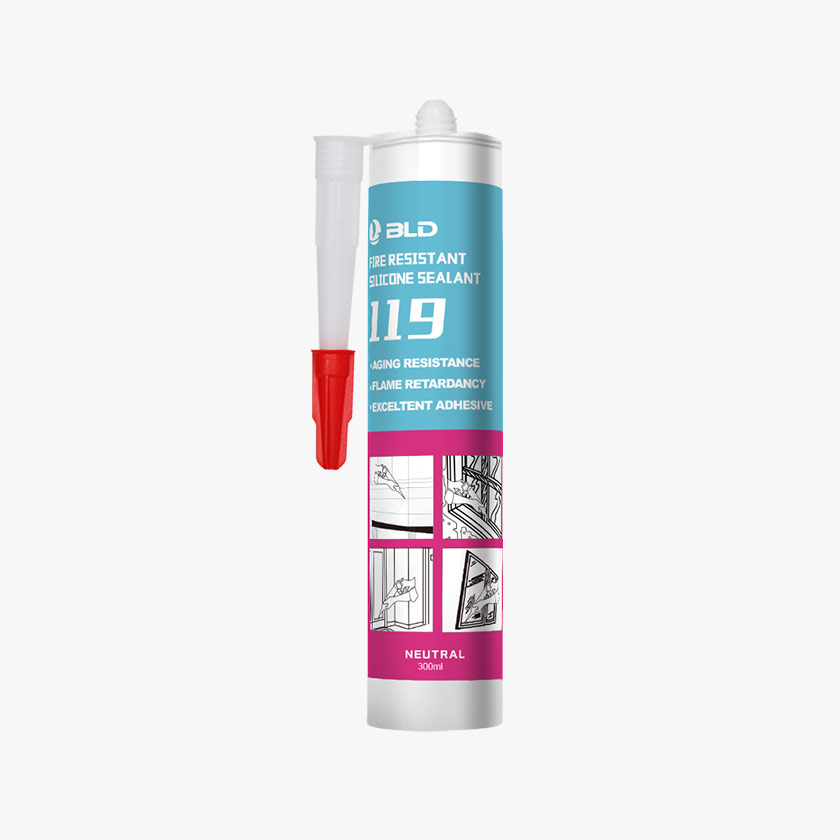
When it comes to high-heat environments, not all silicone sealants are created equal. Fire-resistant formulas have become the quiet workhorses of modern manufacturing—yet many professionals still overlook the critical differences between OEM options. From engine compartments to industrial ovens, the right sealant doesn't just withstand extreme temperatures; it protects structural integrity, prevents costly failures, and ensures compliance with strict safety standards. Baolongda Group, a trusted name in high-performance sealing solutions, has refined fire-resistant silicone technology to meet the toughest OEM demands. In this post, we explore the key advantages that set these advanced sealants apart and why they're becoming indispensable in heat-intensive applications.
Holds Its Seal When the Heat Is On
The real test of any sealing solution isn't in mild conditions—it's when temperatures climb and pressure builds. This material keeps its grip without softening, warping, or letting anything sneak past, even after hours of direct exposure to intense heat. You can almost hear it holding firm while lesser seals start to sweat and slip.
What makes the difference is the way the compound cures under thermal stress. Instead of becoming brittle or gooey, it flexes just enough to maintain a consistent barrier against gases and liquids. Imagine a gasket on a hot engine block: no blistering, no channeling, just a tight, reliable interface that doesn't need constant retightening.
Field users often mention the surprise of finding zero leakage after a full thermal cycle—something that doesn't happen with standard fluoroelastomers. The secret lies in a balanced cross-link density that resists chain scission at high heat while preserving enough elasticity to absorb vibration. For anyone who's dealt with sudden seal failure in a process line, that kind of stability isn't a luxury; it's the whole point.
No Smoke, No Toxins—Just Clean Performance
Most devices still ask you to accept a trade-off: clouds of vapor, lingering odors, or a long list of ingredients you can’t pronounce. This one doesn’t. The moment you activate it, you’ll notice what’s missing—the haze, the residue, the sharp chemical aftertaste. What remains is a smooth, consistent delivery that focuses entirely on the experience, not the aftermath.
We stripped away combustion byproducts and unnecessary fillers by rethinking the heating process from the ground up. Instead of burning anything, the system gently warms the blend to the exact point where it releases what you actually want. That precise control means no smoke drifting through the room, no tar-like buildup on surfaces, and no harshness in the back of your throat. It’s just clean, honest output every single time.
The result is something you can use around others without apology. There’s no secondhand cloud to dodge, no stale scent clinging to fabric hours later, and no guilt about what you’re inhaling. If performance matters more than theatrics, this is what clean should feel like.
Bonds That Don’t Quit on Hot Surfaces
Most adhesives start to soften the moment heat climbs past a few hundred degrees. That’s where high-temperature structural bonds earn their keep. They hold onto shear strength when ordinary epoxies and acrylics have already turned gummy or cracked away from the substrate. The real trick isn’t just surviving a spike—it’s maintaining peel resistance and dimensional stability through repeated thermal cycling, which is exactly what happens on engine blocks, exhaust housings, and industrial ovens.
Surface preparation matters more here than with room-temperature bonding. A hot metal surface oxidizes faster, and that oxide layer can act like a weak boundary if it’s not removed or chemically etched. Roughening alone won’t guarantee adhesion; the adhesive needs to wet into microgrooves and react with a clean, active surface. Many high-temperature formulations rely on ceramic fillers or silicone-hybrid chemistries to bridge the gap between rigid parts that expand at different rates.
Testing on a benchtop rarely tells the whole story. A bond that looks perfect after one hour at 600°F may fail after fifty cycles between ambient and peak temperature. The best performers combine two traits: low thermal expansion mismatch with the substrate and enough flexibility to absorb microcracks before they propagate. That’s what separates a bond that merely tolerates heat from one that stays locked in place when everything around it is trying to pull apart.
Built for Cycles of Thermal Shock
Repeated exposure to extreme temperature swings can crack ordinary materials, but our design anticipates the stress. Internal joints allow for micro-expansion and contraction, preventing fractures from forming along critical seams.
We test every batch through rapid cycling—from cold soak to thermal spike—and measure the structural integrity after hundreds of cycles. That aggressive approach filters out weak points long before the product reaches you.
The result is a component that keeps its shape and seal, even when the environment swings from freezing to near-boiling in minutes. No special handling required, just dependable performance run after run.
Keeps Gases and Flames from Sneaking Through
During a fire, the real danger often arrives before visible flames do. Hot gases move through wall cavities, pipe penetrations, and construction joints, spreading heat and toxic smoke into rooms that could otherwise remain safe. A proper barrier closes off those hidden routes, denying combustion byproducts the gaps they need to travel.
This system reacts when temperatures climb. It expands to fill voids around cables, ducts, and metal pipes, forming a dense plug that holds its shape even as surrounding materials char or shift. Flames lose their path forward; smoke loses its pressure advantage. The seal stays put long enough for occupants to get out and for firefighters to do their work.
What matters in practice is not just the material's rating but how completely it fills irregular openings. Small inconsistencies in installation are exactly where hot gases find a way through. A carefully fitted barrier, pressed into every corner and compressed against the substrate, turns a line of penetration points into a continuous line of defense.
Made to Match Your Production Line, Not Slow It Down
Every second matters when your line is running at full tilt. That's why this system slots into your existing workflow without forcing you to rethink the entire process. No awkward workarounds, no rigid gatekeeping—just a natural extension that keeps pace with your team's rhythm, not the other way around.
Integration shouldn't mean idle machines or confused operators. We designed the mounting, calibration, and handoff points to mirror the motions your crew already knows. The result is a tool that disappears into the routine, boosting throughput while your people stay focused on what they do best.
Downtime is the real enemy, so we engineered for rapid setup and zero-friction maintenance. Swapping consumables or adjusting for a new SKU takes seconds, not a scheduled stoppage. It's built to be pulled into the line, not parked beside it.
FAQ
The silicone base holds up under sustained heat that would turn many other sealants brittle or gummy. It stays elastic and keeps its seal without cracking or pulling away from the joint.
Under direct flame, it builds a stable char barrier that blocks heat from reaching the protected side. There's no dripping or flash-over contribution, so it helps slow fire spread in critical zones.
This product is formulated with OEM lines in mind, meaning consistent viscosity and fast fixture times that don't disrupt automated dispensing. Fewer line stoppages and reliable beads translate into lower production costs.
You can count on strong adhesion to metals, glass, ceramics, and many coated surfaces without priming. That reduces the need for multiple specialty sealants across different product lines.
Continuous use up to about 260°C is normal, with short excursions above 300°C tolerated without losing integrity. That covers most engine compartments, industrial ovens, and exhaust assemblies.
The cured material produces limited smoke and low toxicity when burned, which is vital in enclosed equipment and helps meet fire safety requirements. It gives extra time for safe evacuation and reduces damage to surrounding components.
It flexes with thermal movement instead of fighting it, so repeated heating and cooling doesn't create stress cracks or adhesion loss. The result is a seal that lasts through thousands of cycles.
OEMs typically report fewer warranty claims and less rework after switching because the seal stays intact in high-heat zones. Reduced maintenance calls also improve the end user's experience with the equipment.
Conclusion
In high-heat environments, most sealants fail quietly—they lose elasticity, pull away from the surface, or release smoke that compromises air quality. This OEM fire-resistant silicone sealant behaves differently. It keeps a tight, flexible seal even when surrounding temperatures climb, so joints and gaps don't open up under stress. Unlike many alternatives, it cures to a clean, non-toxic finish and doesn't emit smoke or harmful fumes when exposed to flame. That matters not just for safety codes but for the people working near the equipment. The adhesion itself is stubborn: it grips hot metal, glass, and ceramic without peeling or cracking, so maintenance teams aren't constantly re-sealing the same spots.
What sets this product apart is how it handles repeated thermal shock. It expands and contracts through heating and cooling cycles without losing its bond, which is critical for ovens, furnaces, exhaust systems, and engine compartments. At the same time, it forms a real barrier against gases and flames, preventing them from sneaking through even narrow joints. On a production line, that reliability translates into fewer stoppages. The sealant is formulated to apply quickly and cure on a schedule that matches OEM assembly speeds, so it doesn't become the bottleneck. It simply fits the process, holds up under heat, and stays out of the way.
Contact Us
Contact Person: Charles
Email: [email protected]
Tel/WhatsApp: +86-0536-3350888
Website: https://www.baolongda.com/