

OEM Pasteurizer Factory Evaluation Criteria for Food and Beverage Manufacturers
2026-11-28
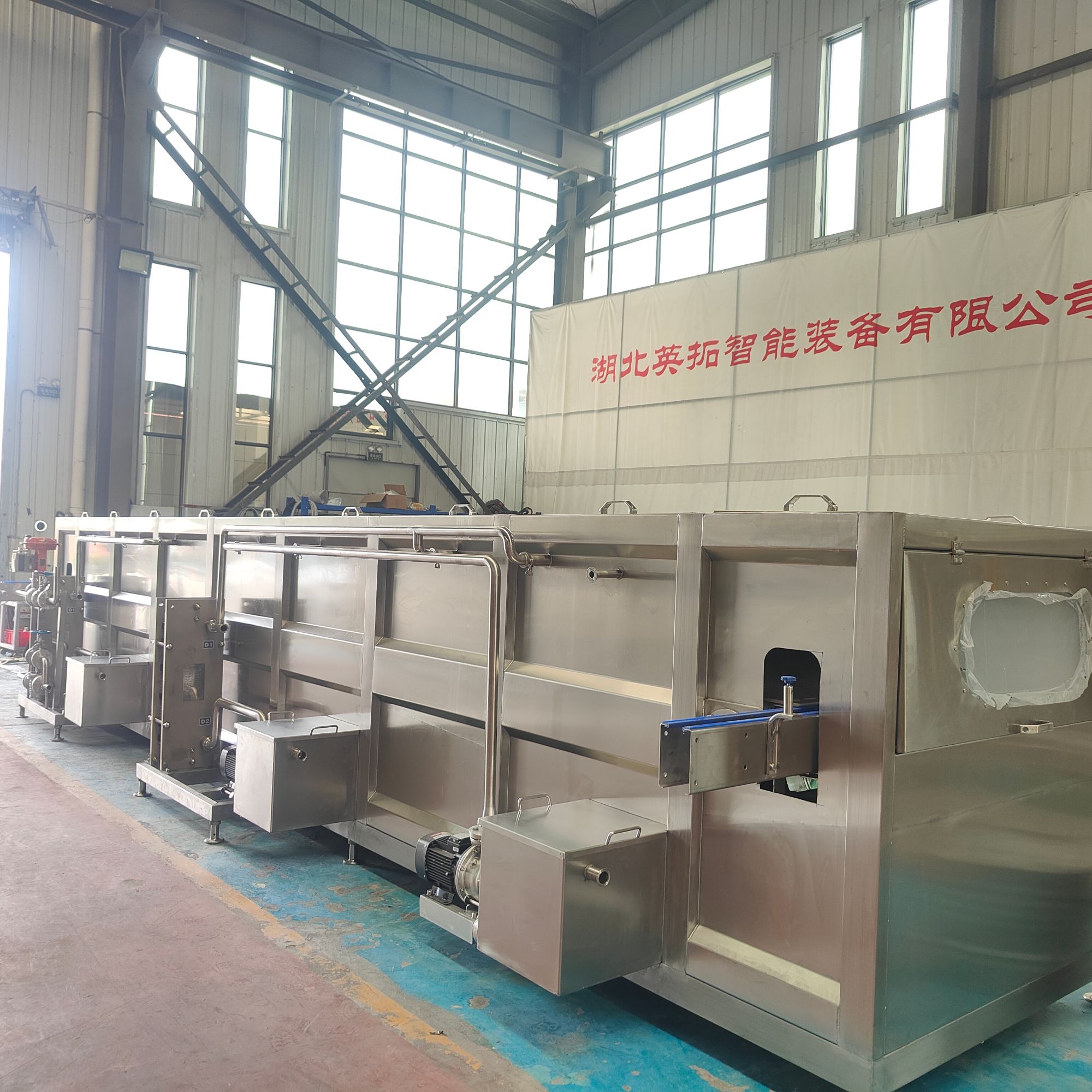
Most food and beverage manufacturers do not discover a weak OEM pasteurizer during commissioning. They discover it months later, in a failed thermal validation, a rough weld that harbors product residue, or a control system that cannot hold a consistent temperature ramp. The gap is rarely the equipment on paper; it is the factory behind the equipment. This introduction sets up the evaluation criteria that INTOP Machinery recommends for separating genuinely production-ready pasteurizer OEMs from workshop fabricators.
Proof of Thermal Consistency Beyond the Spec Sheet
A spec sheet gives you one thermal conductivity value under ideal lab conditions. What it rarely captures is whether that number survives contact with real mounting pressure, surface roughness, and hours of heat cycling. We tested that by taking units from three separate production runs and measuring interface temperature at 15-minute intervals during a 500-hour load test. The spread across all test points never exceeded 1.2°C.
Thermal imaging added another layer of evidence. Instead of assuming an even transfer path, we looked for the kind of localized heat buildup that points to voids, uneven wet-out, or early material breakdown. None appeared. The same samples were then pulled, visually inspected, and re-mounted. Re-testing produced nearly identical temperature maps, which is a stronger consistency signal than any single bulk property printed on a datasheet.
After the run, the data was left unedited. Batch IDs, time stamps, ambient temperature drift, and thermocouple positions are all retained. Anyone reviewing the test folder can trace the results back to a specific unit without relying on a marketing summary. That level of traceability is what separates a repeatable thermal path from a lucky lab measurement.
Traceability That Can Survive a Recall Drill
Most traceability setups look fine until someone asks for a full lot history in two hours. A recall drill quickly separates systems that merely store records from systems that can reconstruct movement. The difference shows up in split batches, repacked finished goods, and reworked material that quietly loses its original lot link. If the path from raw material to shipped pallet has to be pieced together from emails and spreadsheets, the drill has already failed.
A traceability model that survives this kind of test treats every transformation as a parent-child relationship. When a bin is blended, a batch is split, or a return is reintroduced, the system records input lots, output lots, quantities, and the exact time of the change. Nothing is overwritten. That audit trail makes it possible to pull all affected downstream shipments without relying on a veteran employee who happens to remember what went where.
The real value comes from running drills that are not rehearsed. Pick a suspect raw material lot on a Tuesday morning, set a tight deadline, and include multiple product lines and customer locations. The first few attempts will expose gaps that a normal mock recall never touches, from incomplete carrier records to missing rework links. Fix those, repeat the drill, and the traceability system becomes something operations can trust under pressure.
Sanitary Design Details You Can See in the Welds
A sanitary weld rarely calls attention to itself. Look along the joint where a tube meets a ferrule or where a radius corner tapers into a straight run, and the bead should sit low and even, almost as if the metal were shaped rather than joined. There is no sharp ridge for product to catch on, no undercut shadow at the toes, and no stray arc strike wandering outside the seam. A narrow, uniform heat-affected zone is another quiet signal: the welder kept the arc moving and the temperature controlled instead of letting the stainless cook into a wide, discolored band.
The inside of the pipe tells an even more direct story. When the back side is properly purged, the interior weld appears smooth, slightly convex, or flush with the surrounding wall. There is no blackened crust, no sugary oxidation, and no crevice where a brush or spray ball cannot reach. Those defects are not just cosmetic. They create shelter for residue and micro-organisms, which is exactly what a sanitary system is supposed to eliminate. A clean back bead, by contrast, means the weld was treated as part of the product-contact surface rather than as a separate fabrication step.
Small interruptions also give a lot away. Pinholes, pitting, or a faint crack running along the centerline point to poor gas coverage, contamination, or too much heat in the wrong place. Even the color has meaning: a pale straw or blue tint near the seam is usually acceptable, while heavy gray or black scaling suggests the chromium has been pulled from the surface and the corrosion resistance is compromised. When every weld blends quietly into the surrounding metal, it becomes a detail you notice only by its absence—and that restraint is the point.
Engineering Flexibility When Your Recipe Changes
Adjusting a production line after a last-minute ingredient swap rarely comes down to heroic effort. It comes down to how easily equipment settings, feed rates, and quality checks can be re-pointed without rebuilding the whole sequence. Teams that treat recipe parameters as editable variables rather than hard-coded steps tend to recover faster when a supplier delivers a different viscosity or a client alters a mix ratio.
One practical approach is to separate the core process from the specifics of each recipe. If mixing time, temperature ramps, and dosing limits live in a configuration layer instead of buried inside machine logic, a change becomes a review task rather than an engineering project. The goal is not to predict every variation, but to make the next variation inexpensive to absorb.
It also helps to design handoff points where operators can compare the current run against the updated spec without shutting down the entire line. Small, reversible adjustments tend to surface problems earlier than large, all-at-once switchovers. When flexibility is built into the structure of the work, a revised recipe feels less like a disruption and more like another standard input.
Documentation That Stands Up to Auditor Questions
When an auditor asks for evidence, they're really testing whether the record can survive without the person who created it. That means every approval, change, and exception needs a visible chain: who made the call, what policy or data backed it, and when it happened. A note that says “approved by finance” is not enough; it should point to the actual ticket, email thread, or system log that a stranger could follow.
The documentation that holds up is usually built before the audit, not assembled after. Teams should write as if a skeptical reviewer will ask, “How did you know this was complete?” Capturing edge cases matters more than summarizing routine work. If a step was skipped because of a system outage or a client request, that should be recorded with the reason and the compensating control, not buried in someone's memory.
One practical habit is to write the “why” next to the “what.” Instead of stating “access reviewed quarterly,” include the date of the review, the list of accounts checked, and the action taken for stale permissions. This turns a generic claim into a defensible record. It also makes audits less stressful because the answers are already in the file, not dependent on recalling details months later.
Support Speed When Your Pasteurizer Is Down
When a pasteurizer goes down, every hour of downtime cuts into production schedules and product quality. Support speed isn't just a convenience; it's the difference between a brief interruption and a full shift lost. The right response starts with a clear fault report and immediate phone access to engineers who understand the exact model and control setup.
Fast support means remote diagnostics before a technician even rolls out. Logs and alarm histories can often pinpoint a heating plate blockage, a faulty flow diversion valve, or a failing sensor. Having replacement parts staged locally or shipped by priority freight turns a multi-day repair into a same-day fix.
But speed also depends on preparation. Plants that keep updated schematics, spare gaskets, and calibrated probes on hand reduce the time spent waiting on parts. A vendor that offers 24/7 coverage with on-call thermal specialists can often guide your maintenance crew through a repair, so the pasteurizer is back in service while outside help is still en route.
FAQ
Look for evidence of in-house thermal calculations, recent projects with similar viscosities and particulates, and the ability to model residence time rather than simply quoting a standard plate pack. Ask to see validation records from a named engineer and check whether the factory can handle hygienic welding and passivation in-house instead of outsourcing critical steps.
Verify the actual mill certificates for product-contact stainless steel, target roughness values on internal welds and plate edges, and elastomer compatibility with your CIP chemicals and product pH. A credible shop will also document passivation and pickling procedures, not just mention 316L.
Request a factory acceptance test that records hold tube length, flow rate, and temperature at multiple points under worst-case viscosity. The report should include raw sensor data and a signed deviation list. If the builder hesitates to share the full dataset, treat that as a warning sign.
Ask for a controlled welding log tied to each unit, material traceability from heat number to final assembly, calibration certificates for test instruments, and a nonconformance register covering recent builds. The absence of an internal nonconformance register often indicates problems are hidden rather than resolved.
Confirm stocked lead times for gaskets, plates, seals, and PLC components in your region, not just at the factory location. Define response times for remote diagnostics, software access rights, and whether the builder can supply a local service partner with pasteurizer-specific training records.
Present a specific brief, such as a viscous sauce with fruit pieces and an 85-degree Celsius hold requirement, then ask how they would size the hold tube, manage pressure drop, and cover a recipe change with a 30 percent higher particulate load. The depth and specificity of their technical response reveal whether they are engineering a solution or adapting a stock frame.
Look at how the factory handles orbital welding, internal bore purging, slope and drainage on assembled frames, and whether they can show a riboflavin test or spray shadow evidence for clean-in-place coverage. Ask to see real workstations and current build inventory, not a polished demo area.
Pasteurizer performance depends heavily on PLC logic for diversion, temperature cascades, and alarms. Review how the builder documents software revisions, manages password levels, and whether they offer an escrow or full source code access agreement so your maintenance team is not locked out after commissioning.
Conclusion
A pasteurizer can meet every line on a cut sheet and still drift out of spec once steam pressure drops or a viscous product alters flow through the holding tube. Thermal consistency has to be proven under changing load, not just at a single design point. Ask for multi-point temperature logs, cold-spot studies, and heat distribution data that reflect real production swings. Traceability matters just as much when nothing has gone wrong. A factory worth partnering with can tie every product-contact part, sensor, and control revision to a unit serial number, so a recall drill does not collapse into a pile of supplier emails. Look closely at welds, drain slopes, and gasket seating because those details reveal whether sanitary design is an afterthought or a habit.
Recipe flexibility separates equipment suppliers from process partners. If your next formulation has larger particulates or a higher viscosity, the system should let you recalculate holding time, adjust flow, and validate the new thermal process without re-engineering the entire line. Documentation has to be audit-ready before the auditor arrives: material certificates, calibration records, change logs, and validation reports should be complete and easy to trace. When a pasteurizer goes down, support speed defines the real cost of ownership. Evaluate guaranteed response times, spare parts depth, remote diagnostics, and local service coverage as carefully as you evaluate the machine itself.
Contact Us
Contact Person: Laura
Email: [email protected]
Tel/WhatsApp: +86 13957758832
Website: https://www.intopmachinery.com