

OEM Residue Free Protective Film Exporter: A Buyer's Guide to Quality Assurance
2026-11-16
Every OEM protective film promises residue-free performance until a customer peels it off and finds ghosting on a brand-new appliance panel. If you're tired of crossed fingers and costly rework, this buyer's guide gives you the QA filters that separate dependable exporters from risky ones. Shire has spent years turning those filters into a repeatable sourcing standard.
What Residue Free Really Means for Your Application
Residue free doesn’t just mean the surface looks clean after the process. In many applications, it means there’s no invisible film that can interfere with adhesion, coating, or electrical contact. Even a microscopic layer of surfactant, plasticizer, or release agent can change how a bond cures or how a sensor responds. For engineers and operators, this often shows up as intermittent failures that take weeks to trace back to a cleaning or preparation step.
The practical test is usually what happens after the component moves to the next stage. If a residue-free product leaves behind something that only becomes apparent under heat, humidity, or voltage, the problem gets expensive fast. A connector that passes a quick visual check may still carry enough residue to promote corrosion or reduce surface energy. So the real meaning of residue free is tied to the next process requirement, not just the absence of visible dirt.
Choosing a product labeled residue free should come with a clear understanding of the application environment. What works on glass may not be appropriate for a polycarbonate lens or a silicone gasket. The best approach is to test the cleaned or treated surface under the same conditions it will face in service, including temperature swings and exposure to process chemicals. That way, residue free becomes a measurable performance standard rather than a marketing phrase.
The Impact of Coating Weight on Clean Peel Performance
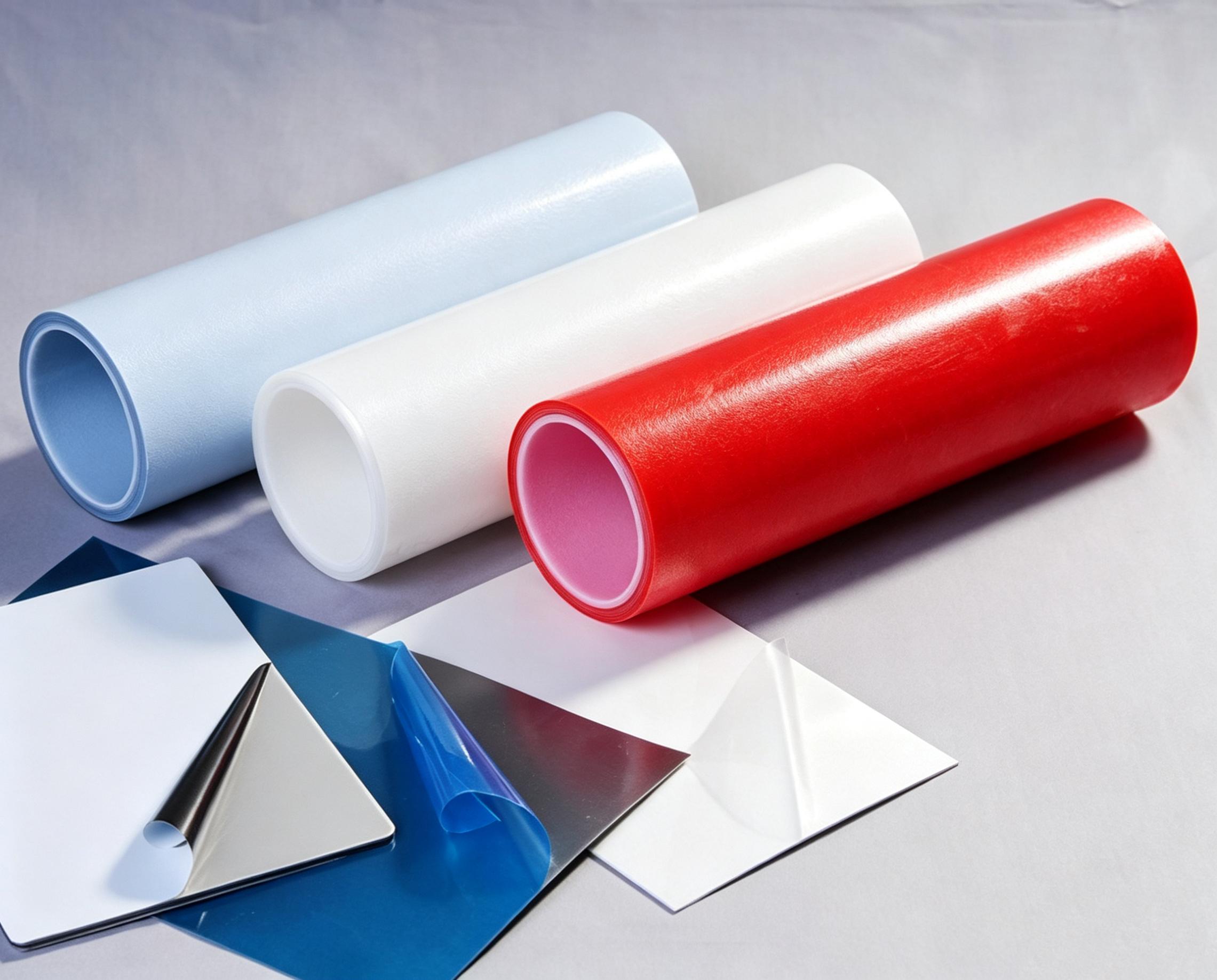
Coating weight sets the baseline for how a release layer behaves during peel. When the applied coat is too light, coverage over a textured or porous substrate becomes patchy. Adhesive can grab exposed fiber or film surface, which turns an intended clean peel into a jagged, high-force event with micro-tears or residue. This often shows up as hazy patches on the liner or a faint clicking sound as the label is pulled.
On the other end, a heavier coat does not automatically improve release. Excess coating can remain under-cured at typical line speeds, leaving free silicone or release agent available to migrate onto the adhesive. The result is a peel that feels slippery but leaves behind an invisible contaminant, reducing the tack of the final construction. Heavier deposits also increase the chance of blocking or curling if the liner is wound before full cure.
Finding the right weight is less about hitting a single number and more about matching the coat to the base paper or film, the adhesive system, and the die-cutting or labeling conditions. A rough clay-coated kraft liner may need a noticeably higher coat weight than a smooth polyester film to maintain consistent release. Trial runs that vary coat weight in small increments while measuring both peel force and post-peel adhesive performance tend to reveal the practical window where clean separation holds up across batches.
Why Film Base Selection Matters More Than You Think
Most people pick a film stock based on speed or color profile, but the base underneath the emulsion quietly shapes everything from how the negative handles in the lab to the final look on screen. A polyester base, for instance, resists tearing and stretching even when wet, which saves your images during aggressive processing or scanning. Acetate, on the other hand, has a softer physical personality—it can be spliced with simple tape and tends to break cleanly in a jam, sparing your camera’s transport mechanism. These differences rarely show up in spec sheets, yet they decide whether a roll survives a rough day or ends up as confetti.
Beyond durability, the base affects how light travels through the film during scanning and printing. Polyester is clearer and more dimensionally stable, so it sits flatter on a scanner bed and yields fewer color fringing artifacts at the edges. Acetate, while slightly less transparent, has a gentler interaction with older enlargers and contact printers, often giving a smoother tonal transition in the highlights. Photographers who switch bases without realizing it may blame the lens or the lab for uneven sharpness, when the real culprit is the thin plastic layer they never think about.
There is also an archival angle that gets overlooked until it is too late. Acetate degrades over decades, releasing acetic acid and becoming brittle—the infamous “vinegar syndrome” that ruins countless family archives. Polyester is chemically inert and can last centuries if stored reasonably well, making it the safer choice for work you intend to pass down. The choice is not just technical; it is a bet on how long your images will matter. Pick the wrong base and you are not just altering contrast or grain, you are quietly choosing whether your photographs outlive the box they are stored in.
How Inline Inspection Catches Defects Labels Miss
Labels rely on human eyes and fixed checkpoints, so they only spot issues someone already knows to look for. Inline inspection works differently—it scans every unit as it moves, catching random placement drift, subtle color shifts, or micro-cracks that slip past a static sticker. The system learns from the line itself, flagging deviations from the live norm rather than waiting for a preset defect list.
Another gap labels miss is timing. By the time a bad batch gets tagged, hundreds of flawed pieces may already be boxed. Inline tools act within seconds, pulling suspect items before they stack up. This shift from after-the-fact marking to in-the-moment filtering turns quality control from a cleanup step into a real-time guardrail.
What makes the difference stick is consistency. A label only works if an operator notices it, understands it, and reacts correctly under pressure. Inline inspection doesn’t get tired or distracted—it applies the same threshold to the first unit and the ten-thousandth, reducing the quiet drift that labels often document but rarely prevent.
Custom Slitting and Lamination Without Losing Consistency
Custom slitting and lamination demand more than just cutting and bonding—they require a process that holds tolerances from the first meter to the last. Our approach starts with a detailed material profile: film stiffness, adhesive rheology, and roll geometry all feed into the machine setup before a single blade touches the web. Tension zones are tuned individually, not copied from a generic recipe, so polyester, polypropylene, and foil laminates stay flat and wrinkle-free even at narrow widths.
During slitting, we swap in blade configurations matched to the specific layer stack—razor, shear, or crush-cut—based on edge quality tests rather than assumptions. For lamination, adhesive coat weights are monitored in real time and adjusted on the fly, preventing streaks or delamination that show up only after curing. This same setup is documented and repeated exactly for subsequent runs, so the 50th roll matches the first within microns.
The payoff is consistency you can measure without a lab: no telescoping on the unwind, no tunneling in the laminate, and no drift in bond strength across a full master roll. Incoming inspection is simplified because every converted roll carries the same tension history and edge profile. When a customer asks for a custom slit width or a two-ply construction with a specific peel strength, we dial it in once and lock the settings—then run it the same way every time.
Field Testing Protocols That Predict Real World Results
Most field tests fail quietly before they ever produce a bad number. The protocols that actually predict real-world performance are built around the messy variables you cannot control—humidity swings, operator fatigue, surface variation, equipment drift—and they treat those variables as data, not noise. A useful protocol does not attempt to replicate a single perfect run; it stresses the product across a defined range of conditions and records where the behavior starts to shift.
The difference between a reassuring field trial and a predictive one often comes down to sampling discipline. Instead of testing until the results look acceptable, strong protocols fix the number of units, the duration, and the pass/fail thresholds before anyone steps outside. They also include deliberate negative controls or reference products so the team can tell whether the test itself was sensitive enough to catch known weaknesses. Without that internal calibration, a clean result may simply mean the protocol was too forgiving.
One underused practice is to log maintenance events, environmental readings, and operator observations in the same timeline as performance metrics. That allows the analysis to separate product limitations from external interference—a distinction that matters when a field result contradicts lab data. Protocols that predict real-world outcomes are rarely the most complex; they are the ones that force honest measurement under conditions you did not choose, then give you enough context to interpret the failures.
FAQ
Look at how they handle substrate compatibility testing. Many exporters will claim broad adhesion ranges, but the ones worth your time will ask for samples of your actual surface material—whether it's powder-coated metal, glass, or textured plastic—and run peel adhesion tests at different dwell times. If they only provide a generic spec sheet without asking about your application, treat that as a warning sign.
Request accelerated aging data that includes UV exposure, humidity cycling, and temperature extremes. Don't settle for a simple room-temperature 180° peel test. A credible exporter will have data showing adhesion build-up over time, measured at intervals like 24 hours, 7 days, and 30 days. Ask specifically about the adhesive's glass transition temperature and whether they've seen any residue on low-surface-energy substrates. If they hesitate or only mention 'low tack' without numbers, move on.
ISO 9001 is a baseline but says little about film performance. Pay more attention to whether the exporter can provide test reports following ASTM D3330 for peel adhesion, ASTM D3654 for shear holding power, and perhaps PSTC-101 for tack. For electronics or automotive applications, ask about compliance with RoHS and REACH, and whether they've done any testing per IEC standards for surface contamination. A good exporter will not just list these numbers—they'll explain what they mean for your specific use case.
Ask whether they use solvent-based, water-based, or UV-curable acrylic adhesives, and why. For truly clean removal, you want an adhesive that crosslinks during curing but doesn't continue to build adhesion aggressively over time. Request details on the adhesive's molecular weight and gel fraction, or at least a summary of its cohesive strength. Also ask if they can adjust the peel force for your surface energy. If the exporter can't discuss adhesive chemistry beyond 'it's acrylic,' you're probably dealing with a trading company rather than a manufacturer.
A serious exporter will proactively ask about your storage and end-use environment. They should ask about maximum temperatures during shipping, whether the film will be exposed to direct sunlight, and the type of surface roughness. Then they should recommend a specific adhesive series—not just one product—and possibly send pre-production samples for you to test on your own line. If an exporter says one film works for everything from glass to stainless steel to painted wood, that's a red flag. No single adhesive performs universally without residue issues.
Insist on a certificate of analysis (COA) for every batch, not just a generic product datasheet. The COA should include actual measured values for thickness, peel adhesion, tensile strength, and elongation—not just nominal ranges. Also ask for batch traceability, meaning the exporter can link a roll of film back to the specific adhesive lot and raw material supplier. If they provide only a 'passed inspection' stamp without numbers, their QA is superficial.
Standardize your test protocol before samples arrive. Use the same substrate coupons, same application pressure (e.g., a 2 kg rubber roller per ASTM D3330), same dwell times, and same removal angle and speed. Then compare not only whether residue remains, but also how the film handles—does it lie flat, does it unwind smoothly, does it leave any fogging or ghosting on the surface? Also note the film's clarity and edge lifting. Buyers often forget that residue-free is only one part; if the film curls or tears during removal, the whole process slows down. A good exporter will welcome your test protocol and may even suggest improvements.
Watch for vague language like 'high quality' or '100% residue-free guarantee' without specifying test methods. Also note whether they can supply failure mode data—what happens if the film is left on for twice the rated time? Do they have examples of field failures and how they were resolved? A manufacturer that has never seen a residue issue is either lying or hasn't shipped much volume. Ask for a list of reference clients in your industry; if they can't name any, that's telling. Also check whether they have in-house lab equipment or outsource testing. Outsourcing isn't automatically bad, but it often means slower feedback and less control over adhesive formulation.
Conclusion
When sourcing residue free protective film from an OEM exporter, nothing matters more than knowing exactly how the product will behave on your specific surface. “Residue free” is not a single material property; it depends on a controlled balance between adhesive formulation, film base, and coating weight. A slightly higher coating weight can improve adhesion on textured substrates but may leave micro-deposits after peeling if the adhesive transfers. Conversely, too little coating causes early lifting. The film base is equally critical—polyolefin, polyester, or PVC each responds differently to UV exposure, temperature swings, and stretching during application. Buyers who ignore base selection often discover edge lift or ghosting weeks after installation.
True quality assurance comes from what happens before rolls leave the factory. Inline inspection systems catch coating streaks, gels, and splice defects that offline label checks routinely miss, reducing the risk of a contaminated roll reaching your line. Custom slitting and lamination require tight tension control; otherwise edge burrs and uneven profiles create inconsistent unwind and peel force. The most reliable exporters pair these production controls with field testing protocols that simulate your actual environment—heat aging, humidity cycling, and peel adhesion on your substrate. Only then can a supplier honestly promise clean, residue free removal across batches, not just in a lab sample.
Contact Us
Contact Person: Jack Xu
Email: [email protected]
Tel/WhatsApp: 8615257328825
Website: https://www.temporaryprotectivefilm.com/