

Private Label Abrasive Jumbo Rolls: What Industrial Buyers Need to Know
2026-11-20
Industrial buyers often treat abrasive jumbo rolls as a commodity—same grit, same backing, same result. That assumption gets expensive fast when inconsistent grain dispersion or weak resin bonding slows finishing lines and drives up rework. The real difference sits in how the roll is engineered, not just what it's made from. SHENZHEN SUN ABRASIVES has built its private label program around that overlooked layer: controlled coating weight, uniform grain orientation, and splices that don't snap under tension. Before you lock in another blanket order, here's a closer look at the specifications that actually move the needle in high-volume sanding.
What Actually Changes When a Roll Gets Your Logo
A roll with your logo often looks like a simple branding swap, but the real change runs much deeper. The embossing or debossing depth shifts to match the plate thickness, which alters how the paper fibers compress around each character. That subtle shift changes the way light hits the raised or recessed area, giving your mark a tactile presence that plain printed logos never achieve.
Letterpress and foil processes also introduce different material behaviors. A foil-stamped roll requires a heat-activated layer that bonds to the paper surface, while blind debossing relies purely on pressure. These two paths produce distinct edge sharpness and background texture, so the same logo can feel crisp and metallic on one run or softly pressed and matte on another.
Beyond the visual, a custom roll changes handling. The branded area becomes a tactile interruption in an otherwise smooth surface, which makes people run a thumb over it without thinking. That small pause is where a plain roll becomes a memorable object, and it is rarely captured in a flat product photo.
Reading a Backing and Bond Spec Without the Marketing Gloss
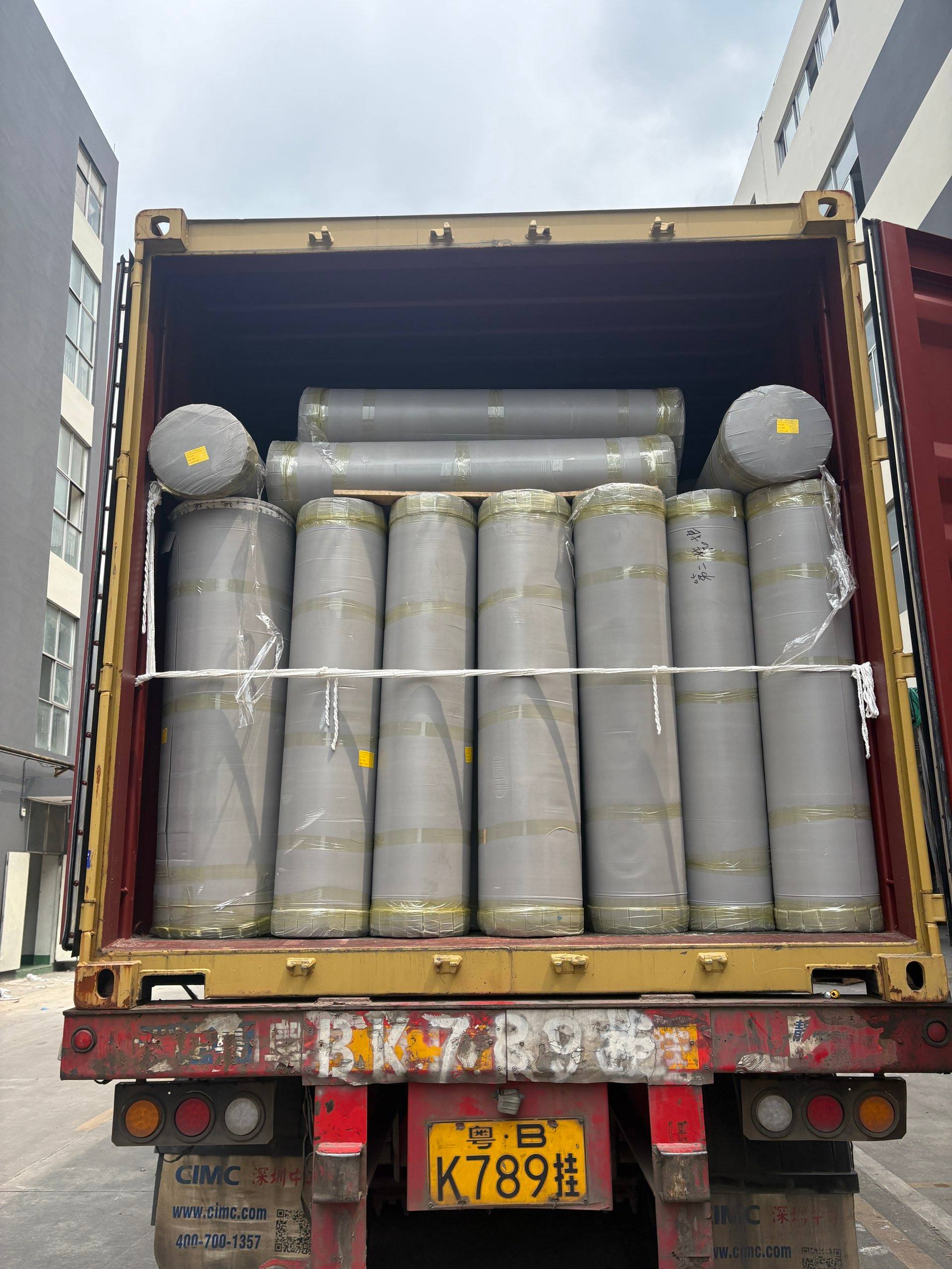
Most product sheets lead with fiber type, pile height, or surface finish because those are easy to sell. What actually keeps a floor covering flat, stable, and intact over time sits further down the page: the backing system and the bond between layers. Ignore adjectives like premium, high-performance, or heavy-duty unless they are followed by a measurable test result. Instead, look for the specific materials used in the primary and secondary backing, whether the construction is woven, nonwoven, or reinforced, and what adhesive or laminating method holds the layers together. A polypropylene secondary backing with a polyester scrim behaves differently under moisture and rolling loads than a straight latex-coated felt, even when both are marketed for commercial use.
The bond spec is only useful when it names a test method, a unit, and a passing value. Peel strength, delamination resistance, or tuft bind should be cited alongside something like ASTM D3936 or ISO 11825, not buried in a phrase like suitable for busy interiors. Check whether the number refers to initial bond, aged bond after heat and humidity, or performance after wet cleaning. Adhesive type matters too: a hot-melt urethane bond tends to behave differently at seams and under chair casters than a standard latex lamination. If two products are being compared, strip them down to the same test method and the same conditioning protocol; otherwise the numbers will mislead more than the marketing copy ever could.
Spec sheets that omit a backing description or skip bond values usually leave a gap for a reason. Ask for the missing data before assuming the product is equivalent to something with a fully documented construction. Also pay attention to backing weight and recycled content claims. A heavier backing can improve dimensional stability, but only if the added material is well bonded and not simply there to lower cost. Recycled content can shift how a product absorbs moisture or responds to temperature changes, and those effects show up in the same bond and stability numbers you should already be checking. A quiet, plain-looking spec line often reveals more about long-term performance than the bold claims on the first page.
Matching Jumbo Rolls to Your Existing Converting Lines
Every converting operation has its own rhythm, built around the width, tension range, and core size of the rolls it already runs. The first step in matching a jumbo roll isn't picking the largest diameter available—it's checking how your unwind stand actually behaves at the edges of that diameter. A roll that fits the chuck but overruns your tension control will cause more waste than a slightly smaller one that stays predictable from start to finish.
Pay close attention to the splice point and the acceleration curve on your existing lines. Older equipment often handles taper tension differently, and a jumbo roll that seems fine at steady speed can throw off registration during ramp-up or emergency stops. Measure the roll's stiffness under your specific web path, because two rolls with identical dimensions can behave very differently once they're threaded through idlers, dancers, and steering guides.
Rather than forcing the largest roll into a line that wasn't designed for it, work backward from the downtime you're willing to accept. If a bigger roll saves changeovers but invites more breaks at the unwind, the numbers rarely work out. A practical match means your operators can load, splice, and run the roll without adjusting settings they don't normally touch—that's when the extra diameter actually pays for itself.
The Real Cost Difference Hiding in Yield and Splice Waste
Most yield comparisons stop at the quoted price per thousand square feet, which is exactly where the real cost story starts to hide. A roll may carry the same labeled length as another, but short ends, inconsistent tension, and poor edges quietly remove usable material before a job ever reaches full speed. Those losses are rarely shown as a separate charge; they surface later as extra setups, slower running speeds, or output that falls short of planning.
Splice waste tends to get filed under scrap, so it never truly enters the cost side of the ledger. Yet each splice forces the operator to stop, re-register the web, and remove a section that cannot be processed or sold. The physical scrap is only a fraction of the real impact. Downstream, the line loses rhythm, handling increases, and quality checks multiply in ways no shift schedule accounts for.
The practical comparison is between usable output per purchased unit, not between two face prices. A low-cost material that splices often or tracks poorly can easily erase its own discount through reduced throughput. Once yield loss and splice frequency become part of the math, the product that looked cheaper on the order sheet often becomes the more expensive one on the floor.
Grit Consistency Checks Worth Requesting Before the First Shipment
Before signing off on the first truckload, ask the supplier to pull samples from three separate production runs and run a full sieve stack analysis. A single averaged number hides the spread that causes uneven blast profiles. If the retained percentages on the critical screens shift by more than a few points between lots, you will feel that on the surface long before the paperwork catches it.
Moisture and fine dust deserve attention too. Grit that pours freely in a dry warehouse can clog metering valves halfway through a humid morning if the supplier's packaging was exposed. Ask for a moisture content reading taken just before loading, not from the last archived certificate. Likewise, have them report the amount passing the finest screen as a separate figure, not blended into the coarse fraction.
The goal is not to punish the vendor with extra paperwork. It is to lock down which variation actually matters for your nozzles, reclaim system, and finish spec before a full container is parked at your dock. Once that baseline exists, every later shipment becomes a comparison against something real.
When a Stable Supplier Matters More Than a Low Opening Quote
A low opening quote tends to look better on a spreadsheet than it does on a loading dock. Once the first delay hits, or a batch arrives with finish problems, the money saved upfront gets spent again in expediting, sorting, and apologizing to the customer. A stable supplier keeps lead times honest and material quality consistent, which keeps the real cost close to the budget instead of turning it into a moving target.
Stability also shows up in the moments that are hard to put on a purchase order. When a spec changes at the last minute or a forecast jumps, a dependable supplier will tell you what can and cannot be done before you commit. That kind of straight answer is worth more than a lower first quote from a vendor who overpromises and then goes quiet after the contract is signed.
None of this means price should be ignored. It means the opening number only becomes meaningful after you know how much follow-up, rework, and schedule risk comes with it. For buyers who have been through enough late shipments, paying a bit more for a supplier that answers the phone and ships on time usually looks like the cheaper decision.
FAQ
They are large master rolls of coated abrasive material sold unbranded or under the buyer's own name, then slit or converted to the widths and lengths a production line actually needs. Retail abrasives are usually pre-cut discs, sheets, or belts with limited backing and grit choices, while jumbo rolls give industrial buyers direct control over grain type, backing, coating weight, and packaging.
The backing has to match the pressure, flexibility, and heat conditions of the operation. Paper works for lighter sanding, film gives a consistent finish, cotton and polyester cloth handle more aggressive grinding, and blended backings reduce stretching. Grain selection matters just as much: aluminum oxide is the general-purpose choice, zirconia and ceramic handle high-pressure or high-heat work, and silicon carbide suits non-ferrous metals and some coatings.
They have a direct effect on yield and downtime. A roll that varies in width can cause tracking problems or excess edge trim, and excessive splices interrupt converting and can leave marks on the workpiece. Buyers should specify acceptable width tolerance, maximum splices per roll, and clean butt splices with no overlap or thick adhesive lines.
It depends on what equipment is already on hand. A plant with slitting, laminating, or die-cutting capacity can usually handle conversion without major new spending. If not, using a contract converter or buying slit-to-width rolls from the supplier is often cheaper than investing in machinery, especially when volumes are still unstable.
The most frequent complaints include splice bumps, uneven abrasive coating, grit shedding, wavy edges, telescoping during unwinding, curling after slitting, and color differences between batches. These problems often trace back to handling, curing, or tension control, so a supplier with solid incoming inspection and batch traceability is worth the effort to find.
Ask for sample rolls from separate production batches, not just hand-picked samples. Review coating weight and grain test data, check whether the supplier follows an internal quality system or independent audits, and if possible visit the coating and converting line. A first article run followed by repeat sampling on the next order usually reveals more than a single trial.
Buyers can request specific core diameters, moisture-resistant wrap, reinforced pallets, barcode labels, batch numbers, directional arrows, and custom brand printing. These details may seem minor but they reduce handling damage, speed up receiving, and make it easier to rotate stock by production date.
It often makes sense once there is enough volume to absorb the initial tooling, sample, and packaging setup. The unit cost usually drops compared with buying converted goods, and the buyer gains a consistent product line under its own name. The main cautions are storage space, forecasting accuracy, and having a dependable conversion path, so starting with one or two fast-moving grits is a practical way to test the model.
Conclusion
Private labeling a jumbo roll is less about changing the abrasive and more about controlling what arrives at your dock. The grain, backing, and bond usually stay identical to a supplier's stock line, but you gain tighter say over packaging, labeling, lot codes, and often the ability to lock a specification so the next shipment does not drift. That makes reading the backing and bond details without the marketing gloss critical. A polyester film backing or a heavier cotton drill, a resin-over-resin bond, a specific grain type—these are the variables that determine whether a roll runs cleanly on your converting line or fights the tension controls from the first unwind. Before committing, buyers should confirm the roll width, core size, unwind direction, and splice style match the equipment already on the floor, because a standard jumbo is rarely standard across every converter.
The larger cost story usually hides in yield and splice waste rather than the opening price. Two rolls can carry the same quoted width and length, yet one yields more usable narrow rolls because of fewer hidden splices, better edge stability, and more consistent caliper. Grit consistency matters just as much: a shipment that passes a visual check can still produce uneven scratch patterns if the abrasive particle distribution shifts from batch to batch. That is why it is worth requesting retained samples, sieve analysis data, or a small trial run before the first full container leaves the supplier. Over time, a stable supplier with predictable tension, adhesion, and splice frequency saves more than a low initial quote ever will—downtime and rejected converting runs are far more expensive than the few cents per square meter someone tried to trim on the front end.
Contact Us
Contact Person: Amanda Wang
Email: [email protected]
Tel/WhatsApp: +86-13602569854
Website: https://www.sunabrasives.com.cn