

Reduction Mill Strategies for Efficient Flat/Rectangular Wire Production in Modern Factories
2026-02-15
In today's competitive manufacturing landscape, achieving precision and efficiency in flat/rectangular wire production is more critical than ever. Modern factories are turning to advanced reduction mill strategies to optimize output, minimize waste, and enhance product quality. These innovative approaches not only streamline processes but also open up new possibilities for industries ranging from automotive to electronics. At GRM, we're at the forefront of this transformation, leveraging cutting-edge technology to drive success. In this blog, we'll explore the key strategies that are reshaping production lines and how they can benefit your operations. Get ready to dive into the future of wire manufacturing—where every millimeter counts and efficiency reigns supreme.
Streamlining Production: Tactics for High-Speed Flat Wire Rolling
In the world of metalworking, achieving top speeds in flat wire rolling is no simple feat. It demands a blend of technological finesse and operational precision that goes beyond basic machinery. This process is all about fine-tuning every element, from the initial setup to real-time adjustments, to eliminate bottlenecks. By focusing on seamless integration and reducing downtime, manufacturers can push their lines to operate at peak efficiency, turning raw material into high-quality flat wire without unnecessary interruptions. It's a continuous dance of optimization where even minor tweaks can lead to significant gains in throughput.
One key tactic involves leveraging advanced automation systems that monitor and adjust roll pressures and speeds on the fly. These smart setups use sensors and AI-driven analytics to predict wear and tear, ensuring consistent output while preventing costly breakdowns. Instead of waiting for problems to arise, proactive maintenance schedules align with production rhythms, keeping the equipment humming smoothly. This approach not only boosts speed but also enhances product uniformity, which is crucial for applications in electronics and automotive industries where precision is non-negotiable.
To really stand out, it's worth considering unconventional strategies like custom alloy formulations or hybrid cooling techniques that reduce friction and heat buildup. By experimenting with material blends and innovative lubricants, operators can minimize resistance during rolling, allowing for faster cycles without compromising surface finish. Pair this with tailored training for staff to respond swiftly to anomalies, and you've got a robust framework that adapts to changing demands. Ultimately, streamlining in this context means transforming a routine process into a dynamic, high-performance system that delivers results reliably.
Optimizing Roll Pass Design in Rectangular Wire Manufacturing
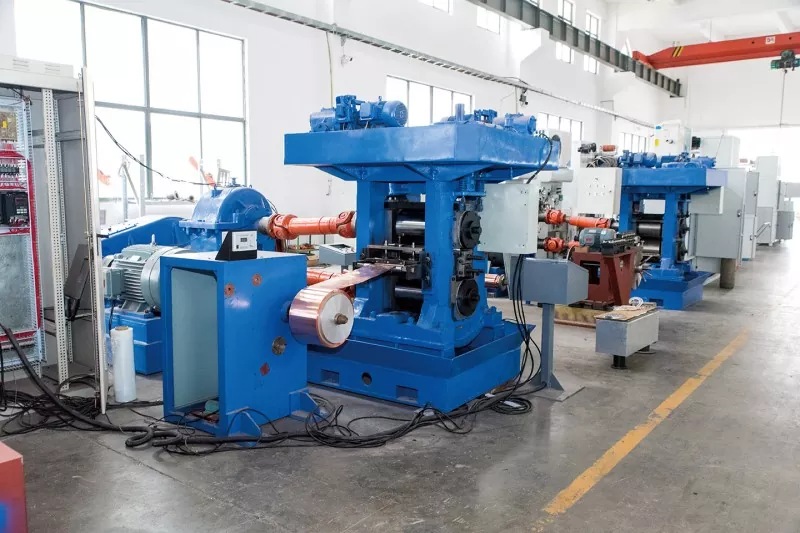
In the realm of rectangular wire production, fine-tuning the roll pass design isn't just a step; it's the foundation that dictates everything from material flow to final dimensions. By meticulously adjusting parameters like groove shapes and roll diameters, manufacturers can achieve tighter tolerances and reduce scrap rates, ensuring each coil meets exact specifications without unnecessary waste. This process often involves iterative simulations to predict how the metal will behave under pressure, allowing for proactive corrections before physical trials begin. Such precision transforms raw stock into uniform, high-quality wire ready for diverse applications, from construction to electronics.
Beyond basic shaping, optimizing roll pass design delves into the nuances of deformation mechanics, where even slight tweaks to pass sequences can dramatically impact energy consumption and tool wear. For instance, a well-balanced design might incorporate intermediate passes that gradually form the rectangular profile, minimizing stress concentrations and extending roll life. Real-world case studies show that companies adopting data-driven approaches—like monitoring rolling forces and temperature variations—can fine-tune their setups to outperform competitors in both speed and cost-efficiency. This hands-on optimization not only boosts productivity but also adapts to varying alloy types, making it a versatile strategy in modern wire mills.
Looking forward, the push for smarter roll pass design integrates emerging technologies such as AI-driven modeling and real-time sensor feedback, enabling dynamic adjustments during production runs. By leveraging these tools, engineers can anticipate issues like edge cracking or dimensional drift, shifting from reactive fixes to predictive maintenance. This evolution underscores how optimization isn't a one-time task but an ongoing journey, fostering innovation in rectangular wire manufacturing that balances precision with sustainability, ultimately delivering superior products with fewer resources. Embracing these advancements ensures manufacturers stay agile in a competitive market, where every micron counts.
Enhancing Quality Control with Advanced Mill Monitoring Systems
At the heart of modern manufacturing, leveraging advanced mill monitoring systems transforms how quality control is executed on the shop floor. Imagine sensors and IoT devices working in real-time to track variables like temperature, vibration, and material flow—this continuous data collection allows operators to identify deviations before they escalate into costly defects. By integrating these digital tools, companies can move from reactive troubleshooting to a proactive stance, ensuring every production batch meets stringent standards without constant manual oversight.
What truly distinguishes these systems is their ability to combine machine learning algorithms with historical performance data. For instance, predictive analytics can forecast potential equipment failures or suboptimal milling conditions, enabling preemptive adjustments that minimize downtime and waste. This not only boosts efficiency but also empowers teams to fine-tune processes iteratively, fostering a culture of continuous improvement where quality becomes an ingrained part of the workflow rather than a final checkpoint.
In competitive markets, adopting such technology isn't just about compliance; it's a strategic advantage that enhances product consistency and customer trust. Tailored dashboards and alerts keep stakeholders informed, bridging the gap between technical data and actionable insights. As mills evolve, these monitoring solutions pave the way for smarter, more resilient operations, where quality control seamlessly integrates into daily operations to drive long-term success.
Energy-Efficient Practices for Modern Reduction Mills
Modern reduction mills are stepping up their game in energy efficiency, leveraging smart technologies and innovative approaches to slash power consumption. By integrating variable frequency drives and advanced control systems, these mills can fine-tune motor operations to match real-time load demands, cutting energy waste significantly. Additionally, the adoption of high-efficiency motors and regenerative braking systems helps recover energy that would otherwise be lost, making operations not only greener but more cost-effective in the long run.
Beyond equipment upgrades, operational tweaks play a crucial role in boosting efficiency. For instance, optimizing process parameters like temperature and pressure through real-time monitoring can reduce energy use without compromising output quality. Many mills are also implementing waste heat recovery systems to repurpose excess thermal energy for pre-heating materials or generating auxiliary power, turning a byproduct into a valuable resource that drives down overall energy bills.
To stay ahead, forward-thinking reduction mills are embracing a holistic approach that combines technology with employee training and continuous improvement cycles. By fostering a culture of energy awareness and regularly auditing energy flows, mills can identify hidden inefficiencies and adapt swiftly to changing conditions. This proactive stance not only enhances sustainability but also builds a competitive edge in an industry increasingly focused on reducing its environmental footprint.
Adapting Mill Operations for Diverse Rectangular Wire Specifications
Modern manufacturing demands that industrial mills remain agile in processing rectangular wire to meet a broad spectrum of client needs. Rather than a one-size-fits-all approach, facilities must adjust rolling techniques, tension controls, and cooling processes on the fly. This flexibility is crucial for applications ranging from precision electronics to heavy-duty construction, where wire dimensions and material properties can vary dramatically.
One key challenge lies in calibrating machinery for different alloys and thicknesses without compromising efficiency. Operators often integrate real-time monitoring systems to track dimensional accuracy and surface finish, allowing for immediate tweaks. For instance, switching from a softer copper alloy to high-strength steel might necessitate slower rolling speeds and adjusted annealing cycles to prevent defects and maintain structural integrity.
Beyond technical adjustments, adapting operations involves training staff to handle diverse specifications confidently. Many mills now use digital twins to simulate production runs, reducing trial-and-error and downtime. By embracing such innovations, manufacturers can not only meet varied specs but also enhance product quality and responsiveness to market shifts, securing a competitive edge in today's dynamic industrial landscape.
Innovative Cooling and Finishing Techniques for Improved Wire Performance
In the wire manufacturing industry, achieving superior performance hinges on advanced cooling and finishing methods that fine-tune material properties. For instance, rapid quenching processes, such as water or air cooling, are now tailored to specific alloys to reduce internal stresses and enhance ductility, leading to wires that resist breakage under high tension. By integrating sensors and automated controls, manufacturers can precisely monitor cooling rates, ensuring consistent quality across batches and minimizing defects that could compromise wire integrity in applications like electrical cabling or automotive components.
Beyond cooling, innovative finishing techniques like electro-polishing or plasma coating are revolutionizing wire surfaces to boost durability and conductivity. Electro-polishing removes micro-imperfections, creating a smoother finish that reduces friction and wear in dynamic environments, while plasma coatings can deposit thin layers of corrosion-resistant materials, extending wire lifespan in harsh conditions. These methods not only improve mechanical strength but also enhance electrical performance by maintaining optimal contact surfaces, crucial for sectors like aerospace or renewable energy where reliability is paramount.
By combining these cooling and finishing advancements, manufacturers can produce wires with tailored characteristics, such as increased flexibility or thermal stability, that outperform traditional products. This holistic approach allows for customization based on end-use requirements, driving innovation in industries from construction to electronics without compromising on efficiency or sustainability. As a result, stakeholders benefit from more durable, efficient wires that support cutting-edge technologies and contribute to overall system resilience.
FAQ
Strategies often include multi-stand rolling with precise tension control, customized die designs to minimize material waste, and real-time monitoring systems for quick adjustments.
They implement robotic handling for consistent material feeding, AI-driven predictive maintenance to reduce downtime, and automated quality checks using vision systems.
Precision ensures uniform dimensions and mechanical properties, with laser measurement tools and closed-loop control systems enabling tight tolerances and high repeatability.
Key factors include selecting alloys with excellent formability, managing grain structure through controlled cooling, and using lubricants to reduce friction and wear.
Efficiency is boosted by regenerative braking in drive systems, heat recovery from cooling processes, and optimized rolling schedules to minimize power consumption.
They utilize quick-change tooling systems, flexible programming for different rolling patterns, and modular setups that allow rapid reconfiguration for diverse orders.
Data analytics helps in predicting equipment failures, optimizing process parameters based on historical trends, and correlating production variables with final wire quality for continuous refinement.
Conclusion
In contemporary manufacturing facilities, the pursuit of efficiency in flat and rectangular wire production hinges on sophisticated reduction mill strategies that integrate multiple operational facets. Streamlining production through high-speed rolling tactics is paramount, requiring precise roll pass designs tailored specifically for rectangular geometries to minimize defects and maximize throughput. Simultaneously, enhancing quality control via advanced mill monitoring systems ensures real-time oversight, detecting deviations early to maintain stringent dimensional and surface standards. By adapting mill operations to diverse specifications—from varying thicknesses to unique alloy requirements—factories can achieve versatile output without sacrificing speed or consistency, thereby addressing a broad market demand with agile manufacturing processes.
Further optimization is achieved through energy-efficient practices that not only reduce operational costs but also align with sustainability goals, incorporating innovative cooling and finishing techniques to enhance wire performance. These methods, such as controlled quenching or specialized coatings, improve mechanical properties like strength and corrosion resistance, adding value to the final product. By blending these elements—from streamlined rolling and optimized designs to smart monitoring and eco-friendly innovations—modern factories create a cohesive framework that boosts productivity, ensures high-quality outputs, and drives competitiveness in an evolving industry landscape.
Contact Us
Contact Person: Rayna
Email: [email protected]
Tel/WhatsApp: 86 -173 1474 6343
Website: https://www.grmrollingmill.com/