

Reliable EMC Testing: Achieving Consistent Accuracy in Electromagnetic Compatibility
2026-06-04
Electromagnetic compatibility often feels like a puzzle where even the smallest oversight can lead to unreliable results. At TPS, we understand that consistency in EMC testing isn’t just about following standards—it’s about mastering the subtle interplay of setup, equipment, and methodology. This article uncovers the practical strategies that transform routine compliance checks into truly trustworthy measurements, ensuring your products perform as intended in the real world.
The Core Challenges in EMC Testing Consistency
Electromagnetic compatibility (EMC) testing often feels like a tug-of-war between repeatability and real-world applicability. Labs meticulously control ambient conditions, yet small variations in test setups—such as cable routing, grounding methods, or even the technician's hand placement—can drastically alter emission signatures or immunity thresholds. This inherent tension means that achieving consistent results isn't just about following a standard line by line; it requires a deep understanding of the underlying physics and a culture of precision that goes beyond the checkbox mentality.
One frequently overlooked hurdle is the dynamic behavior of the equipment under test (EUT) itself. Software states, thermal drift, and intermittent faults can introduce non-deterministic responses that mock the idea of a stable test outcome. A device might pass radiated immunity on a cool morning but fail in the afternoon when the lab heats up, not because of the environment, but because the EUT’s own performance shifted. Bridging this gap demands test protocols that capture operational variability, effectively transforming a snapshot into a more representative stress test.
Finally, the human element and interpretation of ambiguous standard requirements add another layer of complexity. Different labs may interpret the setup diagrams or measurement procedures slightly differently, leading to divergent results even when everyone follows the same document. Furthermore, seasoned engineers develop intuitive shortcuts that, while efficient, can erode consistency across facilities. Overcoming these challenges necessitates ongoing round-robin testing, transparent documentation of setup nuances, and a shared commitment to demystifying the gray areas that standards often leave unaddressed.
Mastering Test Environments for Unwavering Repeatability
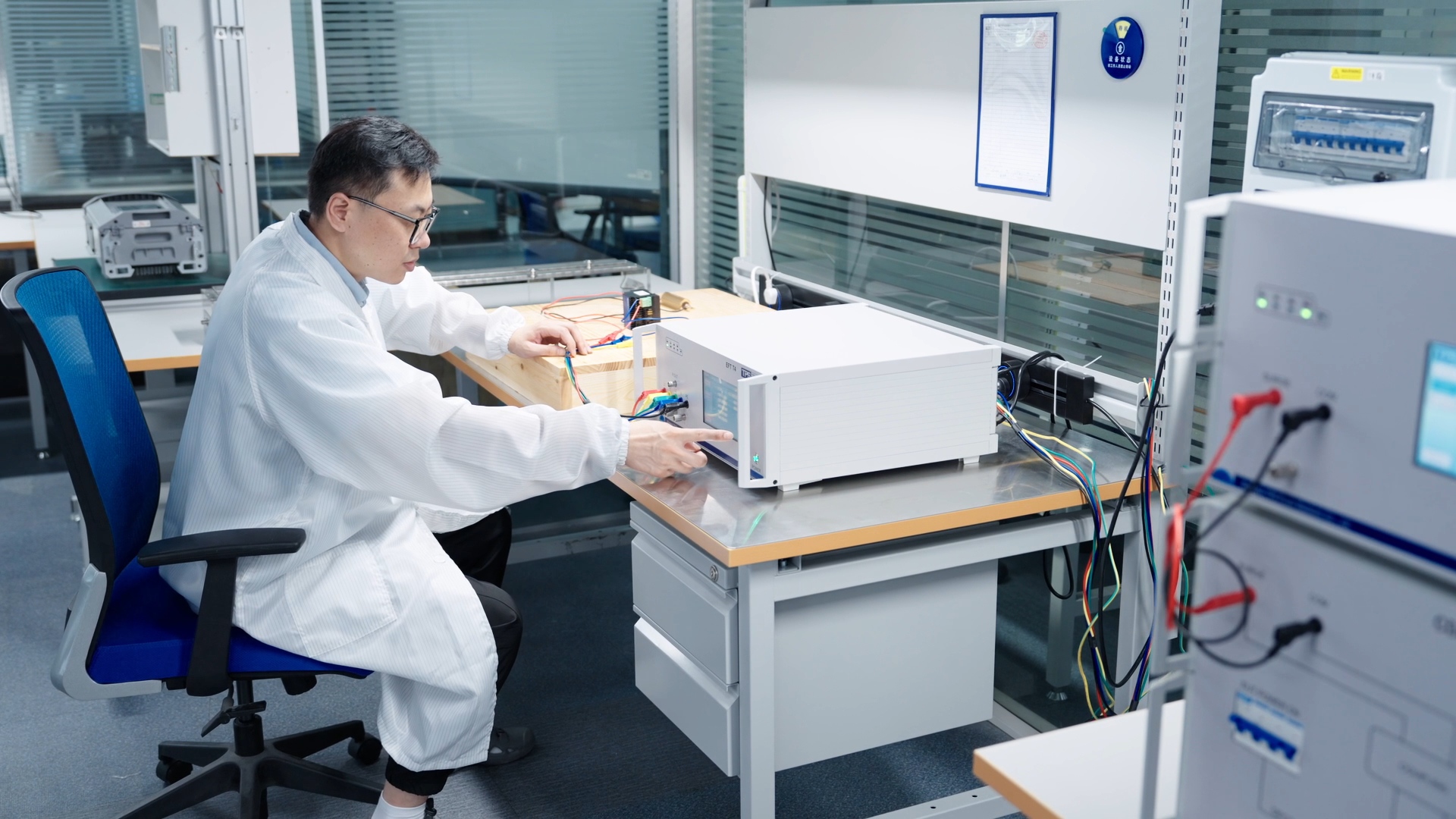
The quest for unwavering repeatability begins with treating environments as immutable artifacts. Instead of patching long-lived servers, spin up fresh instances from a golden image each time tests run. This eliminates hidden drift—a stale dependency, a lingering configuration change—that can turn a passing test into a flaky mystery overnight.
Pairing infrastructure-as-code with isolated networking takes it further. Define every component—databases, message queues, third-party stubs—in version-controlled templates. Then stamp out entire topologies on demand, ensuring no two test suites ever contend for shared state. The result is a pristine canvas where failures point straight to application logic, not environmental noise.
True mastery comes from validating the environment itself before trusting its output. Add lightweight smoke checks that verify service connectivity, data freshness, and configuration parity with production. When these checks pass, every subsequent test run becomes a reliable signal, transforming repeatability from an aspiration into a baseline expectation.
Equipment Calibration: The Unseen Pillar of Accurate Results
In any lab or production environment, the reliability of data hinges on something most people never think about—calibration. It’s the quiet process that makes sure every instrument, from a simple thermometer to a high-end spectrometer, reads true. Without it, even the most carefully designed experiment can drift into a swamp of error, wasting time, money, and materials. Calibration isn’t glamorous, but it’s the subtle thread connecting consistent measurements to trustworthy outcomes.
What makes calibration tricky is that it’s not a one-time task. Instruments age, conditions shift, and tolerances tighten without warning. A pipette that was spot-on last month might be off by a few microliters today, silently undermining downstream assays. The only way to catch these drifts is through regular checks against known standards, and that requires a blend of discipline and skepticism. You can’t just trust the equipment; you have to verify it, over and over, and document every step. Those logs become your proof that the data isn’t just numbers, but a faithful reflection of reality.
Ultimately, calibration is about confidence. When you can point to a meticulous calibration record, you’re not just defending a single result—you’re defending the entire chain of decisions built on that data. Whether it’s ensuring a medical device won’t fail in the field or confirming that a batch of pharmaceuticals meets potency specs, the quiet work of calibration keeps unexpected disasters at bay. It may never get the spotlight, but without it, accuracy is just a hope, not a fact.
Mitigating Human Error with Smart Automation
People make mistakes—it’s an unavoidable part of any workflow. But when those slip-ups occur in critical tasks like data entry, compliance checks, or system monitoring, the consequences can be costly. Smart automation steps in not to replace human judgment, but to create a safety net that catches errors before they escalate. By automating repetitive and detail-oriented processes, businesses can drastically reduce the likelihood of oversights caused by fatigue, distraction, or simple forgetfulness.
Rather than leaning on rigid, rule-based scripts that break at the first exception, modern automation uses contextual awareness and adaptive learning. It can flag anomalies in real time, cross-reference data across systems, and even suggest corrective actions—turning potential failures into opportunities for improvement. This doesn’t just minimize errors; it frees teams to focus on higher-level thinking, where human creativity and empathy still reign supreme. The result is a more resilient operation where mistakes are managed gracefully instead of snowballing into disasters.
The best part? Implementing this doesn’t require a full overhaul. Start by identifying pain points—those tedious, error-prone tasks that everyone dreads. Then, layer in automation that assists, verifies, and learns. Over time, the system becomes a silent partner that subtly guides decisions and standardizes quality. It’s not about building a foolproof process, but about making the existing process profoundly more human-friendly.
Advanced Diagnostics for Elusive EMI Patterns
Tracking down electromagnetic interference that appears intermittently or only under rare operating conditions demands more than a standard spectrum sweep. Field engineers often rely on long-duration waterfall captures with color persistence adjusted to highlight low-duty-cycle signals, coupled with real-time triggering on specific frequency-hopped or bursted emissions. This approach reveals transient patterns that otherwise blur into the noise floor during routine compliance testing.
Time-correlated near-field probing adds another layer, where synchronized phase measurements between radiated and conducted emission paths expose coupling mechanisms. By mapping the spatial phase progression across a board using differential probes, one can separate standing-wave illusions from genuine source locations. Statistical techniques like cross-correlation with ambient noise baselines further isolate device-under-test signatures from environmental clutter, improving confidence when chasing elusive harmonics below regulatory limits.
For persistent puzzles, intentionally varying clock spread-spectrum parameters or modulating bus activity while monitoring demodulated audio from an AM receiver can make hidden patterns audible. Complementary machine-learning classifiers trained on spectrogram snippets from past failure signatures help distinguish normal operational variance from incipient hardware degradation, reducing time wasted on phantom anomalies. This multi-domain, iterative methodology turns a typical wild-goose chase into a disciplined investigation.
Building a Framework for Enduring EMC Reliability
Electromagnetic compatibility often gets pushed to the final stages of product development, treated as a hurdle to clear just before launch. But lasting EMC reliability demands a different mindset—one that weaves immunity and emissions control into the fabric of design from day one. Rather than retrofitting shields and filters as afterthoughts, an effective framework treats each component, trace, and connector as part of a larger symphony. This means understanding not only the regulatory limits but also the real-world environments where the equipment will operate, from factory floors to operating theaters, and anticipating the interference patterns that could degrade performance over time.
The backbone of any enduring framework lies in disciplined pre-compliance iterations and a keen focus on marginal signals. Instead of waiting for formal test failures, teams integrate near-field probing, impedance analysis, and signal integrity checks into everyday bench work. These insights feed back into layout decisions and component selection early, when changes cost far less. Component aging, thermal drift, and mechanical wear all conspire to shift electromagnetic behavior over time, so the framework must also account for degradation margins—designing not just to pass today’s limits, but to keep passing them five or ten years later under typical stress.
Finally, true reliability is sustained by institutional memory. A framework that captures lessons from field returns, supplier changes, and production tweaks turns EMC from a dark art into an engineering discipline. Shared design rules, documented coupling paths, and periodic audits of production-line grounding practices keep the initial intent intact as revisions roll out. When the next derivative product emerges, engineers are not starting from scratch but building on a hardened foundation of known interactions and countermeasures, dramatically reducing time-to-market while strengthening confidence in the product’s electromagnetic resilience.
FAQ
EMC testing verifies that electronic devices don't emit excessive electromagnetic interference and can operate correctly when exposed to interference from other sources. It's essential because unchecked emissions can disrupt other equipment, while poor immunity can cause device malfunctions—leading to safety hazards, regulatory failures, or unhappy customers.
Inconsistencies often stem from subtle variables: slight differences in cable positioning, fluctuations in ambient noise, or even a loosely fastened connector can shift results. Test setups that aren't rigidly repeated, aging or uncalibrated gear, and overlooking pre‑test device conditioning also introduce drift, making pass/fail decisions unreliable.
Sticking to a strict verification routine helps—daily system checks with a known reference source, maintaining detailed setup photos and configuration scripts, and tracking ambient conditions. Regular inter‑lab comparisons and investing in automated test sequences that minimize human variation also go a long way toward locking in repeatability.
Calibration bridges the gap between raw measurements and real‑world field strengths. Without it, a reading of 40 dBµV/m could be off by several decibels. Regular, accredited calibration of antennas, cables, receivers, and even the test chamber ensures every component in the chain reports values you can defend in a compliance audit.
Uncontrolled environments flood your measurement with ambient radio‑signals—FM broadcasts, Wi‑Fi, cell towers—that mask your device’s true emissions. Besides, reflections from walls and metal objects create an unpredictable field, so you never get the same answer twice. Shielded anechoic chambers or open‑area test sites are the only way to isolate the device.
Standards like CISPR 32 or MIL‑STD‑461 define not only limits but also exact test methods, distances, and measurement bandwidths. This common playbook means a test in Tokyo and a test in Frankfurt follow identical rules, removing guesswork and ensuring that a compliant reading in one lab is valid in another.
Start with a solid PCB stack‑up and good grounding from day one. Use spectrum analyzers during prototyping to catch emissions before they become a problem, and avoid treating EMC as a last‑minute add‑on. Small decisions—like filtering at connectors and routing high‑speed traces carefully—make the final test results far more predictable.
You look beyond the pass label: check that measurement uncertainty has been properly accounted for, that the device was tested in all required modes, and that the margin to the limit isn’t razor‑thin. A reliable pass includes documented evidence that the setup was stable, the noise floor was well below the limit, and any anomalies were understood, not ignored.
Conclusion
Achieving consistent accuracy in electromagnetic compatibility testing demands a deep understanding of the core challenges that often undermine repeatability. Uncontrolled variables in test environments, from ambient noise to setup geometry, can skew results and erode confidence. Mastering these surroundings through rigorous site validation and continuous monitoring is essential, but it’s only part of the picture. The unseen pillar of truly reliable EMC testing lies in meticulous equipment calibration—every cable, antenna, and amplifier must perform within tight tolerances, with traceability to recognized standards. Without this foundation, even the most advanced test chambers become unreliable. Smart automation further transforms consistency by minimizing human error, a persistent source of variability. Automated test sequences, guided by precise software, ensure that protocols are executed identically every time, reducing missteps in instrument settings or data logging.
When elusive electromagnetic interference patterns defy routine checks, advanced diagnostic techniques become critical. Real-time spectrum analysis and near-field probing help pinpoint intermittent emissions that might otherwise go undetected, turning guesswork into targeted investigation. Yet, lasting EMC reliability isn’t just about isolated fixes; it requires a holistic framework that integrates environmental control, calibration discipline, operator training, and intelligent diagnostics into a seamless process. This approach embeds consistency into every stage, from initial design verification to final compliance testing. By treating repeatability as a continuous commitment rather than a one-time checklist, laboratories can deliver results that endure scrutiny across industries, ensuring that products not only meet regulatory limits but perform robustly in the real world.
Contact Us
Contact Person: Lily
Email: [email protected]
Tel/WhatsApp: +49 (0) 2161 49526-0
Website: https://tps-elektronik.com/en/