

Solar Portable System Factory Selection Tips for Durable Off-Grid Power Solutions
2026-11-03
Picking a solar portable system factory is less about ticking boxes and more about trusting that your off-grid power won’t quit halfway through a blackout. A cheap unit works on day one; a durable one still works on day 1,000. The difference comes down to how the factory builds, tests, and stands behind its products. In this guide, we skip the fluff and focus on real selection tips—what to check, what to question, and where SRS fits into the durability equation.
Watch How They Wire the Battery Pack
What catches your eye first is how methodical the process gets once the cells are lined up. The main positive and negative cables stay as short as the layout allows, and they're routed along the pack edges instead of crossing over the terminals. Every nickel strip or busbar gets a quick wipe before welding, and you can see the person checking the orientation more than once before the first spark.
The real detail work happens with the balance leads. Instead of bundling them all at once, each sense wire is laid down one by one, labeled with a small piece of tape, and then routed flat against the cell tops. A quick tug test after soldering catches any weak joints that might look fine but would fail under vibration. By the time the BMS connector clicks into place, the pack already has a neat, almost harness-like appearance that makes the final insulation and shrink wrap go on cleanly.
Ask About Low-Light Panel Performance
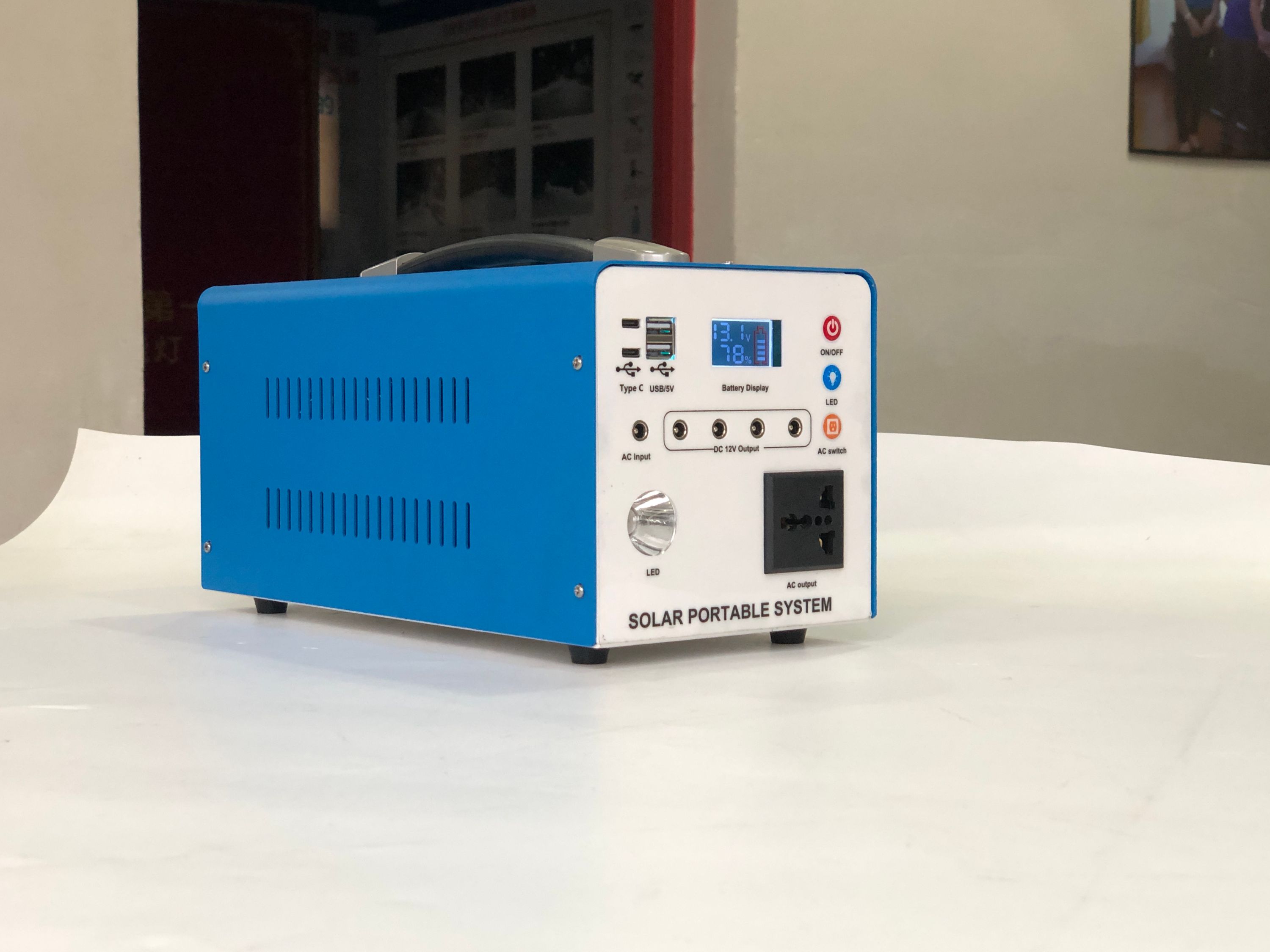
When you're comparing solar panels, the headline wattage rarely tells the full story. Under overcast skies, early morning haze, or indirect window light, a panel's low-light behaviour can vary far more than its STC rating suggests. Asking about performance at 200 W/m² (or even lower) reveals how the panel is engineered: cell design, surface treatment, and bypass diode layout all shape whether it quietly keeps producing or practically falls asleep.
Don't let a sales sheet's single number decide for you. Request real test curves or field data at 100–400 W/m². Some panels with half-cut cells and multi-busbar interconnects hold a surprising fraction of their output even when light is weak; others degrade sharply. The difference might not be visible at noon, but it shows up in total daily yield, especially through winter months or in regions with frequent cloud cover.
Another angle worth pressing: how does the panel's low-light response interact with the inverter's startup voltage? A panel that still produces a usable voltage at low irradiance can wake the system earlier and keep it running later, stretching generation windows without adding panels. If you can't get a clear answer, ask for third-party measurements or installation examples from similar climates.
Compare Cycle Life, Not Just Capacity
When shoppers glance at a battery's spec sheet, the first number that jumps out is almost always capacity—how many milliamp-hours or kilowatt-hours it holds on day one. That initial figure feels tangible and easy to compare, but it quietly ignores the more important question: how long will that capacity actually last? A cell that starts at 100% but degrades to 70% after 300 cycles costs you far more in the long run than one that starts at 95% and still delivers 85% after 1,200 cycles.
Cycle life moves the conversation from a snapshot to a lifespan. Two packs can share identical label capacities, yet one might need replacing twice as often under real-world use. For anything that gets charged daily—a phone, an e-bike, a home storage wall—the difference between 500 and 2,000 cycles is the difference between frustration in a year and reliable service for half a decade. Comparing cycle life exposes that hidden cost per usable kilowatt-hour, not just the sticker price per kilowatt-hour.
Smart buyers now ask for cycle-life curves at realistic depths of discharge, not just the single headline number. A pack rated for 3,000 cycles at 80% depth might only manage 800 cycles if you regularly drain it to empty. By shifting the focus from peak capacity to endurance, you stop paying for a spec that fades in months and start investing in a system that holds its value over years.
Find Out Who Supplies the Inverter
Tracking down the actual manufacturer behind an inverter often takes a few steps, especially since many brands rebrand units from larger OEMs. Start by checking the label on the side or bottom of the unit—look for the UL file number, which you can cross-reference in online databases to reveal the original producer.
Another route is to contact the seller or installer and ask directly for the bill of materials or spec sheet. Some distributors openly state the sourcing, while others may be bound by non-disclosure agreements. If the inverter came with a solar kit, the panel supplier documentation sometimes lists the inverter's factory origin.
Inverter supply chains shift often, so a model sold last year might come from a different facility than the current batch. Checking the serial number prefix with the brand's support team can pinpoint the production plant and help you assess warranty support or spare part availability.
Check the Enclosure for Real Outdoor Use
Start by pulling the enclosure out of the box and looking at how the seams, gaskets, and cable entry points actually mate. A unit that carries an outdoor rating can still fail if a gland is cross-threaded, a gasket has a kink, or the lid torque isn’t even across all corners. Run a thin feeler gauge or piece of paper around the seal while the door is closed to catch gaps that water will find long before a spec sheet admits a problem.
Beyond the static seal, think about where the enclosure will live and how weather hits it from different angles. Mounting orientation matters more than most installers assume—side-facing conduit entries can funnel rain straight into a housing if they aren’t drained or shielded. Look for UV-stable polymers or coated metals, and check whether internal hardware will handle the temperature swings that cause condensation inside a sealed box.
Finally, do a real-world water test before you trust the label. Spray the enclosure from below and from the sides with a garden hose on a mist setting, not just a gentle top-down trickle. If there’s a breather vent or pressure equalization plug, make sure it isn’t clogged and is actually rated for driving rain. A five-minute inspection outside beats a return trip after the first storm.
Call Two Past Buyers Before Deciding
A quick call to two previous customers can reveal more than a dozen spec sheets ever will. Ask what surprised them after the purchase, what they would do differently, and whether the product actually solved the problem they bought it for. The answers tend to be messier and more useful than polished marketing claims.
Don't just ask if they liked it. Push for the moments they almost returned it, the hidden costs that showed up later, and the support experience when something went wrong. Past buyers have no incentive to protect the seller's feelings, so their honesty often exposes friction points you wouldn't notice until it's too late.
Two conversations won't give you perfect certainty, but they will ground your decision in reality instead of assumptions. If both buyers describe the same recurring issue, take that as a signal. If their experiences diverge wildly, dig into why before moving forward.
FAQ
Start by asking for teardown photos of their charge controllers and battery management boards. A factory that uses conformal coating on PCBs, potted connectors, and strain-relieved cable entry points is thinking about years of vibration and humidity. Cheap kits often skip these steps because they are invisible to the buyer.
LiFePO4 is the only realistic choice for long idle periods. Ask the factory for the cell datasheet showing self-discharge below 3% per month and a BMS with low-temperature charge cutoff. If they cannot name the cell manufacturer or show cycle life data at 80% depth of discharge, move on.
Request the actual IP test certificate, not just the marketing sheet. A legitimate factory will send you the test house report with serial numbers matching the enclosure. Also ask for a video of the unit being sprayed with a hose while running a load, and check that the cable glands are compression type, not just rubber grommets.
For off-grid gear, look for UL 2743 or IEC 62109 for the inverter, UN38.3 for battery transport, and CE or UL listing for the complete system. But more important is a recent factory audit report—ask for their latest ISO 9001 surveillance audit or a buyer's audit from another customer. Certificates you can verify online are worth ten stamps on a brochure.
Ask what happens when the inverter is overloaded to 150% for 30 seconds in 40°C ambient. A rugged design will specify derating gracefully, a thermal shutdown that recovers automatically, and no damage. If they hesitate or say 'it should work,' that tells you they have not tested it. Also request the surge rating in watts for at least 3 seconds, not milliseconds.
Give them a real scenario: 24V array, 48V battery bank, and a 230V AC output with a specific connector. A capable factory will come back with a one-page technical proposal showing wire gauges, fuse ratings, and a wiring diagram within a few days. If they just say 'yes we can do custom' without any engineering follow-up, they are likely a trading company.
Ask about spare parts availability for the exact enclosure model, not just the internal components. Lids, latches, and gaskets are what fail after years of sun exposure. A factory that stocks those spares and can ship them with your next order is a partner. Also require a written warranty that covers battery capacity retention at 70% for at least 3 years, not just 'defects.'
Be wary if the factory uses generic 'solar generator' branding with no engineering contact name on the quotation. Other red flags: no third-party test reports for overcharge, short circuit, or crush; wire terminals that are soldered instead of crimped; and sample units that arrive with different screws than shown in the manual. Those small inconsistencies usually mean undocumented component substitutions on future orders.
Conclusion
A smarter starting point for any factory visit is to ask to see a battery pack being assembled rather than relying on a finished demo unit. The way cells are joined—whether they use welded nickel strips or cheaper spring-loaded holders—tells you a lot about how the system will behave after months of vibration and temperature swings. On the panel side, don't settle for peak-wattage claims; request actual output data under cloudy or early-morning conditions. Many portable units look impressive at noon but fall flat when the sky is overcast, which is exactly when off-grid users need them most. Also, push the conversation toward cycle life numbers at realistic discharge depths, not just the headline amp-hour capacity. A pack that holds a big charge for 100 cycles is worth far less than a slightly smaller one rated for 2,000 cycles under daily use.
A factory may assemble everything in-house, but the inverter is often the weakest link, so find out whose unit they install and whether they have failure-rate data for it. The enclosure deserves the same scrutiny: look for gasketed lids, corrosion-resistant latches, and UV-stabilized plastic or powder-coated metal that won't turn brittle after a season outdoors. If a salesperson glosses over these details, take that as a warning. Before signing anything, call two previous buyers who have used the exact model in a similar climate—not a showroom demo, but real field conditions. Ask them what broke first, how the company handled it, and whether they would order again. That kind of unfiltered feedback does more to confirm durability than any spec sheet or factory tour.
Contact Us
Contact Person: kitty
Email: [email protected]
Tel/WhatsApp: +8618676039824
Website: https://www.srssolargroup.com/