

Stainless Steel Hex Nuts Distributor for Reliable Industrial Fastening Solutions
2026-11-16
In the world of industrial fastening, the smallest components often carry the heaviest burden. Stainless steel hex nuts might look unremarkable at first glance, but their reliability can make or break an entire assembly. As a dedicated distributor, Wanluo understands that true strength lies in precision, corrosion resistance, and consistency under pressure. Whether you're securing structural frameworks or fine-tuning precision machinery, the right hex nut isn't just a part—it's the quiet backbone of your project. So, what should you really look for in a supplier before your next torque wrench clicks? Let's strip away the guesswork and talk about the details that actually matter.
Vetting a Distributor: The Questions That Reveal Real Hex Nut Knowledge
Ask about material traceability before you ask about price. A distributor who knows hex nuts will immediately reference ASTM A563 grades, SAE J995, or ISO 898-2 without fumbling. Push further: can they provide heat lot certifications that tie each batch of nuts back to the original mill? If they shrug or say “it’s all the same steel,” walk away. Real expertise shows in the specifics—like whether they know the difference between a standard nut and a heavy hex nut's load-bearing footprint, or why a 2H nut pairs with a Grade 8 bolt but a DH nut works for both A325 and A490 assemblies.
Thread fit and plating are where pretenders get exposed. Ask how they verify pitch diameter and thread class—do they reference ASME B1.1 for unified threads, or just say “it fits”? Then dig into coatings: a knowledgeable distributor will discuss hydrogen embrittlement risks with electroplated high-strength nuts, recommend zinc flake or mechanical galvanizing for certain environments, and explain why baked-on wax can alter torque-tension relationships. If they can't explain how a finish affects prevailing torque on a lock nut, you're not talking to a specialist.
Finally, test their failure analysis instincts. Present a scenario: a hex nut cracked across the flats after three weeks in marine service. The right answer isn't “cheap steel”—it's a conversation about chloride-induced stress corrosion cracking, whether the nut was cold-formed from 316 stainless or merely coated carbon steel, and how to read the fracture surface for intergranular vs. transgranular patterns. That level of diagnostic thinking separates a stocking warehouse from a true fastener partner.
Stainless Grades Demystified: Why 18-8 Can't Always Do the Job
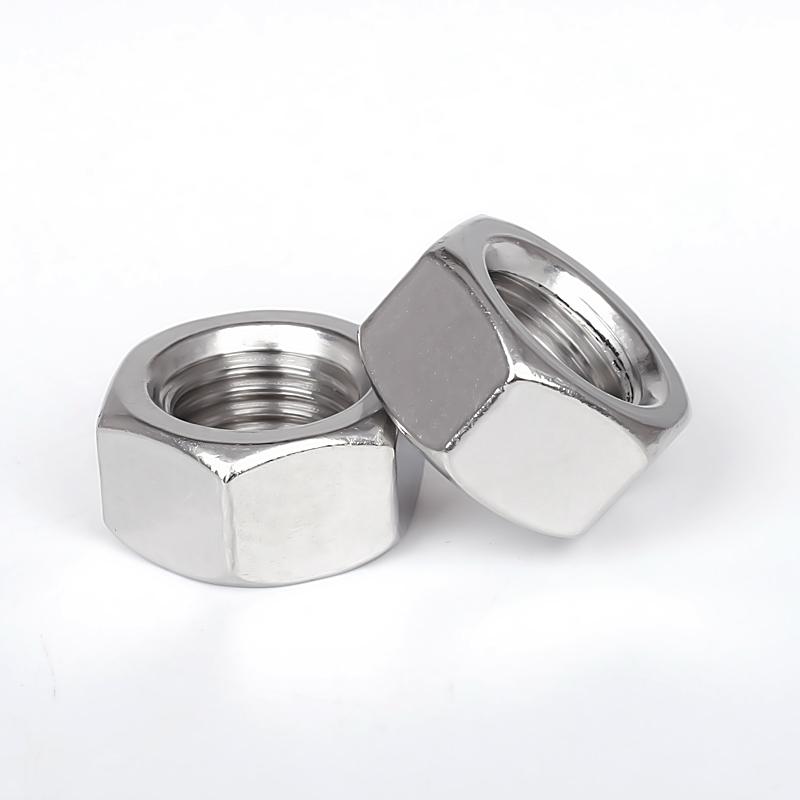
Walk through any hardware aisle and you'll see piles of fasteners stamped with 18-8, a shorthand for the 304 stainless alloy containing roughly 18% chromium and 8% nickel. It's cheap, easy to find, and shrugs off rust in most kitchens or outdoor fences. The problem starts when people assume that one number covers every environment. Put that same 18-8 bolt near a saltwater dock or on a boat deck, and within months you'll notice tiny pits eating into the surface. Chloride ions are relentless—they break down the passive oxide layer that normally protects the steel, leaving behind rust streaks and weakened threads. So the "stainless" label isn't a promise; it's a conditional guarantee, and 18-8 simply wasn't designed for the brine.
Beyond corrosion, 18-8 has other quiet limits that rarely show up in casual conversation. At elevated temperatures, the alloy loses strength faster than you'd expect—anything above about 800°F and those fasteners start to sag or creep under load. Weld it, and the heat-affected zone becomes vulnerable to intergranular attack unless a low-carbon "L" grade is specified. Even in ordinary use, cold working can turn 304 slightly magnetic, which baffles someone who thought all stainless was non-magnetic. For critical jobs like chemical processing, marine hardware, or high-temperature exhaust systems, designers often jump to 316, duplex alloys, or even super-austenitic grades. The real lesson isn't that 18-8 is bad—it's that it's a starting point, not a solution for every challenge.
Why Low-Bid Hex Nuts Often Cost More in Downtime
A box of cheap hex nuts rarely looks dangerous on a shelf. The threads might feel slightly rough under a thumbnail, and the zinc has that dull, patchy finish that suggests the bath was overdue for replacement, but most buyers shrug and figure the torque will sort it out. It doesn't. On a packaging line or pump skid, those little deviations turn into bolts that loosen overnight, flanges that weep, and technicians who spend Tuesday morning chasing a vibration instead of doing planned work.
The real expense shows up when a single nut fails in the middle of a batch. Production stops, a fitter pulls the guard off, and someone has to dig through the crib for a replacement that actually matches the drawing. If the failure happens on a safety-critical joint, the cost isn't just labor; it's the argument over whether to re-torque the entire assembly, the extra inspection, and the paperwork that follows. Cheap nuts don't just break, they also make people trust the surrounding equipment less, so they over-tighten, swap parts early, and burn hours on inspections that shouldn't be necessary.
Over a year, a plant might save a few hundred dollars by buying the low-bid option and then spend several times that on unplanned maintenance, replacement fasteners, and idle machinery. The comparison isn't between two prices on a purchase order. It's between a nut that works quietly for a decade and one that turns a routine job into a recurring repair.
Custom Threads and Uncommon Sizes: A Distributor's Hidden Capability
Most buyers assume a distributor only stocks what’s listed in the catalog. But behind the standard racks and bin labels sits a far more flexible operation. Walk into the back room of a well-run fastener house and you’ll find drawers of M7 x 0.75 bolts, 5/16-24 left-hand nuts, and shoulder screws with grip lengths that don’t appear on any chart. These aren’t leftovers—they’re deliberate inventory built from years of watching industrial orders that never made the front page.
The real value shows up when a maintenance crew needs a 19/32-18 tap on a Friday afternoon, or an OEM discovers their prototype calls for a thread pitch that hasn’t been produced commercially in two decades. A distributor with deep supplier ties can often source these oddballs in days, not weeks. Sometimes the part already exists in a forgotten bin; other times it means calling a specialty mill that runs short batches for exactly this kind of request.
That hidden capability changes how smart buyers think about fasteners. Instead of redesigning around what’s easy to get, they ask the distributor what’s actually possible. More often than not, the answer isn’t “we don’t have it”—it’s “let me check the back.” And that second answer is worth more than any standard price list.
The Paper Trail: How Mill Certificates Separate Pros from Resellers
In the metals trade, a mill certificate is more than a piece of paper—it's a fingerprint of the material's origin, chemistry, and mechanical properties. Professionals treat these documents as non-negotiable, because they confirm that the steel or aluminum they're buying actually meets the specified grade. Without that verification, you're essentially trusting a seller's word on something that could fail under load, corrode prematurely, or fail an inspection.
Resellers often cut corners here. They might promise "equivalent" material, delay providing paperwork, or offer a scan that doesn't match the heat numbers stamped on the product. A seasoned buyer notices these gaps immediately. Pros keep their own traceability logs, cross-check every certificate against the physical tags, and walk away from deals where the trail is murky. That discipline is what separates someone who just moves metal from someone who stands behind it.
The real cost of a missing or mismatched certificate usually shows up later—at the fabricator, during a weld test, or on a job site audit. Reputable suppliers understand this and make their paperwork accessible from the first quote. If a vendor can't produce a clean mill certificate without hesitation, treat it as a warning sign. The paper trail isn't bureaucratic overhead; it's the difference between a material you can prove and one you're just hoping about.
From Salt Spray to High Heat: Matching Hex Nuts to Your Conditions
When hex nuts sit in a salt spray environment, the failure mode isn't usually mechanical—it's corrosion eating away the threads until torque retention drops. Standard zinc-plated carbon steel works for indoor or mild outdoor use, but near coastlines or on road-salted equipment, switching to 316 stainless or hot-dip galvanized nuts keeps the assembly intact. Watch for mixed metals: a stainless bolt with a plain steel nut in a marine atmosphere can accelerate galvanic corrosion on the nut, leaving you with a fused mess.
High heat changes the picture entirely. Above roughly 300°C (570°F), common plating like zinc starts to degrade, and carbon steel hex nuts lose tensile strength through tempering. For sustained exposure, look at alloy steel nuts such as ASTM A194 Grade 2H or Grade 7, or move to stainless grades like 310 for oxidation resistance. Also account for thermal expansion mismatch—if the bolt grows more than the nut, preload can drop significantly and lead to loosening.
Salt spray and high heat rarely appear together, but when they do (think exhaust components on marine engines), forget single-property fixes. A super duplex stainless or nickel-based alloy such as Inconel 718 offers both chloride resistance and strength retention at elevated temperatures. Expect higher cost and longer lead times, and don't rely on organic coatings—they'll burn off before the threads see any meaningful load.
FAQ
We focus on distributing fasteners that hold up in demanding environments. Our hex nuts come from mills that control traceability from raw material to finished part, so you're not guessing about the alloy or heat treatment. The threads are consistently formed to reduce galling, and we keep full dimensional reports available for anyone who needs to verify compliance before installation.
Think about what the nuts will actually touch. 304 handles general moisture, food contact, and most indoor-outdoor exposure without issue. If you're near saltwater, chlorides, or chemical washdowns, 316 is worth the extra cost because the added molybdenum resists pitting that 304 can't handle long term.
Yes. We maintain stock in common sizes like M3 through M36 and #4-40 through 1-1/2 inch, but we can also source fine-thread and left-hand variants from our partner mills. Lead times depend on the spec, but we'll give you a straight answer before you commit.
The biggest mistake is running stainless on stainless dry at high speed. Use a suitable anti-seize or thread lubricant, tighten at a controlled speed, and avoid overtightening. If you're assembling many fasteners, consider nuts with a molybdenum disulfide coating or specify a passivated finish to reduce friction.
We stock to DIN 934, ISO 4032, and ASTM A194 grades, among others. Each batch comes with material certs on request, so you can verify chemistry and mechanical properties rather than relying on a supplier's word.
Absolutely. You can start with a box of 100 pieces to validate fit and finish, then move to pallet quantities with the same part number. We don't impose minimums on most stock sizes, which helps when you're still iterating on a design.
We see a lot of orders from food processing plants, marine equipment builders, chemical transfer operations, and outdoor infrastructure projects. They tend to value corrosion resistance and repeatable quality over the lowest price per piece.
We pack by heat number and size, and we can use sealed poly bags or labeled bins depending on your receiving process. If you need separate lots for traceability, we'll keep them separate all the way to your dock door.
Conclusion
Finding a stainless steel hex nuts distributor who actually understands industrial fastening goes far beyond checking inventory lists. You need to ask pointed questions about alloy behavior, because a supplier who can explain why 18-8 stainless works in mild environments but fails under chloride exposure or high heat is the one who prevents field replacements. Low-bid nuts almost always hide their true cost in downtime, seized threads, or galling during installation—problems that only surface after the purchase order is closed. A reliable partner will talk about passivation, tensile strength across temperature ranges, and the difference between A2 and A4 grades without hesitating.
The distributor’s hidden capabilities matter just as much as the parts on the shelf. Whether you need custom thread pitches, uncommon diameters, or traceable mill certificates for compliance audits, the right source keeps that paper trail organized and accessible. For corrosive salt spray environments, high-temperature exhaust systems, or food-grade washdown lines, matching the hex nut to the actual working conditions—not just the bolt diameter—is what separates a true industrial fastener specialist from a box mover. That level of technical depth, backed by documentation and honest recommendations, delivers fastening solutions that hold up long after installation.
Contact Us
Contact Person: Shane
Email: [email protected]
Tel/WhatsApp: 8613357785029
Website: https://www.wanluohardware.com