

Switch Cabinet Factory: Crafting Reliable Electrical Enclosures for Modern Power Needs
2026-07-24
Behind every stable power grid lies a network of robust electrical enclosures that most people never see. At Chang Song, that unseen backbone takes shape through precision engineering and decades of hands-on expertise. As energy demands grow smarter and tougher, the switch cabinet factory has quietly redefined what reliable protection should feel like—from the inside out. This post pulls back the panel door on how modern enclosures are built to handle tomorrow's loads without breaking a sweat.
The Making of a Switch Cabinet: Precision First
In the world of electrical enclosures, a switch cabinet is more than just a metal box—it’s the nervous system of industrial power distribution. The journey begins long before the first sheet of steel is cut. Engineers pore over schematics, calculating load capacities and thermal dynamics to a fraction of a unit. Every bend radius, every knockout placement, is a deliberate choice driven by one core principle: precision. Even the raw materials undergo rigorous inspection, because a flaw measured in microns today becomes a failure measured in kilowatts tomorrow.
On the fabrication floor, automation and craftsmanship intersect. Laser cutters follow digital templates with hair-splitting accuracy, slicing through steel like it’s paper. Welding robots, programmed to repeat the exact motion thousands of times, fuse seams with a consistency no human hand could match. But it’s the skilled technicians who make the difference—spot-checking alignments, verifying tolerances with dial indicators, and hand-finishing edges until they meet spec. This marriage of technology and touch ensures that each cabinet isn’t just assembled, but engineered into existence.
Testing is where precision proves its worth. Before a single component is installed, the bare enclosure undergoes a battery of trials: ingress protection checks to confirm dust and moisture resistance, structural load tests to simulate decades of wear, and thermal imaging to validate cooling designs. Only then do the busbars, circuit breakers, and control wiring enter the picture—placed and torqued to exact specifications. The final product isn’t shipped until it passes a functional test under full load, because in this domain, ‘almost perfect’ is not in the vocabulary.
Why Metal Thickness Matters More Than You Think
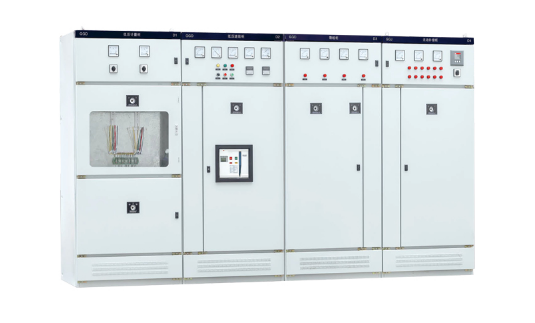
Most people assume that as long as a metal piece feels sturdy, its thickness is just a number on a spec sheet. But in practice, even a fraction of a millimeter can drastically change how a component behaves under stress. It’s not only about brute strength—thickness dictates how heat moves through a material, how it vibrates, and how it joins with other parts. Thin might flex where thick would crack, and vice versa. Overlooking this can turn a well-designed assembly into a liability, especially when loads fluctuate or temperatures swing unexpectedly.
In corrosive environments, thickness acts as a silent buffer. A thin layer might pass a quick visual check but fail months later because there wasn’t enough material to sacrifice to oxidation. Engineers often focus on coatings or alloys, yet the raw dimension is what buys time. Similarly, in precision electronics, metal enclosures that are marginally too thick can trap heat instead of shedding it, leading to thermal drift in sensitive circuits. The right gauge balances protection, weight, and thermal behavior—something a generic rule-of-thumb rarely captures.
Cost pressures tempt designers to shave down every gram, but metal thickness is not a linear expense. Thinner stock can warp more during machining, hiking scrap rates. It may also require extra support ribs or fasteners that eat up assembly time. Conversely, a slightly thicker sheet might eliminate a secondary operation or allow a snap-fit instead of weld, paying back the material cost many times over. When you trace failures back to their root, surprise often lurks not in the material grade, but in a dimension that was dismissed as “close enough.”
No Two Power Networks Are Alike – Our Response
Power networks are not cookie-cutter systems; each one evolves under unique geographical, regulatory, and demand-side pressures. From dense urban meshes to sprawling rural feeders, the topology alone can introduce wildly different stability challenges. Our approach starts by listening to the specifics: historical outage data, load growth patterns, and even the way local weather fronts move across the lines. We don't ship a one-size-fits-all model; we build a digital twin that mirrors your network's quirks, so our response feels native, not forced.
What makes a network tick isn't just the hardware—it's the human decisions layered on top. Maintenance schedules, protection settings, and even unwritten operational norms create a fingerprint. We spend time with the teams who run the grid daily, absorbing that tacit knowledge before we tune our analytics. The result is a solution that respects your existing workflows while quietly introducing efficiencies that might otherwise take years to surface.
When something goes wrong, the last thing you need is generic advice. Our response is shaped by the distinct rhythm of your network: we prioritize interventions that play to its strengths, whether that means leveraging an underused circuit's thermal headroom or rerouting around a chronically congested corridor. No two answers are the same because no two grids are. And that's the point—our expertise is recognizing the difference and treating it as the asset it is.
Testing That Mirrors the Worst-Case Scenario
True resilience isn’t built on sunny-day assumptions. The most revealing tests are those that push a system to its absolute breaking point—where memory leaks, race conditions, and cascading failures hide. By simulating traffic spikes that exceed theoretical limits, injecting network latency at critical handshake moments, or yanking database connections mid-transaction, we uncover how gracefully—or catastrophically—things fall apart. This isn’t about passing a checklist; it’s about understanding the messy, unpredictable ways real-world chaos manifests.
One often-overlooked dimension is the human element during these extreme scenarios. Does the monitoring become a wall of red alerts no one can parse? Do failover mechanisms actually trigger before an operator can blink, or do they require a manual intervention that takes too long under pressure? The worst-case test isn’t just about code paths—it’s about how the entire socio-technical system responds when every assumption you had about normal operations evaporates.
The goal isn’t to document failure for failure’s sake. It’s to build a living playbook from the wreckage. After each extreme trial, we distill the surprises into new architectural patterns—adding back-pressure where queues silently overflowed, introducing jitter to prevent thundering herd problems, or redesigning health checks to catch zombie processes early. Over time, this practice changes the team’s intuition: you start designing for the improbable, not just the average case, and that’s precisely where real reliability begins.
When Cabinets Get Smart: IoT Without Compromise
The idea of a cabinet that thinks for itself once belonged to science fiction, but it’s quietly becoming a feature of modern kitchens. Without fanfare, these pieces of furniture are learning to track what’s inside, suggest recipes based on available ingredients, and even reorder staples before you run out. It’s a shift that feels less like a tech demo and more like a natural evolution of how we interact with our homes.
Bringing connectivity into cabinetry usually means wrestling with complex setups or worrying about who else might peek into your pantry, but the latest designs sidestep those trade-offs entirely. Sensors are discreet, networks are local-first, and data stays under your control—no cloud subscriptions required unless you explicitly want them. The result is something that blends into the background, helping without hovering, and never demanding that you sacrifice privacy for convenience.
What really changes is the rhythm of daily life. When your storage spaces can adapt—keeping produce fresher with humidity control, reminding you when the kids have taken the last snacks, or dimming their internal lights as you pass by—the kitchen starts to feel cooperative rather than simply functional. That’s the real promise: technology that doesn’t shout about its presence, but quietly makes everything work a little better.
From Factory Floor to Wind Farm: Reliability in Action
Reliability doesn’t start at the wind farm gate—it begins on the factory floor, woven into every component before it ever catches the breeze. From the precision machining of gearboxes to the rigorous testing of blade composites, each step is engineered to withstand years of harsh, unpredictable environments. We’ve learned that consistency in manufacturing isn’t just a quality metric; it’s the silent promise that a turbine will keep spinning long after the commissioning team packs up and leaves.
Out in the field, that promise is tested daily by salt spray, thermal cycling, and gusts that strain every bolt. Our approach pairs robust design with real-time condition monitoring, so potential failures are spotted long before they escalate. When a main bearing starts showing early wear signatures, it’s not just an alert—it’s a scheduled intervention that avoids a mid-winter, unscheduled shutdown. That transition from reactive fixes to proactive care is what turns a capable machine into a truly dependable asset.
The real proof comes during those weeks when the wind howls without pause and other farms dial back out of caution. Ours stand firm because the bond between factory precision and on-site vigilance was never an afterthought. It’s embedded in the culture of our crews, who treat each service visit as a chance to preserve that original manufacturing integrity, ensuring the electricity flows as steadily as the wind itself.
FAQ
We produce low-voltage and medium-voltage enclosures, mainly for power distribution, industrial controls, and renewable energy setups. Each unit follows international standards and uses a modular design to simplify installation and maintenance.
Every cabinet goes through routine checks like insulation resistance, temperature rise, and IP dust/water ingress testing. We also run random vibration and short-circuit tests to mimic real-world stress, so there are no surprises on site.
Yes, many of our enclosures are rated IP65 or higher, with corrosion-resistant finishes like powder-coated or stainless steel. They’ve proven durable in coastal and desert conditions alike.
Absolutely. Our engineers work directly with clients to adjust internal layouts, busbar ratings, cable entry points, and even paint colors. We’ve delivered tailored solutions for solar farms, data centers, and mining operations.
We can turn out roughly 1,000 units per month for standard ranges, with flexibility to scale up for larger projects. Regular orders usually ship within 4–6 weeks, but we can expedite when necessary.
Most of our cabinets are CE and UL listed, and some ranges also comply with IEC 61439. We’re glad to share test reports for any specific model you’re considering.
We supply full documentation, installation guides, and remote technical assistance. If a problem comes up, replacement parts can be shipped within days, and our engineers are available for on-site visits if needed.
Conclusion
Every reliable power network starts with a switch cabinet that refuses to cut corners. In our factory, manufacturing precision is not just a buzzword—it’s the first and last rule. Before any metal is shaped, we map out the exact load stresses, thermal swings, and environmental strains the enclosure will face. That analysis dictates everything, from the gauge of the steel to the type of weld. Metal thickness, in particular, often gets overlooked, but we’ve seen how a slight reduction can invite vibration fatigue or deformation under fault currents. That’s why we stock a range of materials and rigorously verify each batch. Yet no two power networks are identical. Some of our clients operate in humid coastal zones; others, in gritty mining sites. So we abandoned the one-size-fits-all approach long ago. Each cabinet is a custom response—dimensions, ingress protection, even the paint chemistry are adjusted to match the actual duty, not a generic datasheet.
Testing, for us, is where the real story unfolds. We don’t just tick boxes for industry standards; we replicate disasters. Our cabinets endure salt fog chambers, high-pressure water jets, and thermal shock cycles that simulate decades of abuse in a few weeks. It’s brutal, but it reveals weaknesses that lab-perfect tests miss. As the industry shifts toward smart grids, we’ve integrated IoT without compromising the very protection a cabinet exists to provide. Sensors, communication modules, and power supplies are embedded in a way that doesn’t create new entry points for moisture or dust. The electronics survive because the enclosure hasn’t been weakened to accommodate them. That synthesis of toughness and connectivity is what carries our cabinets from the calm of the assembly floor to the chaos of a wind farm or a remote substation. In the end, their true reliability is proven not by certificates, but by years of silent, trouble-free operation in places where failure is simply not an option.
Contact Us
Contact Person: Tonglun Chen
Email: [email protected]
Tel/WhatsApp: 8618906642555
Website: https://www.cncsele.com