

Thermal Inkjet Printer Factory: Inside the Manufacturing Process of High-Resolution Printing Systems
2026-06-09
Ever wondered how the tiny nozzles inside a thermal inkjet printer can fire thousands of droplets per second to create razor-sharp images? A visit to the Danmajet factory lifts the veil on this precision engineering feat. Here, high-resolution printing systems come to life through a blend of advanced materials, exacting assembly processes, and relentless quality control—all geared toward delivering the crisp, vibrant output that modern industries demand.
Precision Cartridge Assembly: Where Microscopic Nozzles Take Shape
In the realm of advanced manufacturing, the assembly of precision cartridges is a delicate dance of engineering and meticulous control. At its heart lies the formation of microscopic nozzles—structures so minuscule that their dimensions are measured in microns, yet they dictate the performance of entire fluid dispensing systems. Each nozzle must be crafted with exacting tolerances to ensure consistent flow rates, directionality, and resistance to clogging. The process often involves aligning sub-millimeter components under high-magnification optics, where a single stray particle or minute misalignment can render the entire assembly useless.
What sets this stage apart is the convergence of material science and ultra-precision tooling. The materials chosen—whether stainless steel, ceramics, or engineered polymers—must resist chemical corrosion while maintaining dimensional stability through thermal cycles. Technicians rely on custom fixtures and laser-based measurement systems to position nozzle inserts within guide sleeves, securing them with adhesives that cure to near-zero shrinkage. It’s a world where cleanroom protocols, sub-micron placement, and real-time feedback loops transform raw components into reliable, high-tolerance fluidic pathways.
The Ink Formulation Lab: Engineering Fluids for Vivid, Smudge-Free Output
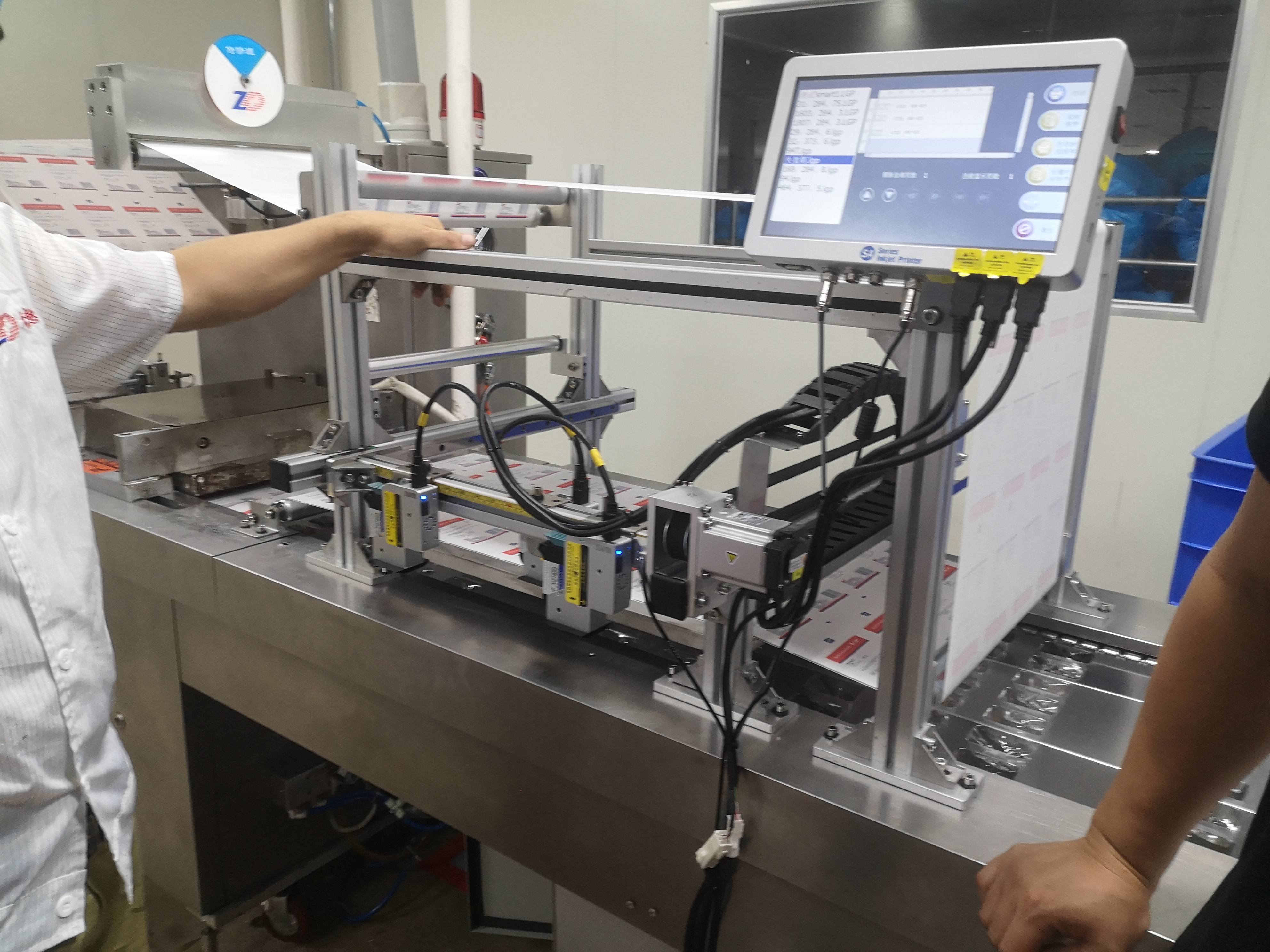
Developing an ink that leaps off the page without smearing is a balancing act of chemistry and physics. In the formulation lab, every ingredient is chosen for a purpose: pigments must be ground to sub-micron sizes to unlock their full color intensity, while resins bind them to the paper's surface the moment the solvent flashes off. The real craft lies in adjusting the fluid's rheology—its flow and deformation behavior—so that it shears thin under the pen or printhead yet stiffens instantly upon contact, locking the image in place before it can spread into neighboring fibers.
To achieve this, researchers tinker with complex blends of surfactants, dispersants, and rheology modifiers. A surfactant might be tasked with lowering surface tension just enough to wet a glossy substrate without causing bleed, while a dispersant keeps pigment particles from clumping over months on the shelf. Even minor tweaks can cascade: a slight increase in a humectant to slow drying at the nozzle could, if not countered, extend dry time on paper and invite smudging. It's a world where a tenth of a percent of a high-molecular-weight polymer can transform a watery dye into a velvety, quick-setting formulation that stays put through a sweaty palm or a coffee spill.
Testing is as much art as science. Beyond standard fade and rub resistance, lab teams simulate real-world abuse: printing thin lines on recycled cardboard, folding the output while still damp, or dragging a highlighter across fresh text. They analyze failures under high-speed cameras, watching how a droplet spreads or how paper fibers wick away the liquid. These insights feed back into the formulation, chasing that elusive sweet spot where vibrancy meets durability—an ink that not only looks brilliant from the first stroke but also refuses to budge for years to come.
Calibrating Printhead Nozzles: A Dance of Microns and Picoliters
In the realm of digital printing, the alignment of printhead nozzles is an exquisite choreography measured in microns. Each droplet, a precise volume of just picoliters, must be placed with unwavering accuracy to avoid banding, blurring, or color shifts. The calibration process begins with a test pattern, revealing subtle deviations that the naked eye would never catch. Advanced printers employ optical sensors to read these microscopic marks, translating them into offsets that correct for skew, bidirectional misalignment, and step inconsistencies. This dance of light and ink ensures that every pass of the carriage lays down a seamless tapestry of color, where the human eye perceives only continuous tone.
Behind the scenes, the calibration ritual involves a negotiation between the printer’s firmware and the physics of fluid dynamics. Picoliter-sized drops are ejected at high frequencies, but slight variations in nozzle shape, ink viscosity, or even temperature can cause one nozzle to fire slightly off axis. By individually mapping the trajectory of each nozzle, the system can compensate, selectively delaying pulses or adjusting waveform voltages. This is not a one-time adjustment; it is an ongoing conversation that adapts to changing conditions. The result is a print where gradients flow without streaks, fine text remains crisp, and photographs emerge with the depth intended by the artist.
For those who maintain these machines, the process is equal parts science and art. They clean, prime, and align, listening for the subtle hiss of a misfiring nozzle. They study test prints under magnification, tracing the faint staircase patterns that betray a vertical misstep. With each calibration, they are not merely adjusting hardware—they are fine-tuning a delicate ballet where microns matter and picoliters carry the weight of accuracy. In this microscopic arena, perfection is an asymptote, approached with each iterative tweak but never fully attained, lending each printed piece a touch of the human chase for precision.
Cleanroom Protocols: Keeping Contaminants Out of High-Res Systems
Even the smallest particle can disrupt sensitive high-resolution systems, so cleanrooms are designed to minimize contamination at every step. Personnel follow strict gowning procedures, donning full-body suits, gloves, and face masks to keep skin flakes and fibers from entering the environment. The air itself is constantly filtered and circulated, with HEPA or ULPA systems scrubbing out particles far smaller than what the eye can see.
Protocols extend beyond attire and airflow. Materials entering the cleanroom are thoroughly cleaned, and tools are often dedicated to specific areas to prevent cross-contamination. Routine monitoring with particle counters and regular audits ensure that the environment stays within the tight specifications needed to protect delicate optics, semiconductors, or other high-resolution equipment. The discipline of cleanroom behavior—moving slowly, minimizing talking, and avoiding quick motions—becomes second nature, as even a sudden gesture can shed invisible contaminants.
From Silicon Wafers to Printheads: The Semiconductor Roots of Inkjet Tech
The familiar hum of an inkjet printer belies a startling origin story—one etched into the very same silicon wafers that power microchips. Long before precision nozzles sprayed droplets onto paper, the technology leaned heavily on semiconductor fabrication techniques. Photolithography, the process of patterning circuits onto silicon with light, was repurposed to carve microscopic channels and chambers needed for ink delivery. This crossover meant that early printhead prototypes emerged not from printing labs, but from cleanrooms designed for integrated circuits.
As manufacturers chased higher resolutions, borrowed concepts multiplied. Thin-film deposition, a staple in transistor manufacturing, enabled the creation of heating elements durable enough to vaporize ink thousands of times per second. Even the drive electronics that orchestrate nozzle firing were built using common MOS transistor arrays, blurring the line between printer and processor. Silicon’s crystalline structure proved ideal for forming the precision orifices that define modern printheads, achieving geometries impossible through conventional machining.
Today’s thermal inkjet chips are essentially microfluidic devices on silicon substrates, a direct lineage from semiconductor innovation. Manufacturers continue to refine these printheads in fabrication plants that once exclusively produced memory and logic chips. The marriage of silicon processing and fluid dispensing quietly revolutionized everything from home printing to textile decoration, turning semiconductor know-how into a cornerstone of everyday document production.
Lifecycle Testing: Simulating Years of Printing in Just Hours
To truly validate a printer’s durability, we compress a decade of real-world use into a single intensive session. Custom-built robotic arms feed reams of paper non-stop, while climate chambers cycle through extreme humidity and temperature swings that mimic dusty offices and humid warehouses. Every component—from paper trays to fusers—endures the equivalent of 150,000 printed pages in under 48 hours, revealing weaknesses that only time would normally expose.
During these accelerated trials, we don't just count pages; we scrutinize every printed sheet for fading, streaking, or misalignment under high-resolution scanners. Even subtle degradations in gear torque or roller grip are logged through sensor arrays embedded throughout the mechanism. By the end of a test run, we’ve generated a wear-map that predicts exactly when a maintenance cycle should be triggered, effectively turning sudden breakdowns into scheduled upkeep.
This approach isn’t about pushing machines to their breaking point for sport—it’s about designing that point out of existence. Data gleaned from thousands of simulated years feeds directly back into material choices and firmware tweaks, ensuring that the printer you unbox tomorrow already carries the lessons learned from brutal virtual lifetimes. The result is hardware that stays reliable far beyond its warranty, because we’ve already lived its future in our lab.
FAQ
Thermal inkjet uses tiny heating elements to vaporize ink and create bubbles that force droplets onto the paper. This extremely rapid and controlled ejection allows for smaller, more accurate dot placement, resulting in sharper text and smoother gradients, especially at high resolutions.
Dedicated calibration stations check each nozzle with laser interferometry and high-speed cameras. Any deviation in drop size or flight path triggers automatic adjustment of the firing parameters, and heads that don't meet the tolerance are reworked or discarded before moving on.
The ink must be chemically stable, resist drying at the nozzle plate, and have precise viscosity and surface tension. Additives like humectants and surfactants are carefully balanced, and all ingredients undergo sub-micron filtration to eliminate particles that could block the microscopic orifices.
The nozzle plate contains hundreds of laser-drilled openings just microns wide. The accuracy of the hole diameter, spacing, and surface smoothness directly determines the final print resolution and uniformity. Even a tiny burr or misalignment can cause streaking or banding in prints.
A sealed fluidic path connects each color channel to a pressure-regulated ink reservoir. Backpressure is precisely maintained to prevent ink from leaking or air from being drawn into the nozzles. Automated priming and purging stations ensure the system is free of bubbles before the head is mated with the carriage.
Prototypes undergo accelerated life testing, where heads fire billions of drops in environmental chambers that cycle temperature and humidity. Print quality is analyzed on hundreds of media types, and the waveform driving the heaters is optimized for maximum lifetime while maintaining consistent drop characteristics.
The speed at which the ink wets and spreads on the media, along with the coating on the printhead face that prevents puddling, all affect final dot placement. If the ink beads up or soaks in too quickly, the defined dot pattern is lost, so the entire system must be tuned to work as a single, cohesive unit.
They’ve developed higher-density nozzle arrays and refined the droplet ejection sequence to fire more nozzles simultaneously while minimizing crosstalk. Advanced real-time image processing also compensates for any mechanical vibrations, allowing the printer to maintain precision at speeds that would have been unfeasible a decade ago.
Conclusion
In the heart of a thermal inkjet printer factory, the journey toward high-resolution output begins at the microscopic level. Precision cartridge assembly rooms hum with robotic arms aligning silicon wafers into printheads, where thousands of nozzles are etched with sub-micron accuracy. These semiconductor roots—borrowing from chip fabrication—demand cleanroom protocols that rival those of microelectronics, scrubbing the air of particles that could clog a nozzle measuring a fraction of a hair’s width. Every drop matters: the ink formulation lab next door engineers fluids with just the right viscosity and surface tension, ensuring jetting stability without sacrificing vibrancy or quick-drying, smudge-resistant properties. It’s a choreography of chemistry and physics, where glycols, pigments, and surfactants are balanced to fire perfectly through channels barely wider than a red blood cell.
Once assembled, each printhead enters a calibration ballet. Microscopes and laser interferometers map nozzle trajectories, adjusting firing pulses to place picoliter-sized droplets with micron precision. A single misaligned nozzle can ruin a print, so automated systems test every orifice, compensating for minute variances with electronic fine-tuning. Then comes the crucible: lifecycle testing rigs simulate years of printing in just hours, jetting millions of drops through accelerated cycles of high humidity, temperature swings, and continuous operation. Only after surviving this gauntlet—and proving it can still deliver crisp, streak-free images—does a printer clear final inspection. From silicon to finished system, the factory orchestrates these disciplines to turn digital files into tangible reality, one perfectly placed droplet at a time.
Contact Us
Contact Person: Jacky
Email: [email protected]
Tel/WhatsApp: 086 15000607053
Website: https://www.danmajet.com