

Third Generation Cement House Mold: Inside the Original Manufacturer
2026-11-16
Step inside the production floor where the third generation cement house mold is born. From the outside, molds look similar, but the real differences emerge only when you trace them back to the original manufacturer. LugongMachinery doesn't just assemble parts—it engineers every component with a focus on longevity, precision, and speed of assembly. In this article, we'll show you what that commitment looks like in practice, and why choosing the right source matters more than the mold itself.
The Day Our Second-Generation Cement Mold Hit Its Breaking Point
We had run the second-generation mold through 400 cycles without a single issue. The mix was consistent, the demolding time had dropped to six minutes, and the finish on the pavers looked better than anything our first mold ever produced. Then on a Tuesday afternoon, with the hydraulic press set to 22 tons, we heard it. Not a bang, but a low, almost metallic sigh that made the operator step back from the control panel.
The back corner of the mold frame had sheared clean along the weld line. A hairline crack raced across the base plate before the whole right side dropped half a millimeter, spilling wet cement down the conveyor. The sensor that was supposed to catch stress fractures hadn't tripped because the failure started inside the ribbing, where no strain gauge was mounted. Up to that point, everyone on the floor trusted the mold's track record more than the daily inspection log.
That afternoon forced us to stop treating the second-generation design as finished. We pulled the failed section, mapped the fatigue marks, and found the steel supplier had changed the tempering process without telling us. Within a week we moved to a thicker base with a bolted rather than welded frame, and we added two more sensors where the ribbing meets the sidewall. The mold that broke didn't just fail a stress test—it exposed how much of our confidence had been built on assumption instead of measurement.
Inside the Original Foundry Where the Third-Generation House Mold Took Shape
The air inside the old foundry still carries the mineral bite of sand and scorched iron, even decades after the last pour. Sunlight cuts through high, grimy windows, falling onto rows of wooden patterns half-buried in dust—each one a ghost of a housing component that once fed entire neighborhoods. In one corner, a rusted cope and drag box sits open, its interior stained black where molten metal once rushed into the cavity for the third-generation house mold. Workers here didn’t just cast parts; they tuned the very shape of domestic life, adjusting draft angles and core prints by hand until every wall panel and roof truss could be pulled cleanly from the sand without a single tear.
What strikes you first is the sheer physicality of the process: the overhead crane still hangs on its rails, its hook wrapped in frayed rope, while ladles the size of bathtubs lean against a wall marked with chalk tallies. The third-generation mold wasn’t designed on a screen—it was carved, scraped, and rammed into existence over weeks of trial. Veteran patternmakers talk about the “breathing” of the mold, the way green sand had to be vented just right so that steam wouldn’t blow out a corner or leave a cold shut in a critical load-bearing rib. Some of the old timers still tap the iron with a hammer, listening for the dull ring that means the casting is sound.
Looking closer, you can see the evolution etched into the floor itself: shallow channels where the third-generation molds were wheeled from the cope station to the pouring line, now worn smooth by decades of steel-toed boots. Unlike earlier versions, this mold introduced a collapsible core that let builders adjust ceiling heights on site without re-tooling—a small change that quietly reshaped how houses were assembled across the region. The foundry didn’t just make a product; it made a flexible system, and the scars on the concrete tell that story better than any blueprint.
The Composite Core That Changed How We Cast a Cement House
The composite core began as a set of interlocking panels made from a glass-fiber-reinforced gypsum shell filled with a lightweight pumice and recycled glass aggregate. Unlike conventional steel formwork, these panels were designed to stay in place after the concrete pour, becoming a permanent part of the wall assembly. Each panel included built-in chases for wiring and plumbing, so contractors no longer had to cut channels after the concrete had cured.
When cement was pumped into the cavity behind the panels, the composite core acted as both mold and structural skin. The panels' slightly porous inner face absorbed excess water from the mix, which sped up initial set and produced a denser concrete surface at the interface. Because the core could be assembled in curved segments, builders started casting rounded corners and arched openings without custom timber forms, something that had previously been too costly for small residential projects.
Within a few years, the method spread through a handful of regional contractors who valued the reduced need for skilled carpenters. Houses cast this way showed fewer shrinkage cracks and better thermal performance, since the composite layer broke the thermal bridge that steel ties normally create. The core did not replace concrete; it changed how concrete was contained, cured, and finished in a single operation.
Why This Third-Generation Mold Ships with a Warning Label
The third-generation mold didn't get its warning label from a legal review or a generic safety checklist. It came from a specific failure pattern in the second generation, where the redesigned ejection stroke left a narrow gap near the guide pins. If someone grabbed the mold by that gap while lifting it out of the crate, the spring-loaded return plate could snap shut on their fingers. The label is there to show the exact hand-hold zones that won't turn a routine unpacking into a trip to urgent care.
Another reason is the quick-release latch added to the side plate. It's fast to open, which is great on a production floor, but it stores more energy than the old twist-lock design. The warning label uses a simple two-step illustration: push the latch flat, then wait for the hiss of the pressure release before swinging the plate open. Skip the wait and the plate pops outward hard enough to leave a bruise through a work glove.
The label isn't an admission of bad design. It's evidence that the mold has been pushed far enough that the difference between safe and unsafe handling is no longer obvious from a glance. Two generations taught the manufacturer where users would instinctively place their hands. The third generation accepts that instinct and marks it clearly instead of pretending it doesn't exist.
A Cement Pour Test We Ran 214 Times Before Calling It Ready
We didn't start with a formal test plan. The first few pours were just us trying to get a clean edge on a small retaining wall cap, and every single one came out with surface pitting or a hairline crack near the form tie. We changed the mix water ratio, switched to a slower release agent, and adjusted the vibration time by seconds. Some trials failed so early we didn't even bother to record them.
By the time we hit pour sixty, the failures had narrowed to a single variable: ambient temperature during the first hour of cure. That meant running the same batch recipe across early mornings, late afternoons, and a couple of unseasonably warm nights. We kept a logbook on the tailgate of the truck, and each entry had a simple yes or no next to the same question: did the face stay clean after stripping?
Pour two hundred and fourteen was the first one where every sample passed without a single touch-up. We didn't celebrate, we just ran it again the next day to make sure it wasn't a fluke. It wasn't. That's the version we now use on every job, and the logbook sits in the shop with coffee stains on the cover as a reminder of how many small adjustments it took to get there.
What Homebuilders Say After They Switch to the Third-Gen Mold
The first thing most builders mention is how much less release agent they need. With the older molds, crews would spray every surface before each pour, and even then a corner would occasionally hang up. After switching, one site supervisor said they cut release agent use by more than half and haven't had a single stuck panel through two full subdivisions. That alone changes the pace on pour days.
Beyond the material savings, the feedback often turns to callbacks. A manager from a production builder told us his warranty requests for surface blemishes and edge chipping dropped noticeably within the first quarter. He wasn't expecting that from a mold change, but the cleaner pulls mean fewer patch jobs and less time with a sander. His trim carpenters noticed too, since they're not shimming around rough openings as often.
There's also a shift in how crews talk about cleanup. Instead of chipping concrete off steel forms at the end of a long day, they're doing a quick wipe and moving to the next pour. One foreman said the third-gen molds made his least experienced laborer as reliable as a ten-year veteran at stripping. That kind of consistency is hard to put on a spec sheet, but it shows up in the schedule.
FAQ
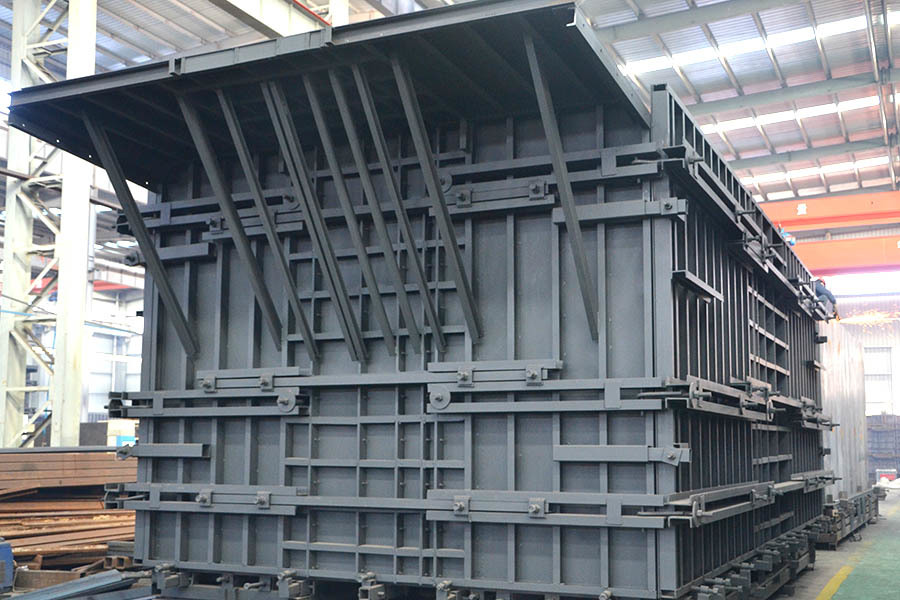
The third generation addresses the two big complaints from the field: joint leakage and panel warping. We switched to a thicker steel frame with laser-cut alignment tabs, so the panels lock together without shims. The inner face also gets a harder chrome coating, which gives a cleaner concrete release and holds up better against abrasive mixes.
We are a factory that has been producing cement house molds since 2009. Buying from us means you skip trading companies and importers. You get direct access to the engineering team, spare parts from the same production line, and the ability to request custom panel sizes without lengthy back-and-forth.
The base system is modular, but we also make curved corner inserts and adjustable radius panels. For projects that need arched openings or rounded facades, these attach to the same frame rails. It is not as fast as a fixed rectangular setup, but it gives architects more freedom without switching to a completely different formwork system.
With proper vibration and a light release agent, the surface comes out smooth enough to paint directly. If you want a textured or board-formed look, you can swap the face sheet or add a form liner. The mold itself does not leave joint marks as long as the panels are tightened in the correct order.
For a single-story house with a trained crew of four, the initial assembly usually takes around six to eight hours. After the first pour, the crew can strip and reposition the mold in under four hours. The panels are labeled and numbered, so the learning curve is short.
Mostly cleaning and inspection. You scrape off any concrete residue, rinse with water, and apply a thin coat of release agent. Check the locking pins and bolted connections for wear every few months. The chrome face should not need resurfacing for at least 1,500 pours under normal use.
Yes. We include a detailed assembly manual and video call support during the first setup. For larger orders, we can send a technician to your site for a few days to train the crew. That usually covers panel handling, proper vibration technique, and stripping procedures.
Conclusion
When our second-generation cement house mold finally cracked under the pressure of a routine pour, it wasn't just a broken frame—it was the end of a long tolerance for mediocrity. That failure sent us back to the original foundry, the same dusty workshop where the first molds were cast decades ago. There, between worn steel benches and the smell of cooling metal, the third-generation design took shape. We swapped the old solid core for a layered composite that flexes where it should and stays rigid where it must. It wasn't a quick fix; it was a rethink of how a house mold should behave under load, vibration, and repeated stripping.
Before a single unit left the floor, we ran 214 pour tests—each one logged, each one dissected for hairline stress, corner blowout, and demolding resistance. That's why the mold ships with a warning label: not a legal disclaimer, but a reminder that this tool demands respect. Homebuilders who switched to the third-gen mold tell us the same things: fewer wasted batches, cleaner reveals, and a mold that finally feels like it's working with them instead of against them. The composite core doesn't just hold its shape; it holds trust.
Contact Us
Contact Person: Zhang Zhenlai
Email: [email protected]
Tel/WhatsApp: 8618563210000
Website: https://en.lugongmachinery.com/