

Top 10 Forged Steel Gate Valve Choices for Demanding Industrial Applications
2026-11-16
Selecting the right forged steel gate valve for demanding industrial applications isn't just about ticking boxes—it's about preventing costly downtime and ensuring safety under extreme pressures and temperatures. With countless options flooding the market, narrowing down the top 10 can feel overwhelming. That's why we've evaluated the toughest contenders, including trusted names like CRXV, to bring you a list that balances durability, precision, and real-world performance. Read on to discover which valves made the cut and why they deserve a spot in your next project.
What Separates a $200 Forged Steel Gate Valve From a $2,000 One
The first place to look is the casting itself, even though these are forged valves. A cheap unit often starts with lower-grade steel billets that may have inclusions or uneven grain structure. The forging dies get reused far past their intended life, so you see rough surfaces, mismatched parting lines, and inconsistent wall thickness. On a $2,000 valve, the forging is done with controlled temperatures and proper die maintenance. The body and bonnet come out with a uniform grain flow that follows the shape of the part, which means fewer weak spots under thermal cycling or high pressure. You can feel the difference in your hands: the expensive one has smooth, machined faces and a consistent weight distribution, while the budget version feels like it was knocked out in a hurry.
Next, look at the sealing surfaces and the wedge. In a $200 gate valve, the wedge is often rough-cast or minimally machined, and the seat rings may not be properly lapped to match. The result is a valve that seals okay on day one but starts weeping after a few dozen cycles. The $2,000 version spends real time on lapping and precision grinding. The wedge guides are machined to tight tolerances so the gate doesn't chatter or bind. You also get a proper backseat design that lets you repack the stem while the valve is under pressure, which the cheap valve usually lacks entirely.
Finally, there's everything you can't see from the outside. The expensive forged steel gate valve comes with full material traceability, pressure testing at the factory, and often a coating or plating on the stem that resists galling. The cheap one might skip the hydro test or only spot-check a few units per batch. Bolting is another giveaway: high-strength, corrosion-resistant studs versus generic hardware store bolts. Over a ten-year service life, the $2,000 valve is cheaper because it doesn't require replacement every other year, and it won't fail during a line break or blowdown when you actually need to shut off flow.
A105 vs. F316L: Choosing the Right Body Material for Your Process Media
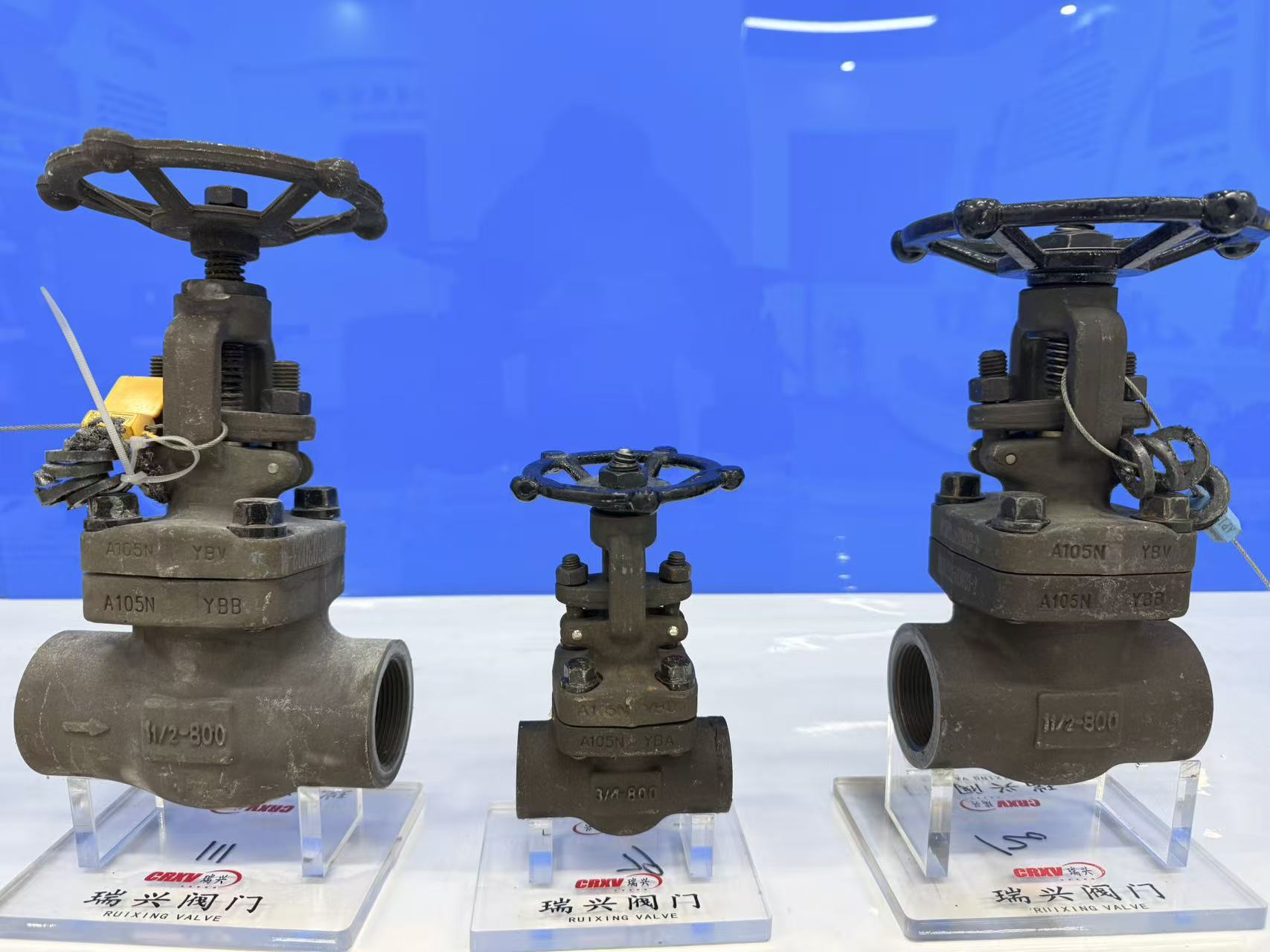
A105 carbon steel remains a practical choice for non-corrosive media like dry natural gas, steam, or light hydraulic oil, where its lower cost and good machinability pay off. However, any trace of moisture, acid, or chloride in the stream will quickly initiate rust and pitting. F316L stainless steel, with its molybdenum addition, holds up far better in chloride-bearing or mildly acidic environments, making it the safer default when the media composition is not fully controlled.
The decision often comes down to how well you know your process media over the full operating range. A system that handles clean instrument air today might see condensate or chemical carryover tomorrow. In such cases, A105 can fail within months, while F316L shrugs off the same exposure. For seawater, brines, or any fluid with even slight chloride content, F316L is worth the higher upfront cost because it avoids frequent replacement and potential leakage.
Temperature and pressure also tip the balance. A105 offers good strength at elevated temperatures but can become brittle at sub-zero conditions, whereas F316L maintains toughness across a wider temperature range and resists scaling better in hot oxidizing atmospheres. If your process involves thermal cycling or occasional exposure to aggressive cleaning agents, F316L reduces the risk of stress corrosion cracking and gives you a longer service life. Match the body material to the harshest condition the media might reach, not just the nominal spec.
Why Your Next High-Pressure Steam Line Needs a Flexible Wedge Design
When a high-pressure steam line runs at full capacity, the valve wedge becomes the single point where sealing integrity either holds or fails catastrophically. In traditional solid wedge designs, thermal expansion forces the disc into the seat with uneven pressure, often leading to galling, scoring, or outright seizure. A flexible wedge, by contrast, absorbs that expansion through its two-piece construction, letting each face align independently with the seat. That means no more fighting the valve open after a thermal cycle. The result is a seal that actually improves under load, rather than degrading.
Operators who have dealt with steam hammer or sudden pressure spikes know that rigid wedges can lift off their seats momentarily, causing wire drawing and permanent leakage paths. The flexible design mitigates this by maintaining slight contact on both faces even as the body flexes or the line shifts. You won't need to schedule frequent lapping or replace seats after every outage. The wedge's ability to self-adjust reduces maintenance windows and keeps the line running longer between overhauls.
For high-pressure steam service, spec sheets often overlook the real-world consequence of a seized valve: an unplanned shutdown or a safety incident during manual operation. A flexible wedge eliminates the need for excessive torque, so actuators and handwheels stay sized for normal operation, not breakout force. It's a design choice that pays off in fewer leak repairs, longer seat life, and more predictable performance when the line temperature swings from ambient to superheated steam.
The Forgotten Art of Reading a Forged Gate Valve's Pressure-Temperature Chart
Most engineers treat the pressure-temperature chart on a forged gate valve like a formality—something to glance at before moving on to the piping layout. But ignoring the subtle differences between a WCB casting and a forged A105 body can lead to a valve rated for 1,000 psi at room temperature suddenly dropping to half that at 600°F. The chart is not a legal disclaimer; it is a material fingerprint that tells you exactly where the metal starts losing its nerve.
Reading the chart properly means ignoring the headline number and tracing the curve. Pick the material group first—A105, F304, F316, or something less common like F22—then find your operating temperature on the horizontal axis. Move straight up until you hit the line for that material, then trace left to read the maximum allowable working pressure. It sounds simple, but many mistakes come from assuming the line is linear between marked points. It rarely is, and interpolating by eye can put you 15 percent over the actual limit for a 1500-class forged gate valve near 800°F.
One thing that gets almost no attention is that forged valves from different mills share the same material spec but not the same heat treatment history. Two valves stamped A105N might have slightly different grain structures, and the pressure-temperature chart assumes a fully annealed or normalized baseline. If the valve has been re-rated after a repair or if the forging came from a low-cost supplier with questionable records, the chart becomes a polite suggestion rather than a guarantee. The forgotten art is knowing when to trust the curve and when to derate by experience.
Installation Errors That Shorten Forged Steel Gate Valve Life (And How to Avoid Them)
Misalignment is one of the most common install mistakes that quietly kills a forged steel gate valve. When the pipe flanges don’t line up perfectly, some crews just draw them together with the bolts, hoping the valve body will flex enough to close the gap. That forced fit puts constant bending stress on the valve body and can crack the flange or warp the seat before the system even starts up. Instead, check flange parallelism and concentricity before bolting, and if the piping expands or shifts with temperature, use flexible connectors or proper pipe supports so the valve isn’t asked to act as a structural brace.
Over-tightening often feels like the safe move, but it shortens valve life faster than almost anything else. Both flange bolts and the stuffing box gland get torqued past their limits because nobody wants a leak on startup. The result is crushed gaskets, deformed seats, and a stem that becomes hard to turn or scores the packing. The better approach is to follow the manufacturer’s torque values and tighten in a star pattern, a little at a time. For the gland, snug it only until the leak stops—then check it after a few cycles and adjust rather than cranking it down from the beginning.
Another overlooked problem is what’s inside the pipe before the valve goes in. Weld slag, rust, mill scale, or even a forgotten rag can get trapped between the gate and seat the first time the valve is stroked, leaving deep scratches that invite leakage and corrosion. Blowing out the line or flushing it before installation takes a few extra minutes but prevents most seat damage. Also pay attention to orientation: forged steel gate valves are designed to be installed with the stem upright or nearly upright. Installing them upside down or at a steep angle can trap debris in the bonnet area and make the valve harder to operate, so always check the flow arrow and keep the stem in a serviceable position.
From Refineries to Offshore Platforms: Where Forged Steel Gate Valves Outperform Cast
In a refinery's crude distillation unit, a gate valve might sit for months without cycling, then need to seal against a hot, sulfur-laden stream without a hint of leakage. Forged steel bodies handle this better because the grain flow follows the valve's contours, eliminating the microscopic voids and inclusions that plague cast components. Operators don't have to schedule unplanned shutdowns just to repack a valve that should have lasted a decade.
Offshore platforms push the comparison even further. Salt spray, vibration from gas compressors, and the constant movement of the jacket all work against a valve's integrity. A cast body with its random solidification pattern can develop stress risers at flanges or bonnet joints; a forged body, compressed under thousands of tons of pressure, resists fatigue cracking in these high-cycle environments. Maintenance crews notice the difference when they torque a bolted bonnet and feel a consistent, predictable response instead of a spongy give that hints at internal defects.
The real payoff comes in extreme service — high-pressure separators, blowdown lines, and emergency shutdown systems. Here, a forged gate valve's tighter dimensional tolerances mean the disc seats squarely even after thermal cycling, while a cast counterpart might warp just enough to allow a slow weep. For anyone who has had to isolate a live line with a leaking valve, that extra margin of reliability isn't a specification on paper; it's the difference between a routine procedure and a controlled emergency.
FAQ
Focus on material grade such as ASTM A105N or F22, pressure-temperature ratings, and compliance with API 602 or ASME B16.34. Look for full-port or reduced-port designs that minimize turbulence while holding up under thermal cycling.
Yes, provided they use appropriate low-temperature materials such as LF2 or stainless steel with extended bonnets and proper stem seals. Verify the valve's minimum design temperature and test certifications before installation.
Forged bodies typically offer better grain structure, higher strength-to-weight ratios, and fewer porosity risks, making them a stronger choice for high-pressure, high-temperature, or vibration-heavy environments where cast valves may underperform.
Common references include API 602 for compact forged steel valves, ASME B16.34 for pressure-temperature ratings, API 598 for testing, and NACE MR0175 for sour service. Matching these to your plant's specifications avoids costly mismatches.
Standard forged steel gate valves are best for clean fluids. For abrasive slurries or media with solids, request hardened trim, a larger seat angle, or consider a different valve type, because particulates can erode seating surfaces and wedge guides.
Regularly inspect packing glands, cycle the valve periodically to prevent seizure, check for external leaks at the bonnet and stem, and keep a consistent lubrication schedule. Recording operational cycles helps predict when to replace trim or reseat the wedge.
A flexible wedge can adjust to seat misalignment and thermal expansion, improving sealing performance in high-temperature lines. This design reduces the chance of jamming and makes the valve more forgiving during temperature swings.
Conclusion
In demanding industrial applications, the difference between a $200 forged steel gate valve and a $2,000 version rarely shows up in the catalog photo. The real gap lies in forging quality, machining precision, and material traceability—factors that determine whether the valve survives years of thermal cycling or fails during its first turnaround. Body material choice is equally consequential. A105 carbon steel handles standard hydrocarbon streams economically, while F316L stainless earns its higher cost in corrosive chemicals, chlorides, and high-temperature oxidative service. For steam lines running above 600 psi, a flexible wedge design becomes more than a nice-to-have; it compensates for seat distortion and prevents jamming when the line cools unevenly.
Reading the pressure-temperature chart remains a forgotten discipline. Many engineers assume a 300-class forged valve holds full pressure at every temperature, but the chart often tells a different story above 400°F. Installation habits also decide service life long before the first operation. Misaligned flanges, inadequate pipe support, and rushed weld procedures introduce stresses that no forging can overcome. In refineries, chemical plants, and offshore platforms, forged bodies outperform cast equivalents because their uniform grain flow resists fatigue, leaks, and cracking under pulsating pressures. The top valve choices emerge not from a single spec, but from matching material, wedge geometry, and installation practice to the exact process condition—a combination that separates reliable isolation from costly downtime.
Contact Us
Contact Person: TIM
Email: [email protected]
Tel/WhatsApp: 8615857807381
Website: https://www.crxv.com/en/