

Top 10 PTFE Tube Suppliers in China for Reliable Sourcing
2026-09-01
Finding a trustworthy PTFE tube supplier in China often means sifting through endless factory claims and inconsistent quality reports. This guide narrows the field to ten suppliers that have earned their reputation through reliable delivery and material consistency. Among them, Kaxite deserves a closer look for its focus on tight tolerances and dependable customer support. Whether you're sourcing for chemical processing, food-grade applications, or high-temperature fluid lines, the right partner saves you from costly downtime and rework. Read on to see which names made the cut and why they stand out in a crowded market.
Which PTFE Tube Suppliers in China Actually Control Their Raw Material?
Most buyers assume that when a Chinese PTFE tube supplier says they control raw material, they simply mean they stock resin from a known brand. In reality, very few actually exercise meaningful control. True control starts with sourcing virgin PTFE resin directly from domestic fluoropolymer plants—often through equity ties or exclusive contracts—rather than buying spot lots from distributors.
The suppliers that stand out usually run their own paste extrusion lines and have in-house testing for resin particle size, moisture, and stretchability before the resin ever reaches the tube die. This is different from merely having a QC lab that checks finished tubes. Raw material control means rejecting a batch of resin before it contaminates production, which only works when you have a direct channel to the resin manufacturer and the leverage to send it back.
A practical way to verify this is to ask for the resin batch traceability report linked to the supplier's incoming inspection records, not just a generic certificate of conformance. Some Chinese manufacturers will show you real-time inventory of resin lots from Dongyue or Shandong Huafu, while others can only produce a distributor's invoice. The difference becomes obvious once you visit the facility and see whether resin silos are labeled by upstream batch or simply by the supplier's internal code.
How Do Custom Sizes and Tolerances Affect Your Sourcing Timeline?
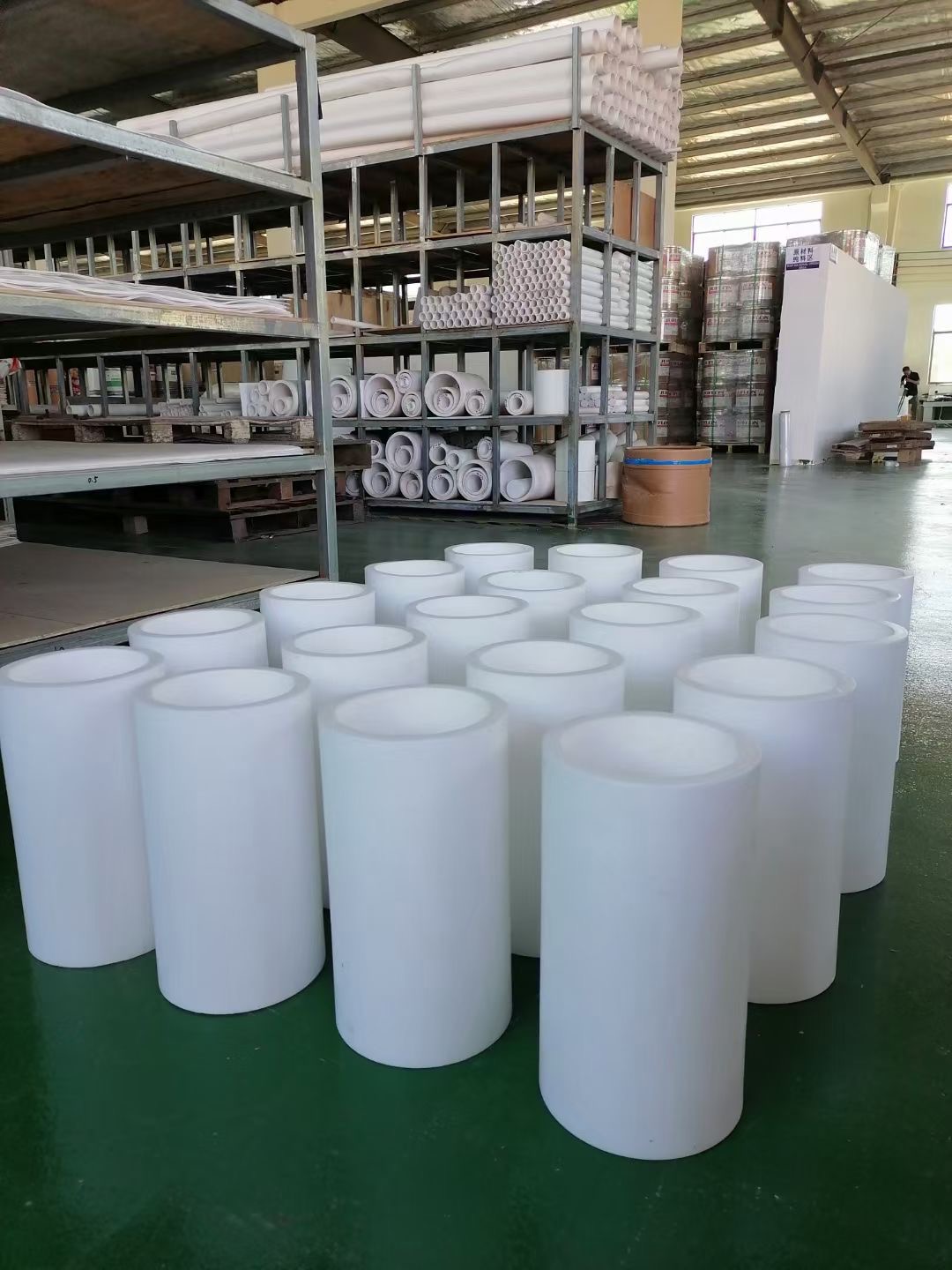
When you move away from off-the-shelf parts and ask for a custom size, the clock starts ticking long before any metal is cut. Suppliers typically need to review your drawings, check whether their existing tooling or fixtures can handle the dimensions, and often come back with questions about how the part will be used. That back-and-forth alone can eat up several days, especially if your tolerance callouts are vague or overly optimistic. Standard sizes ship from stock; custom sizes force a supplier to schedule a run specifically for your order, which means you’re now competing with their existing production queue.
Tolerance adds another layer of delay that many buyers underestimate. A general ±0.1mm tolerance is usually manageable with standard CNC setups, but tighten that to ±0.01mm or add a true position callout under 0.05mm, and the part may need slower feeds, secondary grinding, or even a different machine altogether. Each extra step adds hours or days, and the inspection process becomes more involved since every critical dimension has to be verified with calibrated equipment. If a batch fails first-article inspection, the clock resets. In practice, a seemingly small note like “all dimensions ±0.005mm unless otherwise specified” can push a two-week lead time out to five or six weeks without changing the basic shape of the part.
One way to keep the timeline from spiraling is to be selective about which dimensions actually need tight control. Instead of tolerancing every feature the same way, mark only the functional surfaces as critical and leave the rest at standard commercial tolerances. This gives the supplier room to use faster, more reliable processes and reduces the chance of a rejected lot. You should also ask the supplier up front whether your requested tolerances match their typical capability; if they have to sub out precision grinding or EDM, that will show up in the quoted lead time. Getting those answers early is cheaper than discovering the delay after the purchase order is already placed.
What Certifications and Test Reports Should You Ask for Before Importing?
Before you sign off on a shipment, the exact documents you need will depend heavily on what the product is and where it’s headed. For electronics going to the EU, you’ll want to see the CE marking backed up by actual test reports—usually LVD and EMC reports from an accredited lab. If the same item is bound for the US, FCC testing for electromagnetic compatibility is non-negotiable, and if it plugs into a wall, a safety certification like UL or ETL (or a recognized NRTL mark) becomes essential. For children’s products, don’t just accept a generic “passed” letter; ask for the lab report showing compliance with ASTM F963 and CPSIA requirements in the US, or EN 71 in Europe, along with lead and phthalate content test data.
Other categories have their own traps. Textiles and apparel often need flammability test reports—16 CFR 1610 or 1611 in the US—plus chemical compliance like REACH or OEKO-TEX if you’re selling into the EU. Food contact materials, whether it’s a silicone spatula or a water bottle, should come with migration test reports against FDA 21 CFR or EU 10/2011, not just a supplier’s assurance that it’s “food grade.” And if you’re importing machinery or power tools, a CE certificate with the Machinery Directive risk assessment or a UL 62841 report for power tools is the kind of thing you’ll regret not having when customs holds the container. A common mistake is treating ISO 9001 as a product safety document—it’s a factory quality management certificate, not proof that your product meets a specific safety standard.
Even when you receive these documents, verify them rather than filing them away. Check that the test report’s model number, brand name, and photo match exactly what you’re buying; a report for “Model A-100” doesn’t cover a slightly upgraded “A-100 Pro.” Look at the issuing lab’s accreditation—ILAC-MRA, A2LA, or CNAS are good signs—and if something feels off, call the lab with the report number to confirm it’s genuine. For products with changing raw materials, like textiles or plastic parts, ask for batch-specific test reports, not just a one-time sample. A supplier who hesitates to provide actual reports or only sends a self-declaration is a signal to pause the order until you get the paperwork straight.
How Do Minimum Order Quantities and Lead Times Compare Among Chinese Suppliers?
Minimum order quantities (MOQs) across Chinese suppliers swing wildly depending on what you're buying and who you're dealing with. For off-the-shelf consumer goods like phone cases or basic kitchenware, many factories in Yiwu or Guangzhou will accept orders as low as 100 to 500 units, sometimes even less if you're willing to pay a small surcharge. Push into customized industrial components or electronics, and MOQs routinely jump to 2,000, 5,000, or even 10,000 pieces, because the setup costs for molds, tooling, and specialized materials need to be amortized across a larger run. Small trading companies often advertise lower MOQs than direct manufacturers, but they mark up the unit price to compensate.
Lead times follow a similar pattern of wide variation. If a supplier keeps finished goods in stock—common for generic textiles, hardware, or promotional items—you might see dispatch within 3 to 7 days after payment confirmation. For made-to-order production, expect 20 to 45 days as a baseline, with more complex assemblies or heavily customized products stretching to 60 days or beyond. Seasonal demand, like pre-Chinese New Year rushes or back-to-school peaks, can add an extra week or two. Suppliers in coastal provinces tend to have faster turnaround due to better logistics and component availability, while inland factories might quote slightly longer lead times but lower prices.
A practical approach is to treat MOQ and lead time as negotiable rather than fixed. Many factories will reduce the MOQ by 20-30% if you accept a higher unit price or agree to pay for tooling upfront. For lead times, offering a deposit earlier or splitting your order into two shipments can sometimes shave a week off production. If your volume is too low for a direct manufacturer, consider working with a specialized sourcing agent who pools orders from multiple buyers—this often gets you closer to wholesale pricing without committing to thousands of units at once.
What Inventory and Quality Consistency Practices Reduce Supply Chain Risk?
Inventory practices that reduce supply chain risk are rarely about holding more stock across the board. A better approach starts with segmenting items by criticality and demand variability, then setting dynamic safety stock levels that respond to supplier lead time changes and forecast errors. For high-risk components, dual sourcing or keeping strategic buffer inventory at a shared warehouse can cushion against a single supplier failure without bloating overall working capital. Some teams also shift from finished-goods inventory to postponement strategies, delaying final assembly until actual orders arrive, which lowers the risk of obsolescence while still meeting delivery promises.
Quality consistency is equally tied to risk reduction. Instead of relying on incoming inspection alone, strong programs push quality upstream through supplier process audits, shared control plans, and clear corrective action requirements. Using statistical process control on critical parameters lets both buyer and supplier spot drift before it becomes a batch rejection. When suppliers are required to provide capability data and follow a locked process for changes, the rate of surprise nonconformances drops sharply. This reduces the need for large safety stocks held purely to cover quality-related shortages.
The most effective risk reduction happens when inventory and quality data are shared in real time with key suppliers. When a supplier sees your demand forecast and current quality metrics, they can adjust their own raw material ordering and production schedules earlier. Joint improvement projects on the top failure modes often cut incoming defect rates by double digits, which in turn allows lower buffer stock without increasing shortage risk. Over time, these practices create a feedback loop: fewer quality escapes mean less excess inventory, and leaner inventory exposes problems sooner, forcing quicker root-cause fixes.
When Does Technical Support Become the Main Reason to Stay with a Supplier?
Technical support shifts from a nice-to-have to the deciding factor when the product sits deep inside daily operations. If a supplier’s tool handles inventory, payments, or patient records, an unresolved glitch stops revenue, not just productivity. At that point, response time matters more than feature roadmaps. A vendor who picks up within minutes and assigns someone who already knows your system becomes hard to leave, even if a competitor offers a slightly lower price.
Another trigger is the slow build-up of custom configurations or edge-case integrations. Once a company has wrapped its own scripts and workflows around a supplier’s platform, every upgrade carries risk. Support that can walk you through a botched migration or diagnose a subtle API failure without bouncing you between ticket tiers becomes the hidden glue. You stay not because the software is perfect, but because leaving means teaching a new support team everything the old one already knows.
Support also becomes the linchpin during industry-specific pressure points. A tax firm may tolerate mediocre software for eleven months, but if the vendor’s support team understands filing deadlines and prioritizes those tickets, that reliability outranks minor UX flaws. The renewal decision stops being about software quality and becomes about keeping a partner who has proven they can keep you operational when failure isn’t an option.
FAQ
Look beyond the glossy brochures. A dependable supplier will share raw material traceability, show real production line videos, and offer consistent wall thickness across multiple batches. Ask for a trial order and see how they handle a tight tolerance request before committing to larger volumes.
For food or medical use, FDA and USP Class VI are non-negotiable. For general industrial applications, ISO 9001 plus RoHS and REACH compliance usually covers most bases. Don't just accept a certificate at face value — verify it with the issuing body.
Request batch-level test reports for density, tensile strength, and dimensional accuracy. Insist on clear photos or videos of the cutting and inspection process. A small paid sample order gives you a much better read than any datasheet.
Yes, several manufacturers in Zhejiang and Jiangsu provinces run cleanroom production lines and specialize in high-purity PTFE tubing. They often use virgin resin only and can provide full material certifications, but you need to confirm the cleanroom class and ask about contamination controls.
For standard sizes, many suppliers accept 100 to 500 meters. For custom dimensions or special additives, expect the MOQ to jump to 1,000 meters or more. Some smaller workshops will do 50-meter trial runs, but pricing per meter will be noticeably higher.
Samples typically ship within 3 to 7 days if the size is in stock. Custom extrusion might take 2 to 3 weeks for tooling and a pilot run. Full production orders usually take 2 to 4 weeks, but complex multi-layer or colored tubes can stretch to 5 or 6 weeks.
Always state inner diameter, outer diameter, wall thickness tolerance, cut length, color, and any required certifications. Also mention the resin grade — virgin PTFE versus reprocessed makes a huge difference. Include your target annual quantity, not just a one-time order, so suppliers can offer better per-meter rates.
Conclusion
When evaluating the top PTFE tube suppliers in China, the first thing to check is whether they actually control their raw material. Many factories buy resin from third parties, which creates inconsistency in performance and color. A supplier that extrudes its own PTFE or has long-term contracts with resin producers can offer traceability and tighter batch control. Custom sizes and tolerances are not just about drawing dimensions—they affect tooling, setup time, and inspection. If you need a non-standard ID/OD or a very tight tolerance like ±0.05 mm, be prepared for longer lead times because the line may need to be reconfigured. Before importing, ask for full test reports: FDA, RoHS, REACH, and specific mechanical properties like tensile strength and elongation. Don't accept a simple 'conformity certificate'—request actual lab data for your batch.
Minimum order quantities and lead times vary widely among Chinese manufacturers. Some will run 500 meters for a trial order, while others demand 5,000 meters. Compare not only the MOQ but also how flexible they are with repeat orders and whether they keep semi-finished stock for quick turnaround. Consistent inventory management and strict quality checks at each production stage reduce your supply chain risk. A supplier that documents extrusion temperature, sintering profile, and post-production inspection per lot is much safer than one that only checks samples. Over time, technical support often becomes the main reason to stay: when a supplier helps you solve a kinking issue, recommends a better wall thickness for pressure, or suggests a conductive PTFE variant for static dissipation, that expertise builds a partnership beyond price.
Contact Us
Contact Person: Kaxite
Email: [email protected]
Tel/WhatsApp: 0086-574-87527771
Website: https://www.seal-china.com