

Top Artificial Flowers to Elevate Your Home Decor
2026-11-16
Fresh flowers are lovely—until they're not. Fortunately, the best artificial flowers today look so real you'll be tempted to water them. Whether you're after a permanent spring in your entryway or a low-maintenance centerpiece that never wilts, PHLEEYA has mastered the art of faux florals. Ready to refresh your space? These top picks will transform any room in minutes.
The Secret to Effortless Blooms That Never Fade
The usual mistake is assuming long-lasting flowers demand constant attention, but the trick is picking stems that hold their shape without water. Preserved moss, dried palm spears, and sola wood blooms keep their color and structure for months when kept out of direct sun and heavy humidity. Arrange them once, nestle them into a heavy ceramic vase, and they quietly brighten a corner on their own.
Rather than chasing seasonal bouquets, build a permanent arrangement around texture. Pair a few wispy grasses with rounded dried hydrangea heads and one sculptural branch. The contrast makes the display feel collected, not store-bought. A light pass with a soft brush every few weeks is all the upkeep these pieces ask for.
The real secret is treating faux and preserved stems like fresh botanicals—edit, trim, and bend each stem before it enters the vase. That extra minute of shaping removes the stiff, manufactured look. When stems lean at slightly different angles and the vase isn't overfilled, the whole arrangement reads as cut flowers that simply forgot to wilt.
Choosing Artificial Flowers That Look Anything But Fake
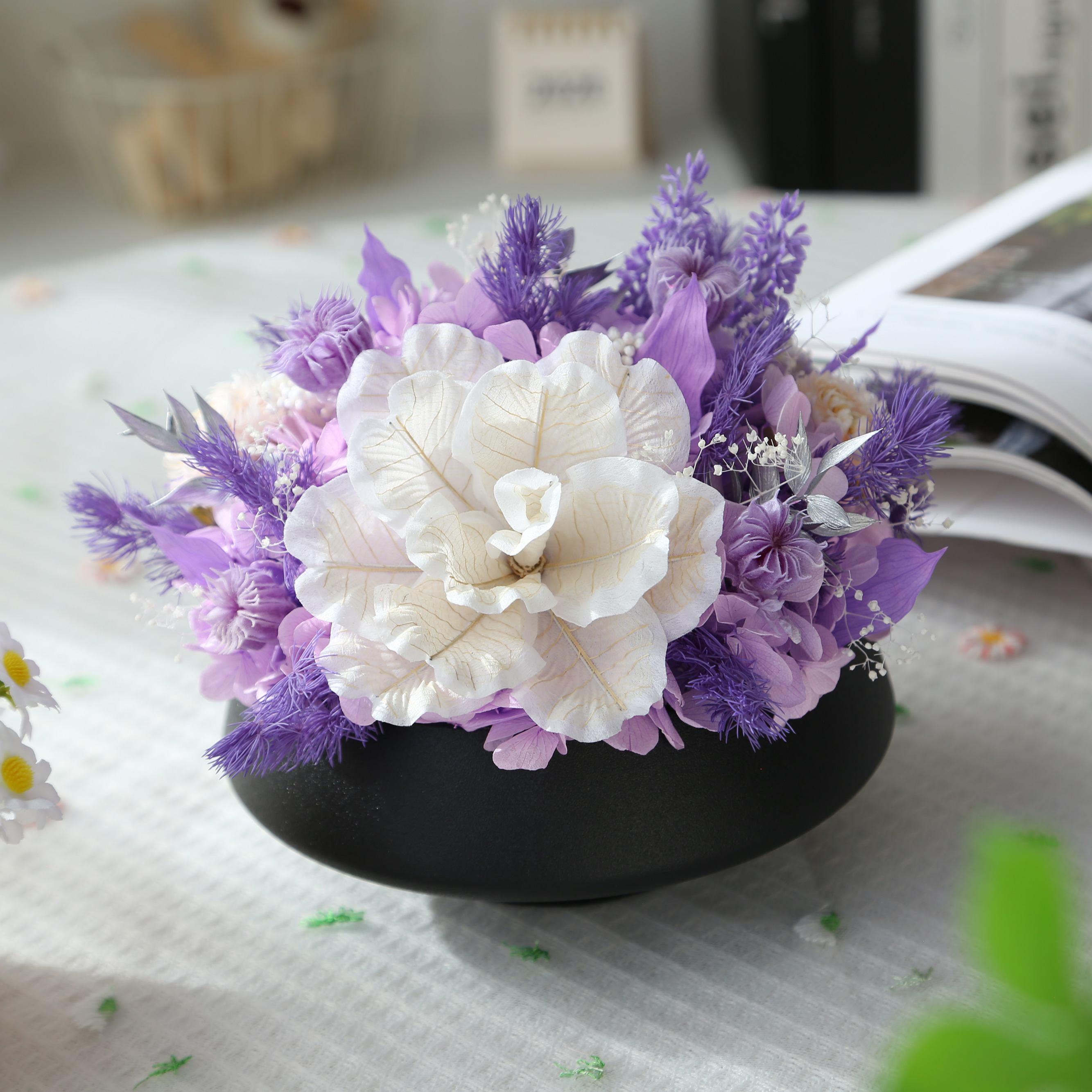
The secret to fooling the eye starts with the petals. Real flowers have slight imperfections—soft color variations, delicate veining, and edges that are never perfectly uniform. Look for artificial blooms that mimic these natural quirks instead of flat, single-tone plastic. High-quality silk or latex flowers often feature hand-painted details and layered textures that catch light the way living petals do. Avoid anything overly shiny or stiff, as that glossy finish is a dead giveaway of polyester pretending to be botanical.
Stems and leaves matter just as much as the blossoms. Real stems have a subtle fuzz, tiny nodes, and a slight give when you bend them. Opt for artificial flowers with wired stems that can be shaped naturally, and check that the leaves show realistic veining and a matte, not waxy, surface. Mixing in a few faux branches or greenery with varied tones can also break up uniformity and make the arrangement feel gathered rather than manufactured.
Finally, don't underestimate the power of context and care. Even the most realistic artificial flowers can look fake if dust gathers or if they're arranged too symmetrically. Fluff the petals gently, trim stems to different lengths, and place them in a vessel with real water or frosted glass to blur the line between faux and fresh. A slightly wild, asymmetrical arrangement goes a long way toward making silk flowers read as just-cut from the garden.
Arranging Faux Florals for a Natural, Lived-In Feel
Real bouquets are rarely symmetrical, and faux stems shouldn't be either. Instead of fanning them out evenly, push a few stems lower, bend one slightly outward, and let a leaf overlap a bloom. Insert each stem on its own, trimming or bending the wire core so the heights feel accidental. That small amount of disorder is what makes an arrangement read as gathered from the garden rather than set in place by hand.
Mix materials and scales. Pair a larger matte-petaled rose with a wispy grass or a sprig of eucalyptus, then tuck in a stem with tiny buds. If every flower shares the same size and sheen, the whole piece starts to look synthetic no matter how realistic each individual bloom is. Use two or three greens with different textures, like a broad leaf, a feathery fern, and a trailing vine that can spill over the vase edge.
Work in odd numbers and allow gaps. Cluster three stems of the same flower at slightly different heights, leave a little breathing room, then add another cluster. Turn the vase as you build so no single side becomes the obvious front. When you think you're nearly done, step back and squint. If an area feels too dense or too bare, nudge a stem by an inch rather than adding more. Faux arrangements usually fail from overfilling, not from leaving a little air.
From Drab to Fab: Transforming Dull Corners with Silk Stems
That shadowed nook by the staircase has probably been ignored for months—maybe longer. A single frosted vase holds a few dried twigs, and the whole area feels more like storage than part of your home. The fix doesn't require new furniture or a weekend of painting. A handful of well-chosen silk stems, bent slightly to follow the light, can pull that forgotten corner into the room's conversation.
What makes silk stems work in dull corners is their ability to add shape without demanding attention. A tall branch of faux magnolia softens a hard wall. A cluster of cream ranunculus in a low bowl brings texture to a narrow console. Because there's no water to change or petals to sweep, the arrangement stays exactly as you styled it—week after week. You can afford to play: swap a bold eucalyptus spray for delicate cherry blossom as the season shifts, or layer two types of stems for depth.
Start with the corner you see first when you enter the room. Place a single stem in an unexpected vessel—a ceramic pitcher, a glass demijohn, even a stoneware mug. Then step back and notice how the eye now travels past the corner instead of getting stuck there. That's the shift from drab to fab: not a grand renovation, but a small, deliberate placement that makes the whole room feel finished.
Mixing Artificial and Real Greenery for Unbeatable Texture
Layering real and faux plants isn't about hiding one behind the other; it's about letting each do what it does best. A sun-loving fern can bring that soft, slightly unruly movement near a window, while a high-quality faux trailing pothos on a shelf adds length and fullness that would take years to grow. The contrast in sheen, weight, and leaf shape gives the arrangement a collected-over-time feel rather than a one-trip showroom look.
The trick is to place them close enough that the eye moves from one texture to the next without stopping to inspect the difference. Pair matte, papery real leaves with waxier artificial stems, or set a real snake plant beside a faux olive branch so the upright, architectural blades play against the fine, dusty green foliage. This kind of pairing creates depth that neither material achieves alone.
Don't be afraid to let the artificial pieces act as the structural backbone. A sturdy faux monstera can anchor a corner where no real plant would thrive, while delicate real greenery fills in the foreground with life and seasonal change. Rotate the real cuttings or small potted plants occasionally; the artificial ones stay constant, so the composition keeps its shape without feeling static.
Seasonal Switch-Ups: Keeping Your Space Fresh Without the Fuss
Swapping out a few textiles can shift the mood of a room faster than you'd think. I keep a slim bin of cushion covers, lightweight throws, and a runner that only come out when the weather turns. The rest of the year they live under the bed, so pulling them out feels like a tiny ritual rather than a chore.
For me, the easiest trick is to bring in whatever is actually happening outside. A branch with new buds, a bowl of citrus, or even just moving a chair closer to the window changes how the space breathes. No shopping spree, no rearranging the whole floor plan—just small, honest adjustments that keep the room from feeling stuck.
And when the season shifts again, I pack those few items away and rotate in the next set. Because the collection stays small, the switch takes maybe twenty minutes. That's the whole point: freshness shouldn't demand a weekend project or a storage unit.
FAQ
Peonies are notorious for dropping petals and demanding bright but indirect light. A high-quality silk or latex peony keeps its full, ruffled shape in a dim entryway and never leaves a mess on the console table.
Trim the stems to slightly different lengths, bend the wired leaves at gentle angles, and place them in an opaque ceramic or stoneware vase with real water and a few drops of floral bleach. The weight of the water and the irregular heights trick the eye before anyone gets close.
Single-stem branches like faux cherry blossom, eucalyptus, or dried-looking pampas grass in a tall, narrow matte vase work better than dense mixed bouquets. Stick to one botanical type and a muted color so the arrangement reads as sculptural rather than fussy.
Yes, use a soft makeup brush or a hair dryer on the cool, low setting once a week. For deeper cleaning, swish the heads in warm water with a drop of mild dish soap, then dry them upside down so water doesn't collect in the petals.
They go too symmetrical and too colorful. Two identical pink rose bunches on each nightstand can look like a hotel set. Instead, use one neutral arrangement on a dresser and a single stem or small bud vase on the nightstand to keep the room calm.
They can, but choose materials that resist moisture, such as polyester or plastic-coated stems, and avoid paper-wrapped wires or dried natural stems that can grow mold. A small arrangement of faux orchids or eucalyptus on a shelf away from the shower works well.
Use real eucalyptus, ferns, or ivy as the base because their slight wilting and texture look natural. Place faux focal flowers like roses or ranunculus in the center where people won't touch them. Change the real greenery weekly so the arrangement never reaches that dusty, forgotten stage.
Flat-faced or cup-shaped blooms like dahlias, anemones, and open roses photograph better than tightly closed buds because they hold a clear shape from a distance. Avoid overly shiny petals and choose matte, color-variegated petals that catch soft shadows instead of glare.
Conclusion
There is a quiet kind of magic in bringing home a bundle of silk peonies or a handful of faux eucalyptus stems. Unlike their living counterparts, these blooms never droop, never brown at the edges, and never demand a sunny windowsill. The real secret is not just their staying power, but how effortlessly they slip into the rhythm of a room. High-quality artificial flowers have shed their plastic sheen; today's best options mimic the slight imperfections of real petals, the uneven curl of a leaf, the subtle variation in stem thickness. When you choose stems that could pass for something picked that morning, you stop thinking of them as fake and start seeing them as simply part of the decor.
Arranging them well is where the lived-in feel begins. Instead of stiff, symmetrical bouquets, try letting stems lean at odd angles, cluster three or five of the same bloom together, and tuck in a few bare branches or dried grasses. Mixing faux greenery with a handful of real cuttings adds an unbeatable layer of texture and confuses the eye in the best way. For dull corners, a single dramatic stem in a heavy ceramic vase can turn an ignored shelf into a focal point. And because silk stems never wilt, switching them out with the seasons becomes a ten-minute ritual rather than a weekend chore. Swap blush tulips for golden maple leaves in autumn, or deep red ranunculus for frosty silver brunia in winter. The result is a home that feels tended to, layered, and alive, without any of the upkeep.
Contact Us
Contact Person: Mr. Luo
Email: [email protected]
Tel/WhatsApp: 86 18100895505
Website: https://www.feiliyaflowers.com/en/