

Top EMC Test Methods for Reliable Product Compliance
2026-06-03
Ensuring your product meets electromagnetic compatibility (EMC) standards is no small feat—yet it’s the make-or-break factor for market access and reliability. With regulations tightening and test setups growing more complex, many engineers struggle to find clear, actionable guidance. That’s where TPS steps in. In this post, we’ll walk you through the top EMC test methods that transform compliance from a headache into a streamlined process, so your product can shine where it matters most—on the market.
Choosing the Right Test Setup for Accurate Results
Nailing down the ideal test configuration often starts with a clear definition of what you're actually measuring and why. It's tempting to grab the most convenient tools or replicate a setup you've used before, but small mismatches here can quietly skew your data. Spend time upfront mapping out the variables that matter—environmental conditions, sample preparation steps, and the limits of your instrumentation. A thoughtful approach at this stage saves you from puzzling over weird results later, when it's much harder to trace the root cause.
Physical connections and signal paths deserve more attention than they usually get. Even high-end equipment can produce misleading readings if cables are worn, adapters introduce unexpected impedance, or grounding isn't solid. It's worth building a habit of inspecting every link in the chain before relying on the numbers. Sometimes the fix is as simple as swapping a suspect connector or rerouting a wire away from a noisy power supply. These practical checks become second nature and consistently keep data quality high.
Calibration routines can make or break measurement confidence. Rather than treating calibration as a chore, treat it as a direct investment in your results. Where possible, use references that closely match your actual test conditions—an in-situ check with a known sample often reveals more than a lab calibration certificate alone. Documenting not just the calibration values but also the ambient conditions and any anomalies builds a rich history that helps you spot drift before it compromises a critical test run. Over time, this habit turns your setup into a trustworthy foundation for every experiment.
Common Pitfalls in EMC Pre-Compliance and How to Avoid Them
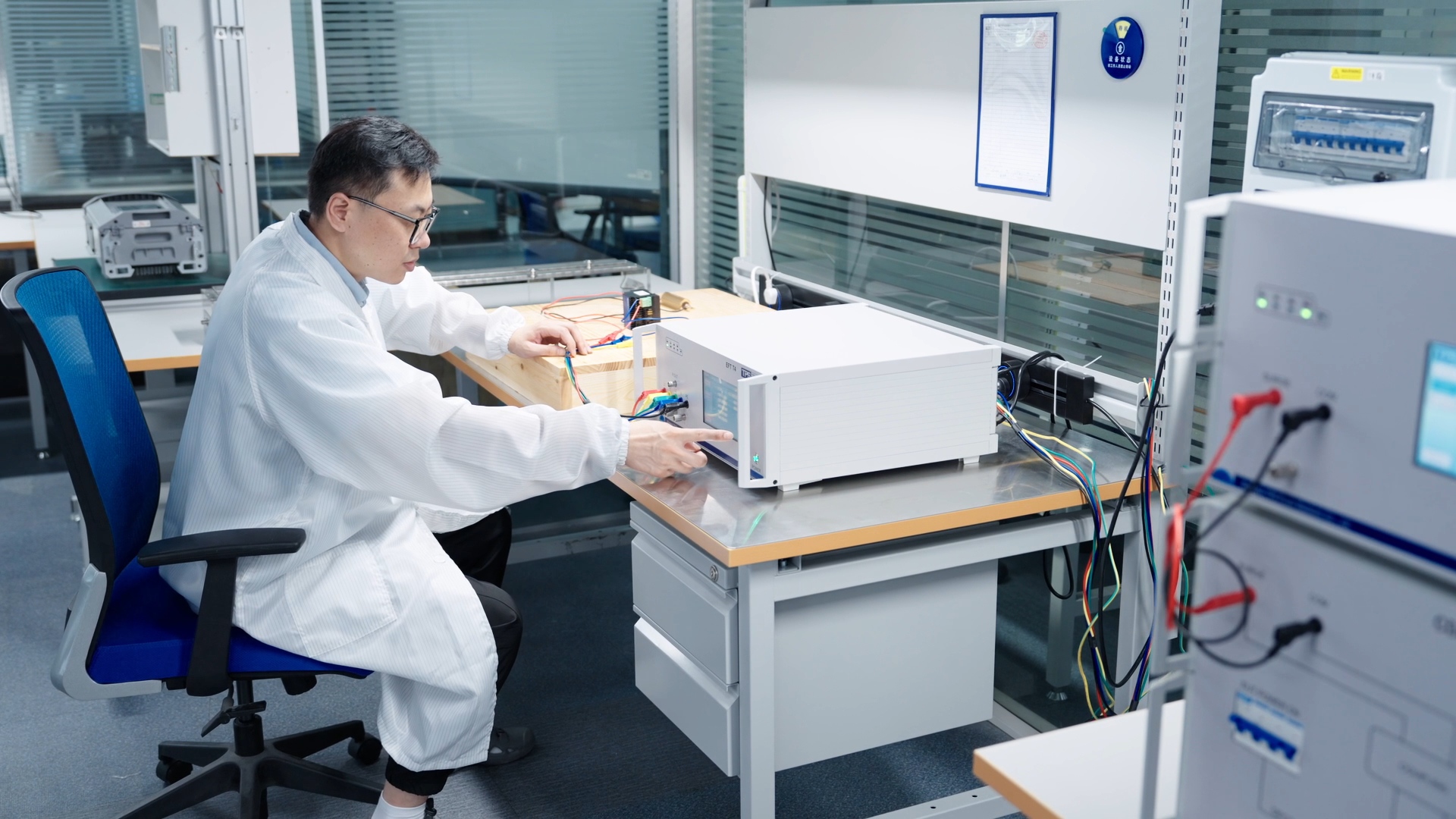
Many engineers underestimate the importance of grounding in early testing. A single-point ground might seem sufficient on paper, but in practice, parasitic inductance at high frequencies turns it into an antenna. Instead, think in terms of return current paths and keep them as short and wide as possible. Using a solid ground plane on the PCB and bonding cable shields directly to the chassis at both ends often makes the difference between passes and failures.
Another trap lies in overlooking the test setup itself. Cables routed carelessly across the bench, unshielded connectors, or missing ferrites can radiate more than the device under test. Always replicate the final installation conditions as closely as possible during pre-compliance. That means using the same cable types, lengths, and terminations, and placing the equipment on a reference ground plane. Even minor deviations can mask real issues or create false positives.
Filtering is often treated as an afterthought, with a generic ferrite bead slapped onto a power line. But without understanding the impedance context, you might only shift the noise to a different frequency. It pays to characterize the source and load impedances first and then select a filter topology that provides actual attenuation in the problematic band. A simple LC filter at the board entry can work wonders, provided the components are placed right at the connector and not spaced inches away on a noisy trace.
Mastering Radiated Emissions Testing for Faster Certification
Getting through radiated emissions testing quickly isn't about last-minute scrambling—it's about weaving compliance into your design from day one. Too many teams treat EMC as an afterthought, only to face delays when their product fails in the chamber. By running pre-compliance sweeps early, even with improvised setups, you catch issues before they become costly redesigns. Understanding the specific limits for your product's class and the nuances of test standards like CISPR 32 or FCC Part 15 makes a world of difference. When you know what the lab is actually measuring, you can target your fixes precisely instead of guessing.
On the hardware side, careful stack-up and return path planning often eliminate the worst offenders before a prototype ever powers on. Splitting planes without a clear, low-impedance return for high-speed signals practically invites radiated noise. Simple changes—like stitching vias along board edges, treating connectors with common-mode chokes, and using shielded cables—can shave weeks off your certification timeline. And don't underestimate the value of a methodical debug approach in the chamber: swapping cables, isolating subsystems, and using near-field probes systematically turns a frustrating failure into a quick fix.
Why Grounding and Cable Placement Matter More Than You Think
Most people picture a flawless mix or a perfect recording when they think about audio quality, but the real magic often happens before a single note is captured. The way you route and secure your cables, and how you manage grounding, can make or break a session. A slight hum, an intermittent crackle, or a mysterious loss of signal can turn a productive day into a troubleshooting nightmare. These aren't just beginner mistakes—they catch even seasoned engineers off guard when a new piece of gear enters the setup or a venue's power source turns hostile.
Ground loops are the silent saboteurs of any audio system. They occur when multiple paths to ground create a difference in electrical potential, allowing current to flow where it shouldn't. That low-frequency buzz that creeps into your recordings? Nine times out of ten, it's a grounding issue, often exacerbated by power-hungry equipment sharing the same circuit as your audio gear. Meanwhile, the physical routing of cables plays an equally sneaky role. Running an unbalanced instrument cable alongside a power cord or an amplifier's speaker line is an open invitation for electromagnetic interference. It doesn't matter how prestigious your preamps are if the signal is already polluted by the time it reaches them.
Small changes in placement can yield dramatic improvements. Lifting a shield at one end of a balanced cable, using isolated power supplies for pedals, or simply crossing audio and power cables at right angles instead of bundling them together can clean up a noisy signal path. Think of it as the less glamorous, deeply practical side of audio engineering—where a few minutes spent organizing a cable run or checking a ground scheme saves hours of frustration and preserves the clarity you've worked so hard to achieve. In the end, the quiet hum of success is just as satisfying as the music itself.
Streamlining Immunity Tests Without Compromising Reliability
Traditional immunity testing often drags on for weeks, with complex setups and manual checks that strain resources. By integrating automated test sequences and real-time monitoring, labs can slash turnaround times without cutting corners on accuracy. This shift lets engineers focus on interpreting results instead of babysitting equipment, turning a bottleneck into a smooth, predictable flow.
A smarter approach couples modular test architectures with intelligent signal analysis, so you only run what’s needed for each device variant. Rather than blanket testing every parameter, the system adapts on the fly, homing in on potential weak spots. This not only saves hours but also preserves the rigor—detecting subtle anomalies that generic sweeps might overlook.
Maintaining reliability while accelerating tests demands a tight feedback loop between simulation and physical validation. Pre-compliance modeling flags risks early, so the actual immunity runs become a targeted confirmation rather than a fishing expedition. The result: certifiable results delivered faster, with no surprises during final audits.
Interpreting Test Data to Pinpoint Failure Points Quickly
Sifting through test results can feel like staring at static—numbers and logs blurring together with no clear signal. The trick isn't just looking at what's broken, but catching the moments right before things go wrong. A sudden spike in latency, a memory usage graph that refuses to flatten, or a scatter of error counts that don't match any known pattern often point to the real culprit faster than a stack trace. It's about training your eye to spot the oddities that don't belong.
Raw data rarely tells the story outright; it needs context. Start by comparing the failure window against a stable baseline run. Did a particular API call take twice as long? Did a thread pool max out exactly three seconds before the timeout? Overlaying timelines often exposes a hidden sequence—like a database lock that triggered a cascade of downstream failures. Visualizing these correlations, even with a quick scatter plot, turns a confusing mess into a breadcrumb trail straight to the root cause.
Speed comes from pattern recognition, and that builds with practice. Instead of deep-diving into every anomaly, ask a simple question: “What changed around the time this metric went off the rails?” Often, a single config tweak or a deployment timestamp aligns too perfectly with the first tremor of trouble. Keep a mental catalogue of common failure signatures—like a CPU plateau paired with a network traffic drop—and you’ll start catching issues before the test suite even finishes running.
FAQ
Start by pinning down the exact standards your product needs to meet and build a test plan around those. It's not just about picking tests—you need to consider the operating modes, worst-case configurations, and even the lab environment. Skipping this upfront homework almost always leads to costly retests.
For most electronic products, yes, radiated emissions are non-negotiable because they directly affect other devices in the real world. Some low-power, battery-operated gadgets with no high-speed signals might get a pass, but that's rare. The key is understanding your device's clock frequencies and unintentional radiators.
Design smart, not heavy. Start with a solid ground plane and keep sensitive traces away from edges and connectors. Strategic placement of TVS diodes and good chassis bonding often do the job without a pile of extra parts. A little board layout finesse goes further than a BOM stuffed with varistors.
Lab setups are idealized—clean power, short cables, perfect grounding. In the field, messy wiring, long cable runs, and shared earth paths can turn those clean lab numbers into a mess. That's why it's wise to test with worst-case cabling and consider the final installation's grounding scheme from day one.
Obsessing over data sheet limits while ignoring performance degradation. A product might stay 'alive' during a surge test but have garbled outputs or lost data, which still counts as a failure according to most norms. Always judge against the actual performance criteria, not just whether the LEDs stayed lit.
Think of pre-compliance as cheap insurance. A few hours with a near-field probe and a spectrum analyzer can catch glaring issues early, letting you fix problems for pennies that would cost thousands to resolve after a full fail. It's not a guarantee, but it dramatically improves your odds.
It's all about frequency range and measurement distance. Biconicals cover low bands, log-periodics handle the mid-range, and horns take you into the GHz territory. The antenna factor and your test site's geometry matter too—don't just grab the nearest broadband antenna and hope for the best; match it to your product's emission profile.
Absolutely. A poorly dressed cable can act like a perfect antenna, undoing all your careful filtering. Keep high-speed lines separated from power cables, avoid loops, and always run cables exactly as they'd be used in the field. Even a slight repositioning can tip the scales between pass and fail.
Conclusion
When developing electronic products, securing EMC compliance isn’t just a box to check—it’s fundamental to market access and performance. The right test setup can make or break accuracy. Many engineers underestimate how subtle configuration choices influence results, from antenna positioning to chamber calibration. One often-overlooked aspect is the critical role of grounding and cable routing. Poor grounding introduces noise that masks real emissions, while haphazard cable placement turns harmless lines into unintended antennas. Similarly, pre-compliance checks are invaluable, but only if you sidestep common missteps. Using uncalibrated equipment or ignoring ambient signals can waste weeks chasing ghosts. Instead, savvy teams treat pre-compliance as a diagnostic phase, combining it with rigorous setup validation to spot issues before formal testing.
When it comes to radiated emissions, mastering the test isn’t about avoiding failure—it’s about understanding your device’s electromagnetic behavior under real conditions. Strategic pre-scanning with near-field probes and systematic troubleshooting of emission sources can slash certification time. Beyond emissions, immunity testing often feels like an endurance run, but streamlining doesn’t mean cutting corners. It means prioritizing threats that reflect actual field conditions and using modular test setups to speed up execution. Finally, the ability to read test data quickly is what separates repeated failures from rapid fixes. Instead of drowning in plots, focus on frequency-domain patterns and correlate them with circuit operations. A spike at a known bus clock frequency, for instance, immediately pinpoints the root cause, turning hours of lab time into minutes of targeted rework.
Contact Us
Contact Person: Lily
Email: [email protected]
Tel/WhatsApp: +49 (0) 2161 49526-0
Website: https://tps-elektronik.com/en/