

Top Hot-Dip Galvanized H-Beam Factory for Durable Structural Solutions
2026-07-03
When structural integrity meets lasting performance, the choice of materials becomes non-negotiable. At Shunchen steel, we don't just manufacture hot-dip galvanized H-beams—we engineer durability into every beam, tackling corrosion, load-bearing demands, and harsh environments head-on. But what truly sets a top-tier factory apart in an industry flooded with options? This blog peels back the layers, revealing why our approach to galvanized H-beams transforms ordinary projects into benchmarks of resilience.
Forging Resilience into Every Beam
True strength isn’t just about holding weight—it’s about enduring the unexpected. We build every beam to absorb stress without losing its core integrity, so structures stand firm through storms, shifts, and the daily grind. It’s resilience you can count on, woven into the metal long before it reaches the site.
Our process pairs metallurgical precision with real-world testing, pushing each beam beyond standard limits to uncover hidden weaknesses. From the melt to the final cool, we tailor grain structures and alloy blends that resist fatigue and corrosion naturally. No shortcuts, no guesswork—just science shaped by decades of hands-on expertise.
When a beam leaves our mill, it carries more than load ratings; it carries the assurance of sleepless nights avoided and futures protected. Every rivet hole and flange is a promise that this framework will perform, year after year, in the face of challenges we may never foresee.
The Galvanizing Process That Makes the Difference
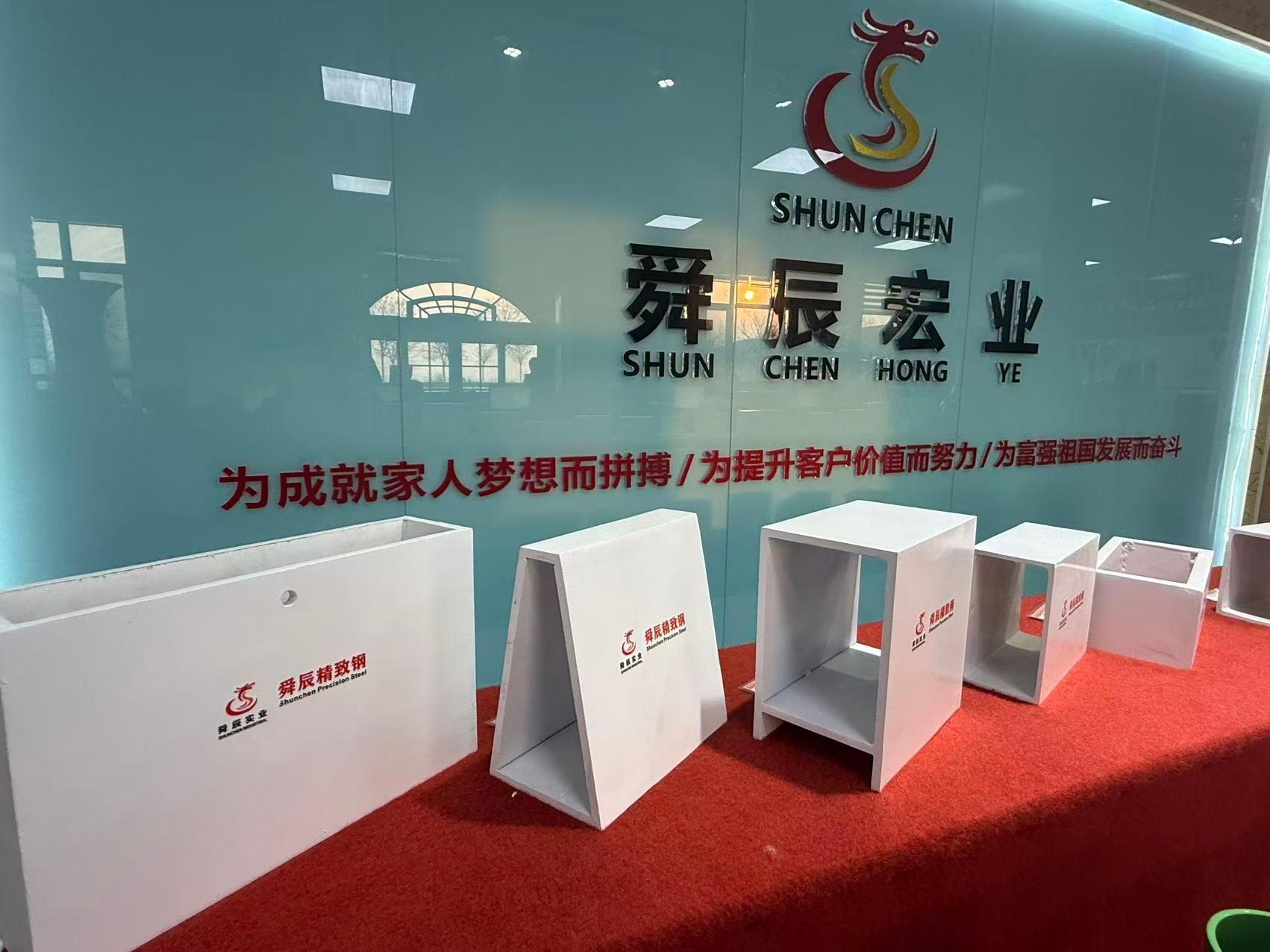
When steel is dipped into molten zinc, something more than a simple coating takes place. The zinc doesn't just sit on the surface—it metallurgically bonds with the iron, forming layers of zinc-iron alloy that become part of the steel itself. This interlocking structure is what gives hot-dip galvanizing its unmatched toughness, far beyond what paint or electroplating can achieve.
What often goes unnoticed is the care taken before the steel ever touches the zinc bath. The material is thoroughly cleaned—degreased, pickled, fluxed—to remove every trace of rust, scale, and oil. This preparation is paramount; without it, the bond would be compromised. It’s a stage where precision meets practicality, ensuring that the final coating adheres perfectly, even in hard-to-reach corners of complex fabrications.
The true difference lies in the protective layer’s unique ability to heal itself. If the galvanized surface is scratched, the surrounding zinc sacrifices itself to protect the exposed steel, galvanically shielding it from corrosion. This self-repairing characteristic means the structure remains defended year after year, often without any maintenance, in environments where other coatings would quickly fail. That’s the quiet advantage built into the process—durability that doesn't demand attention, but delivers it for decades.
Precision-Cut H-Beams for Modern Demands
The demand for structural steel components that combine strength, consistency, and dimensional accuracy has never been higher. Precision-cut H-beams answer this call by delivering exact measurements right from the fabrication stage. Unlike conventional beams that often require on-site trimming or adjustments, these pre-cut sections arrive ready for immediate assembly, slashing installation time and reducing the risk of errors that can cascade into costly delays. Every cut is guided by advanced CNC machinery and rigorous tolerance checks, ensuring that each beam slots perfectly into complex frameworks without the need for manual recuts or shimming.
Modern construction and engineering projects thrive on repeatability. When you order precision-cut H-beams, you can count on every piece in the batch matching the specification down to the millimeter. This level of uniformity transforms how crews approach large-scale builds—whether it's a multi-story commercial tower or a long-span industrial facility. The streamlined workflow translates into lower labor costs and a smoother procurement cycle, because what gets delivered is exactly what was planned, with no surprises. Fabricators and erectors alike have come to trust these beams as a strategic asset that keeps projects moving on schedule and on budget.
Beyond the immediate benefits of fit and speed, precision-cut H-beams contribute to a leaner, waste-conscious project. By generating offcuts precisely where they're needed in the controlled shop environment, material scrap is minimized, and leftover steel can be recycled intelligently instead of littering a messy job site. This thoughtful approach aligns with today's emphasis on responsible resource use without sacrificing the performance or load-bearing capacity that engineers demand. In essence, you're getting a product that reflects the true skill of modern metalwork—sharp, dependable, and made for the demands of the coming decades.
How We Ensure Decades of Service Life
Our engineering philosophy centers on material integrity and stress distribution. We start with premium-grade alloys, selected for their proven resistance to fatigue and corrosion, then shape every component using precision forging that aligns grain structure for maximum strength. Each design undergoes virtual load testing across millions of simulated cycles, ensuring it can handle real-world demands far beyond typical use. This upfront rigor filters out weak points before a single prototype is made.
Assembly is where durability gets locked in. We combine automated precision with skilled hand-finishing, using advanced fastening techniques that eliminate vibration loosening. Every unit is then subjected to a battery of physical tests: thermal shock, salt spray, continuous operation under heavy load. Components that show even minor deviation are scrapped—our tolerance is zero. The result is a product that stays consistent and reliable, year after year.
Longevity also depends on simple, maintainable design. We minimize delicate parts, opting for robust mechanisms that need little care. When maintenance is necessary, access points are obvious and tools are minimal. Detailed guides and decades-long spare part commitments mean repairs are straightforward and never a dead end. It's a holistic approach: the product is built to last, and we make sure it can be kept in service effortlessly.
Custom Profiles for Unique Architectural Visions
In an era where cookie-cutter designs dominate skylines, custom profiles offer a tangible way to carve out a distinct architectural identity. They're not mere structural components; they're the quiet sculptors of a building's character, enabling curves that defy standard geometry, transitions that feel nearly seamless, and shadows that shift as the sun moves. When off-the-shelf systems can't translate a daring concept into reality, these tailored solutions step in, bridging the gap between a napkin sketch and an inhabitable masterpiece.
The real power lies in how adaptable they are. Whether it's a façade that undulates like woven fabric or a tension-free span that opens interior space, custom profiles let the material forget its own limits. Architects work directly with fabricators to tweak alloy compositions, extrusion shapes, and thermal breaks until the profile does exactly what the vision demands—no compromises. That back-and-forth, often messy and iterative, yields something neither party could have dreamed up alone: a built form that feels inevitable, yet unmistakably original.
Ultimately, these profiles are about refusing to let the industry's standard answers define the question. They respect the intention behind every line on a drawing, giving stubborn creativity a practical path forward. A building wrapped in custom extrusions doesn't just stand there—it communicates, it ages with grace, and it quietly reminds everyone that architecture, at its best, happens when craft meets conviction.
From Raw Steel to Rugged Reliability
It starts with something as simple as a coil of steel, but the path from raw material to finished component is anything but ordinary. In our facility, that steel isn't just worked—it's pushed, tested, and refined until it's ready to handle real-world abuse. Every sheet and bar that enters our production line carries its own story, its own hidden flaws and potentials. We uncover them all, making sure nothing slips through that could compromise what it eventually becomes.
The transformation happens under extreme heat and pressure, where the metal's grain structure aligns and hardens in ways that borrowed time and heavy loads can't easily undo. Our team watches the process closely, but they also trust their instincts—those hard-won hunches that come from decades of hands-on craftsmanship. It's not just about following a spec sheet; it's about knowing when a material is truly ready, when it's become something more than the sum of its parts.
What emerges is a piece of equipment that rarely makes headlines, because it's designed to simply keep working long after others have quit. That's the quiet promise behind every product we ship: no drama, no unexpected downtime, just the rugged reliability that only comes from respecting the steel from the very first cut to the final inspection.
FAQ
Hot-dip galvanizing creates a metallurgical bond between zinc and steel, forming a tough, abrasion-resistant coating that protects the H-beam from corrosion for decades, even in harsh environments. This process ensures uniform coverage, including edges and hollow sections, which significantly extends the lifespan of structural frameworks without frequent maintenance.
We adhere to international standards like ASTM A36, A572, and EN 10025, with rigorous in-house testing at every stage—from raw material inspection to final coating thickness checks. Our galvanizing line operates under precise temperature and immersion controls, and each beam undergoes a post-galvanizing visual and adhesion test to guarantee consistent quality.
Absolutely. Our manufacturing setup allows for flexibility in web height, flange width, and thickness. Whether you need standard lengths or specific dimensions for a unique design, we can tailor production accordingly. We also accommodate special drilling, cutting, or welding requests before galvanizing to streamline your assembly on site.
They're widely used in commercial and industrial buildings, bridge supports, transmission towers, agricultural structures, and solar panel framing. The corrosion resistance makes them ideal for coastal areas, chemical plants, and outdoor constructions where exposure to moisture or pollutants is a constant concern.
Yes, we provide end-to-end support including design consultation, surface preparation, and logistics coordination. If needed, we can arrange bundled delivery with protective wrapping to prevent transit damage. Our team is also available for on-site technical guidance regarding installation and long-term care of galvanized structures.
Unlike paint or epoxy coatings, which can chip or peel, hot-dip galvanizing forms an integral part of the steel itself. It offers superior edge protection and sacrificial cathodic protection, meaning even if the coating is scratched, the surrounding zinc continues to guard the exposed steel. This durability often results in a lower lifecycle cost despite a marginally higher upfront expense.
Lead times depend on order volume and complexity, but our streamlined production and galvanizing processes usually allow dispatch within 3 to 5 weeks for standard sizes. We keep a buffer stock of common H-beam blanks to accelerate urgent requests, and we communicate transparently about any scheduling adjustments.
We regularly supply to overseas clients across Asia, Europe, and the Americas. Our facility can process several thousand tons monthly, and we are familiar with export documentation, marine-grade packaging, and compliance with various national building codes. We collaborate closely with freight forwarders to ensure timely, safe delivery to your project site.
Conclusion
At the core of every structure that stands the test of time is a framework built to resist nature's harshest trials. Our hot-dip galvanized H-beams are forged with an unwavering commitment to resilience, where raw steel is transformed through a meticulous process that fuses strength with longevity. We don’t just dip steel in zinc; we engineer a metallurgical bond that penetrates every angle and hidden edge, creating an armor against corrosion that outlasts conventional coatings. The precision cutting of flanges and webs to exact tolerances ensures that each beam slots perfectly into complex architectural grids, eliminating on-site rework and accelerating project timelines without sacrificing an ounce of load-bearing capacity.
Beyond standard dimensions, our facility thrives on translating unique architectural visions into custom profiles—tapered webs, off-axis cuts, or reinforced ends—all while maintaining the same rigorous galvanizing integrity. Decades of service life aren’t promised; they’re built in, layer by layer, from the initial alloy selection to the final quality check. We control every stage: shot blasting to a near-white finish, flux bath chemistry, and immersion timing that ensures zinc intermetallic layers form with millimetric precision. The result is a beam that weathers coastal salt spray, industrial pollutants, and freeze-thaw cycles without flinching. From the molten steel of the electric arc furnace to the rugged reliability of a finished structural member, our factory stands as the silent backbone behind bridges, high-rises, and stadiums that define skylines worldwide.
Contact Us
Contact Person: Max Zhou
Email: [email protected]
Tel/WhatsApp: +86 15712216177
Website: https://www.shunchensteelmaterial.com/