

Top Power Resistors You Need for Reliable Circuit Design
2026-07-22
When designing a reliable circuit, power resistors play a critical role in managing energy and ensuring stability. From current sensing to voltage division, the right choice can make or break your design. In this guide, we’ll explore the top power resistors you need, featuring insights from Milliohm to help you select components that deliver precision and durability in demanding applications.
Key Traits That Define a Dependable Power Resistor
A truly dependable power resistor doesn’t just meet specs on paper—it holds up under real stress. Thermal stability sits at the core of that reliability, often overlooked in favor of wattage ratings alone. The materials and construction must work together to shed heat efficiently, preventing hotspots that gradually degrade performance. Think of it like a marathon runner: steady dissipation over time matters more than a short sprint.
Precision in resistance value under load is another silent marker of quality. A resistor that drifts a few percentage points when hot might not fail immediately, but in sensitive circuits it can cause cascading issues. The best designs pair low temperature coefficients with rugged element materials, so the specified ohms stay put whether the part is at room temperature or pushing its limits.
Finally, physical robustness seals the deal. Legs that don’t crack, coatings that resist moisture and vibration—these details separate a part you can install and forget from one that haunts your repair bench. In harsh environments, a power resistor’s true character shows not in a datasheet graph, but in years of quiet, uninterrupted service.
Why Wirewound Types Still Dominate High-Stress Paths
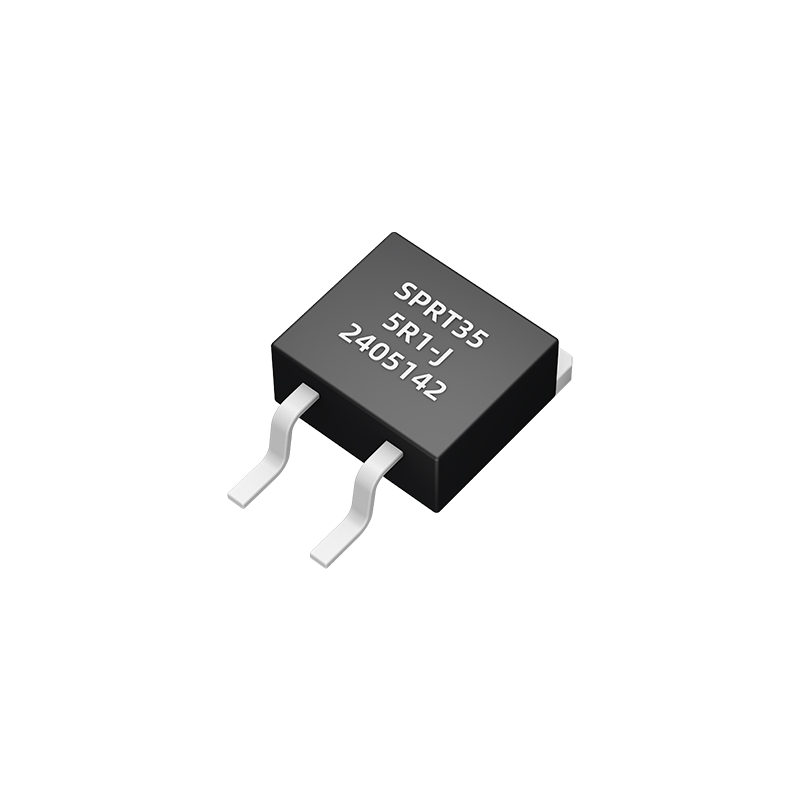
In high-stress applications where components face punishing surges, thermal cycling, and extreme temperatures, wirewound resistors continue to outshine their thin-film, thick-film, and metal foil counterparts. The secret lies in their physical construction: a robust alloy wire is wound around a ceramic core and often encased in a vitreous enamel or silicone coating. This design inherently withstands mechanical stress and dissipates heat more effectively than planar resistive elements, which can crack or delaminate under strain. As a result, wirewounds are the go-to choice for industrial motor drives, braking systems, and power supplies where reliability isn’t just preferred—it’s mandatory.
Another key advantage is their superior pulse-handling capability. The wire element acts as a heat sink, absorbing and spreading energy spikes across its mass before the heat can degrade the resistive material. In contrast, thin-film resistors, while precise, can fail catastrophically when subjected to instantaneous overloads because their resistive layer is only microns thick. Wirewounds, with their bulkier material, simply soak up the punishment. This makes them indispensable in snubber circuits, RF loads, and any path where inrush currents or transient voltages are routine.
While newer technologies have narrowed certain performance gaps, wirewound resistors maintain dominance in high-stress roles through sheer ruggedness and an ability to be customized for specific overload profiles. Manufacturers can adjust the alloy composition, wire gauge, and winding technique to tailor the surge tolerance and inductance level. For many engineers, the decades of field-proven data behind wirewounds outweigh the incremental gains of alternative precision resistors in tasks that push components to their limits.
Thick Film Choices for Compact, Cost-Sensitive Boards
Thick film resistors have become a practical go-to for designers working on space-constrained, budget-focused boards. Their small footprints and ability to handle moderate power levels without demanding expensive substrates make them an immediate fit. Instead of chasing tighter tolerances that push up cost, many engineers lean into the natural variability of thick film technology—accepting slightly wider resistance spreads in exchange for a lower bill of materials and faster assembly. This give-and-take often works well in consumer electronics, industrial sensors, and basic control circuits where precision is not the primary driver.
One overlooked advantage is how easily thick film components play with standard printing and laser trimming processes. When board real estate shrinks, every millimeter counts, and the forgiving nature of thick film paste allows for reliable overglaze and less aggressive trimming that still holds up under temperature swings. This means fewer rejects during production and less rework later. For cost-sensitive projects, that reliability adds up quickly—reducing scrap rates and letting manufacturers avoid the premium attached to thin film alternatives.
In practice, a compact design might pair thick film resistors with straightforward alumina ceramic substrates, skipping the need for exotic materials. The result is a straightforward, repeatable build that doesn’t demand highly specialized fabrication. Engineers can also push pulse handling a bit harder than expected, thanks to the robust structure of thick film elements. It’s not about chasing perfection; it’s about finding the sweet spot where performance meets affordability without overcomplicating the board layout.
Metal Foil Precision When Every Milliohm Matters
In circuits where current sensing dictates performance and safety, a single milliohm can separate efficient operation from thermal runaway. High-current paths in power supplies, battery management systems, and motor drives rely on precise resistance values to generate accurate voltage drops. Even subtle resistance drift under temperature or load can cascade into significant measurement errors, triggering false overloads or masking real faults. When every millivolt of drop translates directly into system decisions, the resistor isn't just a passive component—it becomes a critical calibration reference that must hold its value unwaveringly.
Metal foil technology addresses this demand through a monolithic element of cold-rolled alloy bonded to a ceramic substrate, inherently immune to the granular noise and hot spots common in thick-film or wirewound styles. The foil’s crystalline structure is stress-relieved and thermally stabilized during manufacturing, yielding temperature coefficients near the sub-ppm/°C level. This ensures that a resistor rated at 10 milliohms stays 10 milliohms, regardless of ambient swings or self-heating from pulse loads. The low-thermal EMF junctions and planar current path also minimize parasitic inductance, preserving signal integrity in high-speed kelvin sensing layouts.
Designers pushing the boundaries of efficiency—in renewable energy inverters, precision lab instruments, or automotive shunt modules—find that metal foil resistors eliminate the need for complex temperature compensation algorithms. Their intrinsic long-term stability, often less than 0.005% drift over thousands of hours, means field calibrations become rare events rather than routine maintenance. This reliability, combined with tight initial tolerance, allows power systems to safely operate closer to their theoretical limits, unlocking extra percentage points of efficiency that directly reduce cooling overhead and extend product lifespan.
Managing Heat and Pulse Loads Without Derating Guesswork
Engineers often fall into the trap of applying blanket derating factors to components when faced with uncertain thermal or pulse conditions, but this approach sacrifices performance and adds unnecessary cost. The key is to move beyond guesswork by thoroughly characterizing the actual load profiles and thermal environment. Start by mapping transient current demands over time—capturing not just peak amplitudes but also repetition rates, duty cycles, and the shape of current spikes. This granular view allows you to assess the true stress on the device rather than relying on conservative averages. Pair this with precise thermal modeling that accounts for both the junction-to-case and case-to-ambient paths, including the influence of adjacent heat sources and airflow variations across the PCB or system enclosure.
Once you have a detailed picture of the electrical and thermal dynamics, you can apply advanced simulation tools to predict device behavior without resorting to broad derating. Modern SPICE-based simulators, combined with finite element thermal analysis, let you visualize how the silicon temperature evolves during repetitive pulse trains. Instead of assuming a worst-case steady-state temperature, you can determine whether the device stays within its safe operating area during and after transient events. This method uncovers hidden margin, enabling you to use smaller, cheaper components or push existing designs to higher power levels while maintaining reliability. Ultimately, the shift from derating tables to physics-informed analysis turns heat and pulse management from a routine safety play into a competitive design advantage.
Mounting Methods That Preserve Long-Term Signal Integrity
Choosing the right mounting technique is often what separates a design that works flawlessly at high frequencies from one plagued by reflections and crosstalk. The physical interface between a component and the board, whether it’s a press-fit connector or a carefully reflowed surface-mount package, directly influences impedance continuity. Even microscopic gaps in ground contact or an uneven solder fillet can create parasitic inductance that distorts fast edges. Engineers have learned to treat the mounting zone not as a simple mechanical join, but as an extension of the transmission line, where pad geometry, via placement, and solder mask openings must all be tuned to maintain the characteristic impedance seen by the signal.
Edge-launch and vertical-mount SMA connectors, for instance, demand a nearly flush alignment where the center pin touches the trace with minimal stub length. In multilayer boards, back-drilling unused via stubs beneath these connectors is no longer optional—it is necessary to remove resonant structures that would otherwise sap energy at specific frequencies. Meanwhile, press-fit backplane connectors rely on compliant pin technology that creates a gas-tight cold weld without the thermal shock of soldering, preserving the dimensional stability of precision-drilled holes. When done correctly, the resulting via–pin interface presents a remarkably consistent impedance through the transition zone, even across hundreds of mating cycles.
Beyond connectors, the way a sensitive IC is mounted can make or break signal fidelity. BGA packages with tightly pitched solder balls depend on a balanced pattern of ground and signal returns directly under the die; any void or misregistration during reflow skews the current paths and excites cavity resonances within the substrate. Some designs go further by using conductive epoxy for die attach on RF modules, eliminating bond wire lift-off risks while keeping the thermal and electrical path highly symmetrical. Ultimately, preserving long-term signal integrity comes down to treating every mounting boundary as an opportunity to manage the electromagnetic field, rather than merely fixing a part in place.
FAQ
Power resistors dissipate excess energy as heat, preventing voltage spikes and thermal runaway. Without them, sensitive components can fry under surge conditions, leading to intermittent failures or complete breakdowns over time.
Wirewound types excel in pulse handling and low resistance values due to their metallic coil construction, but they can introduce inductance. Thick film versions are non-inductive, cost-effective, and handle higher frequencies, yet they struggle with sustained overloads compared to wirewound.
Calculate the maximum continuous power it will dissipate using P = I²R or V²/R, then multiply by a safety factor of at least 1.5 to 2. For pulsed loads, consider the average power and peak power separately, and check the manufacturer's pulse-handling curves to avoid derating surprises.
If the calculated dissipation exceeds about 1 watt in still air, a heatsink keeps temperatures within safe limits, extending component life. Designs with tight spatial constraints or high ambient temperatures almost always need heatsinking to maintain reliable operation.
Only in very low-power scenarios. Carbon comps have poor stability under sustained heat and are prone to drifting values after overloads. Dedicated power resistors—like metal oxide or wirewound—maintain tolerance and don't develop micro-cracks that lead to noisy or open circuits.
They dampen voltage transients across switches and relays, absorbing ringing energy that would otherwise cause electromagnetic interference or semiconductor damage. The resistor's pulse-withstanding capability is more critical here than its continuous rating, so choose a type with defined pulse tolerance.
As the resistor heats up, its value shifts by the TCR times the temperature rise. In current-sensing or feedback networks, a 50 ppm/°C drift might seem minor, but when the resistor runs at 100°C above ambient, that's a 0.5% change—enough to throw off calibration in high-accuracy designs. Use low-TCR materials like metal film or foil for stable readings.
Most fail open when the resistive element fuses from excessive heat. However, some metal oxide and film types can develop hot spots that partially short internally, lowering the resistance temporarily before eventually opening. This silent degradation often goes unnoticed until the circuit behaves erratically.
Conclusion
Reliable circuit design hinges on selecting power resistors that withstand stress without compromise. The foundation lies in traits like tight tolerance, low temperature coefficients, and stable long-term performance under load. For high-current paths where surges and heat are relentless, wirewound resistors remain unmatched—their robust construction handles pulse energy gracefully and maintains integrity where others degrade. Yet not every application demands brute force. In dense, cost-sensitive boards, thick film resistors offer a compact, affordable solution with decent precision for less punishing roles. When absolute accuracy is paramount, metal foil devices step in, delivering micro-ohm stability essential in precision measurement and control loops.
Beyond component choice, practical design must address thermal management head-on. Effective heat sinking and pulse-load characterization eliminate the guesswork of derating, ensuring lifespan under real-world transients. Equally critical is the mounting method: surface-mount or through-hole placement, pad geometry, and trace design all influence parasitic effects that erode signal fidelity over time. By integrating these considerations—from material science to mechanical layout—engineers craft power sections that don’t just function but endure, keeping circuits accurate and safe across years of service.
Contact Us
Contact Person: Yuying Gao
Email: [email protected]
Tel/WhatsApp: +86 18926013721
Website: https://en.milliohm.net/