

Universal Car Seat Covers Supplier You Can Trust for All Vehicle Models
2026-11-24
Finding seat covers that actually fit your car can feel like a gamble. Most brands promise universal sizing, but after a week you're left with wrinkled fabric and sliding corners. That's why drivers who care about both protection and style turn to Red Rain. As a supplier trusted across all vehicle models, Red Rain has built a reputation for covers that stay put, look sharp, and handle real daily wear. In this guide, we'll break down what makes their universal fit different, which materials hold up best, and how to pick the right set without second-guessing your order.
How One Cover Design Adapts to Deep Buckets and Flat Bench Seats
The same cover pattern behaves very differently once it meets a deep bucket or a flat bench seat. Deep buckets pull the fabric tight around the side bolsters, so the central motif needs extra room or it will distort into a stretched smear. Flat bench seats, by contrast, offer a broad uninterrupted plane where the design can spread naturally without fighting the cushion’s curves.
A common trick is to treat the side panels and the middle insert as separate visual zones. On deep buckets the printed graphic is deliberately narrowed toward the shoulder area, then widened again at the hip line so the eye reads a balanced shape once the cover is installed. On flat benches the same file can be used almost as-is, though even a slight center crease will interrupt a large geometric pattern if you are not careful.
Materials also shift the result. Stretch wetsuit-style fabric forgives a deep bucket more easily than woven polyester, because it can follow compound curves without hard wrinkles. With a flat bench seat, a low-stretch woven cover often looks sharper and stays put better, but the same print will appear slightly larger and less distorted than on a sculpted bucket.
Materials That Survive Sun, Spills, and Daily Pet Hair Without Feeling Stiff
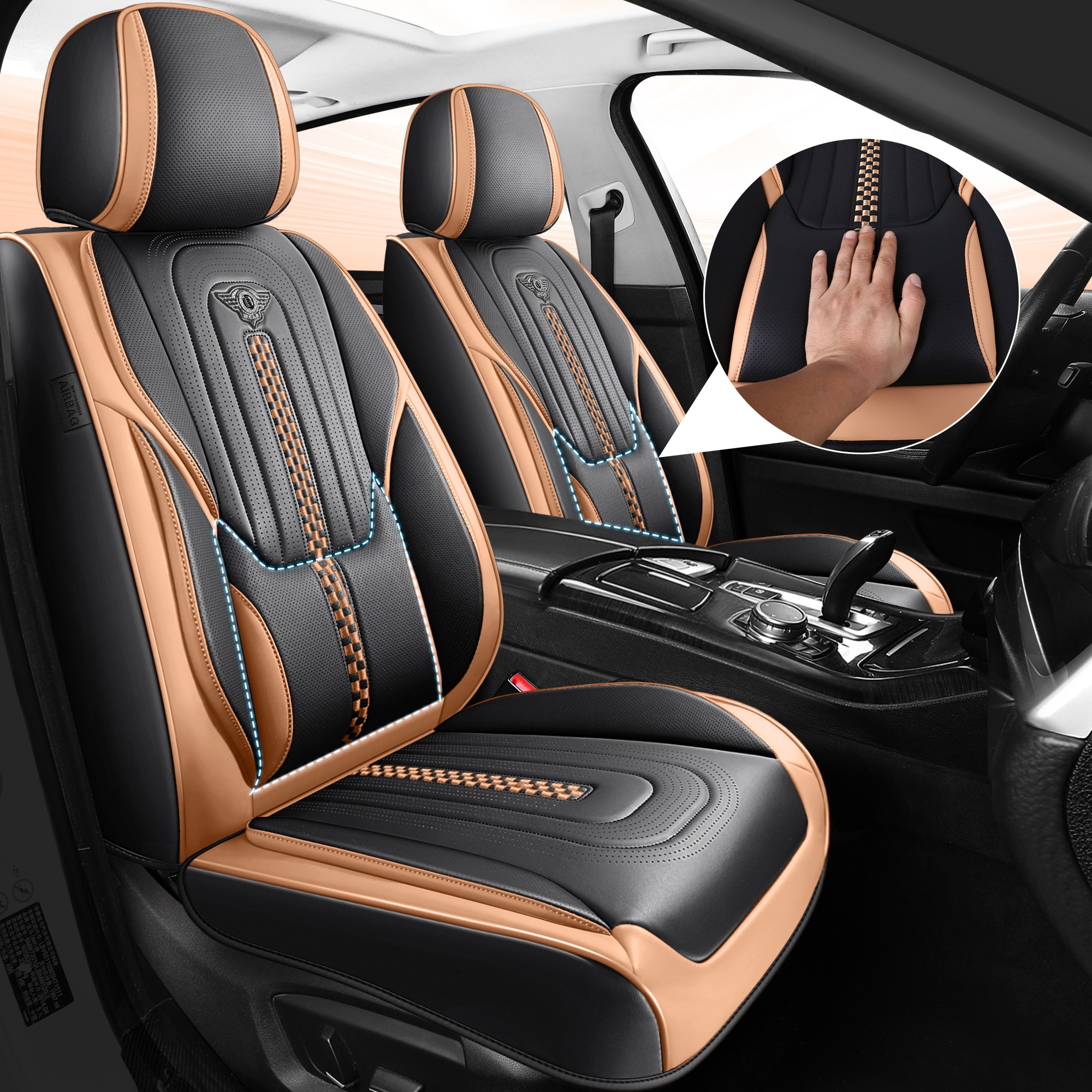
A performance fabric can handle years of sunlight, the occasional knocked-over coffee, and a dog that treats the sofa as a second bed—yet still drape like something you want to nap on. The trick usually comes down to blended weaves and low-profile finishes rather than heavy coatings. Look for solution-dyed acrylics or tightly spun polyesters with a subtle texture; they resist fading and stains without turning into that plasticky, board-like surface that makes you sit up straight instead of sinking in.
Pet hair is where many 'easy-clean' fabrics fall apart. A stiff, rubbery backing might repel liquids, but it grabs fur like Velcro. Woven options with a smooth, flat surface and a slight sheen let hair lift off with a lint roller or a damp hand. Meanwhile, spills bead up just long enough for you to blot them away, because the yarn itself is engineered to be hydrophobic—not because someone glued a plastic layer on top. That way the cushion still flexes and breathes under you.
For households where the sun hits the same corner every afternoon, colorfastness matters as much as softness. A densely woven, heat-set fiber keeps its depth of color for years, while the hand remains relaxed. You end up with furniture that doesn't need slipcovers or constant vacuuming—just the occasional wipe-down and a quick pass with a brush for the fur. Practical, yes, but still comfortable enough for a long Sunday afternoon with the windows open.
Airbag-Safe Openings That Do Not Turn Installation Into a Weekend Project
The usual worry with seat covers is that you either block the side airbag or spend half a Saturday cutting and resewing a panel. These openings are already placed along the bolster seam, so the cover can separate where the seat was designed to deploy. That removes the guesswork and most of the risk.
Fitting them is no more complicated than a standard cover. Line the opening up with the airbag label on the seat, pull the cover down, and fasten the straps. There is no extra flap to fold under, no tailor tape, and no reason to remove the seat. You can finish both front seats before the coffee goes cold.
The stitching around the opening is the part worth paying attention to. It holds up to daily sliding in and out of the car, but it is not so heavy that it would delay a deployment. That is the balance a lot of covers miss: strong enough for everyday use, light enough to get out of the way when it matters.
Why Fleet Buyers Reorder After Seeing How the Covers Handle Real Use
Fleet managers tend to ignore most product claims until a cover has made it through several months of daily loading, road salt, and drivers who are not exactly gentle with equipment. Once that first order survives real use, the next purchase usually has less to do with price and more to do with not wanting to retrain a crew on an unfamiliar fit.
The covers that earn repeat orders are the ones that still close snugly after repeated yanks, shed water instead of pooling it, and do not turn brittle after a season of direct sun. Buyers also notice when buckles stay intact, corners remain reinforced, and replacement straps rarely get pulled from the parts shelf.
Word moves fast through a maintenance yard. When a cover handles real abuse without constant fussing, the conversation quietly changes from “let’s try a cheaper option” to “keep ordering what already works.” That kind of confidence is hard to advertise, but it shows up in every reorder.
Fit Notes for Trucks, Vans, and Third-Row Seats That Most Listings Skip
Trucks and vans don't follow the same seat geometry rules as most passenger cars. The floor pan sits higher, the seat brackets often use different bolt spacing, and a center console or transmission tunnel can eat into the available width. Before you assume a cover will stretch over a work truck bench, check whether the listing actually accounts for integrated headrests that split the backrest into two uneven halves. Many universal covers leave the middle section looking baggy or force you to tuck fabric into gaps that never stay put.
Third-row seats add another layer of trouble because they're usually narrower than the second row and have a pronounced 60/40 or 50/50 split. The release straps, anchor points, and fold-flat levers sit in different spots depending on whether the third row tumbles forward or folds into the floor. If a cover blocks those mechanisms, you lose the quick access families actually need. Look for cuts that leave the latch areas fully exposed and don't rely on elastic that slides down the seatback every time someone climbs in from the tailgate.
Vans with stowable seats create their own puzzle. The seat bottom often tilts upward before the whole unit drops into a well, which means side skirts and front flaps have to clear a hinge point that regular covers never reach. And in trucks with under-seat storage bins, any extra fabric hanging below the cushion will jam against the lid or get caught when you flip the seat forward. Measure twice around the pivot points, not just the flat cushion surface, and you'll avoid the fit notes that most listings quietly bury or skip altogether.
What Universal Fit Should Mean Now That Seat Shapes Keep Changing
Universal fit once implied a single profile was acceptable for most bodies. Seat shapes now change enough between models and categories that any fixed profile starts to fight the rider. A more useful meaning has less to do with one dimension and more with how the shape behaves as the body shifts, tilts, and loads the surface unevenly.
Soft foam and wide rear sections often get mistaken for a safe answer, but they can mask a poor interface. Once a rider settles into a seat, the compressed material changes the effective contour, and the areas that need support may end up floating while the edges carry too much load. The test is not how a seat feels for five minutes; it is whether pressure stays distributed after an hour of small position changes.
A better universal fit does not promise an exact match. It promises that the load stays spread out even when the rider slouches, scoots forward, or shifts weight onto one side. That means fewer hard edges, smoother transitions, and enough flat area under the sit bones without forcing the pelvis into a single tilt. When shapes change, that kind of baseline matters more than any particular width or profile number.
FAQ
The pattern is cut with extra allowance in the side panels and backrest, so it stretches around factory seats without leaving saggy pockets. Instead of relying on model-specific stitching, the covers use a combination of anchor hooks, adjustable straps, and reinforced edges that let the same set work on sedans, SUVs, hatchbacks, and light trucks with only minor tucking.
Most of the neatness comes from the way you secure the straps and tuck the excess fabric into the seat crease. The covers are designed with a slight contour to follow the upper backrest, and the lower skirt has elastic that pulls it close to the cushion. Taking two extra minutes to work the fabric under the plastic trim makes a visible difference.
Yes. The outer layer is a breathable fabric blend that resists everyday scratches and spills, while the middle layer stops liquids from soaking through quickly. That combination gives you enough time to wipe up juice, coffee, or pet messes before they reach the original upholstery. For heavy mud or sand, you can remove the covers and wash them without losing their shape.
The side panels are stitched with a breakaway section that is positioned to align with standard side airbag openings. The seat belt buckle and rear anchor points stay accessible, and the covers are thin enough that manual levers and power controls can still move freely. If your vehicle has unusually placed controls, you may need to leave a small opening, but that does not affect the overall protection.
You start by removing the headrests, then slide the backrest cover down and pull the straps through the gap between the seat back and cushion. After the lower cover goes over the cushion, you hook the anchors under the seat and tighten everything until the fabric sits flat. The first row usually takes ten to fifteen minutes, and the rear bench can take a bit longer because you may need to lift the seat base to reach the straps.
For regular dust and crumbs, a quick vacuum or a damp cloth works. For deeper cleaning, remove the covers and use a cold or low-temperature machine wash with mild detergent, then let them air dry away from direct sun. Avoid bleach and high-heat drying, because those break down the elastic and can make dark colors look chalky over time.
A supplier that focuses on seat covers usually has clearer material specs, faster replacement support, and more consistent sizing between batches. If a strap or hook is missing from the package, you are dealing with the people who packed it, not a third-party seller who has to forward messages. It also helps that the supplier can explain which cover style suits your interior rather than leaving you to guess from a generic photo.
Conclusion
Finding a supplier that actually understands how different vehicle cabins are shaped can be harder than it sounds. These covers are built around a single adaptable pattern that sits correctly on deep bucket seats and flat bench seats alike, so you are not stuck juggling separate part numbers for sedans, pickups, or vans. The material is selected for real daily use rather than showroom looks: it handles sun exposure without fading, shrugs off spills before they soak through, and lets pet hair lift away without feeling stiff or shiny. Airbag-safe openings are placed where they belong, so installation stays straightforward and does not turn into a weekend project.
Fleet buyers tend to come back after seeing how the covers survive constant entry and exit, shifting cargo, and cleaning routines that are not exactly gentle. We also sweat the details most listings skip, including truck bench contours, van seat controls, and third-row belts that still need clear access. Universal fit should not mean a loose cover that fits nothing well. As seat shapes keep changing with deeper bolsters and integrated restraints, the meaning of universal has to move with them. That is why the fit is adjusted from real seat measurements instead of a frozen template, keeping the covers dependable across current models and older vehicles alike.
Contact Us
Contact Person: Ms. Zhu
Email: [email protected]
Tel/WhatsApp: 86-15906860931
Website: https://www.redrainseatcovers.com