

Wholesale Abrasive Paper: Your Complete Guide to Bulk Sanding Supplies
2026-09-11
Buying abrasive paper in bulk can feel like a gamble—wrong grit, flimsy backing, or a supplier that disappears after the first shipment. If your workshop burns through rolls and sheets every week, you already know the real cost isn't the paper itself; it's the downtime and uneven finishes that come from unreliable stock. That's why more buyers are shifting toward suppliers who treat sanding materials as precision products, not just commodities. SHENZHEN SUN ABRASIVES has become a go-to source for teams that need consistent quality and wholesale pricing without the usual back-and-forth. In this guide, we'll break down what to look for in bulk sanding supplies—from grit selection and backing types to packaging and lead times—so your next order actually matches the job at hand.
Reading Grit Numbers Without Second-Guessing
A lot of confusion around grit numbers comes from treating them like a rough guess. Once you know the rule—smaller number, larger abrasive particles and more aggressive cut—reading a label becomes second nature. 80 grit tears through old finish in minutes, while 220 leaves barely visible scratches. The number itself is not random; it corresponds to the mesh size used to filter the abrasive grains. So when you see 120, you can trust it will behave between 80 and 150 in terms of cut rate and scratch depth.
Doubt usually creeps in when a paper feels finer or coarser than expected. That feeling often has more to do with backing weight, grain type, or how worn the sheet is than with the printed number. A fresh 100-grit aluminum oxide sheet cuts differently from a half-used 100-grit garnet sheet. Instead of second-guessing the number, check the backing, the mineral, and the age of the sheet. The number tells you particle size, not overall performance.
Choosing Backing Materials That Won’t Quit Early
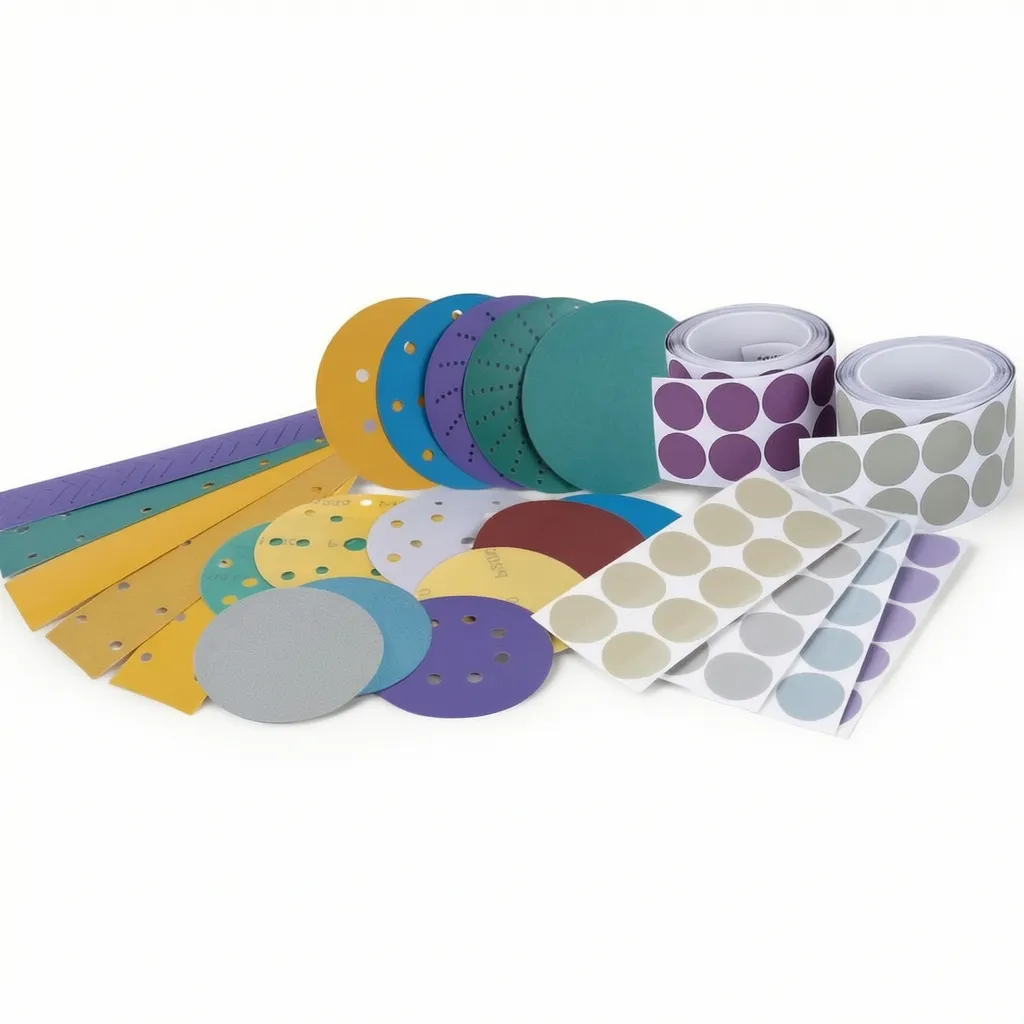
Most backing failures happen long before anyone expects them, and the culprit is rarely a single dramatic event. It is usually a quiet accumulation of micro-strains, thermal cycles, or chemical exposure that slowly eats away at the bond line. When you start looking at candidates, pay less attention to the glossy spec sheet and more to how the material behaves after a few thousand hours in your actual operating environment. A backing that survives a 24-hour lab test might crumble after six months of real-world vibration or humidity swings.
One mistake I see repeatedly is choosing a backing based purely on its initial adhesion strength. High tack feels reassuring, but it often comes at the cost of long-term dimensional stability. Softer, more aggressive adhesives tend to creep under sustained load, especially at elevated temperatures. Instead, look for backings with a balanced modulus—stiff enough to resist deformation, yet flexible enough to absorb stress without cracking. Materials like cross-linked polyethylene foams or certain silicone-coated films often outperform their flashier counterparts simply because they do not quit when the temperature gauge climbs.
Also, do not underestimate the role of surface preparation and liner choice. Even the toughest backing will delaminate early if the substrate is contaminated or the release liner leaves behind a residue that interferes with bonding. Spend time testing candidate materials on the exact surface finish you will use in production, not a polished coupon. And ask for aged adhesion data, not just initial values. A supplier who cannot provide long-term performance curves is often hiding a material that will let you down right when you need it most.
Where Bulk Orders Actually Save You Money
The biggest savings from bulk orders don't come from the sticker price alone. When you order larger quantities, suppliers often waive per-unit handling fees or offer free shipping thresholds that smaller orders never reach. That means the actual cost per item drops, but so does the overhead you'd normally pay for packaging, processing, and multiple deliveries.
Another overlooked area is inventory carrying cost. Bulk buying lets you lock in a lower rate before seasonal price hikes or raw material shortages hit. Instead of placing five small orders over six months and absorbing five separate price increases, you place one order at today's rate and sit on stock that's already cheaper than what your competitors will pay next quarter.
There's also a hidden saving in admin time. Every purchase order, invoice, and receiving check takes staff hours. Ten small orders mean ten sets of paperwork and ten chances for an error to slip through. One bulk order cuts that workload dramatically, letting your team focus on selling rather than reordering the same item every few weeks.
Keeping Abrasive Paper in Top Shape Before Use
Abrasive paper rarely fails because it's worn out—more often, it's been mishandled before it ever touches the workpiece. Storing sheets flat in a dry, moderate-temperature spot matters more than most people realize. Humidity softens the backing and can loosen the grit bond, while damp basements or garages with big temperature swings invite curling and premature shedding. If you've ever pulled a sheet from a drawer and watched the edges roll up like a scroll, you know exactly what I mean.
Before you start sanding, lay the sheet on a flat surface and run your palm across it. Feel for creases, cracks, or patches where the grit feels thin or slick. A sheet that's been folded or tightly rolled won't lie flat against the block or disc—it'll chatter, leave uneven scratches, and wear out fast along the fold lines. Give it a gentle flex in both directions, not to break the backing but to relax any memory from storage. If you spot a deep crease near the edge, trim it off rather than fighting it.
Paper-backed abrasives and cloth-backed ones play by slightly different rules. Paper is stiffer and more prone to cracking if forced around tight contours straight from the pack, so let it acclimate to room temperature for half an hour if it's been sitting in a cold truck or shed. Cloth backing tolerates more bending, but it still benefits from a quick inspection—check for loose fibers along the edges that can snag and tear mid-stroke. A minute of prep before the first pass saves you from a botched finish and a stack of wasted sheets.
Pairing Abrasive Types With the Right Surface
Matching an abrasive to the surface isn't just about picking a grit size—it's about understanding how the grain fractures, how much heat it generates, and how it interacts with the material's hardness and flexibility. Aluminum oxide, for instance, holds up well on wood and softer metals because its blocky shape resists dulling without gouging the surface. Switch to silicon carbide on those same materials and you'll often end up with deeper scratches and a shorter working life, even though the grit number is identical.
On harder, brittle surfaces like glass, stone, or ceramics, silicon carbide becomes the smarter choice. Its sharper, more angular grains keep fracturing under pressure, exposing fresh cutting edges rather than glazing over. That self-sharpening behavior prevents the abrasive from simply skating across the surface. Ceramic alumina and zirconia alumina take a different route—they're engineered for high-pressure grinding on metals, where their micro-crystalline structure lets them shed tiny fragments slowly, maintaining an aggressive cut without burning the workpiece.
For plastics, fiberglass, and other heat-sensitive or soft composites, the goal shifts toward cool cutting and minimal loading. Garnet, emery, or specialized stearate-coated abrasives often work better because they produce less heat and resist clogging. Even the backing matters: a flexible cloth or film backing follows contours on curved plastic parts, while a stiff paper backing on a flat steel panel can cause uneven wear. A quick test on a scrap piece is always cheaper than reworking a finished surface.
Inspecting Bulk Shipments for Hidden Defects
A quick glance at a bulk shipment rarely tells the whole story. Surface-level checks may catch crushed corners or torn wrapping, but deeper issues like internal moisture, mold growth, or stress fractures often stay hidden until the goods are already in use. To catch these problems, you need to pull samples from places that are easy to overlook—pallets at the bottom of a stack, cartons near container doors, or items strapped tightly against the walls. These spots tend to trap humidity and pressure, making them prime hiding places for defects that won't show up on the top layer.
Opening a few cartons isn't enough if you only pick from the front row. Randomize your selection across the full load, and don't shy away from cutting straps or removing shrink wrap on suspect units. A handheld moisture meter or a simple borescope can reveal damp insulation, delaminated panels, or corroded contacts long before they become visible. When you do find a hidden flaw, mark the entire surrounding stack for closer inspection rather than isolating a single box—bulk shipments often share common handling stress, so one defect usually signals a pattern.
FAQ
Focus on grit consistency, backing flexibility, and whether the abrasive bonds well under heat. Cheaper rolls often shed grit and leave uneven scratches.
Keep a spread from 80 to 400 on hand. Coarse grits remove material fast; finer ones clean up edges and prep surfaces without digging in too deep.
Full sheets give you freedom to cut to any shape for blocks, orbitals, or hand sanding. Precuts are convenient but lock you into one tool size.
Cloth-backed paper lasts longer on metal and rough contours. Paper backing is fine for wood and drywall, but it tears faster on sharp edges.
Keep it flat in a dry, cool area away from direct sunlight. Humidity breaks down the adhesive and makes the backing swell.
It can, but you’ll sacrifice finish quality. Aluminum oxide works across materials, yet each surface benefits from a specific backing and grit.
Start with 50 to 100 sheets per grit. That’s enough to see per-unit cost drop without tying up cash in stock you won’t use quickly.
The abrasive grain may be sparse or unevenly sized. Manufacturers can hit a nominal grit while skimping on coating weight, so the paper dulls fast.
Conclusion
Reading grit numbers without second-guessing starts with thinking of them as a count of abrasive particles per square inch, not a mystery scale. A 40-grit belt chews through paint and rust, while 220-grit leaves a surface ready for stain or primer. Backing material matters just as much, and it's where many bulk buyers stumble: paper is fine for flat wood and drywall, but polyester film or fiberglass stands up to metal edges and repeated flexing without tearing early. If you're ordering in volume, pick a backing that matches the toughest surface you'll hit, not the easiest one.
Where bulk orders actually save you money isn't in the sticker price alone—it's in not running out mid-job and not paying premium retail for single sheets. To keep that advantage, store your stock flat, off concrete floors, and sealed against humidity so the bond between grit and backing doesn't weaken. Pairing abrasive types with the right surface also prevents waste: aluminum oxide handles wood and most metals, while silicon carbide shines on glass, stone, or wet sanding. Before accepting a shipment, open random sleeves and look for uneven grit, wrinkled edges, or backing tears. Catching hidden defects early means your bulk purchase stays a bargain instead of a headache.
Contact Us
Contact Person: Amanda Wang
Email: [email protected]
Tel/WhatsApp: +86-13602569854
Website: https://www.sunabrasives.com.cn